Urban Alienation and the Illusion of the Japanese Dream in Irene Villamor’s Midnight Girls
Villamor’s wider body of work consistently frames bustling cityscapes as a poignant backdrop for profound human isolation.
Published on May 22, 2026
Irene Villamor returns with her latest feature film, Midnight Girls. Moving on from the themes of her previous work, The Loved One (2026), which delved into a decade-long love tested by the very changes of time and the boundaries of sacrifice, all while being consumed by work and the search for purpose in life. Villamor once again takes us to Japan. At the heart of the bustling nightlife of Nagoya, Japan, stand four Filipina omise entertainers: Vicky (Jodi Sta. Maria), Paris (Sanya Lopez), Saki (Jane Oineza), and Wanna (Loisa Andalio), holding on to the promises of the city that belie them as their homeland fails to meet their needs.
As the four of them continue to live in the city, it exposes how urban life alters their very existence, as they hold onto the steadfast belief that an unfamiliar country will change their lives for the better. However, the characterization of the city and its connection to the characters' existence is no stranger in Villamor's films. For one, aside from the fact that Celeste (Bela Padilla) in Meet Me in St. Gallen (2018) is experiencing a hurdle in her relationship with Jesse (Carlo Aquino), the city itself becomes a burden for her to dwell in. Suffocated by an overcrowded Manila and the demanding needs of her corporate job, Celeste escapes to St. Gallen, Switzerland.
Moreover, Sid & Aya’s (2018) depiction of the city shows how it enslaves its dwellers, alienating them from their very existence. Driven by their labor and the spaces they inhabit while the metropolis continues its rapid, indifferent movement, fosters a deep detachment in Sid's (Dingdong Dantes) and Aya’s (Anne Curtis) consciousness. Ultimately, it forces them to don masks just to survive and keep pace with a constantly shifting urban landscape.
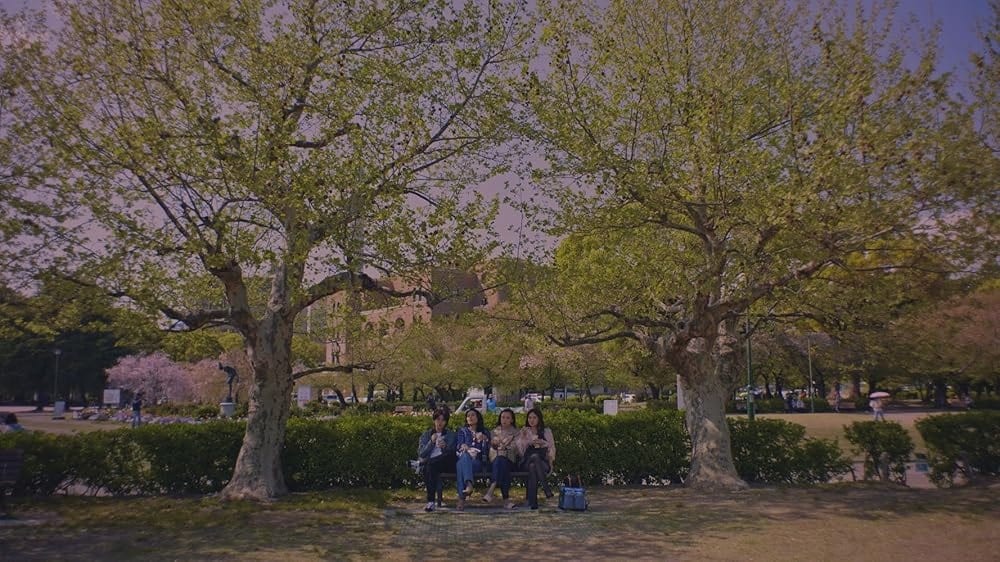
Meanwhile, in Midnight Girls, Villamor and her frequent collaborator, cinematographer Pao Orendain, characterize the city, particularly Nagoya, as a landscape of hope: shots of the city that never sleeps, crowded crossings from day to night, and towering buildings that stand as visions of progress; a promised remedy for the hardships endured by Vicky, Paris, Saki, and Wanna.
Yet, upon closer look, this very urban expanse is what provides them with their masks, causing them to lose sight of who they are outside the confines of their labor. Unlike Sid & Aya, where the city is shot statically to betray its rapid movement, Midnight Girls is captured almost entirely handheld. Orendain’s camera establishes a raw closeness to the characters' lives, operating as an active participant rather than a merely observational bystander to the unfolding scenes.
For instance, a breakdown occurs when Vicky, Paris, Saki, and Wanna completely lose control over their fates while the city engulfs them, and a confrontation ensues where Wanna unmasks them. The subsequent scene reveals Vicky in her apartment, gazing out at the cityscape. A moment that feels almost cathartic as the score swells to a deafening volume. Yet, instead of remaining static, the camera captures her via a handheld shot, training its focus on her troubled expression as the uncertainty of her life in Japan settles in. After a few moments, the camera pulls away from her, trapping her within the frame to suggest her deep imprisonment by the very city she clings to in order to sustain her family back home.
Moreover, this familial burden extends to Wanna, the daughter of a farmer who tilled land that was not theirs. The weight of what she has lost within herself begins to sink in as she continues to toil to support her family. In one poignant scene, as she experiences diasporic alienation, Wanna breaks down, confessing how much she misses her family and the farm. Her need to sustain them in the Philippines drives her to seize every opportunity, squeezing her entire day into working two jobs. As a result, her emotional labor has deeply changed her, turning the world into a place to be endured rather than lived in.
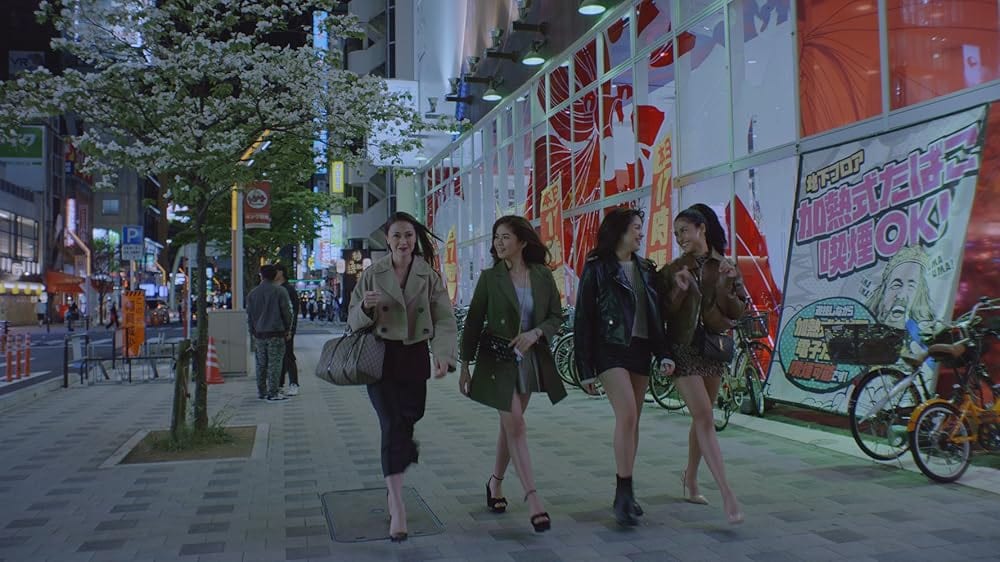
Nagoya has become a double-edged sword in the lives of Vicky, Paris, Saki, and most especially, Wanna. The labor power that serves as their leverage, while providing the sustenance for themselves and their families to keep going, also creates a contradiction within the very space they revolve in. For if it is life-sustaining, why is there still a need to look for other jobs?
And when emotional labor results in alienation, the disillusionment brought by a city characterized as a space of progress and hope becomes clear. The city of Nagoya has also become a monster that consumes dreams, even as it continues to feed workers—especially OFWs—the illusion that it will alleviate their suffering.
What undergirds this alienating experience is the socio-political milieu in which the film is situated. The film opens in 2009, the first time Vicky, Paris, and Saki set foot in Japan. Here, they are forced to undergo imitation weddings in order to stay much longer.
In retrospect, it was in the year 2009, under former President Gloria Macapagal-Arroyo, when a massive influx of labor migration to various countries occurred. Furthermore, labor migration data reached 1.43 million in that same year. During this time, the irony of having steadfast economic growth reveals the abuse experienced by OFWs. In the film, while the abuse of japayukis like Vicky, Paris, Saki, and Wanna is not explicitly depicted, the very alienation they experience in their care work and from the city itself serves as a blow to their existence as a diaspora.
Fifteen years later, as the film shows, precarity still persists. Looking at the context of the Marcos Jr. and Duterte administrations, the situation in the Philippines is vividly captured through the stories shared by Wanna after her first day in Japan. “It’s still the same, life just keeps getting harder and harder,” she says. Additionally, the film highlights the ongoing abuses faced by Filipino workers within the country, which ultimately results in the strike joined by Vicky’s son, Patrick (Zaijan Jaranilla).

Suffice it to say, this reveals an administration's hollow response to the people's needs, especially at the employment level. By co-opting and exploiting workers, particularly women. The existence of people like Vicky, Paris, Saki, and Wanna, then, is plunged into precarity. Their day-to-day lives in Nagoya are plagued by uncertainty because the city that they navigate, despite having laws that could protect their welfare, remains tainted by exploitation, ultimately leading to their alienation from their own labor.
Within this system, the care work that initially serves as their advantage becomes merely transactional. This takes a toll on their sense of self, suppressing the expression of their true feelings as their bodies are reduced to mere tools for survival. It is precisely this constant concealment of her oppressive conditions that estranges Vicky from her child. Furthermore, this alienation gives birth to a new persona: one where survival mechanisms take over, and everything, even the stripping away of their dignity, no longer seems to matter.
This is how Villamor reimagines Japan: a landscape riddled with contradictions that expose a double betrayal. While the homeland fails to provide for these women, Japan reduces them to mere economic tools, placing their very lives in jeopardy.
And while Villamor turns philosophical in Sid & Aya, Midnight Girls serves a realist tone in its narrative. As urban alienation knows no borders, as much as the labor that it entails, Midnight Girls tears down the disillusioning Japanese dreams that housed a lot of Filipina migrants.
But at the end of it all, as Villamor asserts in the film, this is what remains that the city will never be able to take away: the bond between these women, which becomes their foundation to keep fighting and to reclaim their destiny amidst the uncertainty of a country unfamiliar to them.
ALSO READ:
The 25 Highest-Grossing Filipino Movies of All Time
10 Great Songs From Filipino Indie Films
Lorence Lozano is a film critic and cultural worker from the Philippines. Their interests lie at the intersection of gender, politics, and space within Southeast Asian cinema.
View More Articles About: