Making Sense of the Post-Endgame Marvel Cinematic Universe
A debloating of Marvel's billion-dollar film legacy.
Published on Aug 5, 2026
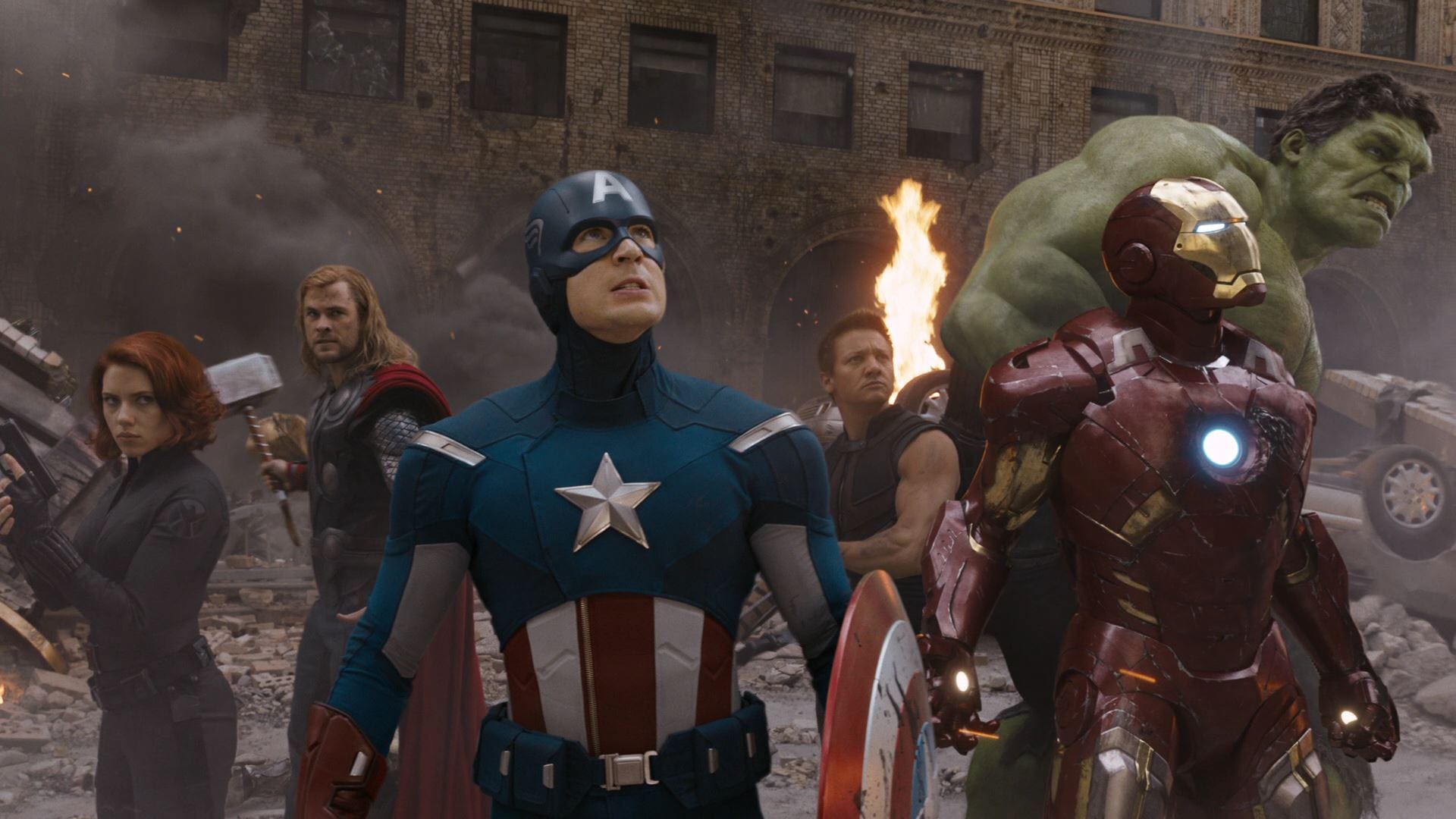
Here's a cerebral exercise for you: Think of the Marvel Cinematic Universe (MCU) in terms of the comics medium. The Infinity Saga is the encompassing crossover event, and each film in the saga is a single-issue comic. What films would be the main issues, and what would be tie-ins?
I'd say the core series are The Avengers (2012), Avengers: Age of Ultron (2015), Captain America: Civil War (2016), Avengers: Infinity War (2018), and Avengers: Endgame (2019). Supplemental tie-ins would be Iron Man (2008), Captain America: The First Avenger (2011), Captain America: The Winter Soldier (2014), Guardians of the Galaxy (2014), Guardians of the Galaxy Vol. 2 (2017).
It can be contested, but with these, you’d get a general sense of the overarching plot of the Infinity Saga without having to delve into all of the films. Other titles can be safely skipped.
When you tackle the Multiverse Saga, however, things get much more complicated. The MCU is the story of two structurally different sagas. It’s not hard to figure out which one’s a mess. Whereas the former saga comprises 23 films building and leading to a straight and simple conclusion, the latter is a web of disjointed narratives that seem to follow various paths leading nowhere.
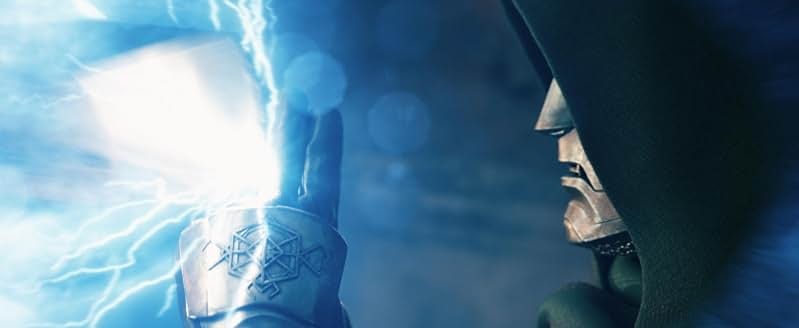
Like, what’s up with the Young Avengers? Add the fact that it has been derailed midway in its conception as Robert Downey Jr.’s Dr. Doom replaces Jonathan Majors’ Kang the Conqueror as the arching villain due to real-life controversies, forcing a major creative redirection. And whereas Thanos is a present villain developed with a MacGuffin-esque motivation, we have yet to glimpse our eyes on Dr. Doom past a cloak cameo, much less sense his motive.
Of course, the Multiverse Saga is not yet complete. Avengers: Doomsday and Avengers: Secret Wars, once released, will undoubtedly be important. It’s just that at this point in the saga, there hasn’t been a tentpole movie yet; no spine that holds the arching narrative together. If there even is one.
So far, the Multiverse Saga has 15 theatrical films (the latest being Spider-Man: Brand New Day). Not bad, but you also have 17 Disney+ live-action and animated shows (excluding the upcoming VisionQuest), 3 special presentations, the recently reincorporated 6 Netflix series, possibly all titles in Sony’s Spider-Man Universe and Fox’s X-Men Universe, and just about any Marvel outing ever. This article is an attempt to define and evaluate what makes an “essential” title in the Multiverse Saga. So it will strictly tackle titles released only by Marvel Studios (no Sony Spideys and Fox mutants, sadly). For this venture, I have to use different approaches.
Approach #1: The Doomsday Plot
This is a straightforward approach. Look at the characters in Doomsday. Who’s on it and who directly affects the story? From the original Avengers lineup, it looks like Thor and Steve Rogers are the only ones returning full time. Thor’s gone serious again following the events of Thor: Love and Thunder (2022), which sees Jane Foster briefly taking his mantle. Steve Rogers hasn't appeared since Endgame, while Sam Wilson took the mantle of Captain America as seen in The Falcon and the Winter Soldier (2021) and followed up in Captain America: Brave New World (2025).
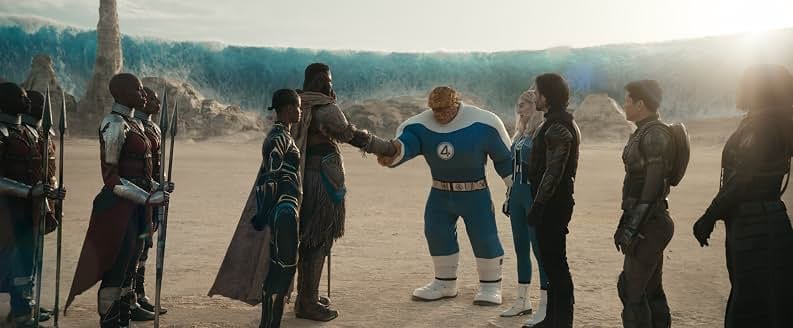
Following the death of T’Challa, Wakanda enters an era of turmoil. Nations pressure Wakanda over their vibranium. Shuri is pressured to find a new person to take on the Black Panther mantle. As the vibranium-rich secret underwater kingdom of Talokan is discovered, its ruler Namor blames and goes into conflict with Wakanda, as seen in Black Panther: Wakanda Forever (2022). Wakanda (along with Shuri, Okoye, and M’Baku) and the underwater kingdom of Talokan (along with its ruler Namor) are heavily featured in Doomsday trailers. How they fit into the story is still unclear.
Meanwhile, a variant of Loki (the one who escaped 2012 New York in Endgame) has taken leadership over the Time Variance Authority (TVA), a multiversal entity tasked with preserving the Sacred Timeline. The series Loki (2021-2023) provides a backbone for the mechanics of the Multiverse Saga. And it attempts to tie up the messy debacle that is Kang. It is expected that Loki and the TVA would have a major role in Doomsday and possibly Secret Wars.
If you fell off the MCU after Endgame, some of the cast are fresh faces. You have Shang-Chi, lead of Shang-Chi and the Legend of the Ten Rings (2021), a martial artist endowed with the power of the ancient relics known as the Ten Rings. He got those from his father, Xu Wenwu, the real "Mandarin," who leads the organization also called the Ten Rings. Thunderbolts* (2025) follows the eponymous team (later rebranded as The New Avengers), a group of anti-heroes organized by Valentina Allegra de Fontaine. It is Marvel’s answer to the Suicide Squad consisting of Black Widow’s sister Yelena Belova, Bucky Barnes, Red Guardian, U.S. Agent, Ghost, and Bob (aka Sentry). Most of these characters first appeared post-Endgame. Some fans may argue that Thunderbolts* can be considered a tentpole Avengers film.
And finally, you have the Fantastic Four. Two cinematic iterations have appeared before. The MCU’s version debuts in The Fantastic Four: First Steps (2025) as they face a more accurate depiction of Galactus. The team is Dr. Doom’s closest link to the MCU thus far, appearing in a faceless cameo in the post-credits scene, showing interest in Reed Richards and Sue Storm’s son Franklin. So far, it’s the slightest crumb of plot we have heading to Doomsday.
Core Titles: Loki (2021-2023), Black Panther: Wakanda Forever (2022), *Thunderbolts (2025), The Fantastic Four: First Steps (2025)
Supplemental Tie-Ins: The Falcon and the Winter Soldier (2021), Shang-Chi and the Legend of the Ten Rings (2021), Thor: Love and Thunder (2022), Captain America: Brave New World (2025)
Approach #2: The Multiversal Perspective
A looser and more philosophical approach. What is the Multiverse Saga about? Detractors would say the multiverse is just a big gimmick, a giant marketing stunt. It is doubling down on the concept of the cinematic crossover by incorporating virtually every Marvel film under one cinematic, uhm, multiverse. It is a fanboy’s ultimate wet dream.
This approach sees what’s “essential” not in story relevance but in delivering the hype. Martin Scorsese once compared the MCU to a theme park ride. The Multiverse Saga, if anything else, has proven the guy right. These titles are thrills over substance. It also proves another thing: that the concept of the multiverse is a creative wasteland (not unlike the TVA’s Void) where established characters and stories are used like toys stripped of history and dignity. All in the name of the box office.
In Spider-Man: No Way Home (2021), Marvel’s worst-kept secret, where Tobey Maguire’s and Andrew Garfield’s Spider-Men crossed over to swing with Tom Holland, fueled mania even before the film got to theaters. It’s a novelty cinema hasn’t seen before, but not as much as the thought of Sony Pictures and Marvel Studios partnering up. Original Spidey director Sam Raimi followed Maguire’s excursion as he directed Doctor Strange in the Multiverse of Madness (2022), featuring the MCU’s introduction of Reed Richards and Patrick Stewart’s Professor Xavier. It’s a feat that was impossible until Disney and Fox’s consolidation.
The multiverse reached a height in Deadpool & Wolverine (2025) when Hugh Jackman, who already bowed out of the perfect role, leaped over to the MCU to reprise Wolverine, who already had the perfect ending. He is joined by Dafne Keen’s X23, Wesley Snipes’ Blade, Jennifer Garner’s Elektra, and Chris Evans’ Johnny Storm. And a realization of a casting that never happened—Channing Tatum’s Gambit. They’re surrounded by cameos of supporting villains all throughout the Fox X-Men films.
They're not the same characters that we’ve known. They’re bastardized variants, save for Ryan Reynolds’ Deadpool. For my love for these characters, I’m thankful that they are. In my head canon, the same is true for Tobey's and Andrew’s Spidey’s and their villains, and those versions of themselves continue on with their multiverse-less lives somewhere. Because why else would Disney pluck them from their respective reveries? To show that Disney can? Why cast RDJ as Doom? Because with the multiverse, no rules can say otherwise.
The animated series What If…? (2021-2024) is the MCU’s playground in fully exploring the multiverse. It’s fairly inconsequential to the Sacred Timeline and leads into its own bubble event. But if you want to immerse yourself in Marvel’s conceptualization of the multiverse, it’s a perfectly fine title to binge.
And then, of course, we go back to The Fantastic Four: First Steps (2025) because the MCU’s First Family did not come from the Sacred Timeline. We’re not sure yet if Dr. Doom comes from the same universe as this Fantastic Four. But the film represents another problem with this era of the MCU—that the multiverse becomes a hindrance in telling compelling standalone stories with iconic characters. Because you have to tie it all together somehow! The Disney+ shows are actually an antidote to this. WandaVision (2021), Moon Knight (2022), Ms. Marvel (2022), She-Hulk: Attorney at All (2022), and Ironheart (2025) get the tone and character of the show they’re representing. Whether it’s your jam or not is on you. “Woke” is an anachronistic criticism for material that’s always been what it is. But as much as I think they are underrated (read: the shows are better than the films!), they get the usual criticism of “not being relevant to the grander scheme of things.”
Core Titles: Spider-Man: No Way Home (2021), Doctor Strange and the Multiverse of Madness (2022), What If…? (2021-2024), Deadpool & Wolverine (2025), The Fantastic Four: First Steps (2025)
Approach #3: To Hell With It
This one is simple. Just skip it all and watch Avengers: Doomsday blind! Sequels to iconic comic crossover events are usually not as popular as the original, anyway. Jumping straight to Doomsday from Endgame may not be as jarring.
Or, just watch the films with the characters you are largely invested in. A controversial opinion: Chloé Zhao’s Eternals (2021) is a favorite MCU entry of mine because it’s largely unconcerned with the universe it lives in. And the MCU's been in need of gambles for a long time now. Eternals is a bad MCU movie, maybe, but an interesting avant-garde superhero film in itself. A less controversial opinion: James Gunn’s Guardians of the Galaxy Vol. 3 (2023), the epic finale to the trilogy, is a great MCU movie (and just movie in general!) through and through and is one of the banner’s best offerings. The street-level bubble Daredevil: Born Again (2025-present), extending to all the Netflix shows, resides in also shows promise. Are all these “essential” to the arching saga? No. But the exclusion feels wrong.
Ant-Man and the Wasp: Quantumania (2023) is very important to the Kang-era Multiverse Saga. Yet, its inclusion in any essentials list also feels wrong.
Right now, Spider-Man: Brand New Day (2026) is raking in staggering box-office numbers and breaking records. After three films, Tom Holland’s Spidey finally lives his own story away from the weight of a shared universe (or multiverse). The audience will show up for characters and titles they care for, not because they have to check an item off a list just to catch up to the next big thing.
View More Articles About: