'Mortal Kombat II' Delivers Boredom a Fatality
Video game movies should never be judged on high standards, but Mortal Kombat II still sets the bar for how video games should be adapted into film.

by Zach Yonzon
Published on May 7, 2026
Mortal Kombat came out in 1992, a fighting game that came out a year after Street Fighter and gained notoriety for its graphic violence, notably the gruesome finishing moves called Fatalities. It was so violent that the US government used it, among other games like Doom, as examples of how video games were a bad influence on the youth during congressional hearings in 1993. You can’t pay for better marketing than an entire nation going into a panic over your video game, so Mortal Kombat became an indelible part of the cultural zeitgeist.
It’s a game about bashing your opponent’s head in, tearing them in half, or ripping out their spine. It’s not Lord of the Rings. Any expectations of a Mortal Kombat movie should be, at best, set to the level of seeing creative on-screen violence and well-timed one-liners. The first one checked some of those boxes and automatically added some dramatic gravitas by casting Hiroyuki Sanada as Hanzo Hasashi or Scorpion. But the first film faltered by putting a new, original character, Cole Young (Lewis Tan), made just for the movie, front and center. Fans of the franchise had no emotional attachment to a brand new character with no known backstory, finishing moves, or catch phrases. It was good, it was fun, but it wasn’t great. It was an improvement over the 1995 movie with a horribly miscast but impossible not to love Christopher Lambert as Raiden, but that’s probably a function of better special effects than actual cinematic superiority.
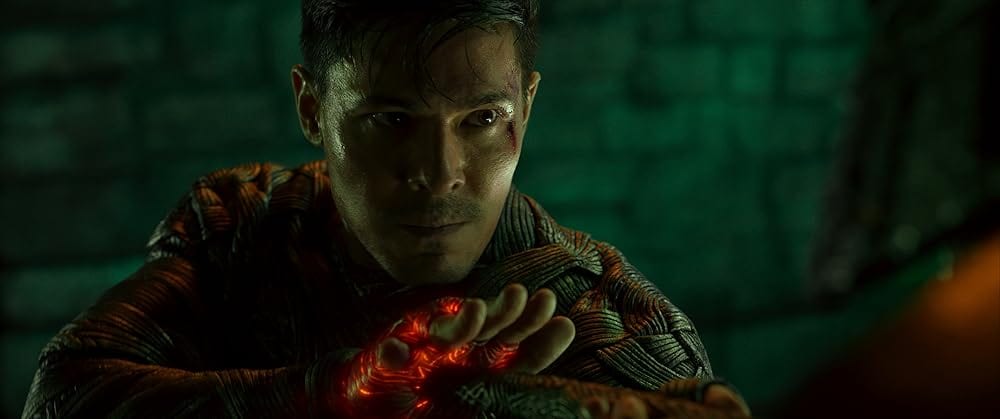
Mortal Kombat II is another animal entirely. The trailers and marketing material make it seem like fan-favorite Johnny Cage (Karl Urban) is the main character, but that’s only half-true. The reality is that Mortal Kombat II is an ensemble movie that juggles multiple characters and defies expectations by giving each one ample focus and a relatively satisfying arc. Cage is only one of two main characters, the other being the game’s most popular female fighter, Kitana (Adeline Rudolph). The film actually opens with a young Kitana, princess of Edenia, who watches her realm become subjugated and enslaved by Shao Khan’s (Martyn Ford) Outworld. Johnny and Kitana’s storylines intersect and intertwine throughout the film, which manages to bring in Mortal Kombat’s multiple worlds into focus.
Once again, Earthrealm is in danger, and its fate will be determined by combat, in a unique tournament consisting of select fighters from each realm going head-to-head until one side no longer has any champions to fight for it. Despite the brutality or violence, Mortal Kombat actually seems like a perfectly reasonable alternative to fighting wars. As the film notes, the size of one’s army doesn’t matter; the outcome of a major conflict is determined by a contest of champions. This would be like having geopolitical disputes settled through the Olympics, if the Olympics had athletes who could blast fire from their fists or shoot laser beams from their eyes.
Unlike the first film, which took the subject matter a little too seriously, Mortal Kombat II leans heavily into fan service and humor. When characters throw insults like, “Voldemort’s nutsack,” you know you’re in for a good time. Johnny Cage gets the lion’s share of the punchlines and comic relief, but Kano ( Josh Lawson, who’s an absolute riot in St. Denis Medical) gets absolute gems of one-liners, too. Between Cage, Kano, and the surprisingly hilarious Baraka (CJ Bloomfield) — you’ll need to watch the film to understand — there’s enough laughter to take audiences from one bloody fatality to the next. This is what Mortal Kombat II gets right: balance. There’s the right amount of humor, a lot of action, a smattering of violence, and the welcome surprise of a cohesive, if convenient, story.
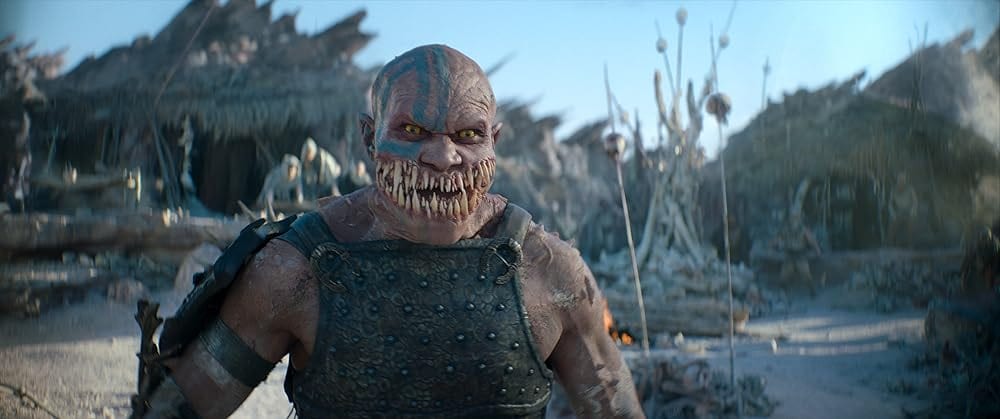
Mortal Kombat II course-corrects without overcorrecting, bringing the focus back to what fans of the franchise want and expect. There’s never a dull moment in the film, and every interaction is important in some way. It’s still not Citizen Kane or The Godfather, and it doesn’t even try to be, which is why it works so well. Mortal Kombat II knows exactly what it is — a movie adaptation of a video game where you bash your opponent’s head in, tear them in half, or rip out their spine, and that’s what makes it one of the most fun movies of the year. Fans of the game will have a rockin’ good time, and every Easter egg and fan service reveal is a genuine fist-pumping moment. In fact, Johnny’s journey is a loose metaphor for the film itself, unlocking its true potential only when it embraces its role as a product of Hollywood, an unapologetically cheesy, funny, old-fashioned relic of the past that still gets its moment in the sun.
Video game movies have a low bar to clear, but Mortal Kombat II exceeds expectations by listening to what fans want and avoiding making the same mistakes. Unlike a few other rabid fandoms, where the loudest, most vocal few tend to lean towards the unsavory spectrum of online chatter, Mortal Kombat fans just want a film that feels a lot more like the game. In that regard, Mortal Kombat II definitely delivers. Moviegoers looking for the perfect summer fare can’t go wrong with a screening of the season’s most enjoyable, fatality-filled romp.
ALSO READ:
From Arcade to Blockbuster: How 'Mortal Kombat' Set the Bar for 30 Years of Fighting Games
How 'Mortal Kombat II' Got Things Right The Second Time Around
Zach really, really, really loves films.
View More Articles About: