'Rental Family' and the Inexorable Loneliness of Being Human
The Japanese-directed film featuring Brendan Fraser as an actor, filling different roles in people’s lives, is a poignant reflection on the human need for connection.

by Zach Yonzon
Published on Jan 23, 2026
Is there an actor today who radiates gentleness and vulnerable affability more than Brendan Fraser? Rental Family, a film that spotlights the rather unusual Japanese business model of providing actors to stand in as friends, family, or colleagues in a person’s life, might not have worked with any actor other than Fraser, whose singular earnestness and sorrow-touched eyes tell you all you need to know about the film. Human beings are lonely creatures, and we need each other in ways that aren’t always readily available or accessible.
Japanese director and co-writer HIKARI, who directed three episodes of the Netflix series Beef, crafts a sublime examination of our collective solitude by focusing on an industry borne from our need to address it. The opening scene of Rental Family is one of the most achingly melancholic images in a film that’s laced with aching and melancholy. Philip Vanderploeg (Fraser), an American actor in Japan, observes different people in their respective apartments, living disparate lives in boxes stacked above and beside each other, an unsubtle metaphor for how, despite our proximity to one another, we all exist apart. It’s a profoundly lonely yet extremely familiar image to anyone who, on a random nighttime commute home, has taken the time to look into the windows of homes.
The rental family service began in Japan in 1991 by Oiwa Satsuki, founder and CEO of Japan Efficiency Corporation, who began the practice of renting out professional actors to clients to fill roles in unsatisfactory relationships. Much of it has to do with the Japanese obsession with keeping up appearances, a concern many Asian families are familiar with. Mark Meily’s Crying Ladies features a similar, though far less intensely personal, service of hiring professional mourners to pretend to grieve for the departed and give the appearance that they were loved greatly in life. Rental family services offer this, too, among others, in a broad spectrum of hourly-rate relationships.
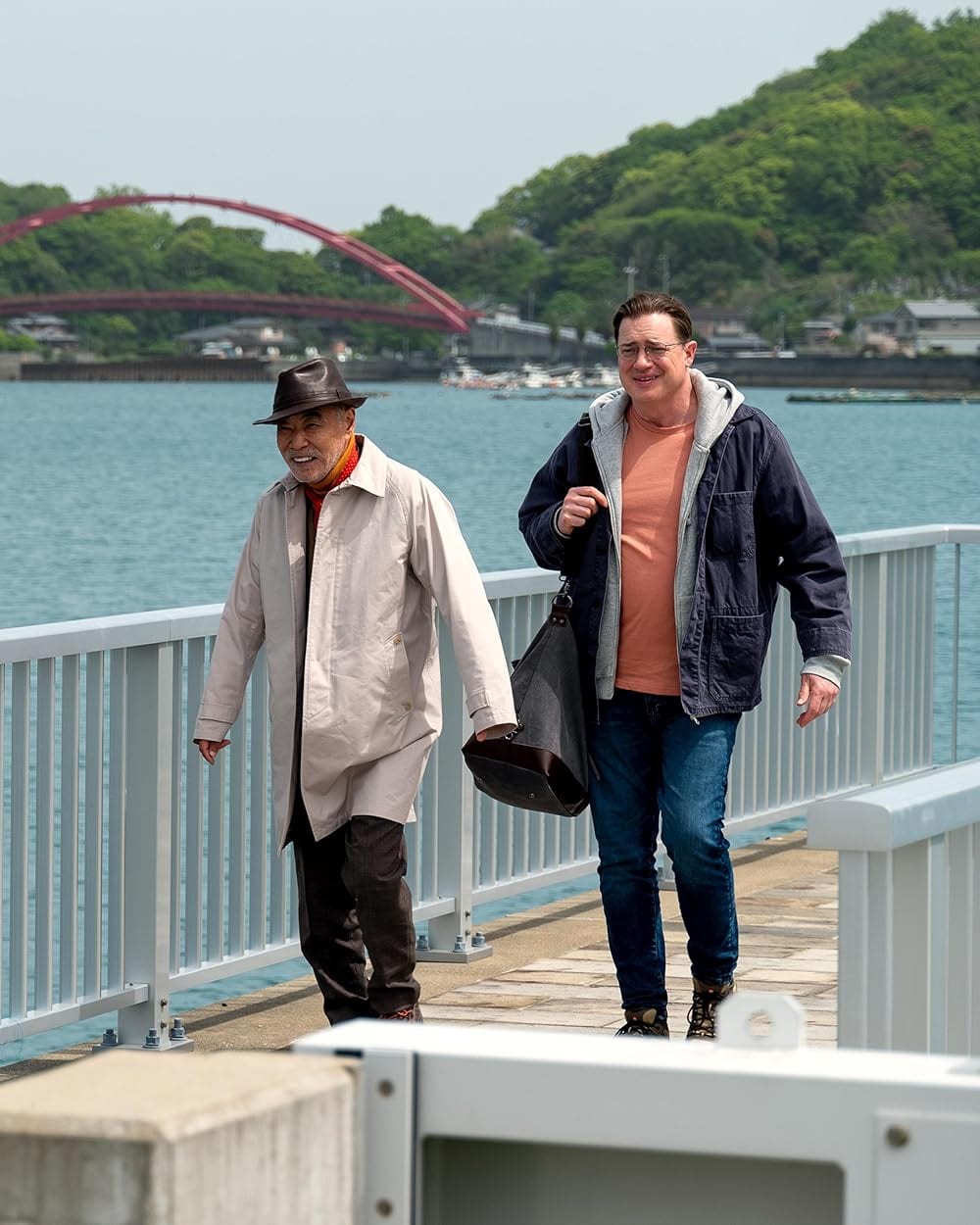
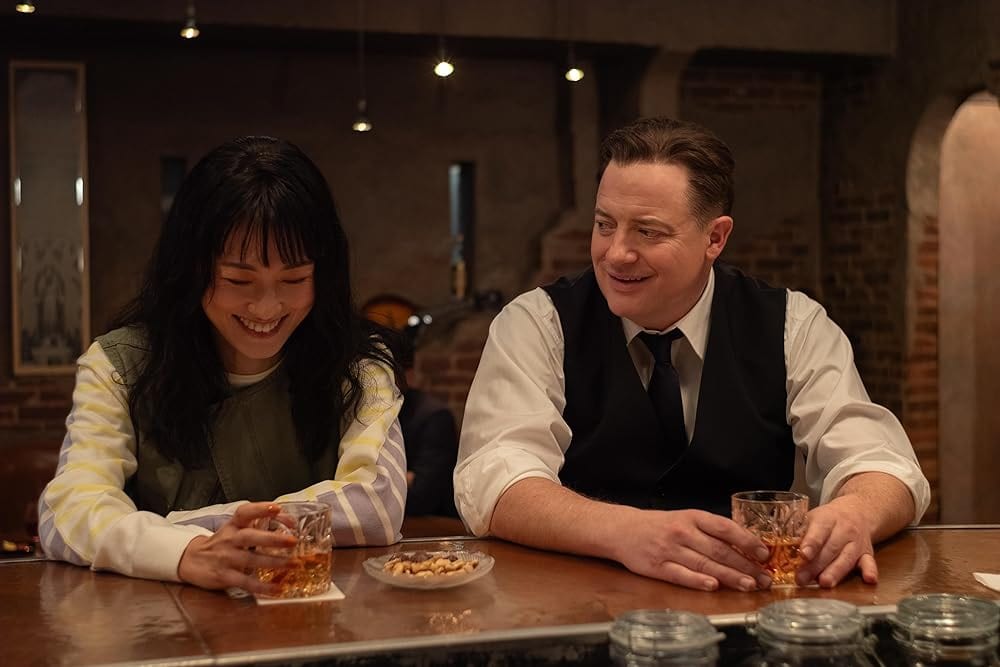
In many ways, it’s not much different from sex work, a fact that HIKARI and her co-writer Stephen Blahut astutely point out when Philip, exhausted after playing the groom at a wedding in his first assignment, recounts his day to his own hourly-rate companion, Lola (Tamae Ando), and she responds by telling him that they have similar lines of work. He’s stunned by her assertion that he has the harder job because her work is just physical, whereas he needs to foster an emotional connection. It’s but a brief moment in Rental Family, but one that underscores the filmmakers’ nuanced understanding of the subject. It was also a sobering reminder to Philip that his work, a job he almost backed out of because of his reservations about its inauthenticity, can be truly important and that he’s also paying to fill a need in much the same way.
This is the crux of Rental Family. Almost all human relationships are transactional in some form, the only variance being the currency that’s in trade. Authenticity is sometimes secondary to necessity, and sometimes we take far more than we give. So why not pay actors to play roles of people who get the short end of the relationship stick? Japan’s culture can sometimes be repressive, even constrictive, stigmatizing mental health and creating a market for unconventional solutions. Rental Family even touches upon Japan’s deep-rooted misogyny by featuring one of the industry’s most profitable services: the apology. Cheating husbands hire an actress to play the role of a contrite mistress who then apologizes to their heartbroken wives for leading them astray. The woman takes all of the blame and part of the shame, allowing the man to potentially repair his fractured marriage while keeping the identity of his real mistress a secret. This would be a gangbuster business in the Philippines.
Not all services are as ethically deplorable, of course, but they certainly come with their own conundrums. Rental Family revolves mainly around two of Philip’s roles, the first as the father of Mia (Shannon Mahina Gorman) a young half-Japanese girl whose single mom feels that the presence of a father will improve her chances of being accepted to an elite private school; and then as a reporter writing about the life of Kikuo Hasegawa (Akira Emoto), a retired legendary actor who feels the world has forgotten him. Kikuo’s daughter hires Philip to keep her father’s fading memory engaged and to keep him company. Unlike his other roles, from cheerleading a karaoke enthusiast in need of validation to playing video games with an introverted recluse needing companionship, neither Mia nor Kikuo are aware that he’s a hired actor.
Pretending to be someone’s father is an ethical and emotional minefield, but it isn’t without precedent. In an Atlantic interview, the founder of Family Romance, Ishii Yuichi, relates how he once played the father of a 12-year old who was bullied for not having a dad and has continued to play the role until his client reveals the truth. In Rental Family, Philip’s relationship with Mia has a predetermined end, as his main purpose is to improve her chances of getting into a good school and not necessarily to act as a parent. But the contractual nature of this arrangement is what makes the time they spend together even more poignant and tender. Gorman’s Mia is extremely lovable, and naturally, Fraser’s Philip, who grew up without a father, settles quickly into his role and the two grow fond of each other.
Likewise, Philip’s role as a faux reporter chronicling an old actor’s life evolves into friend and accomplice. Emoto, a celebrated actor in Japan with a considerable resume, plays a version of himself who’s aware of his mortality and fading memory. There’s a delicate poetry in seeing actors playing actors, and HIKARI weaves a thoughtful tapestry that shows us the threads that connect us to one another. Even if Philip is only playing a role, there’s an authenticity in the connections he makes. Fraser is luminescent, playing the fish out of water with a relatability that draws audiences into an unfamiliar world and transforms it into something we recognize. As mysterious and different Japan is to outsiders, or gaijin, like Philip, our yearning for others is the same.
Philip’s boss, Shinji (Takehiro Hira), tells him that his acting job is an opportunity to play a truly meaningful role. While it’s certainly true, Philip pours so much of himself into his work that he manages to transform the lives of Shinji as well as his fellow actor and co-worker, Aiko (Mari Yamamoto), in surprising and unexpected ways. Rental Family is a beautiful and quiet film that lays bare the loneliness of human existence and the ways by which we seek to address it. In this vast world, it pays to be reminded that, at the end of it all, all we have is each other.
Rental Family is now showing in Ayala Mall cinemas.
ALSO READ:
After Two Decades of Struggle, Brendan Fraser Is Back
The Comeback Is Complete: The World Celebrates Brendan Fraser's Oscar Win
Zach really, really, really loves films.
View More Articles About: