'Status: Rejected' from This Year's Cinemalaya Shows How Life Blossoms at Any Age
Esquire Philippines sat down with the youngest director in this year's Cinemalaya festival.
Published on Aug 11, 2026
This article contains spoilers for Status: Rejected.
“Walang pinipiling edad ang pamemelikula.” This is the parting word of film director Vahn Leinard Pascual during his interview with Esquire Philippines. It’s the heart of our whole conversation.
His debut feature-length film Status: Rejected is one of 9 films in competition in this year’s Cinemalaya Philippine Independent Film Festival. He’s the youngest director in his batch, having only graduated from college last year. “Sobrang surreal na maging part ng batch na ito kasi grabe ‘yung kasabayan ko, mga profs, Palanca winners,” admitted Pascual.
Status: Rejected’s selection came as a surprise to Pascual. He submitted three concepts to Cinemalaya, two of which are reworked expansions of his previous short films (one of these two was his thesis film). What got accepted was the fresh concept that would become Status: Rejected.
Pascual had to work with producer Fea Fortuna (also new to the feature-length game) in every stage of production. Their guiding question was, “Should we work with veterans or with our peers? ” What comes is a process all filmmakers face but what they must face twofold: polishing the script, pitching for additional funding, and facing rejections after rejections. Doubt from others is just a reality they had to contend with as beginners.
Eventually, they found partners in producer Micah Tadena, Clever Minds Inc., and Black Cap Pictures. They’re collaborations built from relationships they had. Even if they wanted to make a feature with peers, they had to compromise with the support and guidance of veterans. "It takes a village to mount a feature,” Fortuna confided.
Fiction Mirrors Reality
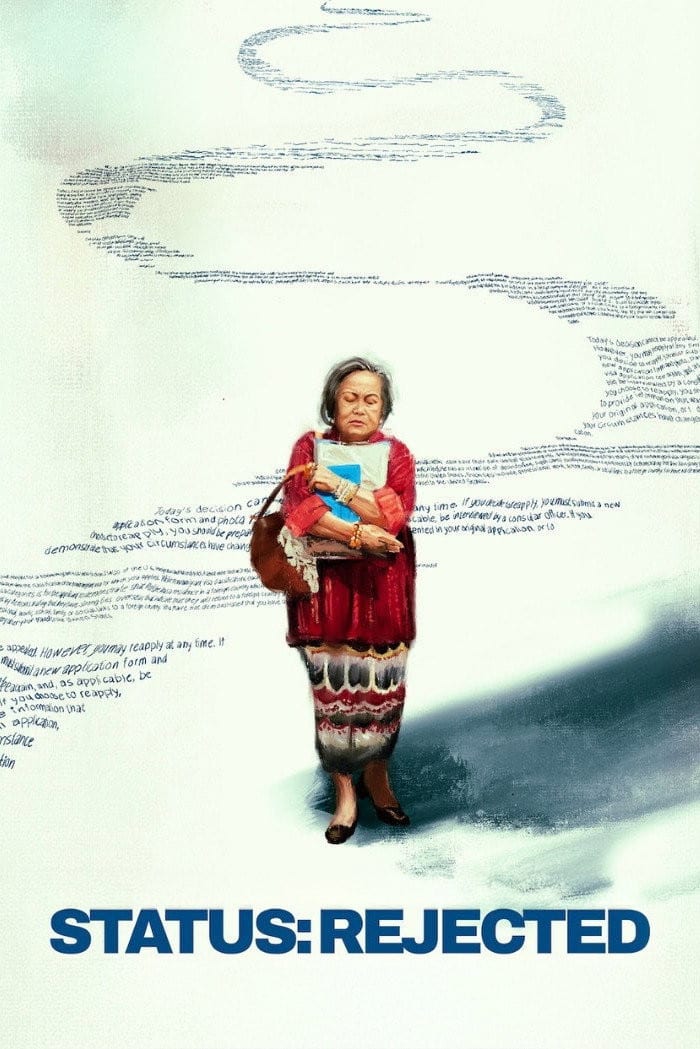
Pascual’s hardships as a young director contrast with those of his main character in Status: Rejected. Biring (Ruby Ruiz) is an elderly woman made to feel like a burden by her daughter Anna (Alessandra de Rossi), whose generational trauma extends to Biring’s granddaughter Sophia (Yani Villarosa).
Biring finds comfort for her loneliness through Steve Johnson, a faceless American social media friend that romances her in a way that makes her feel young again. The film has a serious subject matter laced with humor all throughout. In an empathic scene where Biring scans her body parts in a photoscanner to show Steve her aging form, absurdity and gravity harmoniously clash. It’s a scene that hits the core of Biring’s turmoil. For who could Biring be past the number of her age? When Steve Johnson’s affection turned out to be a love scam, Biring’s second coming-of-age crashes down. She then has to face the music with Anna.
Status: Rejected is about the illusory lies of the American dream in the perspective of the colonized; the pervasive loneliness brought by late-stage capitalism; and the antidote that is community. The film is tight and concise, ending in a hopeful shot at reconnection. The editing can be credited to Che Tagyamon. The screenplay can be credited to three peers: Pascual himself, Jaymar Santos Castro, and Ivan Villacorta Gentolizo. In a platform where messaging can be contrived and where films say entirely different lessons from what their filmmakers preach, due to the circumstances of production and less so the skills of creatives, clarity is a tall order to achieve. And achieved, the film did.
Pascual says the material is close to his heart. It’s culled from the experience of his own grandmother. The tenderness shows in how he handles Biring—a human with her shortcomings, but a human with dignity nonetheless. Pascual’s previous films tackle queer topics. The two concepts he submitted with Status: Rejected were queer. When asked how he approaches Biring he answers, “Lumaki kasi ako na babae ang mga nakapaligid sakin. Naniniwala ako na ang kwento ng kababaihan at queer people ay maraming similarities.”
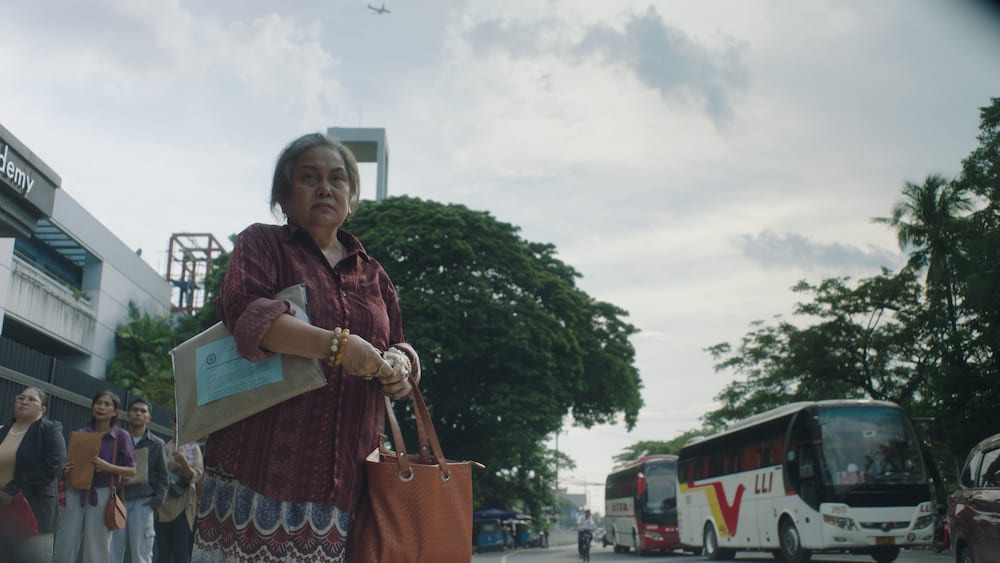
As for directing veterans like Ruiz and de Rossi, Pascual is very honored and thankful for how they take initiative in listening and following his vision. The same goes for all cast and crew. On set, Pascual attests everybody treats everyone as equals. Age be damned.
“Nakaka-overwhelm talaga ‘yung buong production. Pero naging sanayan lang din siya,” said Pascual. “Kasi kailangan ko siyang matapos, kailangan ko siyang magawa, kailangang hindi ko mapahiya ‘yung mga naniwala sa akin.”
One of the biggest hurdles of the production is mounting the airport scene. It was a looming obstacle even back in conceptualization because it’s a non-negotiable in the story. Their work around? A different establishment was dressed as if it were an airport. Aside from the film’s production designer, Marielle Hizon, Pascual has a background as a production designer working in student prods. That experience became very handy. Another asset was Martika Ramirez Escobar as cinematographer, who found angles that favor the illusion. Ramirez is also responsible for guiding our sight through the film’s textured and lived-in world, courtesy of Hizon.
Thus is the story of two people in contrasting stages of their lives finding their space to belong. But maybe it’s as simple as believing that you do. For Pascual, who had to face multiple rejections before just to get to this batch, it’s believing that, “Rejection is redirection.”
View More Articles About: