'The Bride!' Gives a Classic Character the Backstory She Deserves
Maggie Gyllenhaal’s take on one of horror’s most iconic characters is fresh, bold, and at times even a little fun.

by Zach Yonzon
Published on Mar 6, 2026
In the opening scene of James Whale’s 1935 masterpiece The Bride of Frankenstein, Lord Byron revels in astonishment at how Mary Wollstonecraft Shelley was able to write Frankenstein. “I don’t know why you think so,” she responds, “what do you expect? Such an audience needs something stronger than a pretty little love story.” The actress who played Mary Shelley, Elsa Lanchester, also played, uncredited, the titular Bride of Frankenstein or ‘The Monster’s Mate". Despite being in the title, the Bride actually only appears in the film for a few minutes in the final scenes, more of a plot device than an actual character, and even then gets more focus than in the book, where Victor Frankenstein destroys her body before it’s even finished.
Shelley wrote Frankenstein on a dare among herself, her husband, poet Percy Bysshe Shelley, and their friend, the poet Lord Byron. Both men came up with nothing or nothing of note, while Shelley ended up writing one of the most well-known works in English literature and is considered the first true work of science fiction. Shelley’s audience, ostensibly both of the men, did indeed need something stronger than a pretty little love story — unfairly considered the only domain for female writers at the time — but Frankenstein is as much about love as it is about anything else. The monster’s loneliness is an integral part of his character, and he sought to soothe that isolation by asking his creator for a mate. The fact that Victor denied him this solace is the primary driver for his rage, and Whale explores this theme more fully in the film, but the story remains centered on Frankenstein’s monster.
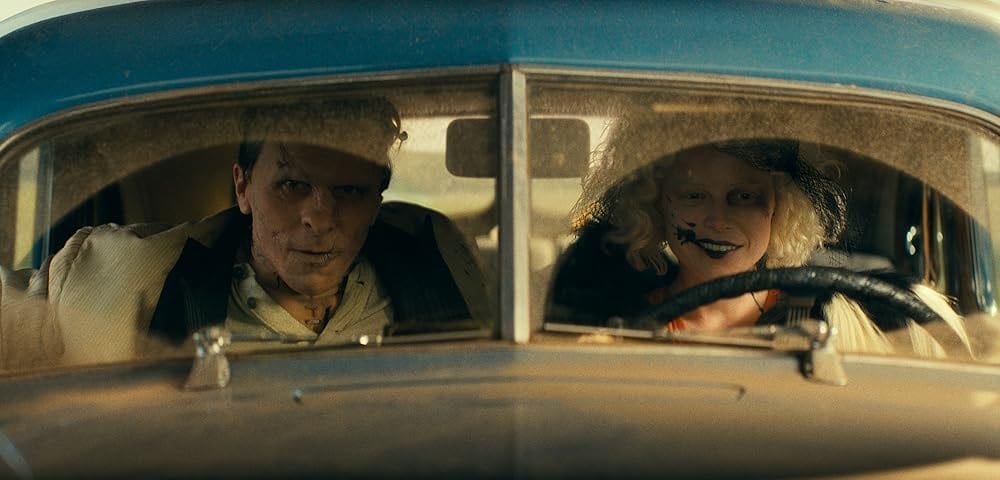
Writer and director Maggie Gyllenhaal’s The Bride! is a sequel of sorts that’s set in 1930s Chicago, prefaced by the otherworldly apparition of Mary Shelley telling audiences that a love story is the most terrifying one of all. This time around, the Bride gets her due as the story revolves around her instead of Frankenstein’s monster. Jessie Buckley plays both Shelley and the Bride, a nod to the original film; while Christian Bale is the monster, dubbed Frank. Gyllenhaal transposes the story to America’s mob era, a time during the Great Depression when organized crime and outlaws thrived. Basically, a time of monsters.
Two monsters, in particular, stand out as the likely inspiration for Gyllenhaal, the outlaws Bonnie Parker and Clyde Barrow, whose criminal exploits have often been romanticized in pop culture. The Bride! is an unapologetic homage to 1967’s Bonnie and Clyde with Faye Dunaway and Warren Beatty, a watershed moment in American cinema that rewrote the rules for the depiction of on-screen violence. The pair’s dramatized death scene is one of the most shocking and bloody moments in cinema history, which makes it just a little bit ironic that the execs at Warner Bros — incidentally the same studio that produced Arthur Penn’s landmark film — reportedly asked Gyllenhaal to tone down the violence after early screenings.
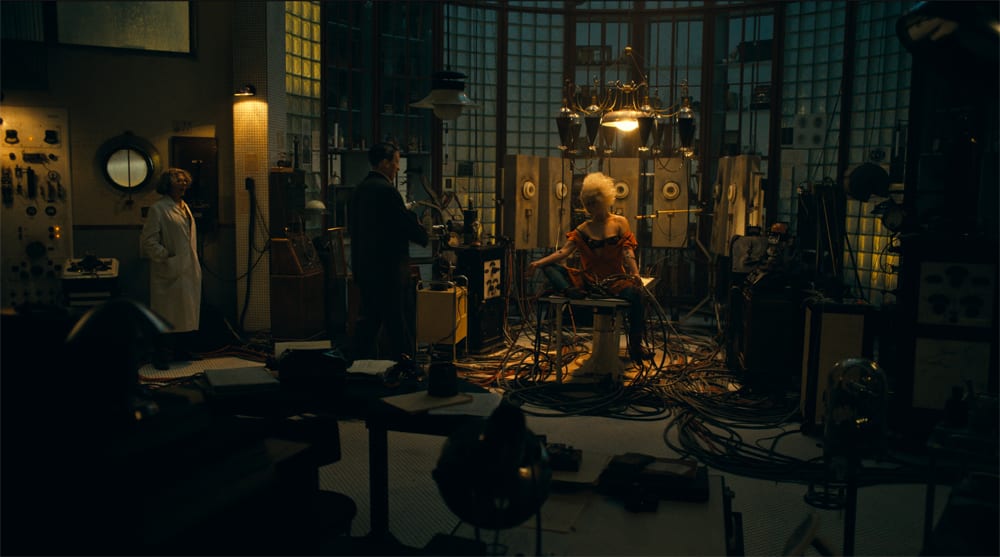
Make no mistake, The Bride! is bloody and violent, garnering a relatively rare R-16 from the MTRCB. But it’s a mere glimpse into the actual physical and sexual violence that women are subject to in the real world, themes and issues that Gyllenhaal wanted to bring attention to, at times with the absence of any subtlety or elegance. At one point, the phrase, “me, too!’ is repeated multiple times, and it’s uncomfortable not because the issue is uncomfortable but because saying it out loud in a film that tries to bring attention to sexual violence against women robs it of its power.
The Bride! also shares DNA with Oliver Stone’s own homage to Bonnie and Clyde, a love story between mass murderers, 1994’s Natural Born Killers (curiously also from Warner Bros). The opening scene, where a dancing Mallory (Juliette Lewis) is sexually harassed, echoes in The Bride!, where the Bride dances with men in a club as they run their hands lasciviously all over her body. When they overstep their boundaries and harass her outside the club is when things get truly ugly. The Bride! also pays homage to Stone’s intercut of black and white, with all of Mary Shelley’s narration in a ghostly, colorless void, as well as Frank’s escapist imaginings into the films of his favorite actor, Ronnie Reed (Jake Gyllenhaal), the movie’s Fred Astaire analog. Frank even tries to name the Bride ‘Ginger’, and if the reference weren’t clear enough, she says, “like Ginger Rogers?” The moments when the film can’t resist being too on the nose are its weakest.
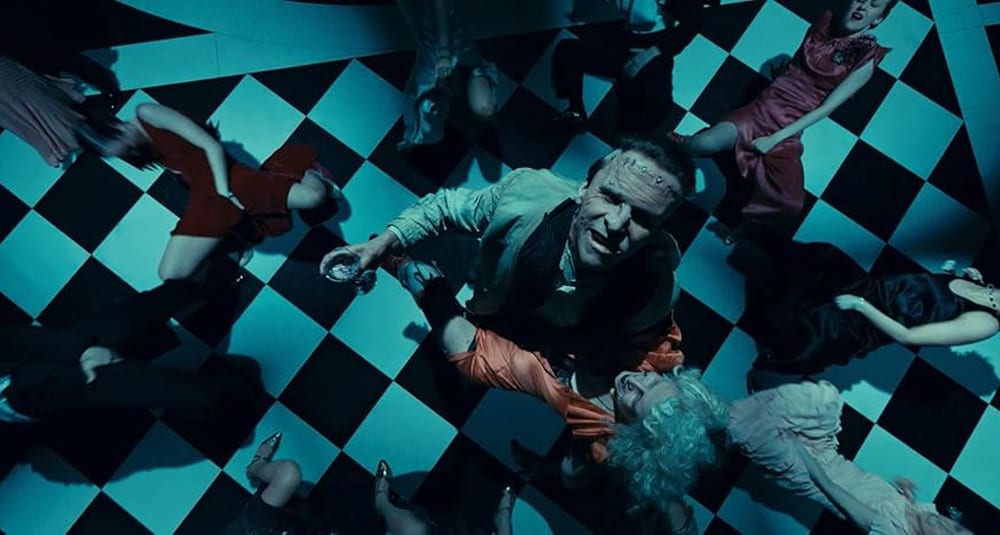
On the other hand, the unsaid references are its best, such as the Bride’s flapper-inspired orange outfit, which is a direct homage to Faye Dunaway’s warm tones in Bonnie and Clyde. Even the tan car that the pair use is a mirror of the infamous 1934 Ford V8, where the psychopathic lovers were killed. When the Bride asks Frank what her name was before she died, he lies and tells her it was Penelope, famous in Greek mythology for her enduring loyalty to her husband. In reality, it was Ida, who was a woman subject to the whims and wiles of men, and if there was any question at all what Gyllenhaal’s message was, a man demands her to eat an oyster and say, “yes, please,” in the opening scenes.
The Bride establishes her autonomy and agency upon her resurrection, contrasting it with her powerlessness in life. Gyllenhaal borrows the phrase, “I would prefer not to,” from Herman Melville’s Bartleby, the Scrivener, a declaration of passive resistance that’s more powerful than a simple ‘no’. The Bride issues this refrain throughout the film, a polite abstention from participation rather than a straight-up rejection, and in opting to opt out, defines true freedom of will. And there is no greater exemplar of the exercise of freedom than choosing to love.
The Bride! reminds us, shows us, that love can drive us to be monstrous creatures, but also that we are worse with its absence. Unlike Bonnie and Clyde or Mick and Mallory, the Bride and Frank aren’t inherently monstrous, murderous, or destructive, and unlike the other two couples who are physically beautiful, Frank, at least, is a grotesque assemblage of discarded parts. When Frank first lays eyes on Ida’s corpse, he tells the mad scientist Dr. Euphronious (Annette Bening), “she’s too beautiful,” and wishes to find a less comely specimen to match his terrifying visage. But love goes beyond flesh and death, and certainly beyond beauty. The Bride! is what Todd Philip’s disastrous Joker: Folie à Deux could’ve been, a deconstruction of a descent into madness, a portrayal of love between monstrous creatures who experience schizophrenic episodes. In fact, the Bride inspiring copycats who declare their violent autonomy in ghoulish, black make-up is actually very Joker-coded. Gyllenhaal’s The Bride! isn’t without its flaws, but it’s bold and audacious, the newest jarring chapter in a tradition of monstrous couples who leave destruction in their wake.
ALSO READ:
Let's Talk About The Bleak State of Sci-Fi Films in the Philippines
The 11 Best Sci-Fi Novels That You Haven't Read
Zach really, really, really loves films.
View More Articles About: