The Team Behind 'Clayface' Answers Melting Questions
The unexpected horror entry from the DCU is set to hit the screens just in time for Halloween.

by Zach Yonzon
Published on Oct 9, 2026
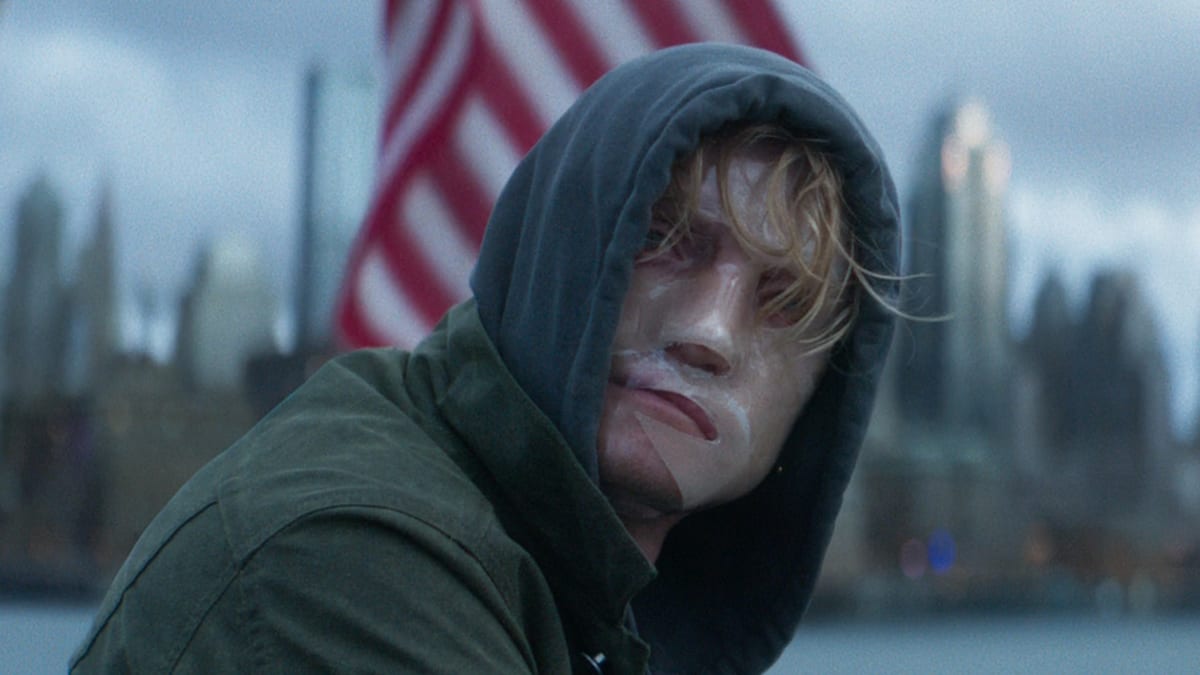
Clayface is an upcoming body horror movie based on a classic Batman villain from the comics that’s just gotten an R-18 Rating from the MTRCB. Director James Watkins, along with lead Tom Rhys Harries and co-stars Naomi Ackie and Max Minghella, sat down with members of the press to answer some questions about a film that, according to some Internet randos, “nobody asked for,” but actually looks poised to surprise horror fans in a year loaded with excellent horror films.
Body horror has a very rich and elevated history. We had the late, great David Lynch, and then there’s Cronenberg, and of course, the GOAT, John Carpenter's The Thing. Body horror has had a resurgence recently, but who were your inspirations, if any, when making this particular body horror film?
James Watkins: Probably the biggest inspiration was Cronenberg. The Fly was such a titanic film in terms of how he grounded the world, how he made the science believable, how a man turns into a fly—or a “brundlefly”—and we buy into the journey, and also the investment of the characters. So, how, you know, Geena Davis and Jeff Goldblum, how their relationship humanized us. And so, the heart, the horror, and the humor, I suppose, was something that we all aspired to emulate.
Max Minghella: I think we want to be careful, though, of this film, because it isn't—I wouldn't actually weirdly describe it as a body horror movie, first and foremost. It really feels like a kind of thriller to me, and like a character-driven thriller, and I can understand those comparisons to other movies in this space, but it feels so different, and when I think about it, I think much more of, weirdly, something like Heat, or something. Yeah, it's much more like a gritty crime thriller, I would say, so I only say it because I don't want people to go in with the wrong expectations. I think it has a lot of the great qualities of a body horror movie, but I would go in expecting something more in line with actually kind of a Gotham-set crime thriller.
Naomi Ackie: Yeah, it's definitely got a noir vibe to it, and it's, you know, like I think with the horror in mind, I think that the most horrific part of it, of the film, and the funnest part to make was the psychological decline, like watching these characters start in a space that's good or bad or whatever, and watch all of them be turned and changed because of the choices that they make.
James’ roots are in horror, right? To what extent does this movie honor horror tropes, and to what extent does it subvert them?
JW: Well, I wouldn't like to just do tropes. I think you want to deliver; I know Chris Nolan has weighed in interestingly about this recently in terms of The Odyssey, but you want to deliver a film that delivers moments that people can enjoy, and that delivers horror. Horror either works viscerally or it doesn't. Any intellectualization, I think, is secondary. There's a lot of intellectualization in terms of trying to work out how it works and what happens. But fundamentally, it hits you in the gut. And what I'm interested in in horror is horror that's beyond just clockwork. I could put a booming sound behind, you know, in the surrounds and make everybody jump, but that's not that interesting.
For me, the most interesting horror is the horror that gets under your skin that isn't just clockwork; it's relatable. And whether that's the horror of how our bodies might betray us, or whether it's the horror of social isolation, or whether it's the horror of losing your livelihood and your identity and your ability to do what you do for a living and your reputation. These are all very relatable horrors that we explore within Clayface.
The horror of the future of science and medicine and AI and all that sort of stuff. So within that, I think, for me, the most interesting horror movies that I see around are the ones that really, really deliver. I've seen a lot of films over here where people go, “Oh, I made a horror.” And I go, “No, you haven't made horror. You've made a drama with a couple of scares in it.” A horror film really has to be a rollercoaster ride with a lot of visceral impact. But at the same time, hopefully this film also has some ballast. It gets under your skin in terms of the theme that it addresses.
So, James said he really wanted to create a movie that gets under your skin. Were there moments on set when you felt you were creating something that could truly terrify audiences?
NA: (laughs) Yes, it's just gross sometimes and in a good way. There's like, I think, oh god, I just find making horror so joyful, and like it's, there's something, I think everyone throws their best stuff at it; it's just so much fun to make, and it's actually genuinely fun to play those moments that are horrific, and this one in particular, there's, without saying what they are like in the script, like the things that Matt has to go through, but also what he does is like, it's crazy, so totally agree with James on that.
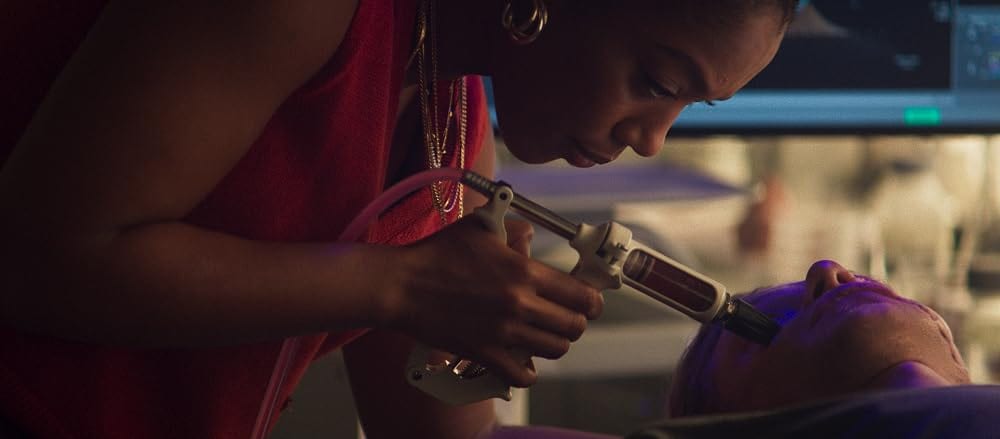
MM: It’s very practical horror movies, right, as well, which is really fun. I think that's why they're so fun to make because there's something very tactile about it, and like the makeup effects and all of that stuff; it's all in front of you, unlike sometimes genre movies, it's kind of like, you know, have to imagine so much of it, but when you're making these movies you really get to like see it all, yeah, so it's fun.
NA: And might I add that Tom's prosthetics on this job are like incredible, and there was a lot of work around making it feel as real as possible and being able to touch it, and it was just an incredible thing to see, so there's a lot that is, like Max says, super practical.
[Screenwriter] Mike Flanagan is one of the modern masters of horror, and I wonder what aspect of the script did you find truly compelling and made you want to make this movie?
Tom Rhys Harries: Well, it was the journey of the character. It was the journey of how a man becomes a monster, really. And the idea of this tragic dimension, I suppose, to the character and the evolution of that character, I thought, gave a really interesting arc that we'd be able to just dig into. I mean, so that was, you know, when I first discussed it with DC, that's what first came in. And, you know, there are things you want to finesse and change, but really, fundamentally, the DNA of that was never changed. You know, I guess I would have slightly different obsessions, but generally, it was a fantastic script and a line of the character that was something that, you know, we kept evolving.
JW: I would say it's really interesting in terms of the film. And Tom can speak to this too, in terms of who the real villain of the movie is, right? And particularly when the monster is within. So who is the monster? What is the monster? Is it the process? Is it your primal urges? What is it? And I think what's most interesting to me [about] monsters are monsters that we can relate to, and the monsters within us. I'd much rather make a film about that than a film where it's aliens or creatures from another planet.
How Matt struggles to understand what's going on with him makes him [relatable], you know? That's what's always been so great about Clayface. Is he a hero? Is he a villain? And I think what's interesting is in that liminal space between them both.
TRH: Yeah, to James's point, I find it interesting where certain actions would determine (how) somebody is classified as a villain or evil. These are fairly binary markers that you'd put on someone. But the strength of Matt being able to claw his way out of being a victim and take ownership of a situation under different circumstances would be universally praised as a strength. And I think that is interesting. And the audience, I suppose, at the right moment in time, gets to be the adjudicators of whether that is justified or not.
Gotham City is full of gray characters. You don't know if they're fully good or fully bad. How did you tackle your characters in this sense and the morality behind them?
NA: Yeah, I think the thing that attracted me the most to this was that not everyone, or most characters, in this film comes out clean; there is a very grey area in the choices people make, but also the situations that people are put in this film. For me, my approach was very much like it always is. I kind of, given the circumstances on a day-to-day, what is the situation, and how can I logically make sense from where my character was to where I know my character needs to go. With this, there was this mixture, I think, because in the ending, we know the audience will know [that] Matt Hagen turns into Clayface. There's a lot of justification work needed at the beginning to get every character right to the spot that you need them to get to for him to turn into Clayface, so there was a lot of work up front for me about figuring out, not necessarily, like, who my character was, like, what her favourite colour is, it's more, like, what does she want, like, what is, over everything else, over all of her relationships, what is the thing that she is wanting so much that she would find herself in this situation, and once that had been cemented, it kind of naturally, everything else slotted into place.
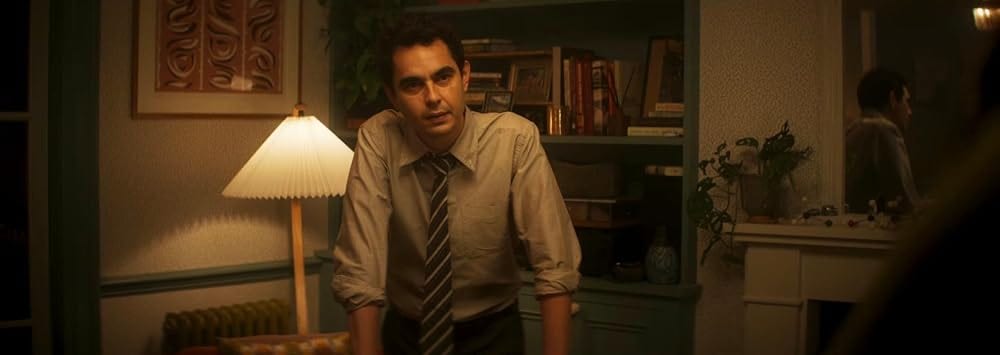
MM: Yeah, that was really articulate. I think, for me, it was unusual, actually, because I normally play characters [who are] probably more on the darker side of the moral spectrum. And (for my character) John, it was really important to James that he was just, like, a good guy, and maybe the person with, like, the cleanest moral compass in the whole movie, and so that was actually kind of really simple. But also, I had to sort of readjust my instincts in some ways with it, [because] at the same time, he’s born [into] a world that's very dark, so James really didn't want him to feel sort of like a Dudley Do-right, you know, he couldn't be that clean-cut. But at the same time, he is just a good dude, and there was something really kind of fun about that to me, and very new.
Matt Hagen seems to be an amalgam of different versions of the character (from the comics and animation). Was there a particular rendition of Clayface that colored your portrayal of him in the film?
TRH: I think there's a certain point in the creative process where you have to take complete ownership over it. That's not to say that when I was preparing that I wouldn't go back into the lore of Clayface. You've got a character that's existed since 1940. To your point, there have been so many different iterations: Preston Payne, Matt Hagen, Basil Carlo, which is an amalgamation of Boris Karloff and Basil Rathbone. You've got this incredibly vivid through-line from the inception of Clayface back in 1940, carrying over and now informing every different iteration through to the ‘Feet of Clay’ episode that is in the animated series, which is brilliantly voiced by Ron Perlman. Then to Mike writing the initial screenplay for this. I think what you have with that history is something that hopefully there are aspects of it that you'll feel through the film, but ultimately you have a completely original piece of storytelling that works as a standalone feature.
There are some really intense scenes as seen from the trailers. What was the most difficult scene to play? What was the most difficult scene to watch?
JW: Probably the most difficult scene to watch, not for me, but for most of the crew, was the scene where Tom, where Matt is in the toilet of the airplane, and his eyes have kind of fused together, and he has to get out the scissors and fix the problem. Tom was in full prosthetic makeup. So those eyes—I can't remember, but he had not only that, right? You had the contacts, right, Tom? Which he could only have in for a certain amount of time. But then we had that little toilet on a gimbal that was going back and [forth] and moving around because the plane is meant to be in turbulence. So it was shaking back and forth, and we had four pairs of scissors: we had the real scissors, we had the blunted scissors, we had the rubber scissors, and we had the scissors without any blade. So anyway, Tom, in his acting enthusiasm, had the real scissors and was shoving them in, and it was great! So Tom was really going great guns in the scene. I was loving it. The crew was all looking appalled, and I think the AD and health and safety on the set were getting very [nervous, but] he was completely in control. He was just acting like he wasn't in control. So but it was when you're on a set, and you can feel the visceral reaction from the hardened crew of Brits on the film set when you know that something is working. I can definitely imagine that.
MM: There was also like a tremendous amount of improvisation, which is, like, I just love, and it, I think, created a sort of naturalism to the scenes that's pretty rare for a movie like this, and I think it's really a testament to James, actually, there's so many things James did in the process that were just unbelievably confident, I thought, and speak to a person who's done this for a long time, and has his 10,000 hours, like, he just knew when to stop, move on, and wasn't precious about anything, but just the fact that he was so willing to try stuff, and let the scenes sort of leave the page so often, was, I thought, really, really confident.
Clayface opens in cinemas on October 21.
ALSO READ:
Lanterns Uses Its Rings for Deconstruction and Breaking Cycles
Shazam! Fury of the Gods Is a Feast of Ham and Cheese
Zach really, really, really loves films.
View More Articles About: