'Wicked: For Good' Shows Why Year-long Intermissions Are Never a Good Idea
The long-awaited second act of last year’s Wicked screen adaptation stays true to its source material, and that might be the problem.

by Zach Yonzon
Published on Nov 22, 2025
I know I’ll get heat for this from lifelong fans of the musical, but I’ve always felt that Wicked’s second act was weaker than the first, and the only reason people come away from the theatre experience on a high is because of the goodwill carried over from "Defying Gravity." I know that some people feel that "No Good Deed" or "For Good" are the best songs in the play, but Stephen Schwartz arguably frontloaded the musical by putting its eminently memorable — and singable — songs in the first act. No song is quite as popular as, well, "Popular," and no song flies quite as high as "Defying Gravity." The first act is also such a feel-good extravaganza that theatergoers go into the 15-minute intermission on a buzz that powers them through the considerably darker and even tragic conclusion.
2024’s Wicked was a triumph and one of the best films of the year, proving that the decision to split the play into two films was unquestionably the right one. But a year-long intermission has a tendency to erode goodwill, no matter how great, leaving Wicked: For Good exposed and left to stand on its own merits without the power of its first act to carry audiences through. Picking up some time after the conclusion of the first chapter, Wicked: For Good finds Elphaba (Cynthia Errivo) as a fugitive hunted by the Wizard’s (Jeff Goldblum) forces, and Glinda (Ariana Grande) established as a spokesperson for Oz and therefore her former best friend’s enemy. Wicked was generously paced, allowing audiences to grow with and appreciate the two friends and their journeys. In contrast, For Good is a fast-paced story where so many things happen in such quick succession that it can be difficult to keep up.
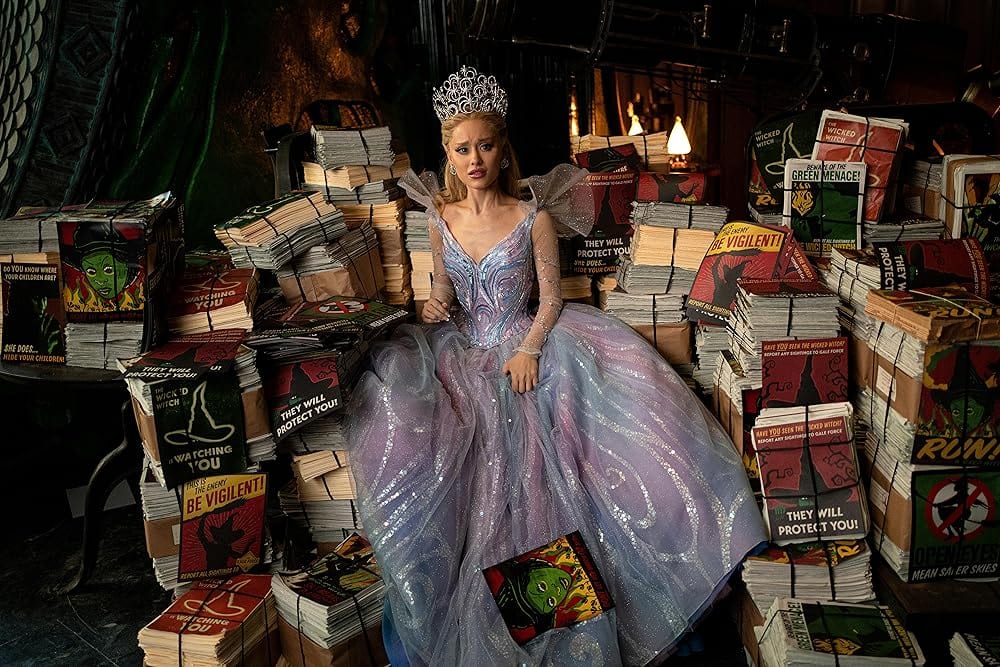
Wicked: For Good flounders in many different ways, both as a result of weak source material and the film’s attempt to flesh it out with filler that sometimes detracts from its incredibly and sadly relevant core message. As dark as Wicked: For Good is, the real tragedy is in how it remains an allegory for our times even more than Wicked was. Glinda’s misguided support for a charismatic despot, however well-meaning, is still complicity and representative of every person who chooses to look the other way when it comes to the wrongdoings of their leader. Glinda is arguably even worse because she directly benefits from her willful ignorance, afforded luxury, wealth, and a position of power in exchange for her cooperation. Meanwhile, the demonization and vilification of Elphaba is your run-of-the-mill state-sponsored hatchet job, not any different from classifying people opposed to fascism as terrorists. Even more tragic is how Elphaba represents powerlessness despite the irony of having real, actual power.
Elphaba can give monkeys wings, but can’t affect any real change in a regime or a populace that’s signed off on segregation and enslavement. It should be a familiar feeling for many, even more so for those of us who can’t fly. The first film expounded on the plight of Oz’s animal populace, our stand-in for your favorite oppressed minority, but perhaps most easily associated with the United States’ undocumented immigrants, who are locked up and treated like animals. So the flying monkeys are ICE? Sure, if the shoe fits. The Wizard, then, is the con man who managed to rise to power thanks in no small part to all the people who want to believe in him. The most chilling exchange in For Good is when Elphaba threatens to expose the Wizard’s inability to do any real magic, and he simply responds with the sobering and heartbreaking fact that people simply won’t believe her. Don’t we know it. In a time when leaders can behave so monstrously and suffer no consequence, where is the lie?
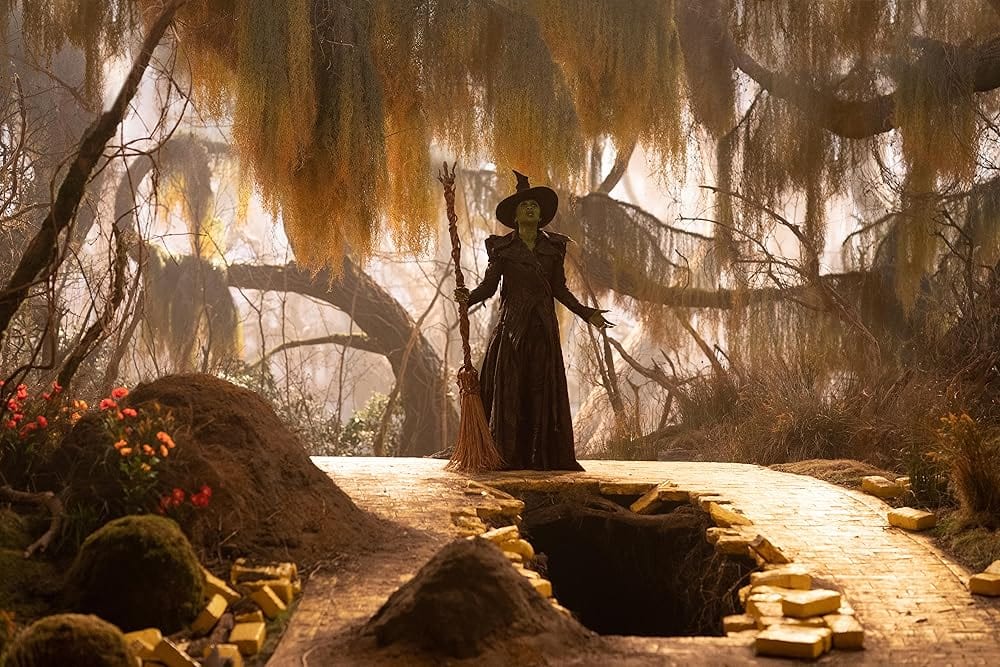
This is the tragedy of Elphaba Thropp — to wield immense, unimaginable power and still be unable to change things for the better. Opposite her is Galinda Upland, who has no magical ability to speak of but gets more things done because people believe in her, illustrating the power of public perception. The frustration of failure ultimately leads Elphaba to embrace her wickedness, a self-fulfilling prophecy borne from the unrewarding task of trying to do good in a cruel world. This is what makes "No Good Deed" so heartbreaking, because it’s hope giving in to cynicism, an acknowledgment that cruelty and anger are easier and more effective than compassion or love. Gregory Maguire’s book is far darker and more cynical than Schwartz’s adaptation (Doctor Dillamond is murdered in the book, for example), but the general tone is the same: if you tell a lie big enough and keep repeating it, people will eventually come to believe it.
Because it’s simply the second act of one story, it’s impossible and unwise to skip For Good, which gives conclusions to some, not all, of the characters’ various arcs to varying degrees of satisfaction. It serves as a prequel and crossover of sorts to the Wizard of Oz, giving origin stories to beloved characters that nobody really asked for, but were changes made by Schwartz and Winnie Holzman from Maguire’s book to the play. The changes are easier for longtime fans, who already know the plot, to swallow the ultimate fate of, say, Prince Fiyero (Jonathan Bailey) or Boq (Ethan Slater). But fans who came on board Wicked’s emerald train by way of the 2024 film might be in for a rude awakening. If Wicked ended triumphant, Wicked: For Good is a bittersweet conclusion, a hollow victory that dulls the shine of the first part. This was always the problem with the musical, but at least you could sit through the whole story in under three hours.
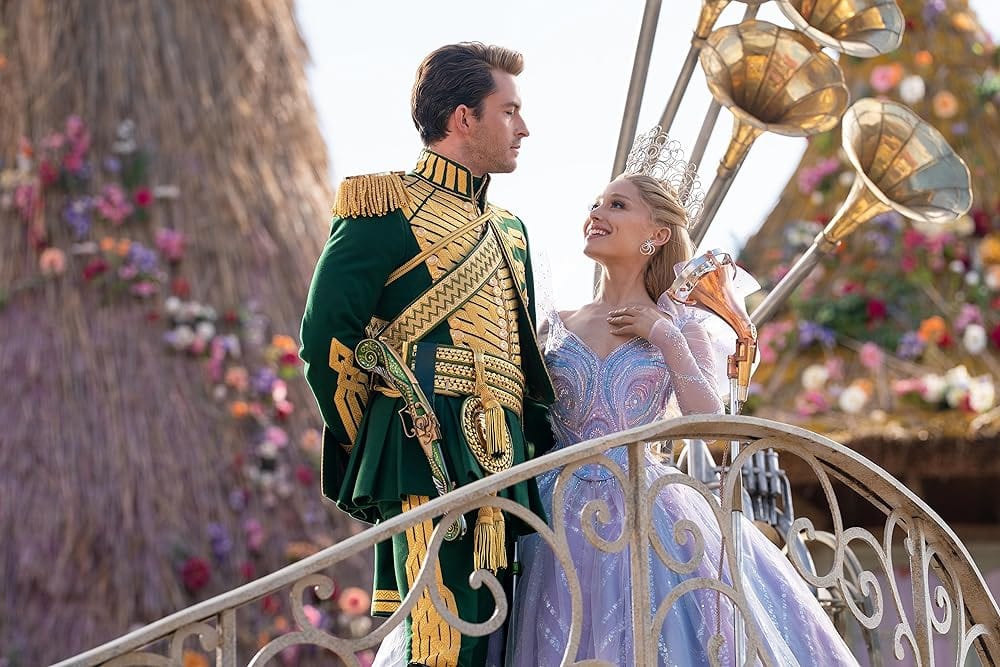
Jon Chu’s mastery of spectacle is still on full display, if not more, but there are sequences where his storytelling leaves much to be desired. In particular, the transformation of the Tin Man, which was done mostly behind closed doors, seemed like a missed opportunity to utilize cinema’s advantage over the stage. A visual representation of a shrinking, disappearing heart would’ve done so much for the story. The Wizard of Oz’s original heroes are actually some of the weakest, most disappointing parts of the film. Chu’s reticence to fully show Dorothy, whose face we never see, is even more distracting because the pains he goes through to obfuscate her feel more clumsy than artful.
All that said, Wicked: For Good is still a highly entertaining film that demands to be experienced in theaters. Grande and Erivo deliver their own powerful, flawless renditions of beloved songs, and both actors remain the true highlights of the film. The jury is out on the two new song additions — Elphaba’s "No Place Like Home," an anthem lamenting Oz’s animal diaspora; and "The Girl in the Bubble," Glinda’s backstory that somehow retcons or at least whitewashes her complicity into dysfunction rooted in childhood trauma.
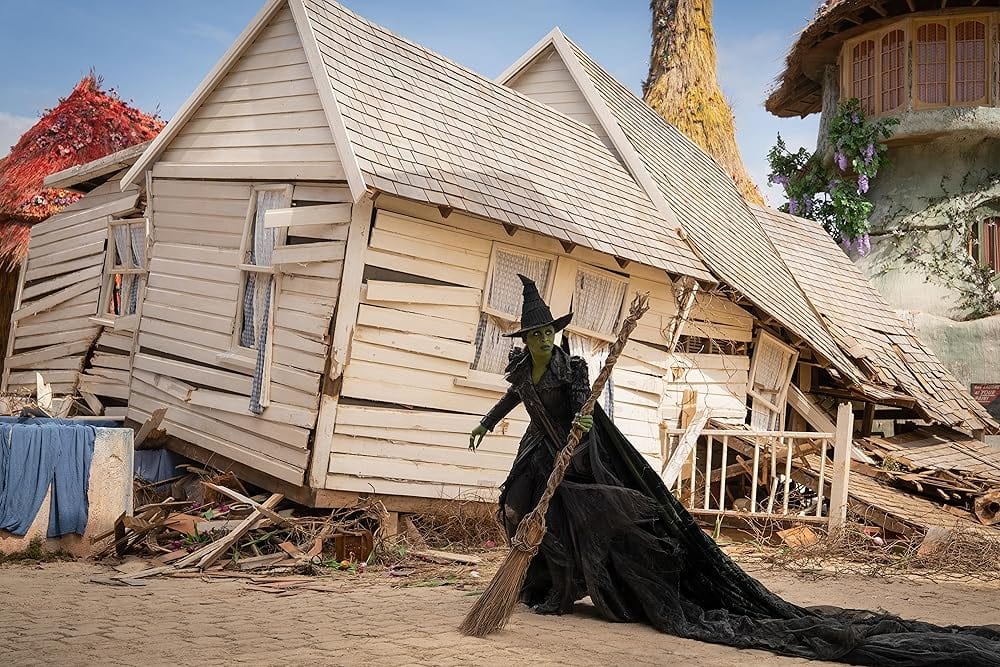
I was able to see the film on SM Cinema’s new ScreenX, a panoramic theater with a 270º field of view. It was a surprisingly entertaining and new cinematic experience, with the small caveat that it’s best when seated towards the back of the theater in order to fully view the panoramic image in its entirety. The brightness of the side projectors is also somewhat distracting, but overall, it’s a truly immersive cinematic experience that rivals IMAX, and viewers who see films on ScreenX will have a significantly different viewing experience than those who don’t. Wicked: For Good is a flawed finale, but still delivers on its promise of a proper conclusion. For those who have loved Wicked from the beginning, it might just be enough.
Zach really, really, really loves films.
View More Articles About: