'Wildwood' Must Win the Academy Award for Best Picture
Laika’s newest epic is a pinnacle of human achievement that encapsulates humanity’s audacity, ambition, and power to make dreams come to life.

by Zach Yonzon
Published on Nov 15, 2026
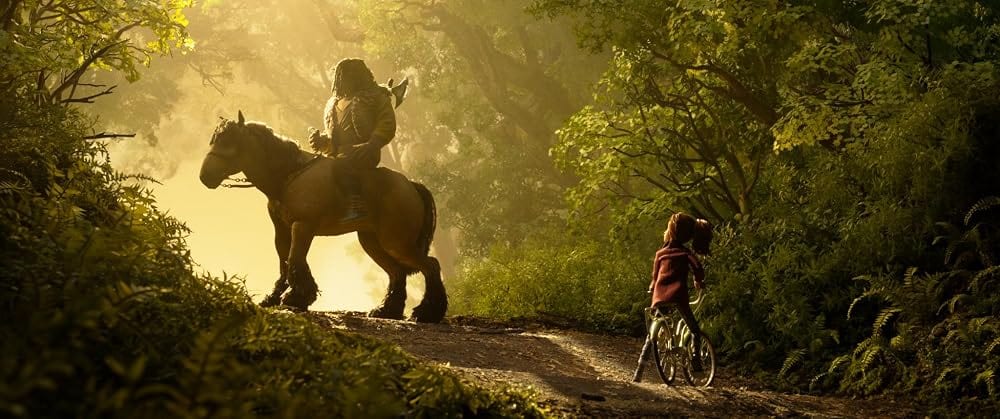
How important is it to understand the process? When dining at a Michelin-star restaurant, does the customer need to know where the meat is sourced? Was the cow grass-fed, or did the greens go from farm to table? When admiring the Sistine Chapel, does it matter that Michelangelo spent countless hours looking up, punishing his neck and spine, as paint dripped on his face? Or does only the end result matter? If the meal tastes good, does it matter how it was cooked? If a painting is beautiful, does it matter how much labor went into its creation? Some might find the process irrelevant, valuing only the end result. After all, creation isn’t a spectator sport. Most of the world will never see the Sistine Chapel in person, much less up close. So what does it matter that its creation was a laborious process? Wildwood, the newest animated feature from Laika Studios, is all about the process, a painstaking, work-intensive process built by hand, frame-by-frame, over a long, long time. In an interview with Variety, Wildwood director and Laika Studios CEO Travis Knight explains how Laika builds thousands of tiny little objects, moves them a microscopic distance, takes a photo, “and we repeat that process over and over until either the film emerges or society collapses.”
Thankfully, society hasn’t collapsed (yet), and Wildwood, a project Laika started on 16 years ago, emerged and stands as a glorious testament to craftsmanship and human perseverance, a bastion of hand-hewn artistry in what seems to be an unstoppable tidal wave of outsourced creativity and process. Does the end result justify the process? Or is Wildwood a film that could’ve been made with CGI in half the time for half the cost? Could it have just been made — God forbid — with generative AI? At some point in the bleak future, where man has completely handed over all inspiration and craftsmanship to iterative algorithms, probably. But it would mean nothing.
In 1953, Herbert Goldstone wrote a short story titled "Virtuoso." In it, a piano-playing Maestro teaches his robot, Rollo, how to play the piano. Rollo quickly masters the instrument and manages to play music that moves the Maestro to tears. Excited by this, Maestro dreams of sharing Rollo’s musical virtuosity with his peers, planning to broadcast performances to a worldwide audience, and dares to imagine recording his entire repertoire with the robot at the keys. But Rollo refuses, explaining that playing music is easy for robots. “This,” Rollo tells Maestro, “… music is not for robots. It is for man. To me it is easy, yes … it was not meant to be easy.”
Goldstone understood the crux of the argument in 1953, long before AI was even a whisper of a dream. It’s not meant to be easy. Wildwood is not easy. It is, in fact, one of the most meticulously crafted works of art in modern history, a true pinnacle of human achievement and creativity that homages the very root of film: the illusion of movement created from stringing together still images. Wildwood’s stop-motion animation is the apex of this illusion that began with the first zoetropes, one of the last exhalations of a craft that places as much importance on process as it does on result. If films like Nolan’s The Odyssey or Cameron’s Avatar franchise push the boundaries of film into new spaces in terms of size, scope, or technological advancement, Knight’s Wildwood is the perfection of one of mankind’s youngest forms of art.
Few films highlight filmmaking’s collaborative process more than Wildwood, the product of countless hours of artisans coming together and bringing a story to life by hand. There’s nothing quite like it, not even Laika’s past works, which are always exponentially better than their previous release. Wildwood is ambitious, audacious, and laughs in the face of capitalist expectations; it is Laika’s most expensive film to date and not projected to make a profit, which is an injustice to cinema and a rebuke to man’s desire to create art for the sake of creating art. Christopher Nolan can build coffin-sized cameras and make films that will only be truly appreciated on less than a handful of screens in the entire world because The Odyssey makes bank. Travis Knight made Wildwood with virtually no marketing budget, only the bold ambition to make the greatest stop-motion film in history. Or at least until the next Laika Studios film.
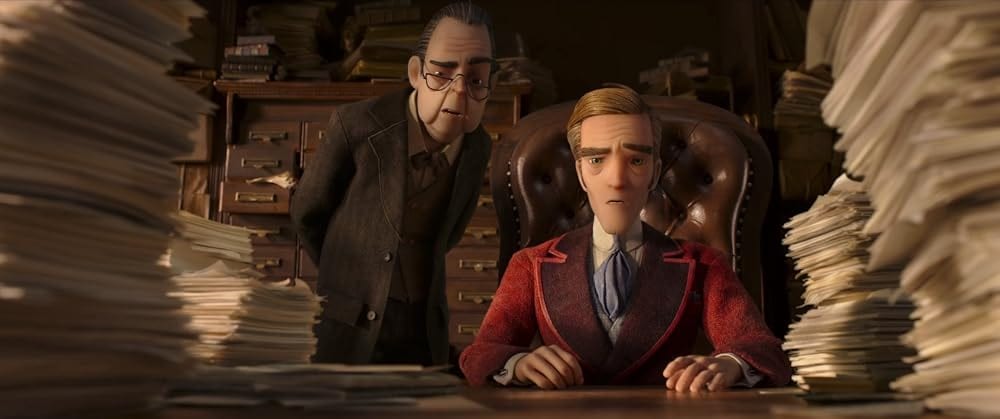
It’s wrong on every level because Wildwood deserves patronage far more than big-budget blockbusters, if only for its commitment to telling new stories in the perfected form of an old way. Knight and Laika Studios stand adamantly, even foolishly, against the tide of capitalist filmmaking, against all reason, because handcrafted work still matters. Carson Ellis, the original artist of the book by Colin Meloy, makes a brief cameo in the film, selling her craft in a stall with a sign that says, “enjoy handmade art before it’s gone for good!” A chilling warning in a world that’s all too happy to outsource the creative process to soulless AI that only iterates but never actually creates.
This is why Wildwood must be in consideration for an Oscar for Best Picture, not just Best Animated Feature. To relegate it to the category of animation would be a cop out and a concession to the false idea that animation is a lesser form of cinema. Wildwood is one of the year’s best films, and arguably the greatest stop-motion film of all time. Anyone at all with an understanding of film, of its roots, of its process, should understand what Wildwood truly means to the medium. Because all film, at its core, is stop-motion animation. Travis Knight, by the same token, deserves recognition for Best Director, because an undertaking of this grandiosity and craftsmanship demands a visionary, and there are few visionaries on Knight’s level because his stake in Wildwood is deeply personal, because as the owner of Laika Studios, his own fortunes are directly tied to its failure or success. Even James Cameron, whose Avatar films are personal undertakings, enjoys the cushion of big studio support and shared risk. Travis Knight has no such comfort, leaping into the abyss armed only with faith that Wildwood will find its audience, uncompromising with its storytelling, earning an R-13 from the MTRCB. An animated film with an R-13 rating. How much courage does that even take?
We owe it to ourselves to see Wildwood in cinemas. Yes, it’s a good story. Yes, it’s a wonderful cinematic experience that can be enjoyed by the whole family, provided everyone is over 12 years old. Yes, the musical score is enthralling and probably should also be in consideration for an Academy Award. Dario Marianelli has already won for Atonement, but he should’ve been nominated for Laika Studios’ Kubo and the Two Strings in 2016. But beyond being one of the year’s best films, Wildwood is an argument for process. Few films demand peering beyond the veil and indeed even enrich the viewing experience as much as Wildwood. Laika Studios has put out short featurettes on YouTube that detail every step of the production process, a jaw-dropping display of human ingenuity and industry. In understanding the demands of the process, Wildwood will move you to tears in much the same way the Maestro was moved by Rollo’s mastery of the piano. Only this time, it wasn’t easy. None of it was easy. Cinema, much like music, isn’t for robots. Cinema is for man. Wildwood, as with all art, was made for man by men and women holding fast against the avalanche of cheapened and commodified creative processes. Wildwood’s puppetry and animation are among the most human of endeavors, and in celebrating it, we celebrate our humanity.
ALSO READ:
‘Forgotten Island’ Is an Unforgettable Exultation of Filipino Culture
Zach really, really, really loves films.
View More Articles About: