Remembering Bing Austria: The Man Who Kept the Soul in Filipino Music
The Filipino ska and soul stalwart died at 62 on Monday, June 8.

by JV Ordoñez
Published on Jun 9, 2026
The news about Bing Austria's death on June 8, Monday, inflicted a proverbial knife wound into the soul of OPM.
In the 30-odd years of being a musician's musician or your dad's favorite artist, he poured his heart out for a specific type of soulful music across an entire lifetime.
Bing Austria
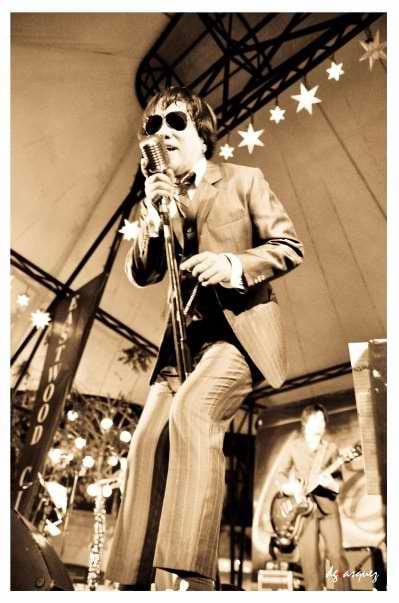
The OPM legend died on Monday after a week of sepsis in the ICU, his family announced on his official Facebook page.
"We are deeply grateful for all the financial support and assistance everyone has extended. Your help gave Bing a fighting chance," according to the post.
The late musician came up in the 1990s as a keyboardist for Tropical Depression and then the Filipino ska band Put3ska, a cheeky pun on "putres ka" and the genre itself.
He brought the meat and bones of their acclaimed self-titled debut record, which spawned hits like "Manila Girl," "Birthday Holiday," and "Short Stories" that drew specifically on the British ska revival movement called the "Two-Tone" era. Austria actually won the NU Rock Award for Keyboardist of the Year in 1997. A year later, Put3ska would be no more.
The OPM stalwart entered a new era in 2004 under Terno Records, the birth of a new outfit, Juan Pablo Dream. It was an entirely new style for Austria as he channeled Curtis Mayfield-esque/Motown sensibilities to put out honest-to-goodness soul music in the Philippines, which no other band was really doing.
JPD's debut LP Soul Up! sounded exactly like what the name suggested, soul music that didn't need any overthinking or anything too pretentious.
His latest and last project was another American soul love letter, the Flippin' Soul Stompers, who tapped into the working-class flair of Otis Redding, James Brown, and Booker T. and the MGs. The group put out a Germany-pressed twelve-track record called Rosas Epektos that had beloved hits such as "Ulan," Uwian Na," and "Alipato."
Austria was as crucial a figure in the local music scene and cultural history books since he was second to none when it came to refusing to fold to the popular music meta.
"When I first started performing music, I was a punk rocker. But the punk I got into was the Clash, and their music saw an infusion of reggae," Austria famously said during an interview at Rodic's
"Eh, saan ba galing ang reggae kung hindi sa rock steady and dub? And saan din galing ang influence ng rock steady kung hindi sa jazz, rhythm and blues, and soul?"
(Where does reggae come from if not from rocksteady and dub? And where does rocksteady get its influence from if not jazz, rhythm and blues, and soul.)
Esquire PH's resident music scribe, wristwatch disciple, and essayist fluent in niche internet subcultures and Philippine politics.
View More Articles About: