EXCLUSIVE: JR Richards, the Original Vocalist of 90s Rock Band Dishwalla, is Still Making Music, and We’re Still Singing Along
The former Dishwalla frontman helped define the sound of 90s alternative rock. Years after leaving the band, he continues to write songs, release solo albums, and find new reasons to return to the PH.
Published on Oct 12, 2026
I lived through the 90s with headphones pretty much stuck to my ears, and if I wasn’t listening to OPM, the soundtrack to my pre-pubescent years consisted mostly of Western alternative rock bands like Third Eye Blind, Gin Blossoms, Goo Goo Dolls, The Lemonheads, and their ilk. I didn’t have money to buy tapes and CDs so I’d wait for the songs on the radio and try to record them on my cassette player. I saved these tapes for years before I finally graduated to buying full albums on CDs and constantly playing tracks like “Semi-Charmed Life,” “Til I Hear it From You,” “Slide,” and “Into Your Arms.”
And then, of course, there’s “Counting Blue Cars” from Dishwalla. The melody was irresistible, but I was always intrigued by the line, “Tell me all your thoughts from God / Cos I’d really like to meet Her.” For a boy who went to a Catholic high school, it felt a bit like sacrilege, but I got over it and just learned to enjoy the song.
Fast forward XX years and I finally got to ask the man himself about it. Pursuing a solo career after parting ways with his bandmates, who have since gone on to hire a new lead singer, John Robert “JR” Richards is in town this week to play several shows. Last Sunday afternoon, I met up with him at the lobby of his hotel to chat about his Filipino fans, whether a reunion with his old bandmates is possible, and yes, THAT song. Excerpts:
ALSO READ
Rex Orange County on Soft Boy Tendencies, Wristwatch Satiation, and Not Giving a Damn
.png)
Esquire Philippines: This is your third time performing in the Philippines in the last few years. How did this latest tour happen and what keeps you coming back?
JR Richards: I was supposed to do a solo tour here in 2020. I had never been to the Philippines (before), even though we had talked about coming here with Dishwalla. Unfortunately, the pandemic happened, and the tour was postponed. It became a bit of a mess, and I wasn't sure if I'd ever make it back.
I'm really grateful to Jesse Cambosa from DMC, who reached out in 2024 and invited me to do some shows. We wanted to rebuild things because people might have been hesitant to buy tickets again after the cancellations. Thankfully, those shows went really well. I came back the following year, and now I'm here again. I hope to return next year, too.
You’re also making an effort to perform outside Metro Manila. Why is that important to you?
It's great to see fans outside the big cities. International acts tend to play in major urban centers, but people in smaller towns often have to travel long distances and spend a lot of money to see them.
It's the same in the United States. You might play Los Angeles, San Diego, and San Francisco, but there are so many smaller towns even in California, where people rarely get to see bigger acts. Being able to reach those audiences is special.
You’ve continued making music even after Dishwalla. Tell me about your love of music and what keeps you writing songs?
I've been writing songs since I was nine years old, and I'll keep doing it until the day I die.
When Dishwalla broke up, many of the guys moved on to do other things, like play golf. I went straight back into the studio and recorded my first solo album. Since I had written most of Dishwalla's songs, continuing to write music felt natural.
I remember wondering whether anyone would care about my music without the Dishwalla name attached to it. My first solo album sounded a lot like the band because it had my voice and songwriting. It did well enough, and I've since released five solo albums, including my latest one last year.
Even if nobody listens, I'll keep writing songs. At the very least, I can play them for my wife in the kitchen.
.png)
Are you still in touch with your former bandmates? Is a Dishwalla reunion possible?
Being in a band is complicated. It can be like being part of a family. You get along sometimes, and sometimes you don't.
Dishwalla went through several lineup changes over the years. When the band broke up, some of the guys wanted to get back together, but I'd already moved on to other projects. That was part of why they eventually got another singer, which I think is great. I wish them the best.
I'm still in touch with some of the guys, though not everyone regularly. I love them all, and I'm always open to the possibility of doing something together down the line.
I wanted to ask about “Counting Blue Cars,” which is, of course, one of Dishwalla's biggest hits. The song imagines God as a woman, which was an unusual idea for a mainstream rock song in the 1990s. Tell us about the thought process behind writing that song, and what was the reaction when it first came out in the 90s?
The song is written from a child's perspective. The child is on a journey to meet God and ask questions such as, “Why am I here? What's my purpose?” Children are open-minded because they haven't necessarily been taught to see things in just one way. In my mind, God is an omnipotent being who could be anything—a man, a woman, a tree, or a bird. Why should God have to be referred to as male? God is God.
I didn't think too much about it when I wrote the song. I just thought about how open-minded children can be. I was surprised when it became a single, reached No. 1, and people started paying attention to that lyric. Most people loved it, but some were upset about the idea of God being a woman. I received plenty of death threats, and occasionally a few people would picket outside our shows.
I'd tell the audience to be nice to them. They had a right to express how they felt, and there was no reason to hassle them.
One of my personal favorites is “Somewhere in the Middle.” Can I ask what the story is behind that song?
It was the first song I wrote for our third album, Opaline. I remember thinking it would make a good radio song. You always hope to have one or two songs on an album that the record label can take to radio, so I felt relieved that I'd written one.
The song is about feeling stuck in a relationship. Before I met my wife, I often found myself in relationships that weren't healthy or making me happy. But I felt bad about telling the other person that I didn't want to be in the relationship anymore. You end up stuck in the middle of something you don't want to be in. I think a lot of people can relate to that.
What has your experience with Filipino fans been like?
Filipino fans are especially lovely. They take the time to send me thoughtful messages or bring gifts to the hotel.
Last night, before I went onstage, people were passing a microphone around and singing the choruses of my songs. Everybody had a great voice. It blew me away, and I was really touched.
It still surprises me that people care enough to memorize my songs and sing them back to me. That's a special feeling.
You were part of the alternative rock scene, which was pretty big back in the 1990s. What do you think made that era special?
Smartphones weren't around, so people paid more attention to what was happening in front of them rather than looking at a screen. There was also a different approach to recording. When we made our first album, if you wanted to sound in tune, you had to sing in tune. Today, technology such as Auto-Tune can change the way a voice sounds.
Of course, technology can be useful, but sometimes people use so much of it that they no longer sound like themselves. Music can become homogenized, with everyone sounding similar.
In the 1990s, recordings often felt raw and true to each individual artist. I hope we move back toward that a little. Technology is great for many things, but art should still come from a human place, not just a computer.
I hope you don’t mind me asking, but I just found out you’re about to turn 60. How are you feeling about life these days, and can you share any pearls of wisdom you’ve learned about life in general?
I'm 59 now and will turn 60 next year. That sounds ancient to me, but in my own mind, I still feel 29.
I think it's important to maintain a youthful outlook. You can be mature without having to act a certain way just because you're getting older. It's still good to have fun, be silly, enjoy yourself, and not take everything so seriously.
If you feel young inside, you'll project that to the rest of the world. I'm a rock singer approaching 60, running around onstage and singing. It's an unusual thing to be doing at this age, but I embrace it and love it.
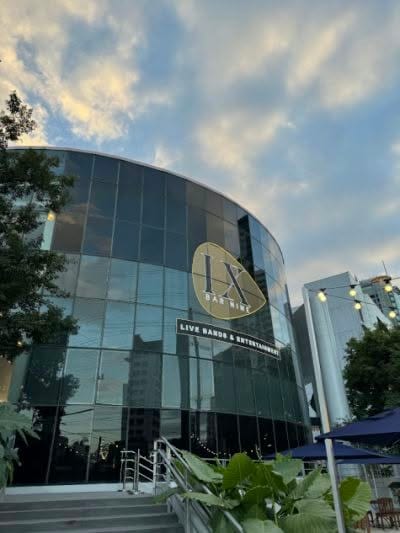
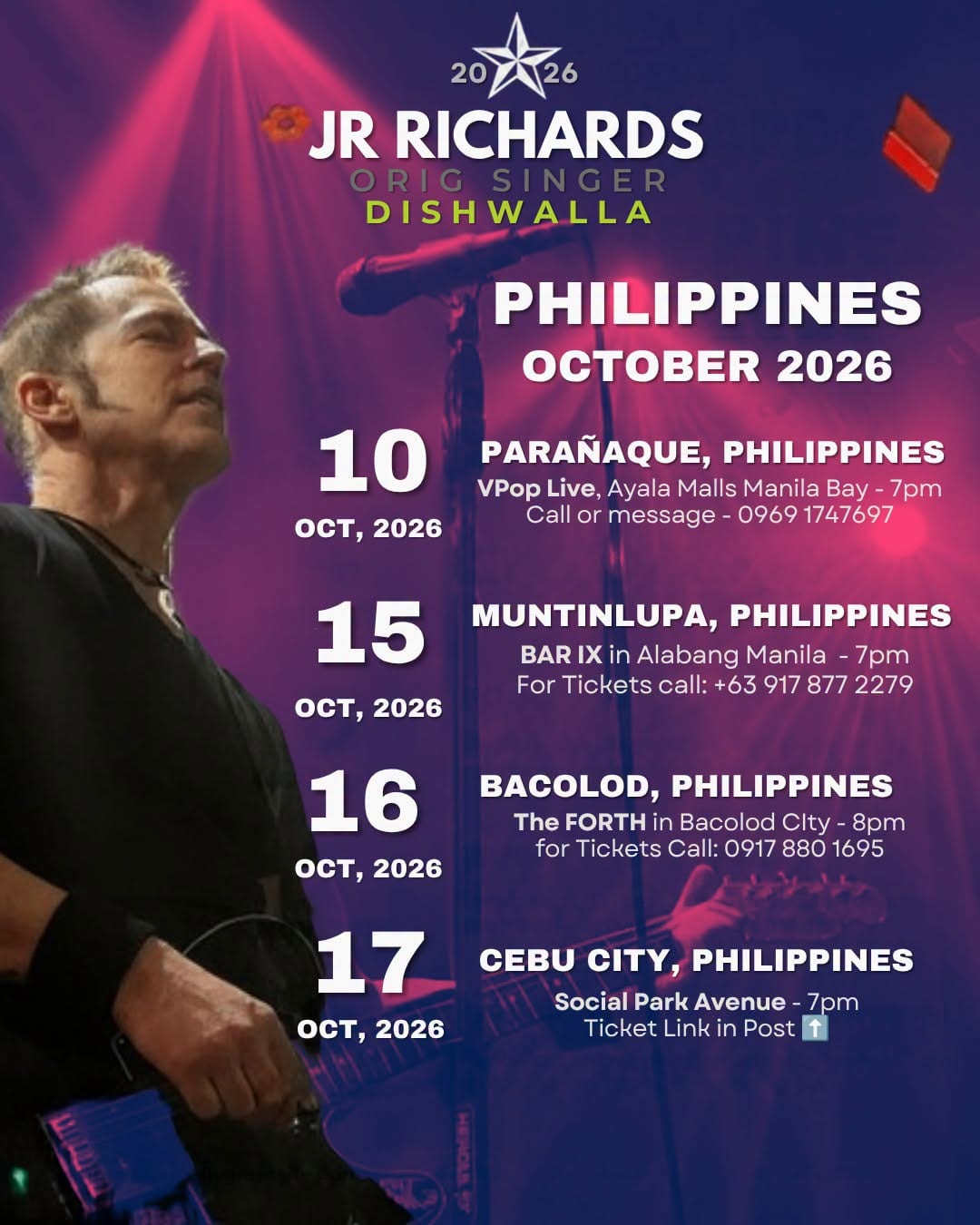
JR Richards is playing at Bar IX, Molito Alabang on Thursday, October 15. For tickets, call or text +63 917 877 2279 or click here. He will then be in Bacolod on Friday, October 16, and Cebu City on Saturday, October 17.