How the Lopez Family Lost Meralco
If you only came to the story when the Lopez cousins started suing each other, it helps to start with a simpler picture: one family, one flagship utility, and a very ambitious buyout.
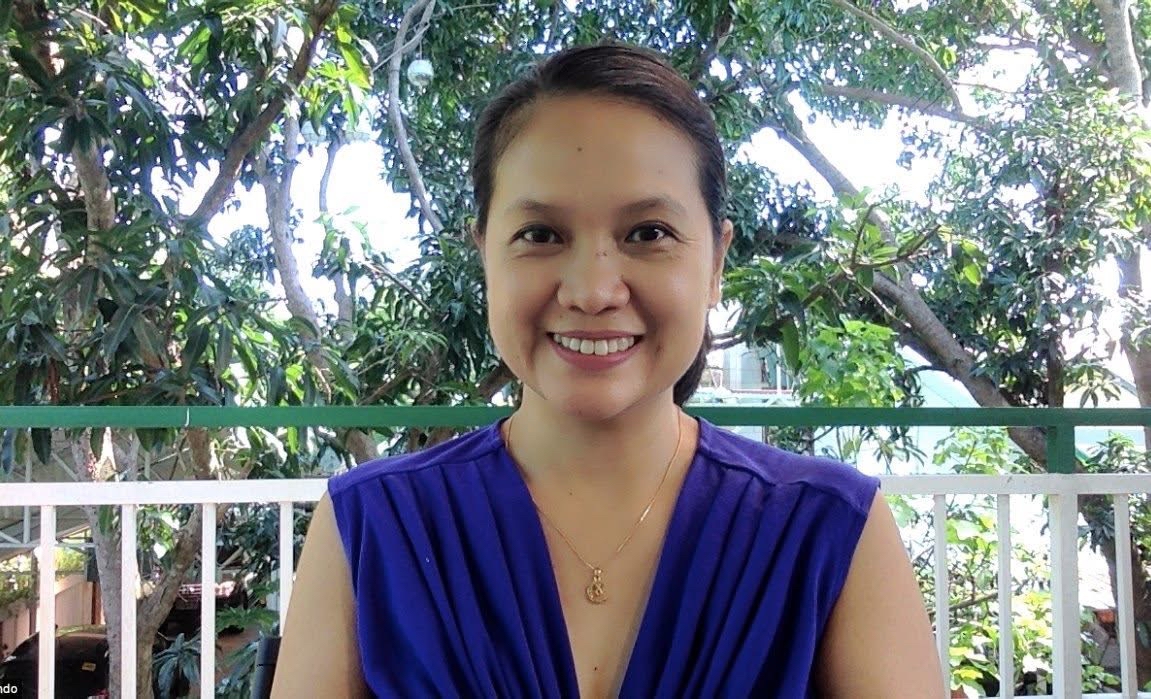
by Lala Rimando
Published on Apr 4, 2026
On March 13, 2009, in a tense First Philippine Holdings board meeting, the Lopez family finally voted to sell a big chunk of Meralco to the Pangilinan group, the same team that controls PLDT and a growing web of toll roads, water concessions, and hospitals. It looked like just another block trade on the stock exchange, but it meant handing effective control of the country’s biggest power distributor to another clan. The decision capped a year of bruising proxy fights, hostile regulators, and government pressure—and marked the second time in half a century that the Lopezes gave up Meralco, the asset that had once defined their rise.
If you only came to the story when the Lopez cousins started suing each other or when Meralco’s ownership grid began sprouting acronyms like FPH, MPIC, SMC, and JGS, it helps to start with a simpler picture: one family, one flagship utility, and a very ambitious buyout.
Back in 1961, Meralco was still an American‑owned enterprise. It began life as the Manila Electric Railroad and Light Company, a U.S.‑controlled utility that ran streetcars and power, and by the 1950s it sat under the orbit of American holding companies including General Public Utilities (GPU). In 1961–1962, a group of Filipino investors led by Eugenio “Don Eñing” Lopez Sr. formed Meralco Securities Corporation (MSC) and negotiated to buy GPU’s stake, in a deal that Meralco’s own history hails as the first major American enterprise in the Philippines to be “Filipinized.” GPU wanted to refocus on U.S. operations and lower its exposure to political risk in a newly independent Philippines just as the 1974 expiry of “parity rights” loomed, and the Lopez group was willing to pay around $66 million and load the company with loans secured on Meralco’s future cash flows.
The Lopez Fortune
It was not the family’s first fortune. The López clan of Iloilo had made its early money in sugar haciendas and shipping in Iloilo and Negros in the first half of the 20th century, through patriarchs like Vicente López Sr. and his sons. In the 1950s, they pushed into media, taking over ABS (Alto Broadcasting System) and later merging it with their own Chronicle Broadcasting Network to form ABS‑CBN, giving the family both a voice and a platform in Manila. But Meralco was the asset that multiplied that older wealth. By the end of the 1960s, the utility, not the network, was the group’s biggest earner, and it made Meralco the first billion‑peso Filipino company and a regular visitor to Wall Street’s bond markets.
ALSO READ
Explainer: Who Really Owns Lopez Inc.—and Why the 29% Cousin Is in Charge
Financially, Meralco was a dream asset. It held a legal monopoly over power distribution in Metro Manila and much of Luzon, serving millions of captive customers. As a regulated utility, it earned an allowed return on rate base, with tariffs adjusted over time, giving lenders and investors unusually predictable cash flows for a Philippine company. For the Lopez holding companies that sat above it—first MSC, then Benpres and First Philippine Holdings—Meralco became both dividend machine and collateral, the asset they could point to whenever they borrowed to build toll roads, telecom networks, or geothermal plants.
Prize and target
Meralco’s visibility made it both prize and target. When Ferdinand Marcos Sr. declared martial law in 1972, he went after both Meralco and ABS‑CBN. By 1973, under what Manolo Lopez would later describe in interviews as “duress,” Don Eñing Lopez had been pushed to sell Meralco shares to Meralco Foundation Inc., a vehicle linked to Marcos’ brother‑in‑law Benjamin “Kokoy” Romualdez, for a token down‑payment. ABS‑CBN’s broadcast facilities were also seized and turned over to cronies.
That is why 1986 matters so much in this story. After the EDSA People Power Revolution toppled Marcos, the new Corazon Aquino government sequestered Meralco and ABS‑CBN shares held by Marcos cronies and began the process of returning assets taken under martial law. Through a mix of court cases, compromise agreements, and corporate restructuring that culminated in the creation of First Philippine Holdings as the main listed vehicle, the Lopezes clawed back a significant Meralco stake—eventually building it up to around 33.4 percent by the mid‑2000s. For the second generation—Geny, Oscar, Manolo, and their cousins—regaining Meralco after 1986 was a symbol that the family had survived dictatorship.
By the mid‑2000s, however, Meralco was again at the center of a storm. The trigger was not martial law but a campaign from state pension fund GSIS, led by outspoken president and general manager Winston Garcia, a known ally of President Gloria Macapagal‑Arroyo. At the same time, ABS‑CBN’s news division was aggressively covering allegations of wrongdoing under Arroyo, from the “Hello Garci” election-rigging scandal to the NBN‑ZTE corruption-tainted broadband deal, keeping the Lopez name in constant tension with Malacañang.
Garcia began by building his stake. Through purchases of government‑held shares, GSIS amassed close to 27 percent of Meralco, making it the largest single shareholder outside the Lopez bloc. Then he went on the offensive. “We are not taking control of Meralco. What we want is a change in management,” he said, promising to “bring back social responsibility and good corporate governance” and warning that government was “ready and willing to take over” the utility if needed.
In press briefings, GSIS accused Meralco of “bloody murder” on consumers and pensioners through alleged overcharging, self‑dealing with Lopez‑controlled suppliers like Philippine Electric Corporation (Philec) and the Lopez gas plants, and inefficient operations. Garcia argued that Meralco was “buying from its own power producers” on terms that hurt consumers and promised that under a new board “rates will go down to the level the rest of the country is paying.” Oscar Lopez pushed back days before the meeting, telling FPH stockholders that Philec won contracts through transparent bidding and that First Gas had in fact waived capacity charges for years when Meralco could not fully dispatch its output: “Was First Gas overcharging? The answer is no,” he said.
A stockholders’ meeting to remember
Behind the rhetoric was a cold boardroom calculation. Going into the May 27, 2008 Meralco annual stockholders’ meeting, the Lopezes controlled about 33.4 percent of the company through First Philippine Holdings—still the largest private block, but not a majority. Garcia’s GSIS held 27 percent, and when you added the shares of other state institutions like SSS and Land Bank, the government‑aligned bloc reached roughly 33.3 percent. In a tightly fought proxy contest, a 27 percent pension fund plus enough minority proxies could outvote a one‑third family block.
What followed at the Meralco Theater that day is the stuff of corporate legend: thousands of employees in green shirts chanting “Lopez! Lopez!”; boos and jeers greeting Garcia’s entry; microphones cutting off when the wrong person spoke; and an SEC director walking into the hall with a cease‑and‑desist order trying to stop the vote. The Lopez side countered with a rapid Court of Appeals petition questioning the SEC’s jurisdiction, which soon produced a TRO against the commission’s orders. By the end of an almost 13‑hour meeting the family had kept enough seats to retain effective control.
The battle moved to the Court of Appeals, and then into what became known as the GSIS–Meralco bribery case, G.R. Nos. 183905 and 184275, where CA Justice Jose Sabio Jr. and businessman Francis de Borja accused each other over an alleged :10‑million “offer” tied to the Meralco petition. The Supreme Court eventually disciplined several justices for irregularities in handling the case, voided the SEC’s orders as beyond its jurisdiction, and left the Lopez‑backed board intact. For the family, it was a legal win—but an exhausting one.
If the pressure had come only from GSIS, the Lopezes might have dug in further. But another player was watching: San Miguel Corporation, led by Ramon S. Ang, which by 2008 had begun a dramatic diversification from beer and food into energy and infrastructure. In October 2008, after back‑channel negotiations, San Miguel agreed to buy the entire 27 percent GSIS stake in Meralco at around P90 per share, beating a competing earlier proposal from the Pangilinan group. Overnight, Meralco added a second power bloc: a San Miguel‑aligned position of about 27 percent, with plans to go higher using other government‑linked shares.
Other players enter the fray
By early 2009, the Lopezes were squeezed between their own 33.4 percent and a San Miguel/government‑aligned bloc approaching 37 percent, in a political climate where Meralco’s every rate case could turn into a hearing about the family’s supposed sins. On top of that, First Holdings was still carrying debts from its Benpres era; First Gen had borrowed heavily to acquire EDC and expand its gas platform; and ABS‑CBN was facing growing hostility from the administration it covered.
Even after formal restructurings, the “Benpres decade” of over‑leveraged bets in Bayantel, Maynilad, SkyCable and toll roads still haunted the group’s balance sheet. Creditors remembered how close the holding company had skated to default, and the family was still selling assets and tightening belts to finally put that chapter behind it.
It was in this context that Manuel V. Pangilinan came into the picture as more than an interested observer. Pangilinan’s group—better known through PLDT, Metro Pacific, and their web of toll roads, water, and hospitals—had long eyed Meralco as a strategic asset. In March 2009, after months of internal debate, the First Philippine Holdings board voted to sell 20 percent of its 33.4 percent Meralco stake to Pangilinan‑led companies for about P20 billion. Oscar Lopez described it as “a business decision” that was “not easy, most especially by my brother Manolo, who has invested more than 30 years of his life with the company.” In that same period, Manolo told interviewers that he was “hurt” by the way critics painted the utility and its employees and admitted that letting go of the company he had nurtured felt “like losing part of the family’s life work.”
For a while, the alliance seemed to work. Combining the Pangilinan group’s growing stake with the Lopezes’ remaining 13.4 percent gave their side close to 48 percent of Meralco, enough to counter San Miguel’s 37 percent in board elections. Pangilinan took a leading role on the board and gradually steered the utility into his regional infrastructure story. But control had already begun to slip. When San Miguel later bid for the Lopezes’ remaining Meralco shares, Metro Pacific exercised a right of first refusal on 6.7 percent, increasing its direct stake and signaling that it would be the natural buyer of whatever the family still held.
San Miguel did not stay forever. In 2013 it sold its entire 27 percent Meralco stake to JG Summit Holdings of the Gokongwei family for about P72 billion in a block sale, turning Meralco into a field dominated by the Pangilinan and Gokongwei camps while the Lopezes watched from the sidelines.
From there, the logic was harsh but straightforward. As the Lopez group refocused on power generation via First Gen and EDC, and as ABS‑CBN moved toward its own epic clash with the Duterte administration that would eventually cost it its broadcast franchise in 2020 and decimate its finances, Meralco became less a symbol of the future than a reservoir of value that could be tapped to stabilize everything else. Over the next few years, the Lopezes sold down their remaining Meralco stake in tranches to the Pangilinan/First Pacific camp, until their name disappeared from the list of major shareholders and they retained only a token interest.
Why the Lopezes let go
It was not the outcome Don Eñing likely had in mind when he built extra corporate layers—Lopez Inc. on top, Benpres/Lopez Holdings in the middle, and First Philippine Holdings below—to try to shield key assets from hostile regimes and regulatory storms. Those holding companies were meant to absorb political shocks so that Meralco, ABS‑CBN, and the power plants beneath them could keep operating even when Malacañang turned cold. In practice, they did buy time: the family survived Marcos, navigated Aquino and Ramos, and traded blows with Estrada and Arroyo. But they could not protect Meralco forever from the compounded weight of debt, new competitors, and political fatigue.
Why did the Lopezes ultimately let go? The answer lies in that mix of cash, politics, and survival that becomes clear when you trace the saga from their own statements and later accounts. Meralco was still lucrative, but it had become politically radioactive and capital‑intensive. The group was still recovering from the Benpres decade, financing ambitious generation portfolios, and soon would be fighting for ABS‑CBN’s very existence. The GSIS offensive showed how quickly a well‑placed regulator or pension fund could turn the utility into a battering ram against them. San Miguel’s entry showed that other conglomerates were willing to put real money to work in that environment. Pangilinan’s offer gave them a way to cash out in stages rather than risk a third forced exit.
Seen that way, the loss of Meralco was not a single defeat but the end point of a long sequence: an audacious Filipinization in the 1960s; confiscation under martial law; a post‑1986 comeback; a bruising 2008 proxy war; San Miguel’s opportunistic entry; a pragmatic alliance with Pangilinan; and, finally, a series of sales that turned an old, politically costly jewel into cash and breathing room for other businesses. Meralco still lights up Metro Manila. It still generates the regulated returns that make it attractive to lenders and tycoons. The difference is that the Lopez name is no longer on the controlling block. For a family that once used Meralco to announce to both Americans and Marcos that they belonged at the center of power, that loss is more than an accounting footnote. It is the price they chose to pay to stay in the game at all.
A former banker, Lala Rimando wrote about Philippine business and managed newsrooms for over 25 years. She’s now based in La Union, working on the biography of the late John Gokongwei.
View More Articles About: