
Financial Adviser: 5 Things to Know About Federico Lopez’s First Gen Corp in 2025 and How to Profit from It

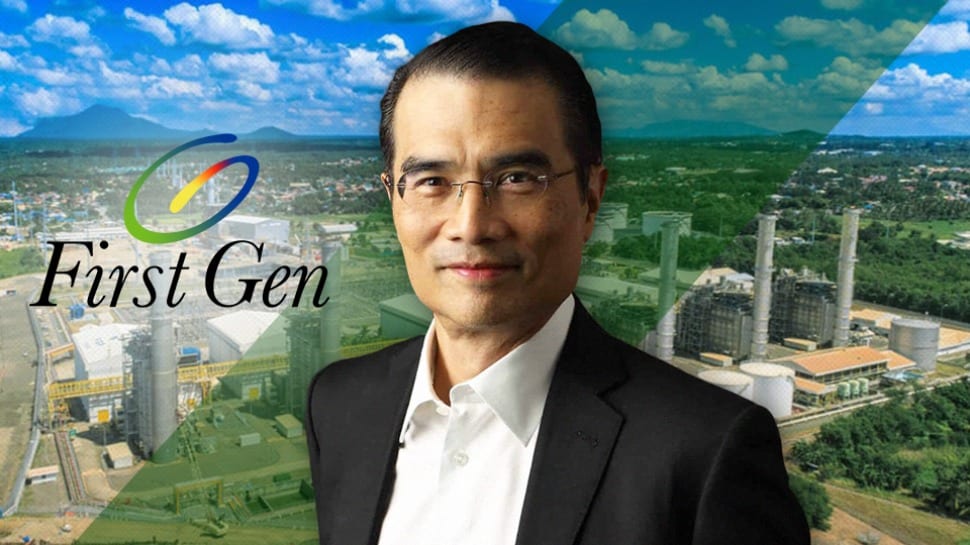
When investors think about volatility in the Philippine Stock Exchange (PSE), the energy sector often comes to mind, which mirrors the swings of global fuel prices, policy shifts, and investor sentiment toward renewable transition plays.
In this market, First Gen Corporation (PSE: FGEN) has stayed resilient through market cycles and challenges but supported by strong finances and a forward-looking energy mix.
Listed on the PSE since 2006, First Gen emerged as one of the core holdings of First Philippine Holdings (FPH) under the Lopez Group, a conglomerate deeply intertwined with the country’s infrastructure and clean energy development.
From its initial public offering at P47 per share to the buy-in of global investor KKR, which now holds roughly 19.9 percent economic interest, FGEN’s stock performance has moved in step with investor confidence in local reforms and global ESG trends.
Yet, like many blue-chip energy names, the stock has been weighed down by sentiment rather than substance. Market participants have rotated in and out of power utilities as fuel prices surged, the peso weakened, and interest rates tightened. These macro pressures often overshadowed the company’s solid fundamentals, which is a recurring story where short-term volatility clouds long-term value.
Despite this, FGEN has quietly carried out one of the most ambitious clean-energy transitions in the region. Still, the market has yet to fully recognize it. Over the past few years, First Gen’s share price has moved within the P14–P20 range, which reflects investor fatigue over regulatory noise and growing competition from newer renewable players. Yet, the company continues to stand on firm ground, even if the market has yet to take notice.
This disconnect presents an opportunity. While the PSE has been characterized by weak liquidity and retail-driven swings, fundamentally sound names like FGEN often become overlooked during bearish phases.
For patient investors, periods of market pessimism often create opportunities to accumulate fundamentally strong stocks, especially when a company’s long-term energy strategy continues to build a stable earnings base.
Before investing, it’s best to set aside market sentiment and take a closer look at the fundamentals. A sound decision always begins with understanding what drives a company’s real value, not just what moves its stock price.
With that in mind, here are the five things to know about First Gen Corporation this 2025 and how you can profit from it:
1| Know the business position and growth drivers
FGEN stands as one of the Philippines’ most diversified and strategically important clean-energy producers, combining natural gas and renewables across a total installed capacity of 3,639 MW, or about one-fifth of the country’s dependable generation.
Its portfolio spans geothermal, natural gas, hydro, wind, and solar, operated through key subsidiaries such as Energy Development Corporation (EDC), First Gas Power Corporation (FGPC), FGEN Power Corporation (FGP), and FGEN LNG.
Through this integrated mix, FGEN plays a central role in the nation’s energy transition. Its geothermal arm, EDC, remains the country’s largest renewable energy producer, while its natural gas facilities in Batangas such as the Santa Rita, San Lorenzo, San Gabriel, and Avion plants supply a major share of Luzon’s baseload demand. This balance between renewables and cleaner transition fuel provides both reliability and lower emissions compared with coal-based peers.
FGEN’s recent partnerships underscore strong investor confidence in its long-term strategy. Prime Infrastructure Capital Inc. is acquiring a 60% stake in FGEN’s gas assets, which provides significant capital that will allow FGEN to recycle funds for future renewable expansion without heavy dilution.
Prime Infrastructure Capital, Inc., or Prime Infra, is a leading Philippine infrastructure investment company founded and chaired by business tycoon, Enrique K. Razon Jr., also the chairman of International Container Terminal Services, Inc. (ICTSI). The company focuses on sustainable infrastructure and essential services, with investments in energy, water, and waste management, which are all aligned with the government’s push for energy transition and resource security.
In the energy sector, Prime Infra operates through subsidiaries such as Prime Energy Resources Development B.V., which manages the Malampaya gas-to-power project, supplying up to 20% of Luzon’s power needs. The company also owns WawaJVCo, which runs the Wawa Bulk Water Supply Project in Rizal, and Enerven InfraCorp, which develops renewable power and battery storage systems. Its partnership with FGEN represents a strategic convergence of Razon’s infrastructure expertise and FGEN’s clean-energy leadership, which enhances long-term fuel security, LNG integration, and capital efficiency for both groups.
At the same time, Tokyo Gas Co. Ltd. holds a 20 percent stake in FGEN LNG Corporation, which operates the Batangas LNG Terminal—recognized by the Department of Energy as an Energy Project of National Significance. This facility ensures stable LNG imports as domestic Malampaya reserves decline, which reinforces FGEN’s vital role in the country’s long-term energy security.
While AboitizPower (PSE: AP) (≈ 6,000 MW) and ACEN Corporation (PSE: ACEN) (≈ 7,000 MW globally) have broader generation footprints, FGEN’s capacity remains highly concentrated within the Philippines and anchored on clean and low-carbon generation. Its diversified mix, dependable output, and strong partnerships make it a pillar of the country’s clean-energy transition and a key player in maintaining grid stability.
2| Know financial base and recovery path of the company
FGEN’s financial track record shows a steady core operation despite headwinds from market volatility and the transition toward cleaner energy.
In 2024, the company posted revenues of $2.41 billion, slightly below $2.47 billion in 2023. The 2.7 percent decline reflected lower electricity selling prices in the spot market and weaker natural gas generation from the Malampaya field.
Meanwhile, cost of sales fell to $1.65 billion from $1.69 billion, while general and administrative expenses rose to $265 million from $235 million, due to higher project development and LNG-related costs.
As a result, income before financial income, expenses, and other charges declined from $550.6 million to $494.9 million, a 10 percent year-on-year decrease in operating profitability. This contraction was mainly due to thinner gas margins and higher administrative spending related to expansion initiatives.
After accounting for financing and one-off items, net income dropped 24.8 percent to $337.8 million, compared with $449.3 million in 2023. Despite this, the company’s balance sheet remained solid, with debt-to-equity below 1×, reflecting conservative leverage and ample liquidity even during a major investment cycle.
Encouragingly, the first half of 2025 marked a turning point.
While revenues eased to $1.21 billion, down 5.1 percent year-on-year, net income rose 3.9 percent to $209 million. This improvement reflects margin recovery from geothermal and hydro assets, better cost discipline, and a partial easing of interest expenses after large project completions.
Operating income remained steady at $274 million, and EBITDA held at about $420 million, which indicates consistent cash-generating capability.
More importantly, FGEN’s cash flows reveal a quiet but significant turnaround.
For the first half of 2025, cash from operations reached $377.9 million, which reflects healthy recurring earnings despite higher tax and interest payments.
Capital spending fell sharply after the completion of the Batangas LNG Terminal and other large projects, which reduces investing outflows to $309.4 million from $906.8 million in the previous year.
Even after accounting for long-term asset development and exploration outlays, free cash flow turned positive at $68 million, compared with a $449 million deficit in the first half of 2024.
This shift from negative to positive free cash flow marks a decisive change in FGEN’s financial direction. It shows the company is now generating more cash than it spends, a key indicator of financial maturity and internal funding strength.
With lower capital requirements and stable earnings, FGEN enters its next phase with the ability to fund growth organically and reduce debt exposure. The figures show that FGEN has moved past its heavy investment phase and is now starting to benefit from those efforts.
What once weighed on profitability like its aggressive renewable and LNG investments is now becoming the foundation of recurring cash flow and long-term stability.
3| Know the impact of the Prime Infra transaction on the company’s strength and strategy
In August 2025, the Philippine Competition Commission (PCC) officially cleared the P50 billion ($909 million) acquisition by Prime Infrastructure Capital Inc. (Prime Infra) of a 60-percent stake in First Gen Corporation’s natural-gas business.
This transaction covers FGEN’s key gas-fired power assets such as the Santa Rita, San Lorenzo, San Gabriel, and Avion plants along with the upcoming Santa Maria project and the Batangas LNG Terminal, which has been designated by the Department of Energy as an Energy Project of National Significance.
The deal marks one of the most consequential corporate restructurings in the Philippine energy sector in recent years. For FGEN, it represents not a retreat but a strategic recalibration which is shifting from heavy, asset-intensive operations to a capital-light, partnership-driven structure that enhances liquidity and unlocks long-term growth capacity in renewables.
Based on the 2024 consolidated results, FGEN generated $2.41 billion in revenues and $338 million in net income. Roughly 55 to 60 percent of these revenues came from its gas-fired operations through First Gas Power Corp. (FGPC) and FGEN Power Corp. (FGP).
Once the 60 percent sale is completed, about $1.3 to $1.4 billion of annual revenues will be deconsolidated from First Gen’s top line.
Net income will no longer reflect the full contribution of the gas segment. Instead, First Gen will recognize equity income from its retained 40 percent stake, estimated at roughly $120 million annually, assuming the segment’s normalized earnings of $300 million.
The remaining businesses, mainly Energy Development Corp. (EDC)’s geothermal operations, plus hydro, solar, wind, and LNG services, will continue generating about $1 billion in revenues and $200 million plus in profits.
Overall, consolidated revenues will fall, but recurring income stability will be preserved. The company’s total net income post-transaction is expected to remain in the $300 million range, thanks to the steady equity income and robust renewable segment performance.
The P50 billion ($909 million) cash proceeds will provide a substantial boost to liquidity. As of June 2025, First Gen already held $736 million in cash; the transaction could bring this figure close to $1.6 billion, even after taxes and transaction costs.
The cash infusion from the Prime Infra deal provides FGEN with greater flexibility and financial strength. With approximately $909 million in additional liquidity, the company can significantly reduce its debt, which is currently around $2.1 billion, that could bring its debt-to-equity ratio down from 0.89× to roughly 0.60×. This lighter leverage will help lower financing costs and improve returns on equity.
At the same time, the proceeds give FGEN room to fund new renewable-energy projects without the need for additional borrowing. This ensures that its next wave of geothermal, hydro, and solar investments can be pursued while maintaining a healthy balance sheet. The result is a stronger financial foundation that supports long-term growth while keeping the company resilient through future industry cycles.
Such deleveraging and liquidity improvement are expected to raise return on equity (ROE) and lower financing costs, which reinforce FGEN’s investment-grade credit profile. The transaction strengthens the company’s financial foundation, which positions it to pursue growth with greater resilience and capital efficiency in the years ahead.
Beyond the balance sheet, the transaction brings several strategic advantages. By selling a majority stake, FGEN reduces its direct exposure to volatile global LNG prices, plant maintenance cycles, and regulatory uncertainty, while still benefiting through profit-sharing from its retained 40 percent stake.
The deal also enables the company to recycle capital into higher-growth, cleaner assets under Energy Development Corporation (EDC) and its expanding hydro and solar pipeline. With geothermal capacity already exceeding 1,400 MW, First Gen can accelerate projects aligned with the government’s target of 35 percent renewable energy by 2030.
Equally important, the sale enhances earnings quality. After the transaction, a larger portion of First Gen’s profits will come from recurring and stable sources, including equity income, service fees, and renewable operations, rather than cyclical, fuel-dependent power sales. This shift improves the predictability and resilience of its earnings stream, which allows FGEN to focus on long-term value creation rather than short-term market fluctuations.
4| Know the valuation gap between the company and its peers
At today’s market price of around P15 per share, FGEN trades at levels that dramatically understate its true value. Despite generating consistent earnings and maintaining one of the strongest balance sheets in the energy sector, the market continues to price the stock as if it were a high-risk, cyclical play rather than a stable cash-generating clean-energy leader.
A look at comparative metrics tells the story. FGEN currently trades at a price-to-earnings (P/E) ratio of just 3.6×, versus 10× for AboitizPower (PSE: AP) and 48.8× for ACEN (PSE: ACEN).
On a price-to-book (P/B) basis, FGEN’s 0.27× multiple implies investors are paying barely one-fourth of the company’s book value, which is a deep discount compared to 1.48× for AP and 0.64× for ACEN. Even when adjusted for cash flow strength, the contrast remains striking: FGEN’s EV/EBITDA of 3.49× sits far below AP’s 8.39× and ACEN’s 38.46×, which signals how undervalued its core operations are relative to peers.
Despite this steep discount, FGEN offers a dividend yield of 5.6 percent, nearly matching AboitizPower’s 5.7 percent and more than double ACEN’s 2.16 percent. FGEN’s market capitalization of P54.8 billion is also modest relative to its asset base of nearly $7 billion, which highlights how the market has yet to price in the company’s long-term earning power.
When benchmarked against fundamentals, FGEN’s undervaluation becomes clearer. The upcoming Prime Infra acquisition, which will provide ?50 billion ($909 million) in fresh capital, is poised to significantly strengthen FGEN’s balance sheet.
With total debt of about $2.1 billion and cash holdings of $736 million as of June 2025, the proceeds will meaningfully lower net debt and expand liquidity to more than $1.6 billion. This stronger cash position enhances financial flexibility that allows the company to refinance, retire, or restructure existing obligations as needed, while maintaining its investment-grade credit quality.
If we value FGEN conservatively at 8× forward earnings, consistent with regional utility averages, the stock’s fair value would land between P28 and P30 per share, which is nearly 80–90 percent upside from current levels. Even on a book-value basis, a re-rating to just 0.6× P/B which is still below peers, implies a fair price of around P21, a gain of more than 40%.
Simply put, FGEN’s current price reflects market sentiment more than its real value. For investors who look beyond market noise, FGEN offers not just dividend income but significant capital appreciation potential.
5| Know the price pattern of the stock
The price pattern of FGEN since early 2023 reflects a clear five-wave decline that is consistent with the structure of a larger corrective downtrend. The first wave unfolded around mid-2023, when the stock broke down from the P19–P20 range toward P16. This was followed by a short-lived rebound near P18 later that year, which forms Wave 2. The most pronounced move came in Wave 3, which extends through much of 2024, when prices fell from P18 to around P15 amid strong volume, which is a classic sign of capitulation and selling climax.
Wave 4 developed by mid-2025 as a shallow retracement toward P17–P17.50, before the current Wave 5 decline began, which is now testing the P15.00–P14.50 area. This ongoing fifth wave suggests that the five-wave cycle may be nearing completion, which is a signal that a long-term bottom is forming.
If Wave 5 matches Wave 1 in magnitude, the downside target would fall near P14.20–P14.40, precisely within the lower range of the current chart structure. Once this leg exhausts, a larger A-B-C corrective rally could follow, with potential rebound levels at P16.80–P17.50 in the early recovery phase.
From a geometric perspective, the full decline from the P22.00 high in 2023 down to the P15.00 level represents roughly a 33 percent retracement, which aligns a common long-term support zone. In terms of time, the downtrend has persisted for about 720 calendar days since the 2023 peak, which marks a complete two-year cycle, that often coincides with potential reversal windows.
Taken together, both Wave count and geometric analyses point to a confluence of support around the P14.00–P15.00 zone. While the short-term trend remains bearish, selling pressure appears to be losing momentum.
A confirmed reversal above P15.80–P16.00 on rising volume would strengthen the case for a corrective rally, with successive upside targets at P16.80, P17.50, and P18.20. Conversely, a sustained close below P14.00 would invalidate the setup and open the door to a deeper continuation toward P13.20.
FGEN’s stock price chart suggests the stock is entering the final stages of a prolonged correction. The P15 zone may serve as a medium-term accumulation area for investors, provided that key support holds and early signs of reversal such as volume upticks or bullish RSI divergence begin to appear.
Henry Ong, RFP, is an entrepreneur, financial planning advocate and business advisor. Email Henry for business advice [email protected] or follow him on Twitter @henryong888
