Today I Learned: In 1944, a Powerful Typhoon in the PH Sea Sank 3 US Destroyers and Killed 790 American Soldiers
One of the most harrowing non-combat encounters at sea, Typhoon Cobra sank 146 aircraft and nearly wiped out an entire U.S. fleet.
by Nick Aguila
Published on Jan 14, 2026
Most Filipino history enthusiasts know 1944 as the year General Douglas MacArthur kept his promise and returned to the Philippines to help liberate the country from the Japanese. What’s less frequently discussed outside naval circles is how nature had a profound effect on this campaign.
In the closing months of that year, as World War II raged across the Pacific, something unexpected and brutal struck the United States Navy. Between December 17 and 18, a powerful typhoon named Cobra (later nicknamed Halsey’s Typhoon after Admiral William “Bull” Halsey Jr.) tore into the U.S. Third Fleet, which was in the midst of a logistical refueling operation in the Philippine Sea. It became one of the deadliest natural disasters in U.S. naval history.
But first, a quick background.
_and_battleship_in_typhoon_1944.jpeg)
After Gen. Macarthur made his comeback to the Philippines in October 1944, the US Army-Navy task forces pummeled Japanese positions around Leyte Gulf. But the ships belonging to Task Force 38 (TF 38), which included battleships, aircraft carriers, cruisers, destroyers, and support vessels, were running low on fuel. And so, orders were handed down for the ships to head northeast into the Philippine Sea to rendezvous with supply ships for refueling before turning back toward operations around Mindoro and Lingayen Gulf.
At the time, the fleet’s weather reports suggested that no real threat lay ahead. Of course, in the 1940s, meteorological science was nowhere near as reliable and comprehensive as they are today. Being more infrequent and based on sparse observations, the weather report did not alarm the fleet and Admiral Halsey’s staff believed a pressure disturbance that lay hundreds of miles to the east would move north and away from their position.
Into the storm
The refueling operation scheduled for December 17 already faced severe difficulties because of nasty weather. One sailor aboard USS Astoria (CL 90) was even quoted as saying, “We had a hell of a time getting the lines over, the waves were so high.” During the day the situation only worsened, with a destroyer almost colliding with an oiler, and the planned transfer of new combat aircraft from an escort carrier (USS Kwajalein) to the TF38 carriers halted because of rough seas.
Eventually, Admiral Halsey decided the entire supply replenishment effort was futile and scheduled a second rendezvous point further northwest the next day, towards what he thought would be a spot in the sea that would have clearer weather.
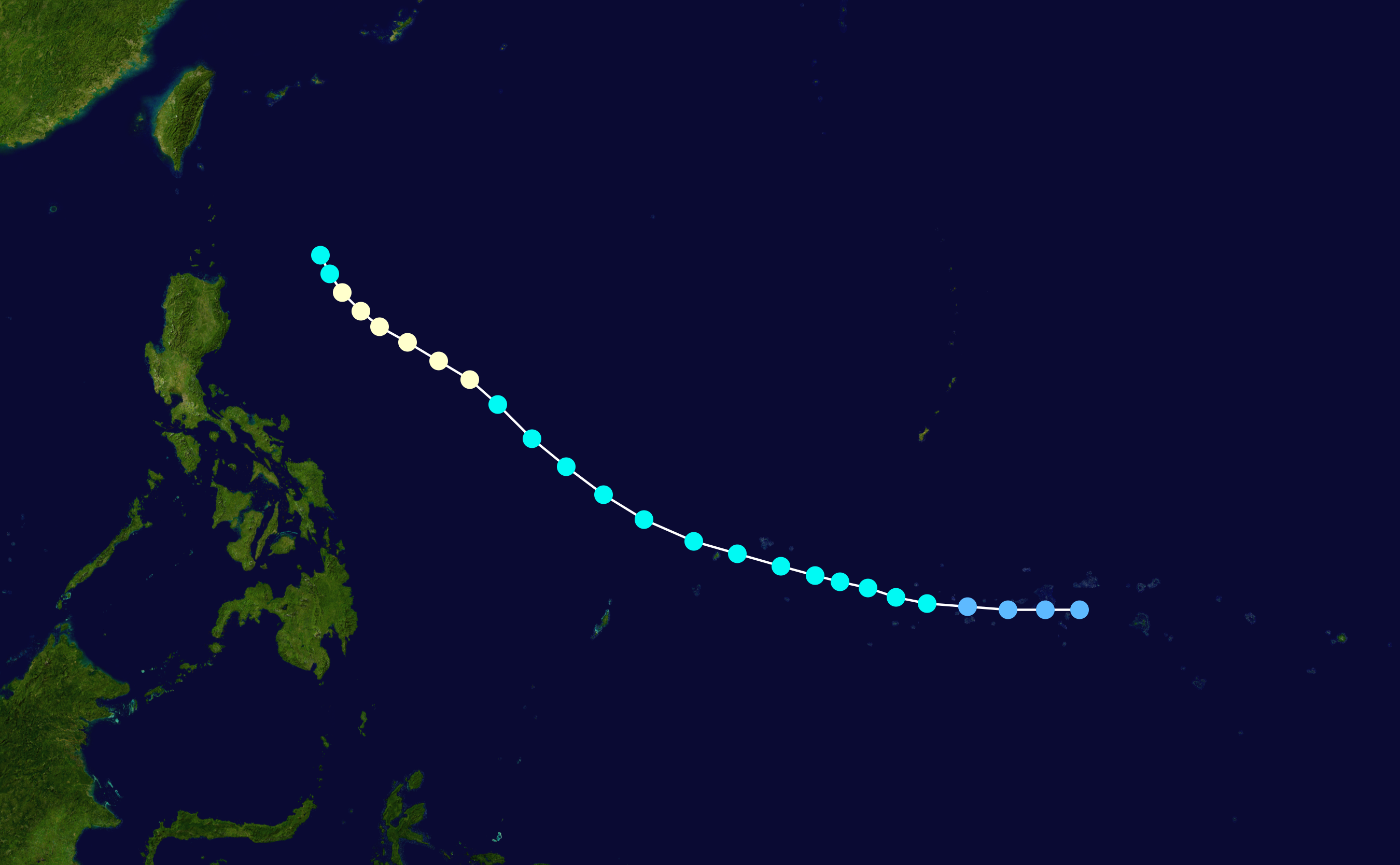
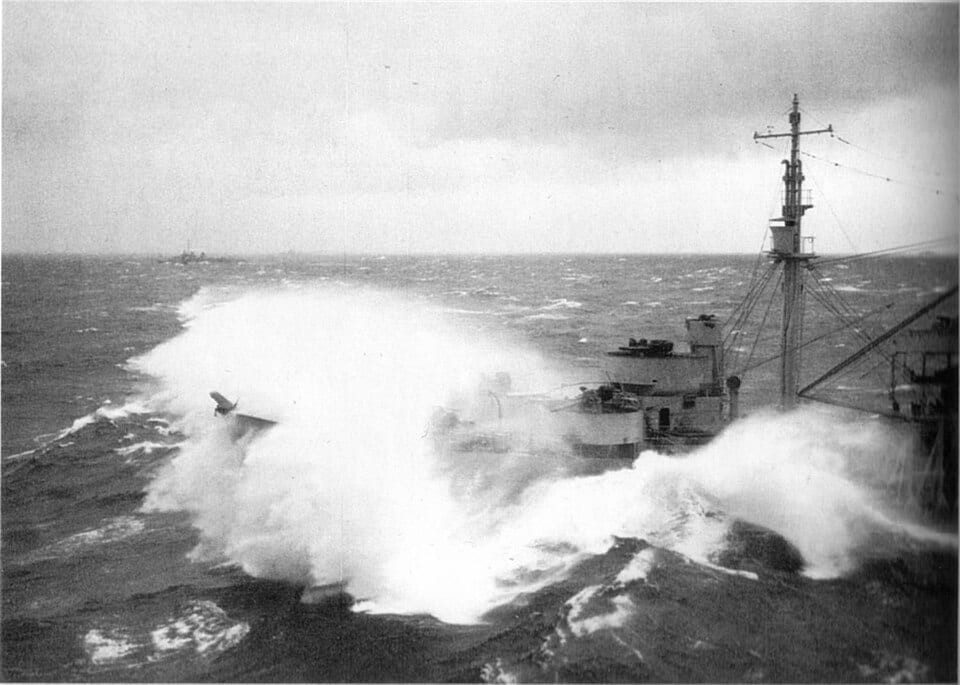
However, conditions on the morning of December 18 were not much better. At around 6 a.m., There were reports of strong winds that began to intensify to hurricane force, gusting well above 100 mph (160 kph). By 10 a.m., weather monitors in the fleet recorded pressure falling “very, very rapidly,” which indicated that a typhoon was already in the area. At 1:45 p.m., Admiral Halsey finally issued a typhoon warning, the first official mention of the typhoon, when he reported to Fleet Weather Central. Even then, the ships experienced frighteningly gigantic waves. Soon, the destroyers rolled more than 70 degrees, while carriers bucked and pitched in the turbulent water. Visibility dropped to mere feet and aircraft that had been lashed to flight decks broke free or were smashed into bulkheads.
Destroyers, which were smaller, more vulnerable warships, had been used intensively in combat and were desperately short of fuel, leaving them with lighter ballast and reduced stability. Some ship captains filled their fuel tanks with seawater to add weight, but it proved to be too late; three destroyers succumbed to the wild sea and capsized. These were the USS Spence, USS Hull, and USS Monaghan. Only a handful of the crews of the three ships survived.
In all, 790 American sailors lost their lives, three destroyers sank, 146 aircraft were destroyed or blown overboard, and dozens of other vessels suffered significant damage.
_during_Typhoon_Cobra.jpg)
The aftermath
The tragedy wrought by Typhoon Cobra triggered intense scrutiny, particularly with the US military. An American Navy court of inquiry convened aboard the USS Cascade at Ulithi Atoll examined the actions of the fleet’s commanders and tried to piece together the sequence of events leading up to the disaster.
The panel found that Halsey had made “errors in judgment” by keeping the fleet on station and into the path of the typhoon but stopped short of recommending any punitive measures. The reasons cited included wartime pressures, incomplete weather data, and the tension between operational objectives and safety.
The court likewise recommended improvements in weather forecasting, naval vessel handling in extreme conditions, and fleet procedures. Many of these suggestions helped shape future practices, leading eventually to advances in storm tracking and the eventual creation of coordinated warning systems, which eventually led to the creation of the Joint Typhoon Warning Center.
While Typhoon Cobra might initially seem like a naval footnote to the overall story of World War 2, particularly in the Pacific Theater, it does hold significant importance in the grand scheme of things, especially for Filipino war historians and enthusiasts. In addition to happening within the Philippine Sea (not in the general expanse of the Pacific Ocean), it happened in the midst of the campaign to liberate the Philippines. While some historians debate exactly how much or how little effect the loss of ships and lives in the typhoon had in the Allied campaign, there’s no denying it was a setback particularly for the Americans and its air strikes that supported the ground troops.
Of course, it’s also a stark reminder that the devastating typhoons that the Philippines experiences on a regular is not a recent phenomenon and in fact can be traced back many, many years throughout the country’s history.
Sources:
Typhoon Cobra—The Worst Natural Disaster in U.S. Navy History, 14–19 December 1944
View More Articles About: