Analysis: If the Lopezes Sell, Who Gets Paid, and Who Gets to Know?
In the five-month Lopez family saga, there is one, inescapable fact: someone has to put money in.
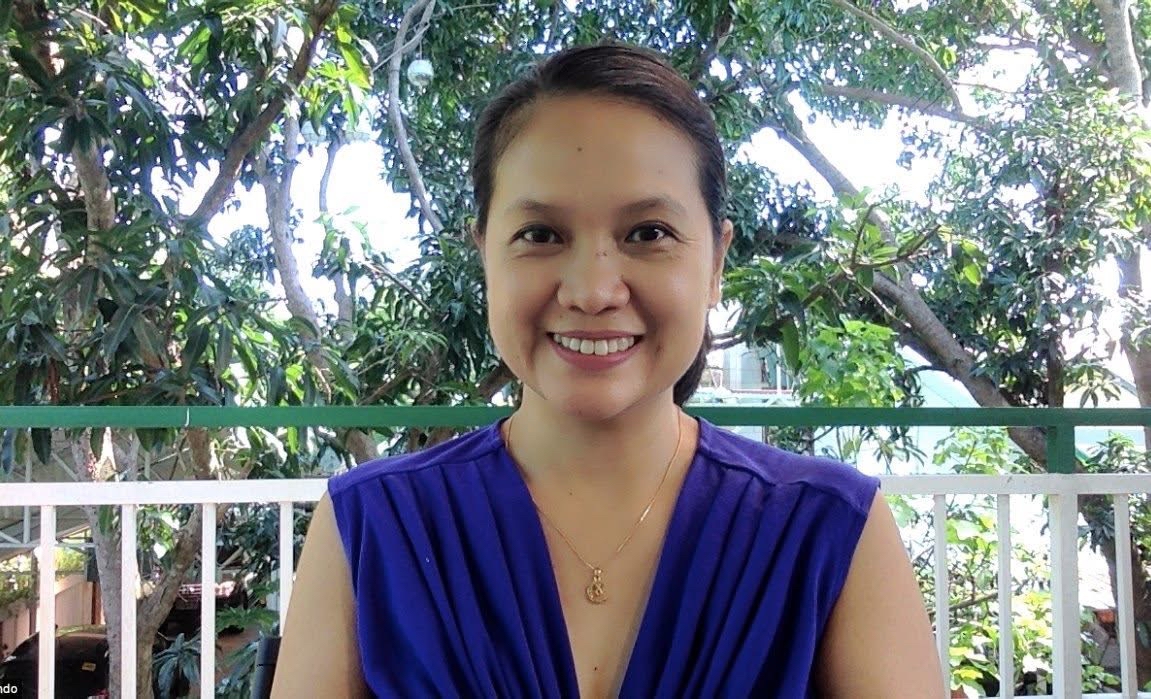
by Lala Rimando
Published on Aug 3, 2026
By March 2026, ABS-CBN owed money it did not have the cash to cover within the year. It owed producers for shows already made, employees for benefits already earned, government for taxes already due, and banks for loans that had come due all at once. Its own auditors used the phrase companies dread most: “a material uncertainty exists that may cast significant doubt on the group's ability to continue as a going concern.”
On paper, 34 years after it listed on the stock exchange, everything ABS-CBN owed added up to slightly more than everything it owned. Its book value, the accounting math behind its own balance sheet, had gone negative by about P66 million as of March 31. The stock itself still traded, still had real buyers, worth about P3.1 billion in total at its most recent close, roughly 47 times what the balance sheet alone said the company was worth, because the market was pricing what the company might earn later, not just what it owned that day.
Someone has to put money in. That is the plain fact behind five months of rumors about the Lopez family: outside investors, white knights, whether the third generation is preparing to sell the empire their fathers and grandfather built. The fight over who controls Lopez Inc. has been covered as a family drama. Underneath it is a narrower question almost nobody has asked out loud: if money comes in, whose account does it land in, and who has to be told.
There are four ways this can go. Each one pays a different set of people, hands a different amount of control to whoever is buying, leaves third generation cousin Federico “Piki” Lopez standing in a different place, and triggers a different set of obligations to the ordinary shareholders who own pieces of the Lopez companies and have not been able to vote on anything since the annual meetings began to be postponed.
ALSO READ
Explainer: Who Really Owns Lopez Inc.—and Why the 29% Cousin Is in Charge
The Long War: What the Lopez 'Ceasefire' Really Says About Power and Fatigue
First, the shape of the thing
Lopez Inc. is private. It does not trade, and it answers to no one but its own four owners, one holding company for each branch of the family's second generation. The branch of the late Oscar Lopez, represented today by his son Piki, holds just over 29 percent. The branch of the late Manolo Lopez holds a matching share. The branch of the late Eugenio “Geny” Lopez Jr., led today by his son Eugenio “Gabby” Lopez III, holds about a quarter. The branch of the late Presentacion “Presy” Lopez holds the rest, just under 16 percent. The last three together, just over 70 percent, voted in February to remove Piki as president. A Mandaluyong court order has kept him in the chair since March.
From Lopez Inc. the ownership runs downward through a listed holding company once known as Benpres, then into First Philippine Holdings. First Philippine Holdings owns about 68 percent of the economic shares of First Gen, the group's main power-generation company, and separately holds all of First Gen's voting preferred shares, the class of stock that actually decides who sits on First Gen's board, regardless of the economic split. First Gen holds the family's stake in the geothermal producer Energy Development Corporation, and First Philippine Holdings separately controls the developer Rockwell Land.
Renewable energy firm First Gen is where most of the family's wealth actually sits now, more than the media company ABS-CBN ever was. Do the arithmetic all the way down from Lopez Inc., through the holding company Lopez Holdings, through First Philippine Holdings, and the family's effective economic claim on First Gen works out to a little over 40 percent, a fraction of a fraction of a fraction. That is the ordinary condition of anyone who owns something through several layers of holding companies rather than owning it outright.
The media company hangs off the tree by a different thread, and it is the thread that decides who runs it. By ABS-CBN's own filings, Lopez Inc. holds 56 percent of the company's economic interest but 79 percent of its voting rights. The gap exists because ABS-CBN's capital is split into ordinary shares and a much larger block of preferred shares that carry almost no dividend rights but vote like any other share. Whoever holds those preferred shares controls the company far more cheaply than the economics suggest, and it is worth remembering that fact every time someone talks about buying into ABS-CBN, because buying the economics and buying the vote are not the same purchase.
Door 1: Someone puts new money into ABS-CBN
This is what people usually mean by a white knight. The investor does not buy anyone's shares. The company issues new ones it is legally entitled to sell but never has, and the cash goes into the company's own account, where it pays down what is owed.
There is a ceiling on this door. ABS-CBN last raised money by issuing new shares in January 2014, selling about 92.5 million shares at just over P43 apiece. Since then it has only handed out small amounts of stock through employee purchase plans, so the share count has barely moved in over a decade. What remains unissued under its charter, roughly 400 million shares, would raise somewhere between P700 million and P1.9 billion at the prices the stock has actually traded at this year, and about P1.4 billion at Thursday's close of P3.44. Against that, the company's current liabilities exceeded its current assets by P13.5 billion as of March 31. A payment on account means covering part of a bill without settling it: the company would still owe the difference, and the going-concern warning already sitting in its own filings would not go away.
To raise anything close to what the company actually needs, ABS-CBN would have to expand its charter, and Philippine law requires two-thirds of the voting shares to approve that. Lopez Inc. alone can supply that two-thirds. Nobody else can supply it without Lopez Inc. Which raises the question this story keeps arriving at from different directions: with the Lopez Inc. board frozen by litigation, who is authorized to cast those votes, and does that person want the increase to happen?
Nobody gets paid through this door. Not the family, and certainly not the public shareholders. The money stays inside the media company, existing owners are diluted, and their only compensation is a company that survives long enough for its shares to be worth something later. It is also the only door through which an investor can walk in without owing the public an exit, because shares sold from a company's own unused capital are treated differently under Philippine tender offer rules than shares bought from an existing owner.
For Piki, this is the door that costs him nothing and settles the argument that started the war. Both camps agree the rupture began when he refused to commit family money to rescue ABS-CBN, a refusal his cousins called abandonment and his own camp called discipline. An outside subscription answers that argument without a peso of family money, leaves First Gen and the energy chain untouched, and quietly dilutes the family's hold on the media company. The cousins who went to war over saving ABS-CBN would end up saving it by giving up part of it. The cousin accused of walking away would get exactly what he asked for, paid for by a stranger.
Door 2: Someone buys the ABS-CBN shares the Lopezes already own
This is a sale, not a rescue. The money goes to whoever sells. The company itself gets nothing.
Three parties could plausibly sell. Lopez Inc. holds the controlling block and needs no public vote to move it, only a board decision, and that board is the one already frozen by court order, which means the injunction protecting Piki's chair also gives him a hand on this door's hinges.
Lopez Holdings, the listed entity one rung down in which Lopez Inc. holds a 54.74 percent voting and economic stake, could sell whatever ABS-CBN shares sit on its own books, though a sale that size would trigger a shareholder vote and give dissenters the legal right to be bought out in cash.
The third entity in the chain, ABS-CBN Holdings, effectively cannot sell at all. It holds about 91.8 million ABS-CBN common shares, roughly 10 percent of the company, entirely to back the depositary receipts already held by the public, and selling the underlying stock would hollow out the very instrument its own investors hold. ABS-CBN Holdings itself is owned 59.5 percent by Lopez Inc. and 40.5 percent by the estate of the late Oscar Lopez and a handful of other family members and executives, which matters because it means this particular layer does not answer only to the three branches currently fighting over Lopez Inc. What a foreigner can buy tomorrow morning is the depositary receipt, not the share: a claim on the economics with no vote attached, which is the only way the Constitution's rule that mass media stay entirely Filipino-owned still allows outside money in.
ABS-CBN closed at P3.44 a share on the PSE on July 31. At that price, the company's common shares are worth about P3.1 billion in total, which puts Lopez Inc.'s 56 percent economic interest at roughly P1.7 billion, a startlingly small number for the asset sitting at the center of this fight. In January 2022, the family itself paid P500 million for a smaller block of the same stock. That same block, at Thursday's price, is worth about ₱113 million, roughly a fifth of what it paid four years ago. Whoever sells now sells into the bottom of the market.
A buyer of Lopez Inc.'s controlling block in ABS-CBN Corporation itself, not ABS-CBN Holdings, would be legally required to offer every remaining public common shareholder the same price. At P3.44 a share, that offer would put roughly P1.4 billion in front of the public shareholders who hold the rest of the common stock, the only exit anyone has put in front of them in years.
For Piki, this door leaves him better off than he is today on the narrowest reading. The cash drain leaves the group, his branch shares in whatever the sale brings, First Gen stays untouched, and the ABS-CBN argument finally ends. What the family would be giving up is the business that made the Lopez name a household one, and Piki, protected by the injunction that keeps him in the Lopez Inc. chair, would still be sitting in it when that happened.
Door 3: An investor buys the majority cousins' stake in Lopez Inc. itself
Now the deal moves to the top of the tree, and the numbers change by an order of magnitude.
Every layer of this structure trades for less than the sum of what it holds, a discount analysts apply to any holding company, and what it means in practice is that the same power plant is worth less the further up the family's ownership chain it is measured.
Lopez Holdings itself, the layer just below Lopez Inc., carried a stock market value of about P26 billion at Thursday (July 30)'s close, and Lopez Inc.'s 54.74 percent of that alone is worth roughly P14 billion, before counting what Lopez Inc. holds directly in ABS-CBN and elsewhere. Put the whole of Lopez Inc.'s holdings together and a reasonable market estimate lands somewhere between P15 billion and P20 billion, which puts the majority cousins' 70.83 percent in a range of roughly P11 billion to P14 billion. Any real offer would carry a premium well above that range, because what is being bought is not a bundle of minority stakes but the right to appoint every board in the group.
The number that matters more sits outside the family entirely. In July, Barito Renewables made an unsolicited offer for the geothermal unit EDC alone that valued it at more than $5 billion dollars, well over five times what the whole group paid to privatize that company in 2007. Against the market, an offer for Lopez Inc. looks generous. Against what outside bidders are now saying the assets underneath are actually worth, the same offer starts to look cheap. That is where a negotiation would start.
Whoever sells would be the three majority branches, not Piki's. His branch gets nothing from this door and is not asked to sell. Whether it can even be left out depends on paperwork nobody outside the family has yet seen, the Lopez Inc. articles of incorporation, which may give the remaining branch the right to match any outside offer before it can close. That single document may be the most consequential piece of paper in this entire story, and it is a matter of public record at the SEC.
A tender offer would follow at every listed company down the chain, because Philippine law, settled by the Supreme Court nearly two decades ago in a cement company dispute, treats an indirect change of control the same as a direct one. A buyer of Lopez Inc. would owe an exit to the public shareholders of every listed company underneath it: the holding company, First Philippine Holdings, First Gen, Rockwell Land, and both ABS-CBN entities. Add up what the public holds in all of them and the cost of buying everyone out could run into tens of billions of pesos on top of the purchase price itself, which is part of why buyers in deals like this usually ask the regulator to narrow the obligation before they sign anything.
Buying 70 percent of Lopez Inc. gives an owner, on paper, the power to work down through four boards and eventually remove Piki from the company that holds the family's most valuable assets. In practice, that power is far more expensive to use than it looks. First Gen's own contracts with its infrastructure partner Prime Infra make it extraordinarily costly to do. The triggers written into those contracts are not about who owns Lopez Inc. at all. Every one of them is about Piki's own position: whether he remains chief executive, whether his people remain on the board, whether he keeps his seat at First Philippine Holdings. A buyer can therefore acquire the top of the tree without setting off anything. The clause fires only when the new owner actually tries to use what it bought. Pull that trigger and First Gen's own disclosures put the total bill at P23.5 billion: P15.5 billion from Prime Infra's right to buy out First Gen's hydropower stake at a 25 percent discount, plus P8 billion from the same discount applied to First Gen's remaining gas stake. That figure is separate from a P24.75 billion bank facility from BDO that can also be recalled on the same trigger, with its own risk of spreading a default across the wider group.
Piki's camp says the provisions were requested by the infrastructure partner, approved by a full board, and are standard for a deal this size. The majority cousins say the effect, intended or not, is an architecture that protects one insider against his own board, and that it only became public because they made it so. Both readings belong in this story, and a buyer sitting across the table from either camp would find the argument beside the point. What matters to a buyer is that the price tag for full control includes a second, contractual price tag for actually exercising it.
Piki himself, if this door opens without him, would end up holding a minority stake in a private company he no longer runs, with no stock market to sell into and no legal right to be bought out. A minority shareholder in a public company has real protections: a vote, the right to sue a board, sometimes a guaranteed buyout. Piki would have none of those. What would stand between him and removal would not be law but the price tag itself: P23.5 billion, written into First Gen's own contracts with Prime Infra.
First Gen was later sanctioned by the Philippine Stock Exchange this year for multiple violations of disclosure rules, tied to these same contracts. The exchange's notice does not spell out which specific filings triggered the penalty, how much First Gen paid, or whether the company contested it. But the gap between what gets signed and what gets told to the public, on time, is the real subject running underneath every door in this story.
Door 4: An investor buys the whole company, Piki's branch included
Everything in door three applies, with two differences. The price rises by roughly the share Piki's branch would add, and the buyer gets a clean company instead of a war they inherit along with the assets. That is worth paying for, and Piki knows it.
It may not happen anyway, because Piki has the better set of alternatives. His branch's wealth sits mostly in the energy chain, and outside bidders are actively repricing that chain upward right now. If the interest in EDC is real, First Gen can raise money by selling pieces of what it already owns, at prices set by people bidding for those specific assets, without anyone selling a share of the family vehicle at a holding company discount. Selling the family company outright is the cheapest way for Piki to exit and the most expensive way for him to be paid.
The party nobody has counted
There is a fifth set of hands on all four doors, and none of them belong to a Lopez.
ABS-CBN's own loan agreements give its banks a say over most of what any investor would want to do: paying dividends, raising new capital, selling assets, taking on new debt. ABS-CBN has spent the past two years asking those banks for waiver after waiver just to stay in compliance. Two of its biggest loans, a P5 billion facility from BPI and a P4.75 billion facility from UnionBank, have already been extended past their most recent deadlines without a clean resolution. The property pledged as collateral, mostly real estate including parts of the company's original broadcast compound on Mother Ignacia Street in Quezon City, has lost roughly a third of its appraised value in a single year, from P18.3 billion down to P12.2 billion, because the company has been selling pieces of it, including to Ayala Land, to pay debt down.
Whatever the family decides, the creditors have a vote. Right now the creditors may have the loudest one.
A former banker, Lala Rimando wrote about Philippine business and managed newsrooms for over 25 years. She’s now based in La Union, working on the biography of the late John Gokongwei.
View More Articles About: