Opinion: Does Star Wars Echo Contemporary History?
It was improbable that Emperor Palpatine/Darth Sidious would be back after his death in Return of the Jedi. But not that long ago, in a place not that far, far away, real life echoed the same thing.
Published on May 5, 2026
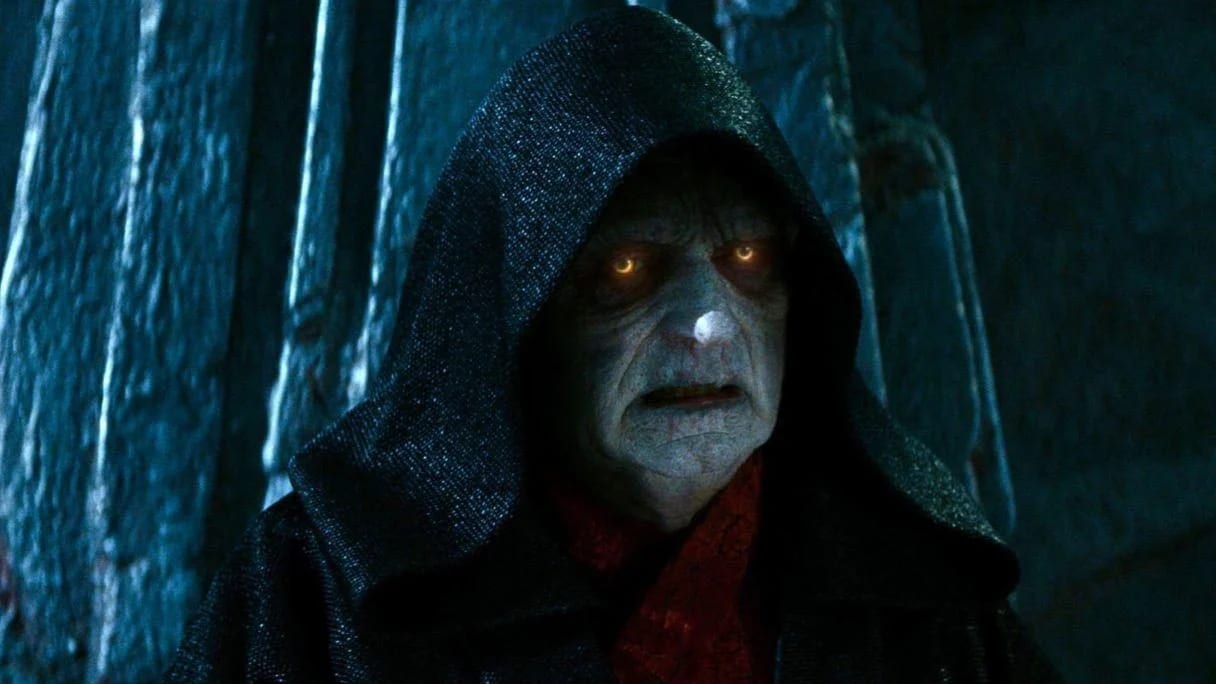
"Somehow, Palpatine returned." This was a throwaway line uttered by Poe Dameron in the trailer for 2019's Star Wars: The Rise of Skywalker. It preempted Darth Sidious’... Well, an abrupt return, a crucial plot point of the film, without any real explanation. The line, which actor Oscar Isaac recently said was a product of last-minute reshoots, was memed and crucified by fans who deemed Star Wars at that point to be creatively bankrupt.
Back then, it was improbable that Emperor Palpatine/Darth Sidious would be back after his death in Return of the Jedi. But not that long ago, in a place not that far, far away, real life echoed the same thing. Decades after a sire was toppled, the heir reclaimed the highest position in the land.
Walden Bello in his book “Counterrevolution: The Global Rise of the Far Right” decried that neoliberalism as a world order following the Cold War has failed. It drove democracies through economic crises, which made them turn to nationalist right-wing politics in the 21st century. Bello was referring to the Warlord as a response to preceding administrations’ neoliberal leniency as an example for his thesis. And we know how the Warlord opened the gate for the Heir’s rule in 2022.
Emperor Palpatine was defeated by Luke Skywalker and the Rebel Alliance in Return of the Jedi, released in 1983. The Sire was toppled by a peaceful revolution forty years ago, in 1986. Somehow, they’ve returned. Are Bello’s protestations also applicable to Star Wars? Maybe Palpatine’s return was inevitable—a vision of the future to come. Or maybe a specter of the past has manifested itself in history, which a multi-billion franchise experiencing a creative lapse has only accidentally made bare.
A Tale of Two Republics
A Star Wars fan knows that the Skywalker saga, consisting of the main 9 films, is just a small part of its world. Its lore is in a perpetual state of amendment, i.e., subsequent entries recontextualize the whole story. Star Wars is a franchise where all media—albeit films, live-action and animated series, novels, comic books, and video games—are considered to be in an equal plane of canon.
The expanded novelization of Rise of Skywalker gave a simplistic explanation to Palpatine’s return: cloning. But to fully understand the machinery and ethos that allowed the rise of the First Order, one needs to look deeper.
The Aftermath novel trilogy sees the Rebellion hunt the Empire’s remaining forces after the Emperor’s fall in the Battle of Endor. The Battle of Jakku shows the Empire finally defeated, making Imperial remnants retreat to the Unknown Regions. From there, the Empire
reorganized as the First Order and bid its time slowly rebuilding its ranks and gaining influence.
The New Republic is established after the ruin of the Empire. At first it was ruled with competence by then-Rebel Alliance leader Chancellor Mon Mothma. This is the New Republic that we see in the Mandoverse shows. For a time, it chased down Imperial remnants, making sure the Empire was unequivocally vanquished. Soon, however, it will be plagued by complacency after Mothma steps down as chancellor due to illness.
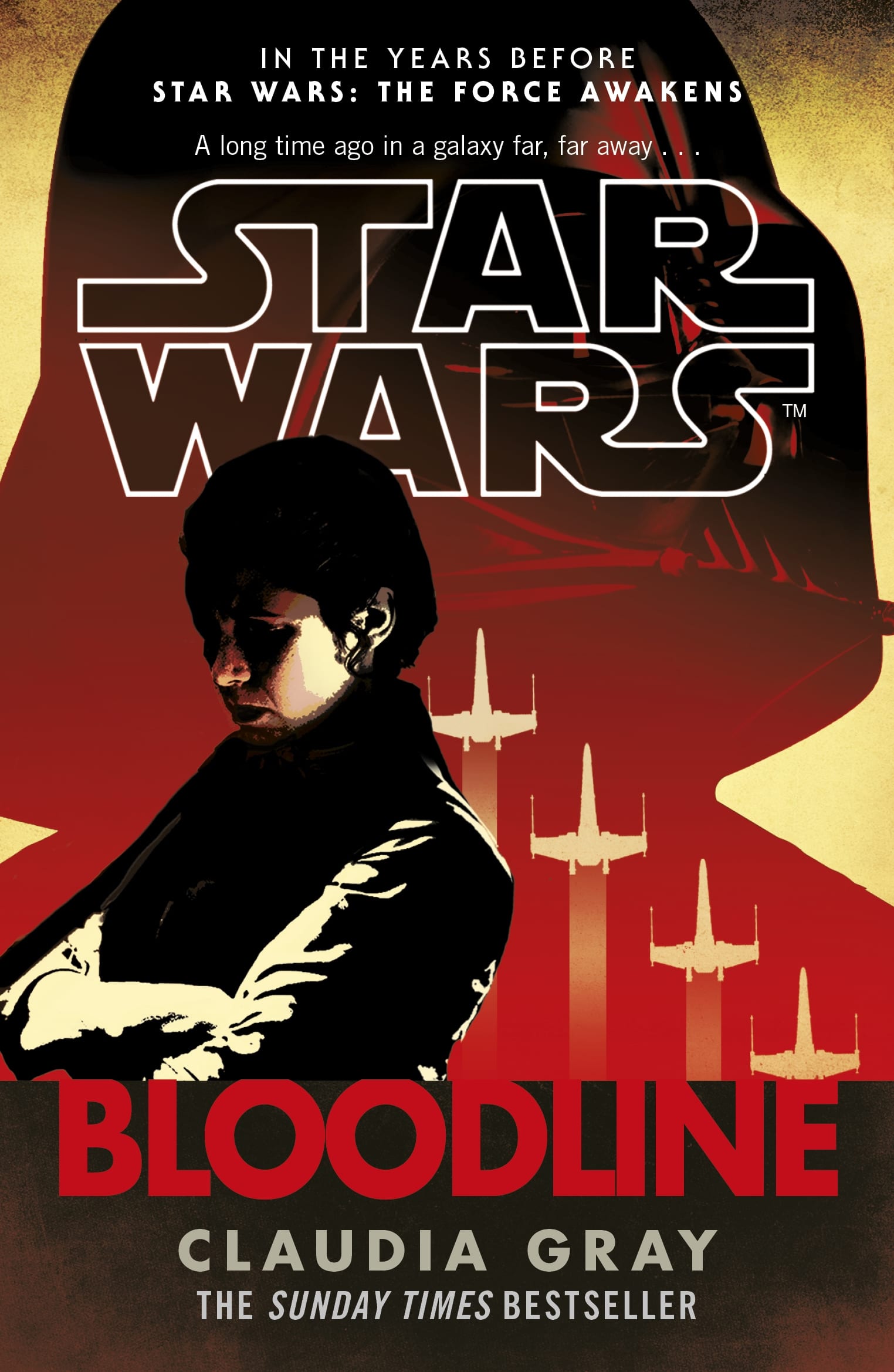
The novel Bloodlines, set over 20 years after Return of the Jedi, sees the Senate of the New Republic divided into two camps: the Populists and the Centrists. The Populists believe in individual world sovereignty, whereas the Centrists believe in a more centralized, militarized governance over all systems—reappropriated ideologies from the Empire’s rule.
The creeping acceptance of imperial philosophy back to the political mainstream allowed the resurfacing First Order to exist as a semi-legal entity and manipulate Centrist actors to unwittingly aid in its reform. This is best exemplified through Senator Ransolm Casterfo, a well-meaning Centrist blinded by Imperial nostalgia and rehabilitation. Casterfo, who has a collection of Imperial artifacts, believed that while the Empire itself was uniformly evil, aspects of it could be redeemed and utilized by the New Republic for more effective governance over pluralistic systems. In the end, Casterfo realized the error of his beliefs too late when he himself was imprisoned by the growing successor to the empire he once admired.
Soon after, then-Rebel Senator Leia Organa saw the true threat of the First Order. She looked for allies new and old, but she soon found the galaxy not as sympathetic to her cause as it once was against the Empire. The Resistance’s size ultimately paled in comparison to the Rebel Alliance’s. Like Casterfo, the galaxy awakened to its blindness only when it was too late. The First Order, echoing the Empire before it, used the superweapon Starkiller Base to destroy the New Republic based in Hosnian Prime, as seen in The Force Awakens. The First Order was treated as merely a nuisance by a complacent, demilitarized New Republic until its end.
The New Republic’s bureaucratic complacency is a disease also seen in the Republic established in 1986 after the peaceful revolution. The family fled like the imperial remnants did. They also had decades to repossess the political influence they once had.
Political actors within the regime turned over a new leaf and were embraced back by the government without much repentance and with little consequence for their past deeds. No one from the regime was ever properly tried, convicted, and sentenced. There’s popular discourse arguing the peaceful revolution wasn’t really much of a revolution, saying the rot that festered during the sire's rule hasn’t been purged and continued well past his successor.
This lax attitude toward accountability is the main reason why after their return from exile, the family was still allowed to hold power. The Heir ran after his return in 1991 and won. This was followed by stints as governor and senator. “The child is not like the father,” the Heir’s supporters would always say. It is the same rhetoric also used by the Populists to defend Leia Organa, albeit in a noble cause, when the galaxy found out about her relation to Darth Vader amidst her bid for first senator.
Disinformation campaigns seeking to rehabilitate the image of the Sire also abound. False nostalgia and narratives of a golden age target the destitute seeking alternative realities. The truth continued to be contested.
After 2022, why was the heir easily accepted through a democratic win? Why was it met with only whimpered wails from the opposition? More importantly, what cracks in policies allowed the Heir to contest in the first place?
Forty years later, I continue to ask these questions as the Empire tears itself apart. The populace has turned its back against it. But why was the spirit of revolution evoked only now after scandals broke out and not back then in 2022?
Are the people like Ransolm Casterfo, who craved a more authoritarian rule to address the disproportionate growth that neoliberalism allowed to prosper? Does their reaction to the failed promise of neoliberalism echo the New Republic’s hubristic complacency?
The Limits of Fiction
Throughout this exercise, Star Wars is used as a lens to view real history. While it is fun and potentially illuminating, it does not in any way aim to flatten the rich and complex ridges of history that history books provide. Politics has many nuances which this article did not touch upon like political dynasties, regionalism, colonialism, etc.
As a defense to inevitable criticism of this think piece: Yes, while there are expressionist strokes of similarity, contemporary history is far from modern Star Wars canon.
Fiction is a blank slate. Slap it over any context and you will inevitably find neat superimpositions. Star Wars and its various eras have been used as a metaphor for various real histories from different regions since 1977—like World War II, the Cold War, the wars in the Middle East, etc.—and will continue being a metaphor for other conflicts in the future. This is how classics remain and will be relevant.
Instead of seeing how real history reflects Star Wars, we should look at it in reverse. The sequel era adopts historical trends that have been present for years by the time of its inception to fill and smoothen out its lore. Truth is in fact stranger and more interesting than fiction, as shown by how fiction subsumes what’s true.
Conversely, in consuming fiction, we should hold a mirror to ourselves and ask questions regarding the tides of history closer to us.
View More Articles About: