Rappers Who Built the Hip-Hop Sneaker Game
Whether MC, DJ, breaker, or graffiti writer, practitioners of hip-hop culture’s four pillars have always had fresh sneakers, way before hype took over.
by JV Emmanuel
Published on Aug 28, 2026
Hip-hop culture rose from city streets and was nurtured by the movement of the people, from those who dance, those who rap, those who spin records, to those looking for the perfect spot to tag. Hip-hop’s long relationship with sneakers feels preordained. But the road to today’s unending supply of brand collaborations and limited releases was long and winding - here are some of the legends who blazed the trail for future greats to follow.
"My Adidas"
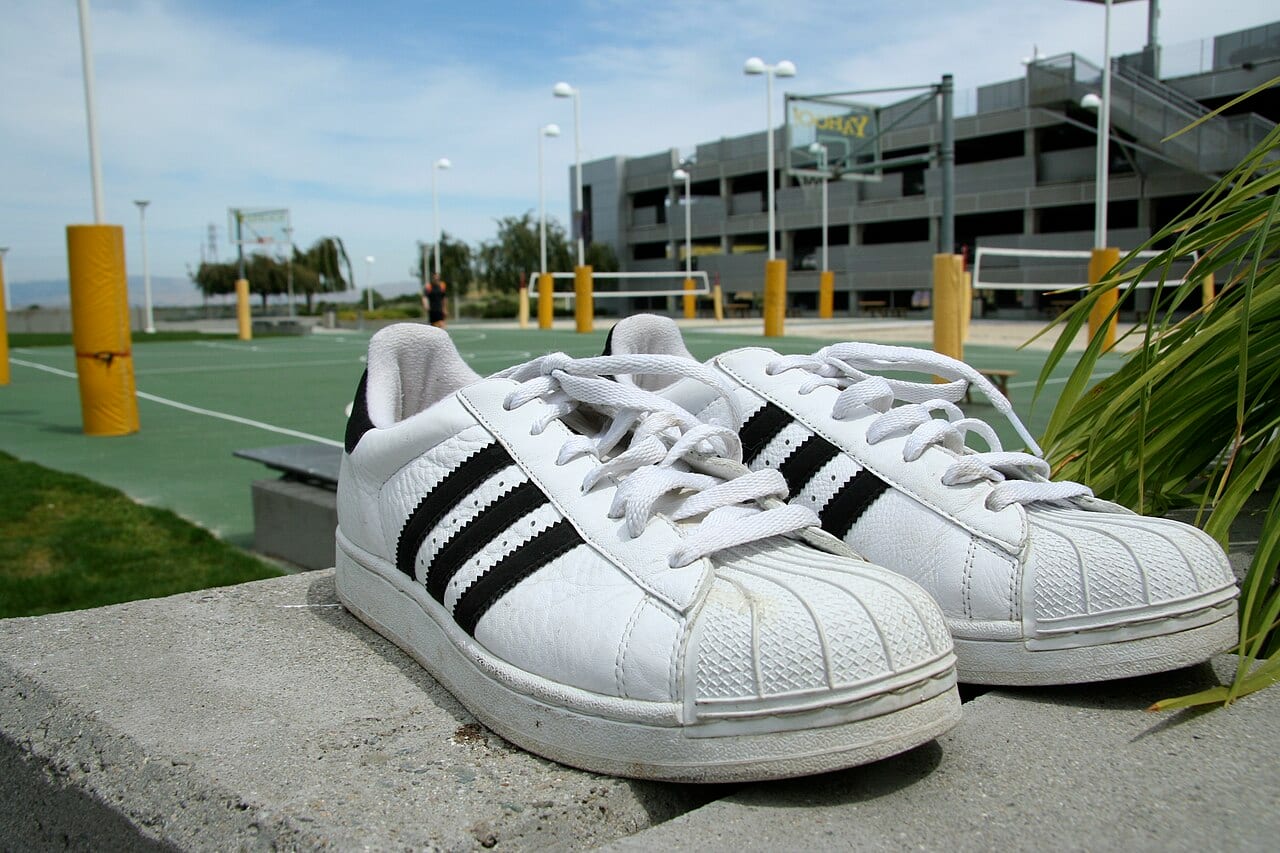
The Adidas Pro Model, released in 1969, was billed as the first all-leather low-top basketball shoe, the pinnacle of basketball performance footwear. Adidas wouldn’t have guessed that the Pro Model, now known as the Superstar, would go on to be one of the brand’s best-selling products, a longtime crowd favorite, and a mainstay of hip-hop for decades to come.
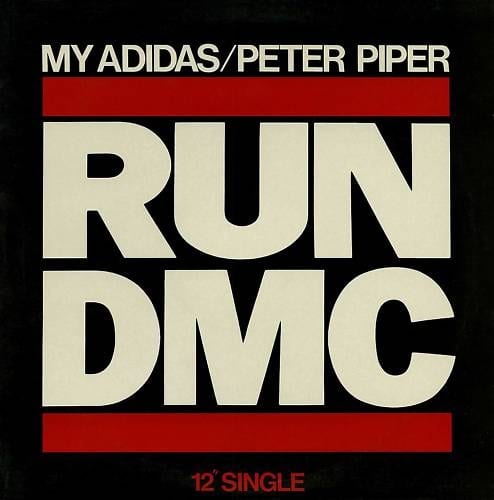
So it only made sense for there to be a rap song about Adidas sneakers, just as rap was gaining mainstream popularity, and wind up being one of the most recognizable rap anthems ever. In 1986, RUN DMC did exactly that, with their single “My Adidas.” The track was a certified hit on the radio, on the streets, and for the German apparel giant who eventually inked the Queens-raised trio to a million-dollar endorsement deal - the first partnership between a sneaker brand and a non-athlete.
Ladies Love Cool James
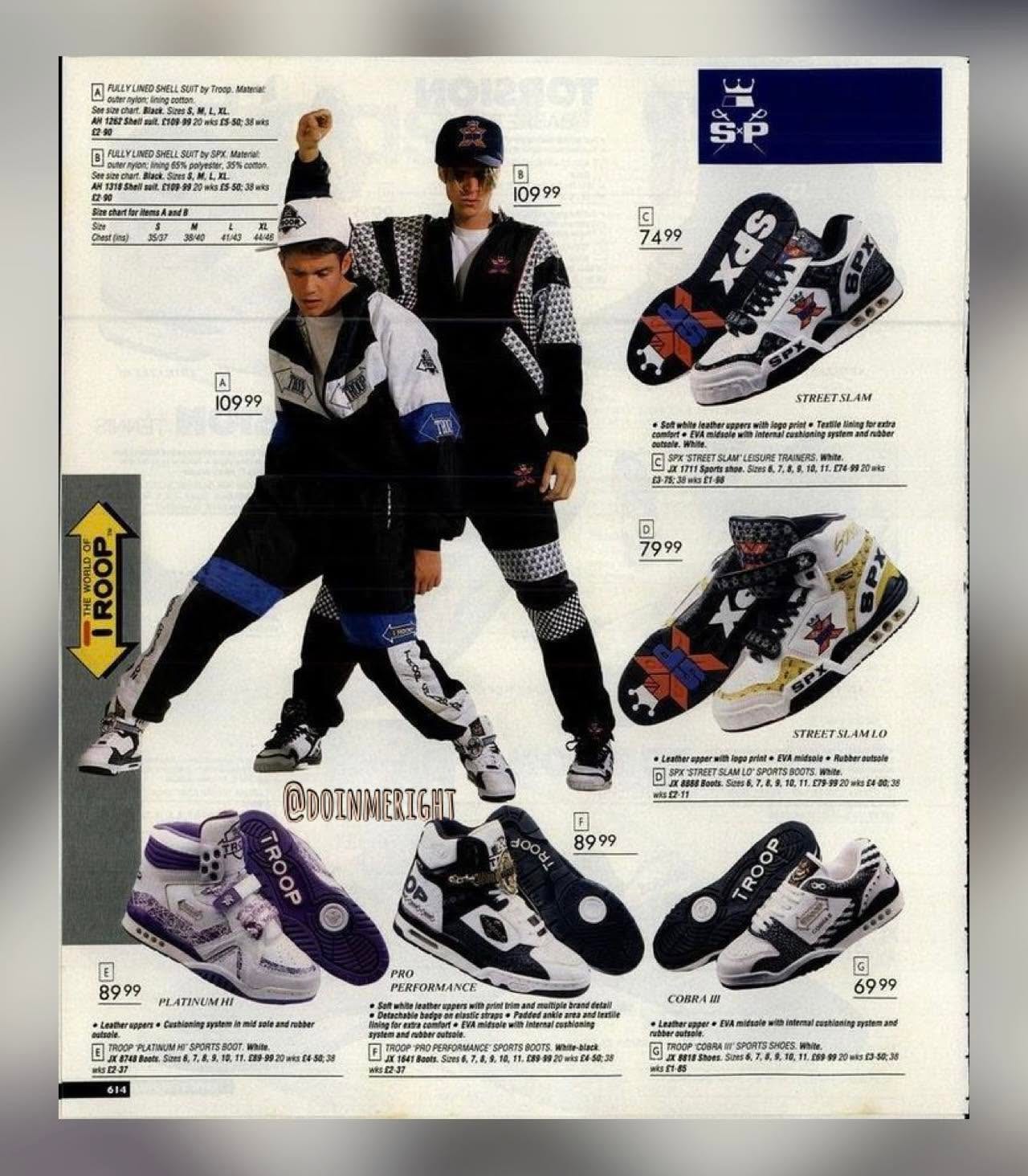
The pop culture explosion of the ‘80s paired with rabid consumerism meant everyone was racing to buy the coolest thing on TV and film, and making sure they had the latest and greatest money could buy. The same was happening in hip-hop, as more people adapted its swagger and excess, both in dress and lifestyle. Twenty-five-year-old Teddy Held, owner of influential Bronx sneaker store Jew Man’s, decided the time was right for a brand to cater directly to hip-hop’s sensibilities—with his brother Harvey and business partner William Kim, Held launched TROOP in 1985.
TROOP did everything bigger and louder than everyone else, with accents, metal studs adorning their leather jackets and ultra-high-top sneakers. By 1986, it had signed one of rap’s first superstars, James Todd Smith, a.k.a. LL Cool J, to a lucrative multi-year deal.
Sadly, TROOP’s undoing came just as quickly as its ascent, but it undoubtedly proved that a grassroots brand, with the help of some star power and a huge dose of authenticity, can compete with the big names of the industry
Can’t Touch This
British Knights began in 1983 as an apparel brand that focused on casual wear—the brand recognized early on that many people rocked the sneakers and apparel not for performance purposes, but simply to look good.
In the early ‘90s, at the height of their powers and their very public feud, British Knights signed both LL Cool J (who had just left TROOP after controversies sank the brand) and Grammy Award winner, multi-million record seller, and whose name is forever attached to a kind of pants, Stanley Burrell, better known as MC Hammer.
The unprecedented U.S. $138 million endorsement deal with MC Hammer proved successful, as the sheer gravity of the Hammer’s name catapulted British Knights to global fame, showing definitively that rappers can sell shoes just as well as athletes can, and maybe even better.
No Limit
Having been in the game since 1908, Converse is a brand steeped in history, from giving the world perhaps the very first signature shoe—the timeless Chuck Taylor All-Star—to signing the likes of Julius Erving, Magic Johnson, Larry Bird, and even the colorful Dennis Rodman.
As the 20th century gave way to the 21st, and with Converse experiencing a downturn, the Massachusetts company sought to make a strong statement entering the new millennium, and who better to send that message than one of the most outspoken voices in rap, Master P?
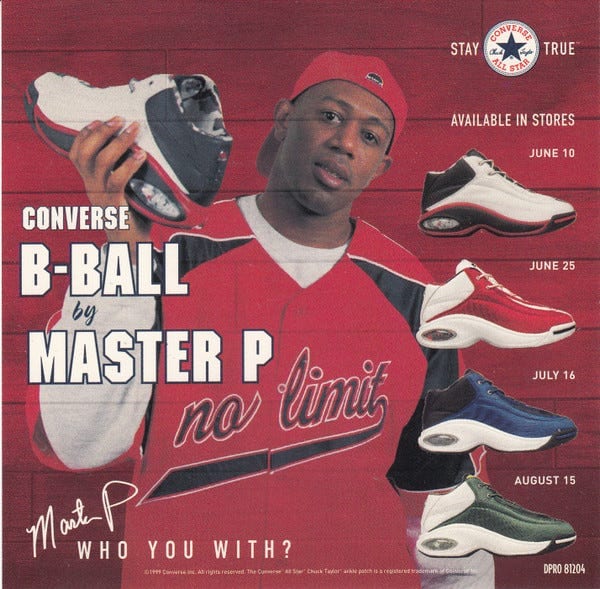
A champion of independent artists, Master P established No Limit Sports in 1999, around the same time the former high school basketball star secured brief NBA stints in the preseason. A rapper who made it to the NBA? Not even Hollywood could’ve scripted it better. Master P immediately parlayed his success and popularity into a deal with Converse.
The partnership initially bore co-branded footwear and apparel, but the year 2000 saw the arrival of something truly groundbreaking, and also sadly largely overlooked. With the All Star MP, Converse created the very first signature shoe designed for a rapper. When once having one’s name on athletic footwear meant being at the 99th percentile of athletic elites, the All Star MP upended a longstanding practice that Converse itself helped pioneer. There is no limit indeed.
Collaborations between rappers and brands seem inescapable these days, and with the likes of Kanye’s Yeezy line and Travis Scott’s Cactus Jack not showing any signs of slowing down, the industry isn’t inclined to stop dipping into that well any time soon.
Nobody really remembers Master P’s signature sneakers anymore, or the vice grip the BK button had on the streets, or how Troop was at one point going toe-to-toe with the latest Air Jordans. People remember RUN DMC but not that they were the first non-athletes to ink an endorsement deal.
Nobody remembers, except for those who were there, and those who choose to look back on times gone by.
Today’s unlimited limited editions are a product of history, and that history had to start somewhere - looking back reminds us of how far we’ve come, and how much further we can keep going.
With fresh kicks on the feet, of course.
ALSO READ:
Today I Learned: The NBA Player Who Changed Basketball Sneaker Deals Forever
Sneakerhead Habits We May Have to Ditch
JV Emmanuel is a writer, photographer, and human rights activist. See some of his photos on IG @gospelchordsonly.
View More Articles About: