Inside Porsche’s Secret Watch Factory
We stopped by the Swiss design HQ to get a closer look at the famous automotive brand's horological process.

by Johnny Davis
Published on Apr 5, 2026
Last week I was talking to a colleague in watch marketing – someone who has spent years at several household-name brands. When I mentioned I’d just come back from Switzerland, where I’d been at the launch of Porsche’s new dedicated watch factory, she looked surprised.
“Porsche makes watches?”
She had no idea.
Fair enough. Most people don’t—Porsche is, after all, famous for making cars. And yet it has turned its hand to some pretty good watches. One in particular is great.
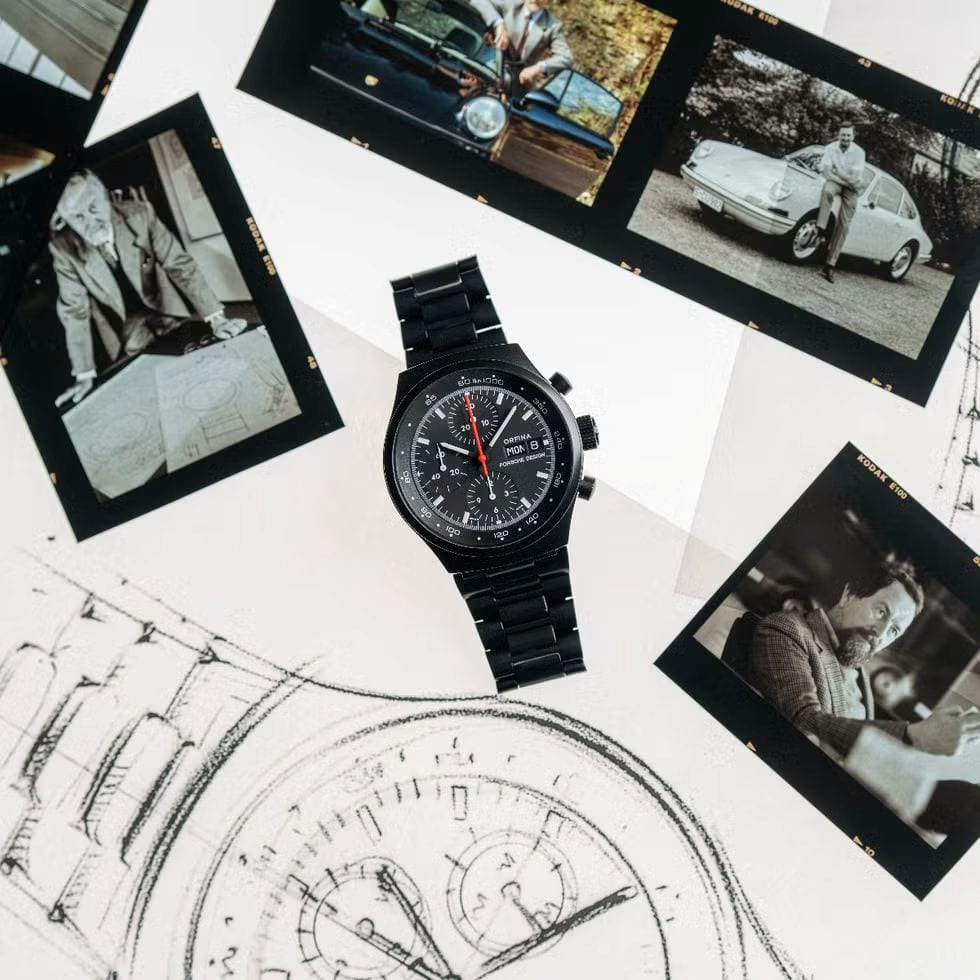
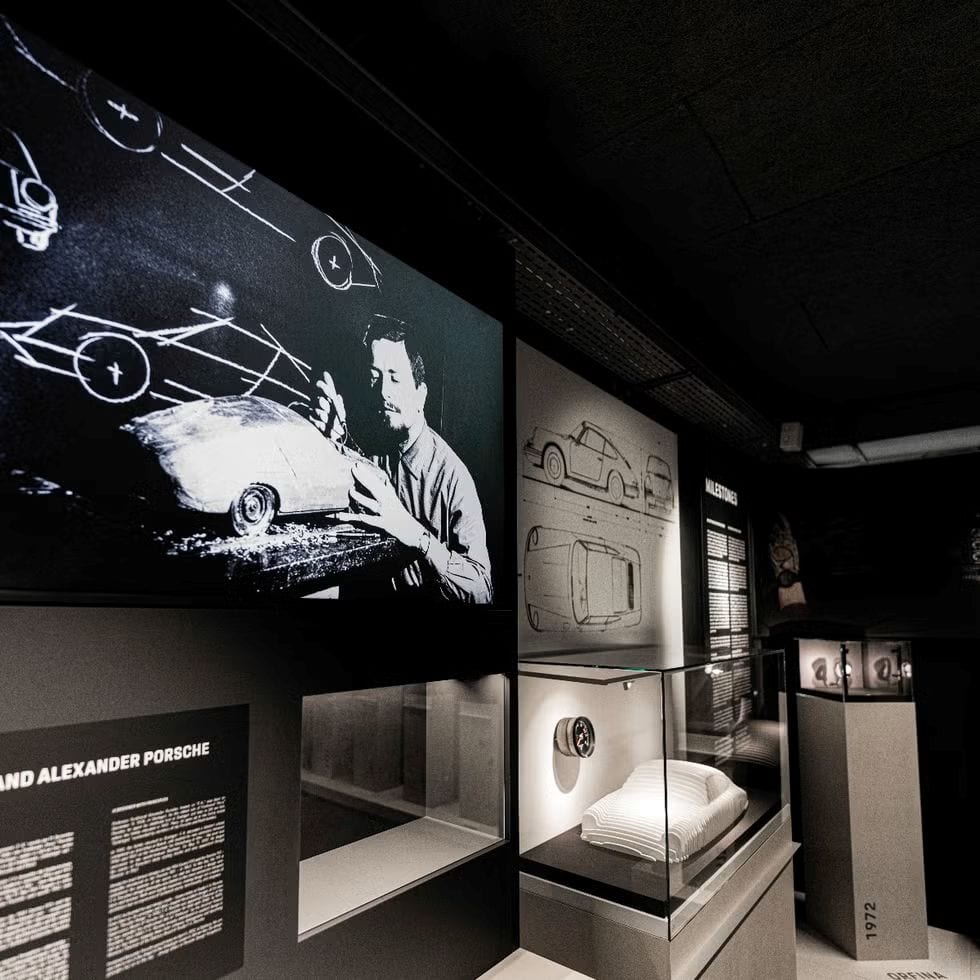
That watch is the Chronograph 1, first launched in 1972 by Porsche Design, the design studio founded by Ferdinand Alexander Porsche, the man behind the original 911.
The relationship between Porsche and Porsche Design is often misunderstood. They share a name and a lineage, but for much of their history they were separate companies. Porsche Design was established independently in 1972, after a restructuring at Porsche barred family members from executive roles.
F. A. Porsche stepped away and built a separate business—one that would become one of Europe’s most influential industrial design studios, spanning sunglasses, luggage and, yes, watches, before his death in 2012. The two have since been brought back together under the wider Porsche group, where Porsche Design sits today, even if the distinction has never entirely disappeared.
As for that first watch, the Chronograph 1, Porsche Design is keen to state that it broke ground as the world’s first all-black chronograph. That's quite a niche claim, but no one has argued otherwise.
Its design is unmistakable, drawn directly from the 911’s dashboard—matte black case and dial, high contrast white markers and a flash of red for the seconds hand. Very instrument-adjacent.
“In the early 1970s, watches were typically decorative – shimmering, jewellery-like objects," as Gerhard Novak, general manager of Porsche Design Timepieces, later explained.
"Once again, as with the 911, Ferdinand Alexander Porsche ignored trends and created something completely different: an all-black watch.”
The Chronograph 1 quickly developed a life beyond Porsche itself. From the late 1970s, versions were adopted by military air forces, including the Swiss Air Force and later US Air Force pilots, valued for their legibility and lack of glare in bright conditions.
That, in turn, led to one of the watch’s more colourful afterlives. Jerry Bruckheimer, researching pilots’ watches for the original Top Gun film, is said to have borrowed one from a Porsche Design store in California for the shoot. Porsche only discovered it had appeared on Tom Cruise’s wrist after viewers recognised it on screen.
The watch was returned afterwards. It turned up again in the 2022 sequel, too, along with the mythology that had built up around it.
Porsche Design continued to make watches—mostly functional chronographs and lightweight, tool-led designs – first with Orfina, which produced the original Chronograph 1, then with IWC, and later with Eterna, the Grenchen-based company known for its work on automatic movements.
There have been strong pieces along the way, including the Sport Chrono Collection and the minimalist 1919 line, but the Chronograph 1 remains the clearest expression of the idea—a watch that looks and feels like a Porsche.
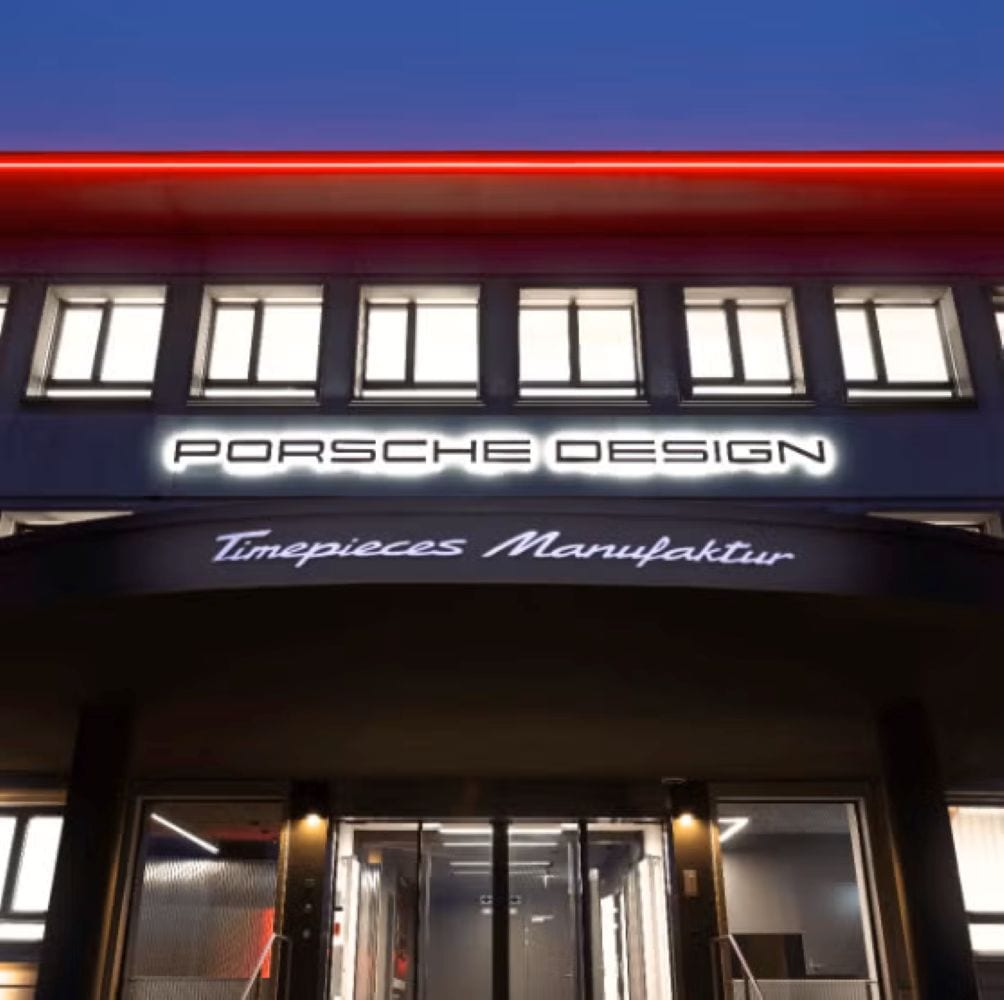
Now Porsche Design has officially opened a new dedicated watch manufactory in a historic 1955 building that once housed Eterna.
Following an 18-month renovation, the site is intended as the company’s first permanent operational base in one of Switzerland’s traditional watchmaking regions—and a clear sign that it wants to be taken more seriously in watches.
I was there with members of the global press who had flown in from as far as America and Japan to see what that means in practice.
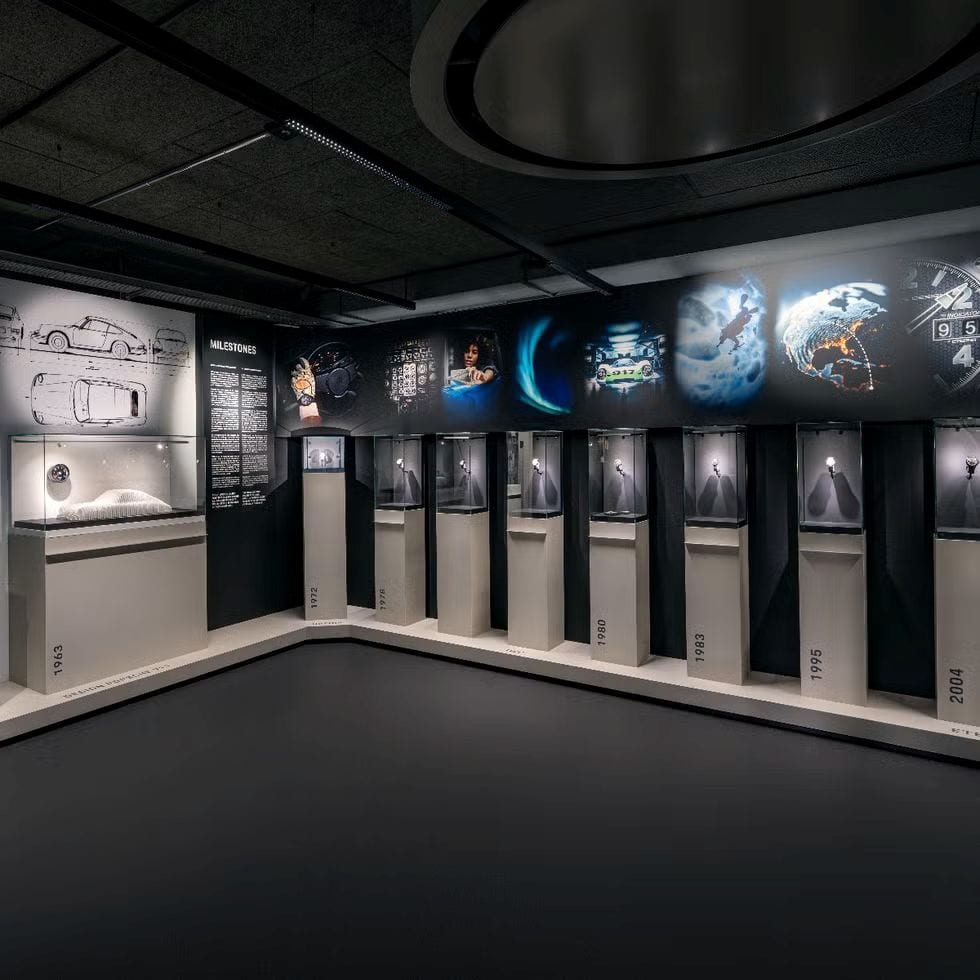
The event began on the ground floor, a mix of presentation and exhibition—archive photography on the walls, watches in vitrines and a crowd made up of press, collectors and industry figures.
Adrian Barker, the watch YouTuber, opened proceedings from the stage, calling it “a significant and rare moment… Porsche Design taking control of its watch manufacturing”. He then introduced Rolf Bergmann, CEO of Porsche Design Timepieces, who set out the thinking behind it.
“Our way of producing watches, our way of creating watches, and our way of fulfilling the dreams of our customers is very special,” he said. “With custom-built timepieces, we need a manufactory that is tailor-made to our processes.”
That custom-built programme sits at the centre of the strategy, accounting for 70 per cent of watch sales. It mirrors the way you configure a 911, extending the same logic of materials, colours and finishes to the wrist.
For example, if your 911 GT3 happens to be finished in Ruby Star with Gentian Blue stitching, those same tones can be carried across—the dial picking up the body colour, the strap echoing the interior, even using the same leather. There is no formal barrier to entry; anyone can configure and order one, although certain limited pieces are reserved for buyers of specific cars. What gives it its appeal is scale.
Officially, the system offers around 1.5 million possible configurations, though when expanded across the full range of colours, rotors and materials, that number runs into the hundreds of millions – making it highly unlikely two watches will ever be the same.
“We do not produce for stock,” Bergmann said.
There was a touch of Hollywood gloss to the afternoon, too: Orlando Bloom, brand ambassador and long-time Porsche owner, took to the stage to talk about his relationship with the company—from falling in love with a 911 as a teenager to buying a 1973 911 S he still owns.
“When I walked through the factory and saw that you could customise your own watch to match your car,” he said, “it was like hallelujah. That is a real moment for people.”
From there, we were taken upstairs for a briefing in a meeting room that had been stripped back during renovation to reveal part of the original 1955 building. The heavy wooden door is original; inside, the floor, hidden for decades, has been restored.
“We did not expect the room to look like this,” one of the team said. “It was quite a surprise when we removed the covering.”
It is here that Bergmann gave the clearest account of what the new facility is actually for. In Solothurn – Porsche Design’s previous, smaller production site around 15 kilometres away—the company could launch its made-to-order programme, but not develop it in the way it wanted. In Grenchen, development, engineering, assembly, quality control and after-sales are now brought together under one roof, in a building designed specifically around watches made to order.
“The main plan is to fulfil what we started,” Bergmann said. “Our aim is to give this much more value. That also allows us to fulfil the wishes of customers who may have a 911 that is five or ten years old and no longer in production.”
Crucially, that changes the nature of the offer. Colours and materials are no longer tied to a single model cycle, but retained and built on – opening up a much broader palette, including for older cars.
More broadly, he framed the building as a way of tightening the connection between design and manufacturing.
“You cannot do design without the technical approach,” he said. “And you cannot build a good technical watch without design. The two always have to come together.”
After that, we moved up to the manufacturing floor—the place where the watches are assembled. The facility covers 3,600 square metres, with production and logistics taking up most of the space. Around ten watchmakers work across assembly, supported by in-house development and quality control, with all key functions now under one roof.
“As the watch manufacturer of a sports car brand, we do not operate like traditional watch companies,” said Gerhard Novak.
Each watch begins with a customer order and is assembled individually rather than as part of a batch. In practice, it is closer to a small, tightly controlled workshop than a traditional factory, with watchmakers building each piece from start to finish and a typical output of around six watches per day.
Like other Swiss facilities, the production environment is tightly controlled—cleanroom conditions, stable temperature and humidity, restricted access and components delivered directly to each workstation.
For all the talk of customisation, the technicians were keen to emphasise the fundamentals. Titanium remains the core case material, valued for its combination of lightness and strength, as well as the way it feels on the wrist and its low risk of skin irritation. All movements are COSC-certified, with testing that goes beyond baseline requirements, including water resistance, shocks, repeated pusher use and temperature extremes.
Much of this is handled by a relatively small in-house team—a handful of engineers and product managers working across both movement development and the configurator system. Over time, patterns have emerged, with the company now able to predict a majority of configurations based on past orders.
Even so, the model remains deliberately constrained.
“Our goal is not to go beyond 10,000 pieces,” one technician said. “Our goal is to have the right client.”
After the tour, I had time with Bergmann and Novak to talk through the business behind it. Currently, 40 per cent of the brand’s sales are in the US, 25 per cent in Germany, 19 per cent in Europe and just five per cent in the UK.
“For us, it is a kind of dream come true,” Novak said of the new HQ. “In terms of heritage, in terms of being back in Grenchen, but also in shaping the future business and having a home to welcome customers.”
Still, the question lingers. Being part of Porsche is a double-edged sword. It is an extraordinarily powerful brand, but one whose reputation was built elsewhere. Can a watch line ever escape that shadow?
“We are not in the phase of feeling the need to get out of the shadow,” Novak said. “We feel very comfortable as part of Porsche.”
If anything, he said, the relationship works in reverse.
“The shadow—it’s really the other way around. Maybe there will be even more light now—but not from us. From our customers.”
They returned to the idea of individualisation – not just as a feature, but as a point of difference.
“When we meet customers, they show us their current watch, and then they say, ‘This is my car.’ The car is over there, but the watch is on the wrist," Novak said. "They say, ‘Look how it matches.’ It creates emotion. It extends sports car ownership. That’s what makes it unique.
“Before, it was the car keys on the table. Today, you have the watch. If you’re in the community, you see someone wearing it and think: he probably owns the car. That’s the new behavior.”
Still, it is easy to imagine that Porsche owners already have their watch game covered. If someone is buying a 911 Turbo or a GT3, they may already be wearing a Rolex or a Patek Philippe – not a Porsche Design watch.
The company’s view is that this is not a problem, so much as an opportunity.
“When someone wearing another mechanical Swiss watch recognises what we are doing and says, ‘That’s a very cool timepiece,’ and then recognises the leather, the features, how you can match it to your car – then the story comes together,” Bergmann said. “The cycle closes.”
I asked whether Ferdinand Alexander Porsche had left behind drawers full of unrealised sketches, in the manner of Gérald Genta, and whether any of them were worth revisiting.
“Yes, many of them are good,” Novak said. “But for us, again, the priority is different. We have brought back icons, and there are still many customers who have not had the chance to get their hands on them.
“For example, in the UK we currently have no watch retail distribution. In the US, we have a limited number of points of sale. So it’s not about creating many new products – it’s about creating accessibility to what we already have.”
For now, then, the strategy is clear. Build slowly. Stay close to the cars. Focus on the customer who already cares.
In other words, follow the same playbook that has served the 911 so well – evolve, don’t reinvent.
This story originally appeared on Esquire.com/uk.
View More Articles About: