The Most Wanted Pre-Owned Luxury Watches of 2026, According to Data
The pre-owned market for luxury watches is a whole different landscape to retail.
Published on Mar 8, 2026
This report comes courtesy of Subdial, a trading platform for people who love watches. All of the data is available here.
Morgan Stanley and LuxeConsult’s recent report on the watch industry raised a few eyebrows – particularly when it came to Omega.
At the core of the panic was their brand rankings – a catchy visual that we'll take inspiration from in a moment. These rankings were based on estimated sales on the primary market (from ADs and the brand directly), which saw Omega slide from a once mighty second all the way down to fifth.
For a brand with ambitions to take on Rolex, this was... not good. Now, Swatch Group (which owns Omega) has disputed the findings in the report, and we are not in a position to litigate that debate.
Instead, we have a different question. What about the preowned market? The preowned market is where a lot of the biggest collectors live. As a platform in this market, thousands of these watches go through our doors, and we have to admit – there's still a ton of Omega. If we dig into the data on the preowned market as a whole, what will we find?
Pulling together a similar analysis to the Morgan Stanley report but for the preowned market, we, perhaps surprisingly, don't see the same story.
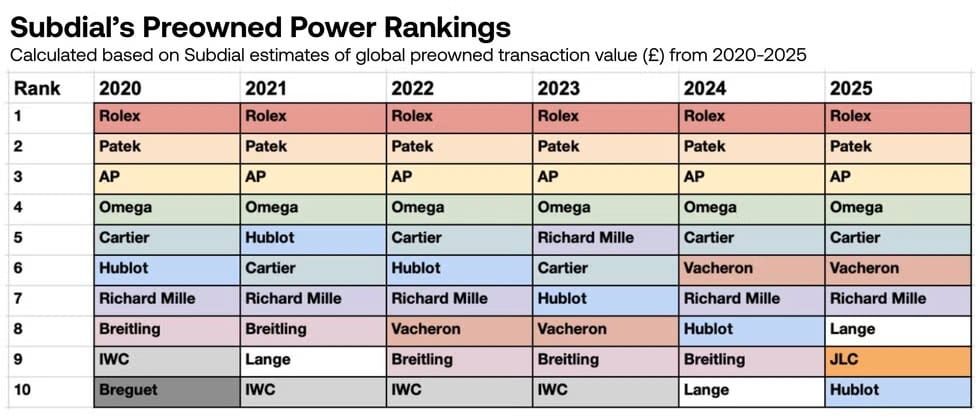
Omega comes in fourth on these Preowned Power Rankings, but has been steady there for years – placing behind Patek Philippe and Audemars Piguet since 2020. Perhaps more surprisingly, it has remained ahead of Cartier the entire time as well (the reasons for Cartier's relative rank are a fascinating insight into the power of branded retail and honestly deserve their own piece, so we'll leave that for another time).
The scarcity of watches from Audemars Piguet and Patek Philippe and the corresponding premiums charged have long supported an elevated standing for these brands on the preowned market. For many buyers, it's the only market they consider for the watch since getting one at retail isn't just difficult – it's basically impossible.
What does this ranking mean for Omega?
First and foremost, Omega's watches did not suddenly become less desirable. It isn't that the brand itself has fallen entirely out of the cultural zeitgeist or taste has moved away from them. Omega remains synonymous with James Bond and the Olympics, producing some special editions that can have truly unique design language. The sustained popularity of some of these past collaborations on the secondary market means maybe some of them were just a little too good?
When a new model does break through, however, Omega's production strategy means that the model behaves quite differently than the typical new Rolex on the preowned market. When a new Rolex is announced, we don't see them arrive on the preowned market for months, and even then availability is scarce and premiums high.
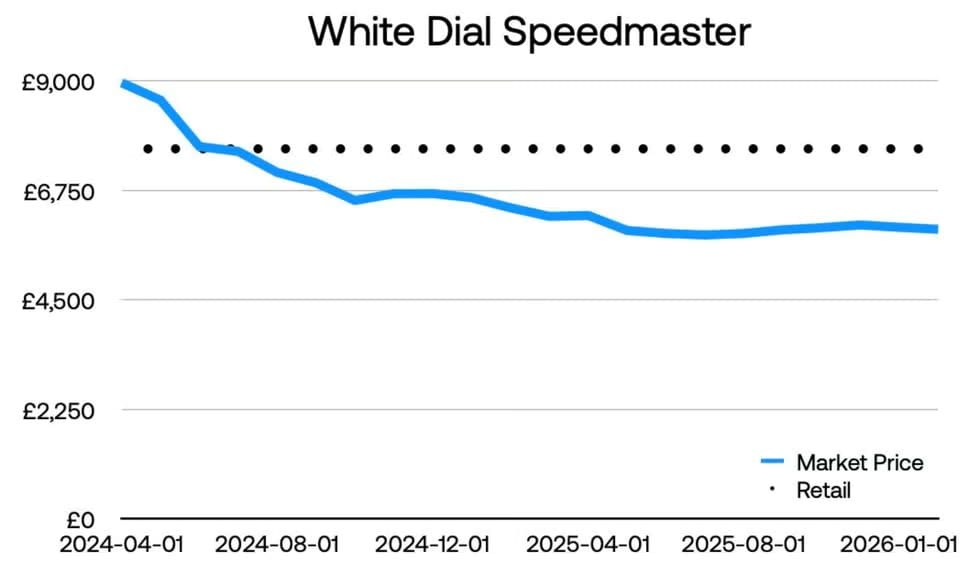
Omega, however, produces meaningful volumes from the start. The recent White Dial Speedmaster is a prime example – an early hit with collectors and probably their most popular recent release, but it quickly started trading at meaningful volume and below retail prices as examples hit the market.
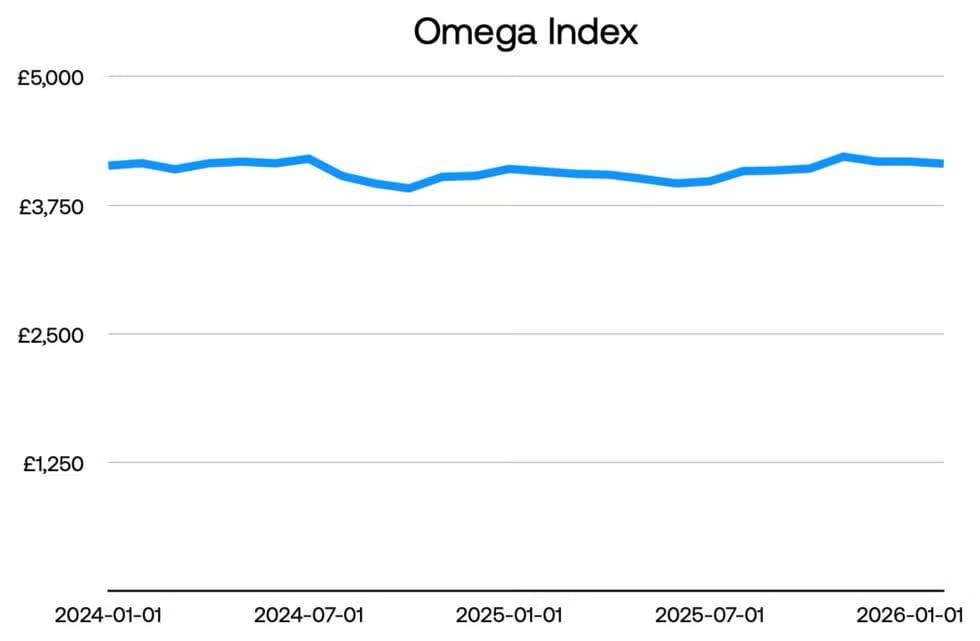
And that gets to another point worth noting. Omega has implemented meaningful price increases at retail over the past years, but those price increases have not crept into the preowned market. In fact, our Omega index has remained virtually flat over the past two years. There is so much good preowned stock that the brand doesn't have the price control that brands which leverage scarcity (like Rolex, Audemars Piguet, or Patek Philippe) can command.
The Rest of the Market
While we're here, it's worth checking in on the other brands included in this ranking. Of the big movers, the obvious positive story recently is Vacheron Constantin. They're producing watches with a mix of historical reference (like the reissued 222) and serious watchmaking credentials that are growing in popularity as collectability replaces hype. Maybe that focus means we'll get a reissue of the original (read: better) size of the 222 some time in the near future.
On the other hand, Hublot's struggles play out quite clearly here as well. At their peak, the brand made it into the top 5, but now Nico Leonard's favourite punching bag seems destined to drop out of the top 10 entirely.
In all, the watch market remains famously opaque, and drawing any glimpse of its successes and failures is always a challenge. But by combining primary and preowned market analysis, we can get a view of not just what's selling at the AD, but what people really want on wrist.
This story originally appeared on Esquire.com/uk.
View More Articles About: