Jaguar’s Type 01 Turns the Controversial Pink Car Into a 1,000 Horsepower Reality and Keeps the Long Bonnet
After two years of controversy, Jaguar’s radical electric reinvention has finally arrived in production form. The Type 01 is still outrageous, but now there is engineering, performance, and a real car

by Alvin Uy
Published on Oct 7, 2026
After two years of mockery, the pink concept finally has a production car behind it. The Type 01 arrives with more than 1,000 PS, a claimed 450-mile WLTP range, and a bonnet that no electric car has any engineering reason to carry.
The paint was the first thing anyone noticed, a satin pink called Rhodon Rose that took in the flash of every phone at Miami Art Week in December 2024 and gave almost none of it back. The rest of the Type 00 was just as hard to ignore, with wheels far too large for any sensible brief and a bonnet that ran on well past the point where a front axle would normally have been consulted. It was the least Jaguar-looking Jaguar anyone had seen, which was the idea.
Jaguar was hardly arriving from a position of strength. The company began in Blackpool in 1922 as the Swallow Sidecar Company and built its name on cars that were handsome first and everything else second. Ford bought it in 1989 and sold it, along with Land Rover, to India's Tata Motors in 2008, and the years that followed produced competent saloons that sold in modest numbers to buyers who already owned one. The XJ was retired in 2019. In 2021 Jaguar promised to go fully electric by 2025, and by the end of 2024 it had wound down production of nearly its entire range, the I-Pace included, with the replacement still some way off.
Then came November 2024 and the rebrand, a logo that mixed upper and lowercase letters and a campaign film full of models in loud clothes and no car whatsoever, signed off with the instruction to Copy Nothing. The reaction was fast and unkind. Elon Musk asked on X whether Jaguar sold cars at all, a fair question given the state of the showrooms, and plenty of longtime owners treated the new wordmark as vandalism.
The Jaguar Type 01 from an aerial shot
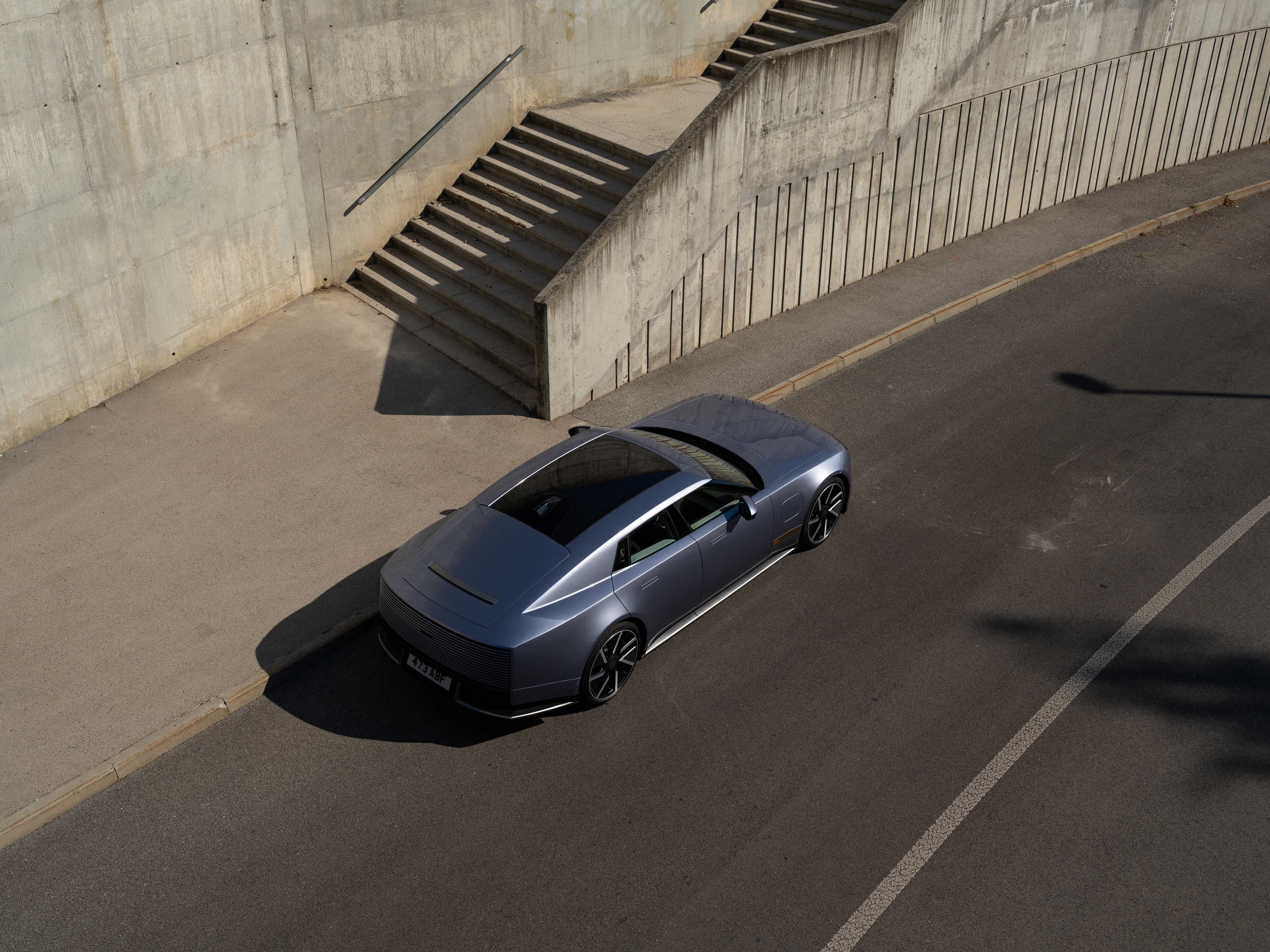
Unveiled in New York, the Type 01 is the answer, and it is the first production Jaguar built on the company's dedicated Jaguar Electric Architecture, or JEA. The figures are the sort that get a press release read to the end: more than 1,000PS, an 850-volt electrical system, a claimed 450-mile WLTP range, and 200 miles of added range in 13 minutes on a 350kW charger. Jaguar is plainly aiming at the upper reaches of the electric luxury market, yet what it wants most from the Type 01 cannot be listed on a specification sheet, which is to be remembered for the way it looks.
The production car is more restrained than the concept, which surprises nobody who has watched a show car meet a homologation department. It keeps the low roofline, sleek silhouette, dramatic proportions and horizontal visual elements of the Type 00 and gives up some of the theatre, but it has not slid into the anonymous electric sedan the rest of the segment keeps delivering. In retrospect the pink coupe was the provocation, and the Type 01 is where Jaguar shows it meant it, with its designers keeping the sense of occasion intact.
Another top-down view of the Jaguar Type 01
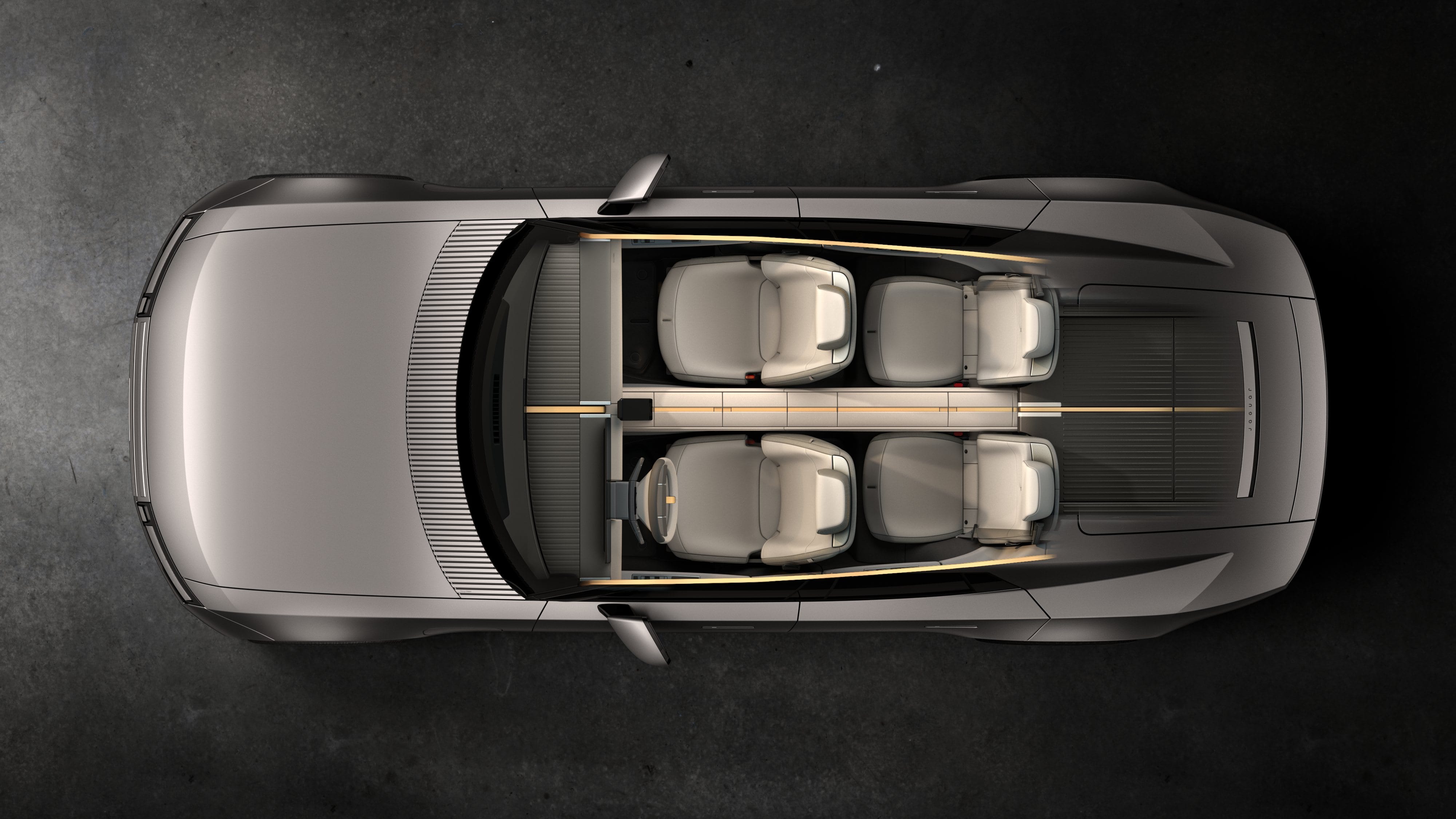
An electric car has no technical need for a long bonnet. With no large combustion engine in the front compartment, designers are free to shorten the nose and push the cabin forward, and most of them have. Jaguar went the other way and rebuilt the proportions of a traditional grand tourer, arguing in effect that electrification need not cost a luxury car its drama.
The choice came from emotion more than engineering, which makes it the most Jaguar thing about the Type 01.
The Type 01 nods at the E-type and the XJS without copying either. The E-type, shown at Geneva in 1961, sold on proportion long before anyone asked about its fuel consumption, and the Type 01 applies the same principle to an electric architecture, using the long bonnet, low roof, and sweeping profile to reach for Jaguar's grand touring lineage without a hint of retro styling.
Under the sculpture sits real engineering. The tri-motor powertrain makes up to 1,030 PS and 1,365 Nm, good for a claimed 0-62 mph in 3.2 seconds, and Jaguar put considerable effort into aerodynamics, with active airflow management and a deployable rear spoiler helping to reach a claimed drag coefficient of 0.23. The company says hundreds of thousands of kilometers of testing went into a car meant to cover long distances in comfort and still behave like a Jaguar when asked.
The interior may be the bolder half. Rather than another minimalist cabin governed by screens, Jaguar treated it almost like a building, running a central spine through the four seats that separates the occupants and repeats the longitudinal theme of the exterior. Brass-inspired aluminum, travertine-influenced surfaces, and tactile materials make for a warmer room than the clinical cabins most electric cars now offer. The technology is there but kept in its place: a 24-inch OLED display sits ahead of the driver, a smaller central touchscreen takes the frequently used functions, and a digital rearview mirror, immersive audio, and electrically operated seats fill out the list, yet the cabin reads as a luxury space first and a computer second.
Horsepower, range, and screen size are specifications any competitor can eventually match, and Jaguar appears to know it, which is why it is selling personality, exclusivity, and design. The Type 00 had to shock the world into paying attention; the Type 01 has the harder job of getting people to pay for it. Whether buyers embrace the new direction remains to be seen, though the question Musk put to Jaguar in November 2024 now has an answer with 1,030 PS, a 0.23 drag coefficient, and a bonnet that goes on for a good while.
View More Articles About: