Today I Learned: Filipinos Have Been Calling Mercedes-Benz 'Chedeng' Since the '70s
Even a Benz isn't safe from Filipino nicknames.

by Alvin Uy
Published on Sep 11, 2026
There is something rather appropriate about finding a six-decade-old Mercedes-Benz sitting alongside the latest electric and combustion-powered models at a premium shopping mall in Rockwell.
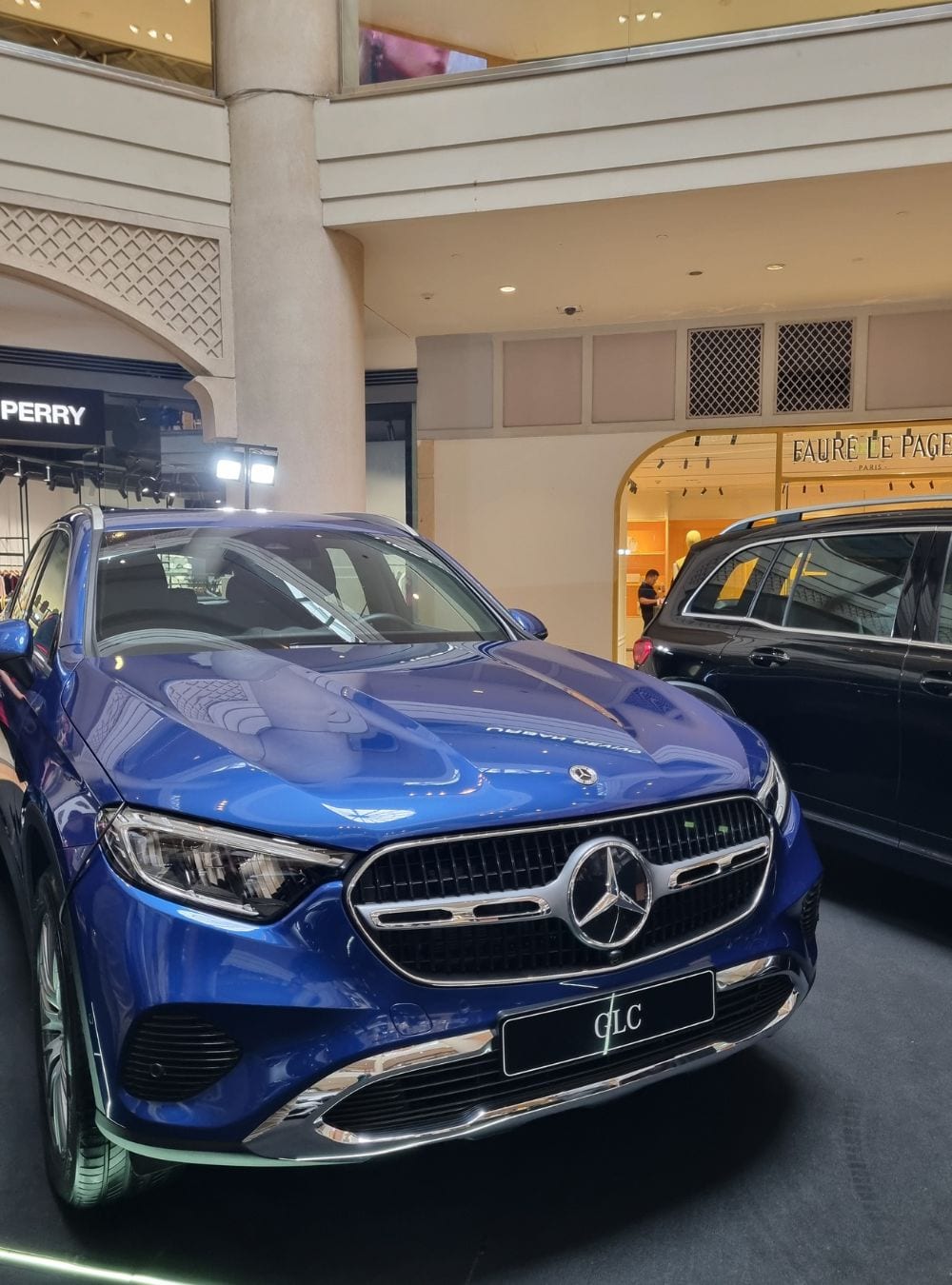
This weekend, Mercedes-Benz Philippines continues its "Welcome Home" Roadshow at Power Plant Mall from September 11 to 13, bringing together a carefully curated collection of the marque's past and present as part of its global 140 Years of Innovation celebration. At the North Court, visitors can see four Mercedes-Benz vehicles, represented by an all-electric EQE 350+ AMG Line, the GLC 200 4MATIC, the seven-seat GLB 200 AMG Line, and, perhaps most intriguingly, a beautifully restored 1967 Mercedes-Benz 250SE and its own story to tell.
It's less a car show than an immersion into a contemporary Mercedes-Benz lifestyle. Official Mercedes-Benz merchandise, a Decimal-branded coffee bar, and the brand’s “140 Seconds of Comfort” in-car immersive experience. Everything has been carefully designed to reflect the Mercedes-Benz interpretation of modern-day luxury, while leaving enough room for its history to tell its own story.
The elegant W108 sedan represents an era when Mercedes-Benz luxury was communicated through proportions, craftsmanship, engineering, and an almost understated sense of authority. Its presence beside today's cars makes for an intriguing comparison. The EQE may now deliver up to 669 kilometers of claimed driving range, while the GLC combines a turbocharged 2.0-liter engine with 48-volt mild-hybrid assistance. The GLB brings seven-seat versatility and AMG Line styling. Yet the basic Mercedes-Benz proposition remains familiar: comfort, engineering, and the feeling that the car was designed to last. That continuity goes all the way back to 1886.
A scale model of the Benz Patent-Motorwagen is also part of the display, reminding visitors of the beginning of the Mercedes-Benz story. Karl Benz designed what is widely recognized as the world's first automobile and filed the patent for his three-wheeled, gasoline-powered Patent-Motorwagen on January 29, 1886. The German Patent Office's patent document is often regarded as the automobile's birth certificate. Gottlieb Daimler was independently developing his own motorized vehicle around the same period. From that fragile three-wheeler to today's intelligent electric vehicles, 140 years of development suddenly becomes much easier to comprehend when the beginning and the present are displayed within the same space.
But the story becomes even more interesting once it reaches the Philippines.
.jpg)
The Story Behind the Endearing 'Chedeng'
For generations of Filipinos, Mercedes-Benz was simply "Chedeng." It was one of those uniquely local nicknames that transformed a global luxury marque into something familiar. Mercedes-Benz Philippines itself now embraces the name as part of its 140th-anniversary celebration, describing Chedeng as a symbol of hard-earned milestones, family successes, and journeys shared across generations.
For Filipinos who grew up in the 1970s and earlier, a Chedeng was more than transportation. Seeing that three-pointed star rolling down the street suggested success and status and, perhaps most importantly, that its owner had arrived. The nickname softened the formality of Mercedes-Benz without diminishing its prestige. In much the same way that Filipinos have a habit of giving familiar names to things they love, "Chedeng" became part of the country's automotive vocabulary.
Mercedes-Benz also has a surprisingly long Philippine automotive history. The marque established an early local presence, and vehicles were assembled in the country decades ago, making the Philippines one of its important early overseas markets. The Philippines was not Mercedes-Benz's first manufacturing facility outside Europe; that distinction belongs to Argentina, where Mercedes-Benz established an assembly operation in the early 1950s. What makes the Philippine story notable is how early the three-pointed star found a home here and how deeply it eventually became embedded in local car culture.
Mercedes-Benz isn't simply asking Filipinos to look at its newest cars here. It is inviting them to look at the journey, from Karl Benz's Patent-Motorwagen, through cars like the 250SE that established the marque's reputation for luxury and durability, to today's electric and electrified Mercedes-Benz models, a showcase where a beautifully restored 1967 sedan can share the same stage with an EQE, while coffee, merchandise, and contemporary luxury create a setting that feels less like a dealership and more like a living room.
After all, Mercedes-Benz has spent 140 years reinventing the automobile. This weekend at Rockwell, it is showing that some things never really need reinventing. For generations of Filipinos, Chedeng has always felt like coming home.
View More Articles About: