Today I Learned: Louis Vuitton Worked with Singer on an Insane Porsche 911
It all started with a request for a dashboard clock.

by Alvin Uy
Published on Aug 20, 2026
At Monterey Car Week, amid the usual parade of six-figure restomods and one-off hypercars, Singer Vehicle Design and Louis Vuitton rolled out two Porsche 911s that make the rest of the lawn look underdressed. One is finished in saffron and cobalt blue, with a roof rack built to carry a surfboard, a pair of skis, or a Louis Vuitton trunk made specifically for it. The other is a cream-white cabriolet with gold accents and enough wood trim to make you check twice for a helm. Between them: a bespoke Tambour-inspired dashboard clock, a matching ceramic-and-gold wristwatch, edge-dyed leather lifted straight from LV's ateliers, and a full driving wardrobe that includes a made-to-measure parachute-silk suit.
Singer itself is the less famous name in that pairing to anyone outside car circles, though inside them it carries the kind of reverence usually reserved for the manufacturers it doesn't work for. The California outfit has spent 17 years taking customer-owned Porsche 911s, mostly Type 964s, and rebuilding them from the ground up into machines that keep the silhouette everyone recognizes while replacing nearly everything else underneath it. That reputation is presumably what got Louis Vuitton's attention in the first place, though the project itself didn't start as a car project at all.
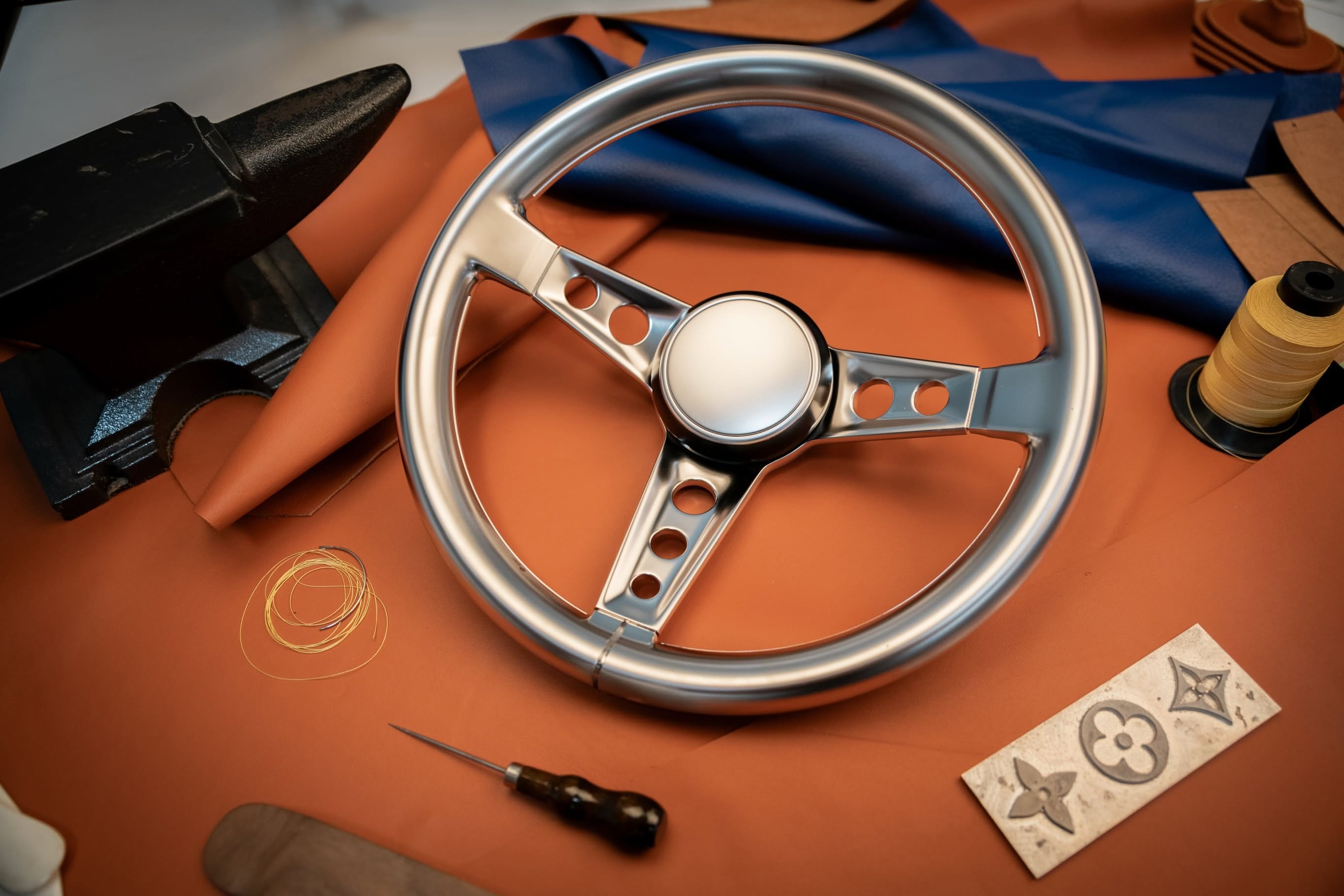
None of it happened because someone at Louis Vuitton woke up wanting to build a car. Per LV Watch Director Jean Arnault, Singer approached the maison first, and the ask was small: a clock for a dashboard. The house's La Fabrique des Temps workshops in Switzerland built one inspired by the Tambour watch, and somewhere between the first prototype and final sign-off, both sides decided the clock made no sense sitting alone in a cabin that wasn't designed around it. So the instruments got redesigned around the same visual language as the timepiece. Then the leather. Then the luggage, the clothing, the footwear, and the sunglasses until a favor turned into two complete automobiles built from the inside out.
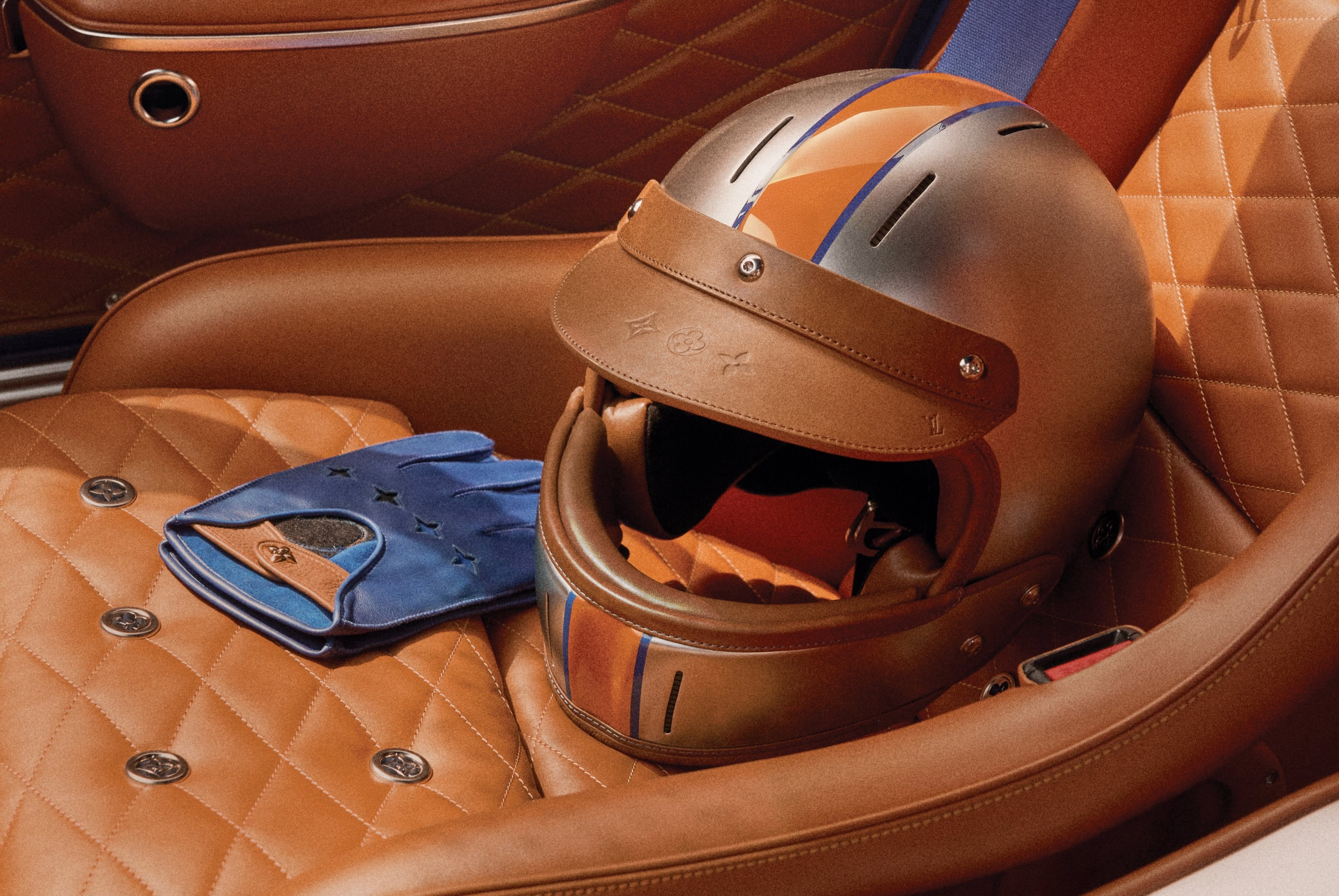
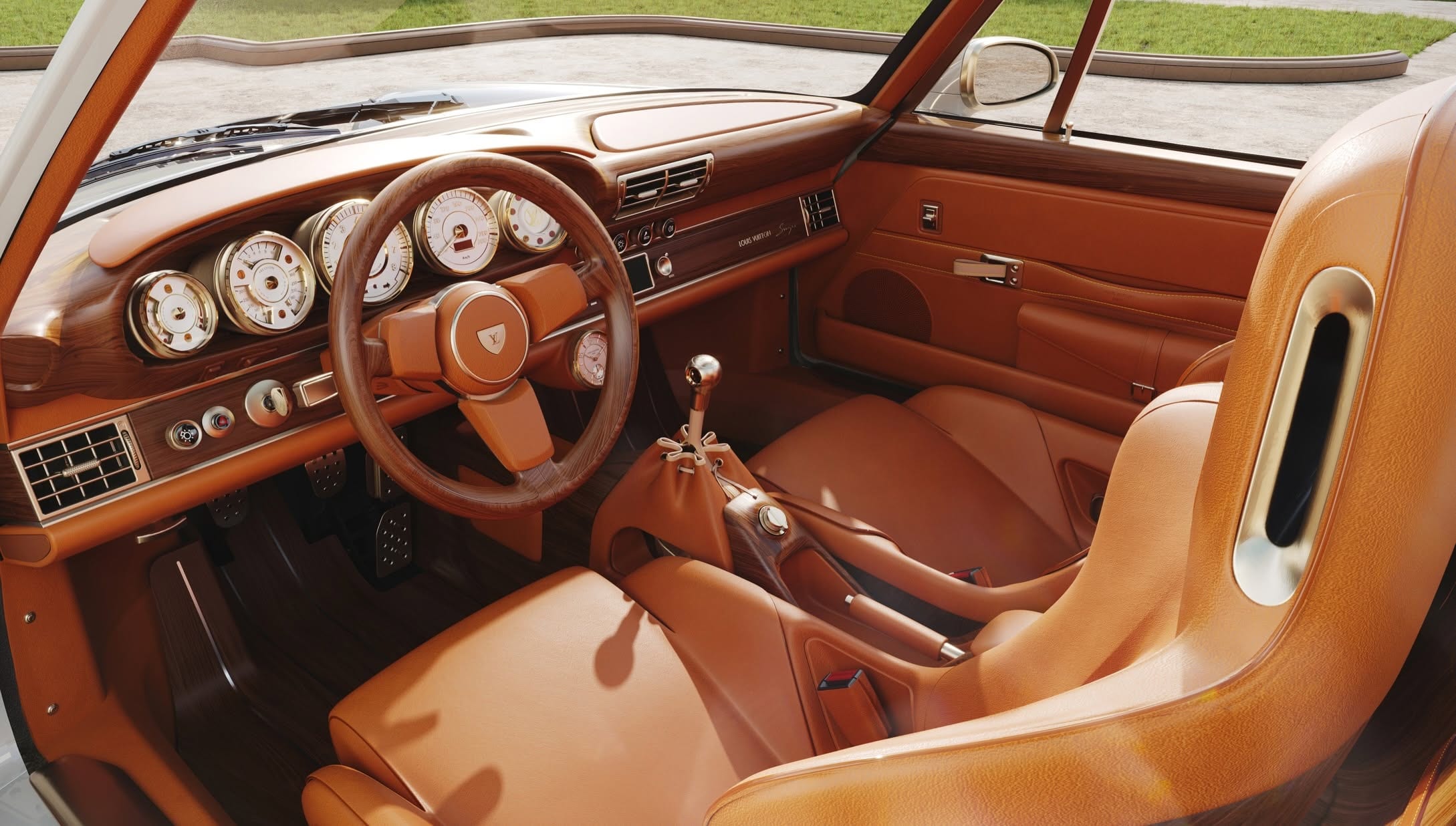
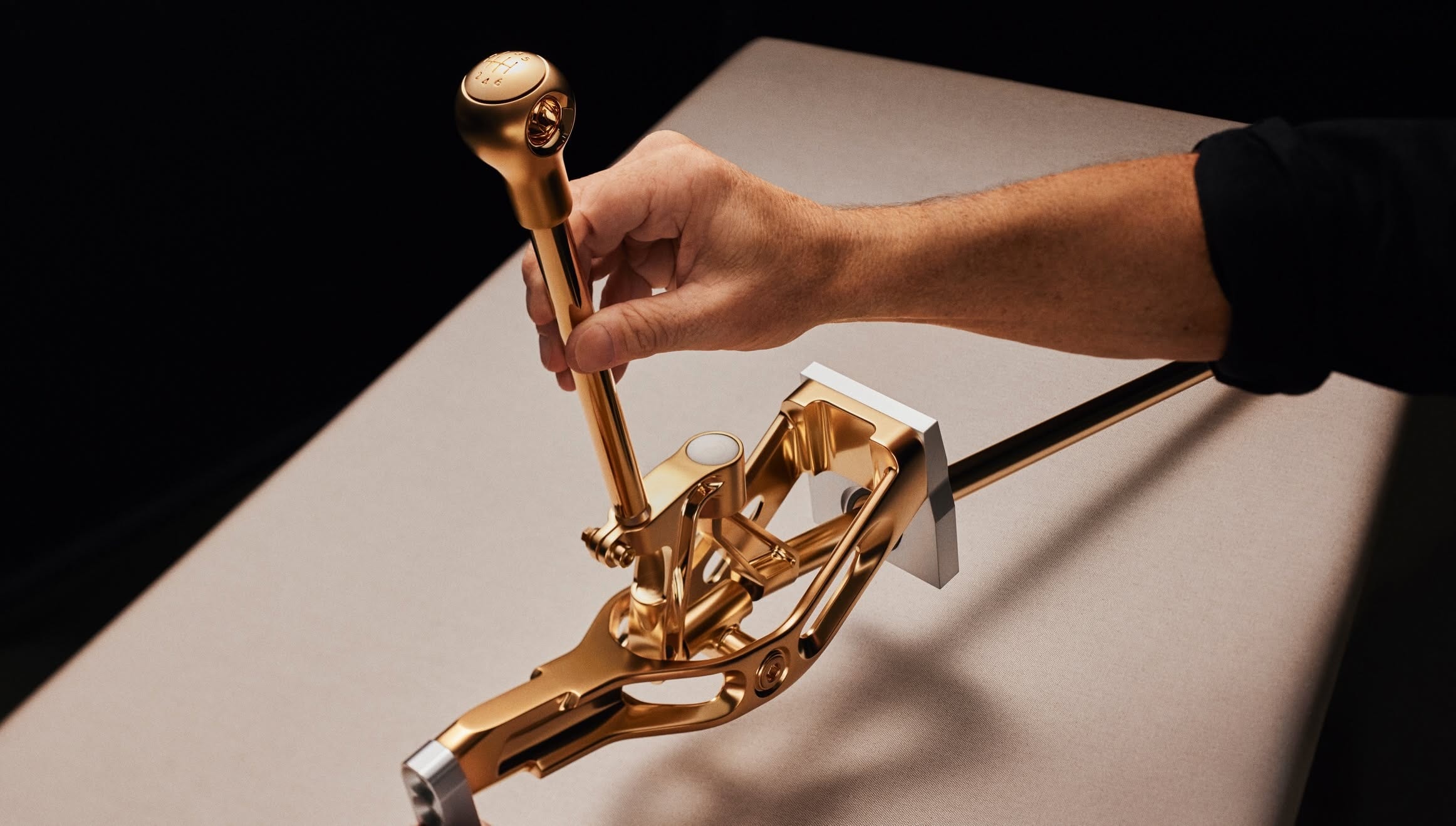
The Classic runs a naturally aspirated 4.0-liter air-cooled flat-six on a six-speed manual, wrapped in a carbon-fiber body over that Type 964-generation shell, with carbon-ceramic brakes and a chassis rebuild that brings 2026 handling to a car that debuted in the late 1980s. Inside, the Monogram Flower motif shows up in restrained doses rather than plastered everywhere, natural leather runs the cabin with yellow stitching that nods back to LV's trunk-making roots, and the edge-dyeing technique normally reserved for handbags gets applied to automotive trim, which is either a flex or a genuine act of craft transfer depending on how charitable you're feeling. The car ships alongside a bespoke Bisten trunk, a Keepall, and a helmet bag, all cut to fit the specific dimensions of that roof rack and that cabin, meaning the luggage was designed around the car and not the other way around.
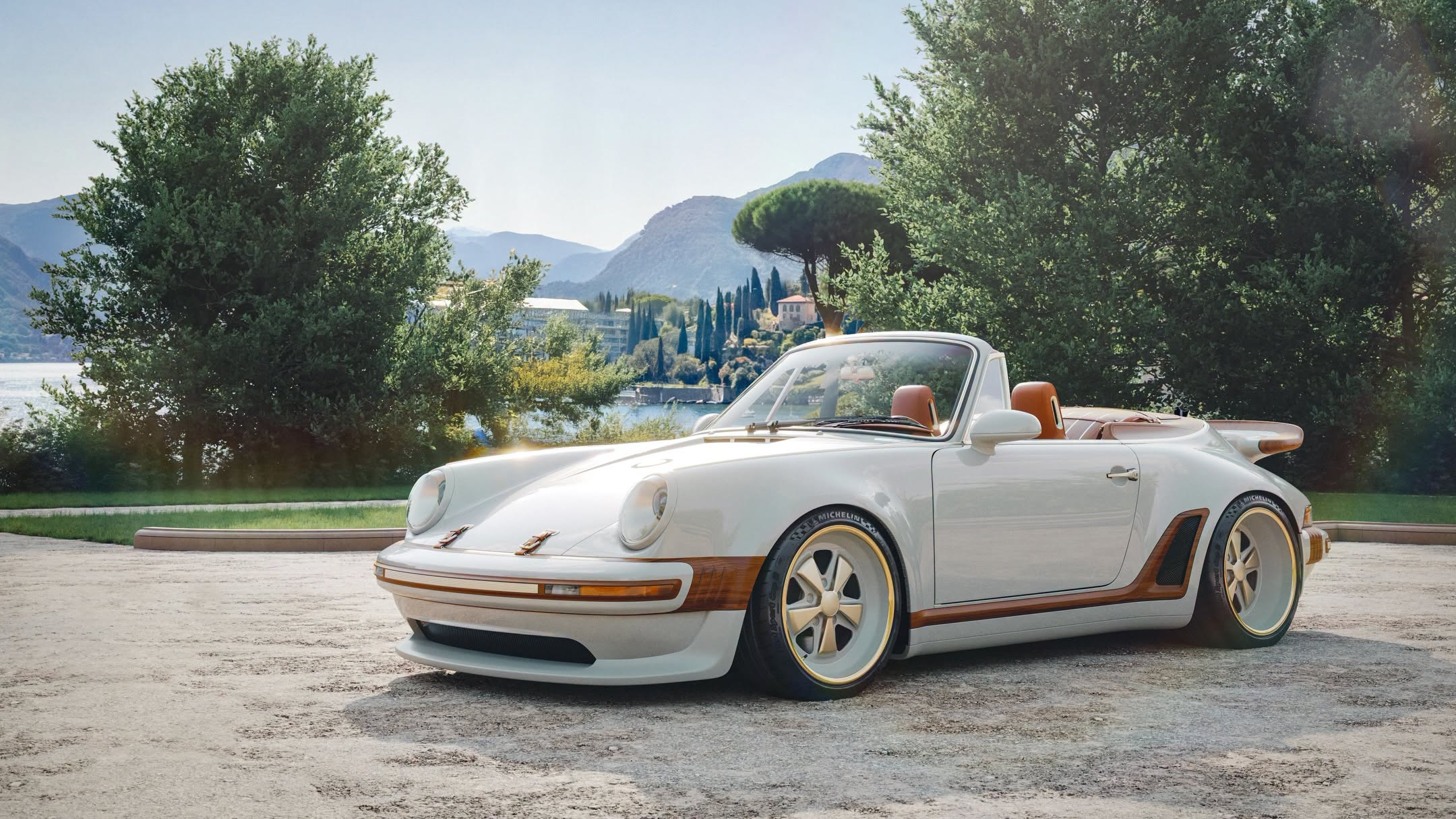
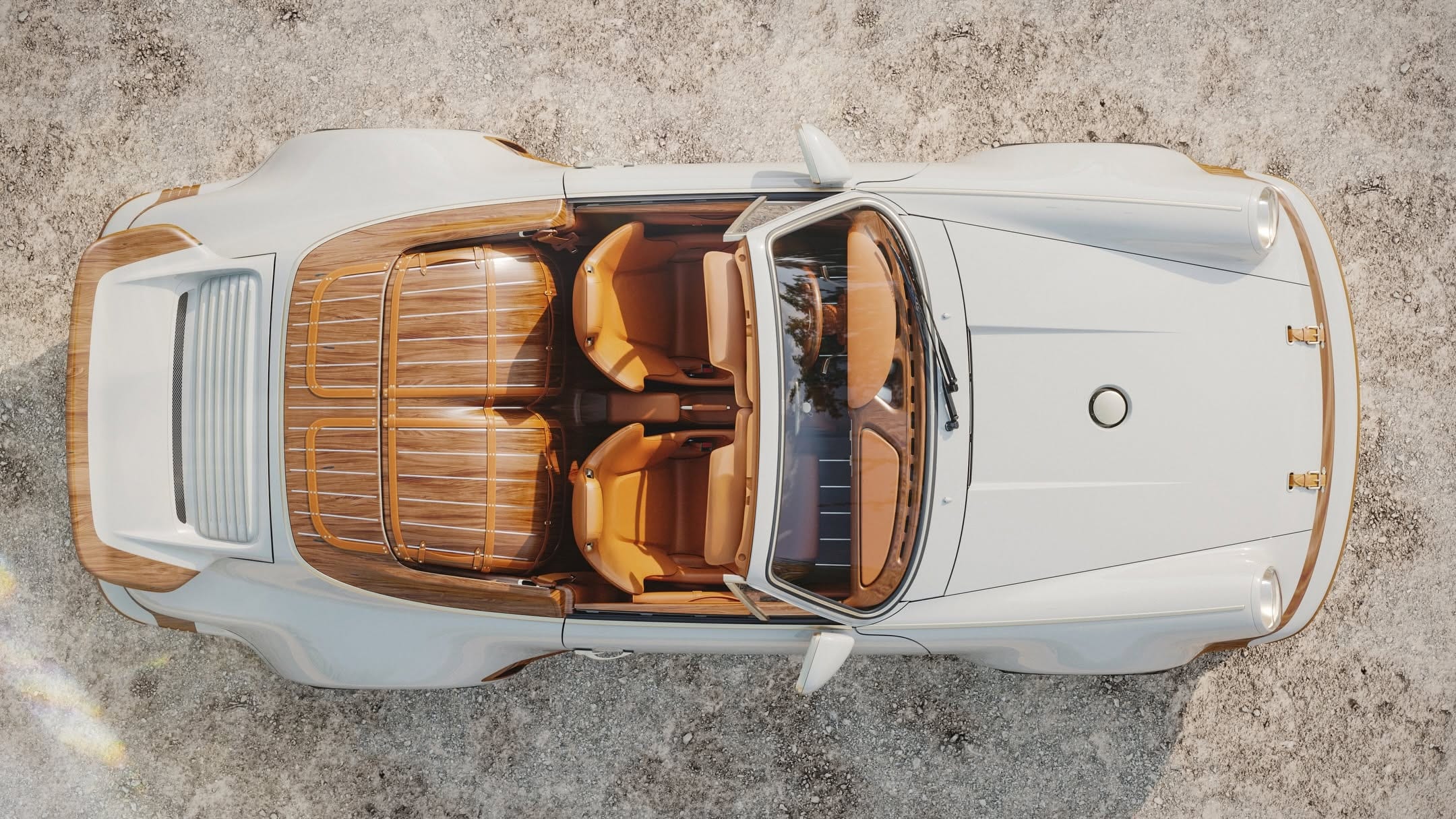
The Classic Turbo goes somewhere else entirely. Developed with Nicolas Ghesquière, LV's Artistic Director of Women's Collections, it drops the roof, swaps in a 3.8-liter twin-turbo flat-six, and trades the saffron-and-cobalt palette for Calcaire Lutétien white, gold accents, and wood trim that shows up even inside the luggage compartment. Ghesquière's reference point was vintage motorboat design rather than anything from a garage, which explains why a Porsche ends up looking, in places, like something that should have a mooring line. The watch connection returns here in fuller form: a Tambour-inspired dashboard clock paired with a matching 40mm Tambour Automatic in ceramic and yellow gold, housed in a specially recreated Louis Vuitton Coffret Tresor built to hold the watch and its accompanying pieces. The car comes with its own capsule wardrobe on top of that, a made-to-measure parachute-silk driving suit, gloves, footwear, a helmet, and sunglasses—the full uniform for a car nobody is meant to actually drive daily.

The luggage angle isn't incidental to the brand, either. Louis Vuitton is 172 years old, and its early business was built specifically around trunks designed for travel by train and by ship, well before the automobile existed as a consumer product. Once cars did exist, the house kept adapting its trunks to fit them, a relationship with motoring that predates most of what currently gets marketed as automotive luxury by close to a century. Seen against that history, a roof rack cut to hold a Bisten trunk reads less like a modern collaboration stunt and more like the house circling back to the exact problem it was solving in the 1850s, just with a different vehicle underneath the cargo.
Singer has gone out of its way, in its own announcement language, to say it is not sponsored, associated with, approved by, or affiliated with Porsche in any capacity and that any reference to the Porsche name or the 911's shape is purely descriptive. Singer builds on donor 964s; it does not manufacture them, and that distinction is doing real legal work, not just modesty. There's also no confirmed name attached to who actually owns either car. Singer's own materials frame them as a joint design project between the two companies rather than a customer commission, unusual for a shop whose entire business model runs on ultra-personal builds for paying clients with their names quietly attached to the finished product.
There's a wrinkle worth sitting with, too. Germany's WirtschaftsWoche has reported, and outlets including Road & Track have since picked up, that Porsche is deep in talks to acquire RUF Automobile, the German manufacturer best known for its own 911-based cars. RUF is a different animal from Singer in one important way: it holds its own manufacturer status and builds using its own engineering and chassis technology rather than reimagining customer-owned donor cars, which would make it a more useful acquisition if Porsche wanted an in-house platform for low-volume, high-value combustion cars going forward. The same WirtschaftsWoche reporting claims Porsche tried to buy Singer first and got turned down before turning its attention to RUF. None of that has been confirmed by Porsche, Singer, or RUF, so treat it as reporting rather than fact. But if it holds up, it reframes the timing of the Louis Vuitton project: less a one-off flex, more proof of what an independent 911 shop is worth once the actual manufacturer starts shopping for one.
Two houses built an entire object system, dashboard clock to driving gloves, around a car neither company will confirm the price of, starting from a request for a timepiece that almost nobody outside the project has actually seen finished.
View More Articles About: