Visual Artist Jappy Agoncillo Takes Us Through the Fire
Esquire Philippines interviews the artist as he gets personal in this Dante-themed solo show.

by Jed Surio
Published on Mar 30, 2026
The opening of Jappy Agoncillo’s newest exhibition is guarded by a familiar beast. A painting of Cerberus, the three-headed hound of Greek mythology, stands at the threshold, carefully watching anyone who steps inside. In "Inferno," the first part of Dante Alighieri’s The Divine Comedy, this monstrous canine punishes sinners in the Third Circle of Hell. Here in the gallery space, however, Cerberus is not waiting to torment the gluttonous. Instead, he serves as a guide, inviting viewers to move through the artist’s introspective reflections.
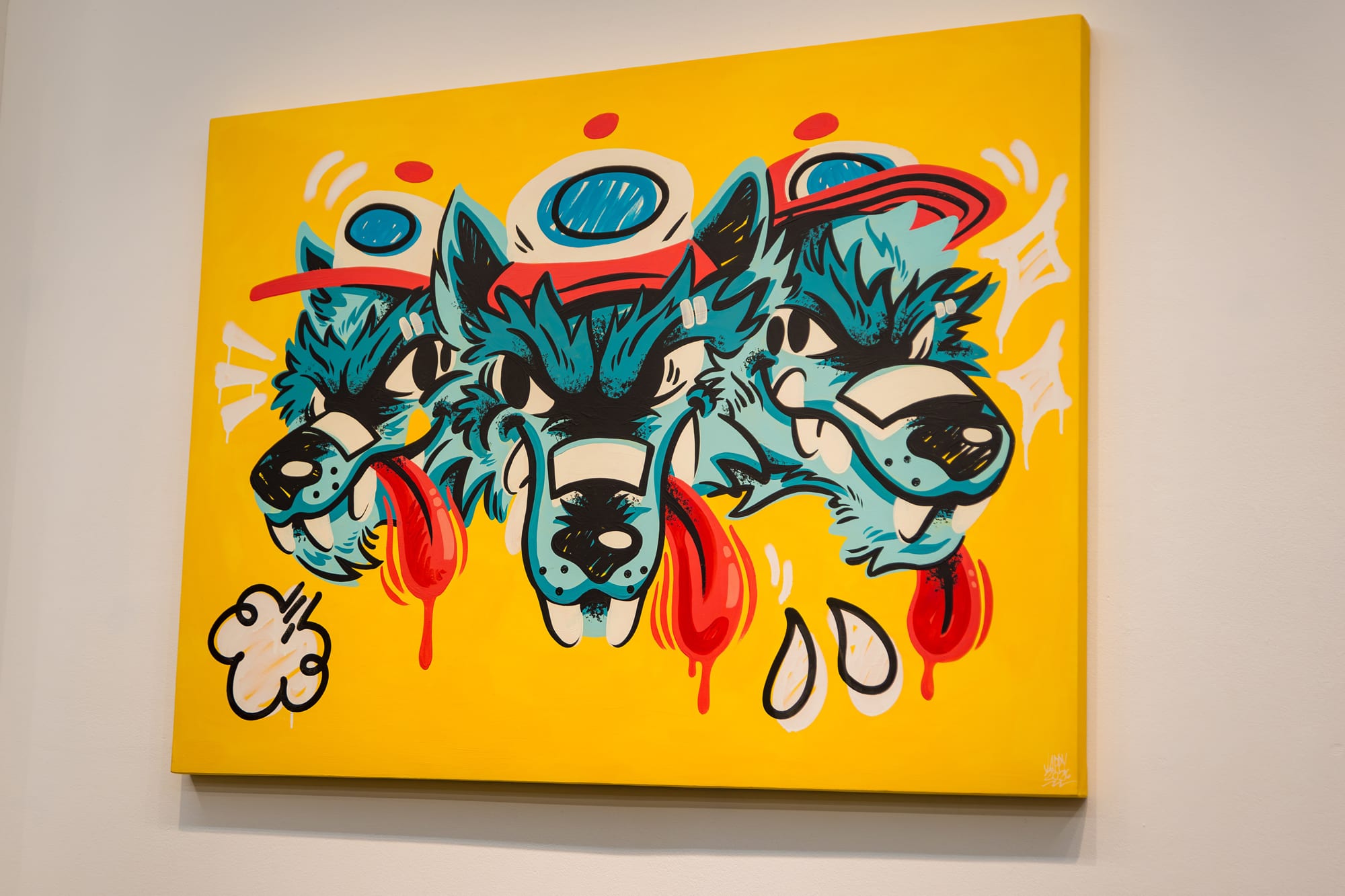
Similarly titled Inferno, this solo exhibition at Space Encounters Gallery in Pasig is, by Agoncillo's own admission, his most personal one to date. While the works retain the graphic energy of his urban, pop-inflected style, their content marks a notable shift. They carry the weight of a personal journey despite being rendered in bold colors and dynamic lines. The result is a persistent push and pull between heaviness and optimism that runs throughout the show.
It is clear that, for Agoncillo, Dante’s text was a way to make sense of that tension. “It’s hopeful,” he tells Esquire Philippines, referring both to the exhibition and to Dante’s epic poem. “It’s about someone who’s trying to make their dreams come true. In Inferno, Dante traverses through Hell, and I’ve always likened my journey to that idea of going through difficulties in order to achieve something in the end.”
Dante’s arc also unexpectedly mirrors the reality of building a creative career. In fact, the initial idea for Inferno emerged years ago when Agoncillo was living and working in New York. “It was such a difficult time in my career, in my life,” he recalls. “I thought to myself: I don’t know if what I’m doing is going to get me anywhere, but I’m going to keep going in the hopes that it does.” It was a period filled with trial and uncertainty; and like Dante, he pushed forward. Now, he finds himself on the other side of those difficulties, celebrating his tenth year in the creative industry.
The Art of Hell
Artists have long been drawn to Dante’s idea of Hell. During the Italian Renaissance, Sandro Botticelli intricately mapped its depths; in the nineteenth century, Gustave Doré rendered it in dark, dramatic engravings. More recently, Robert Rauschenberg reinterpreted the story with a distinctly Abstract Expressionist style. And while Agoncillo’s works are in dialogue with these previous envisionings of Inferno, his approach to the narrative is significantly different. His work focuses less on depicting the story and more on the internal parallels between Dante and himself. In other words, Dante and his text are not only the subject of his work, but also the lens through which the artist understands his own journey.
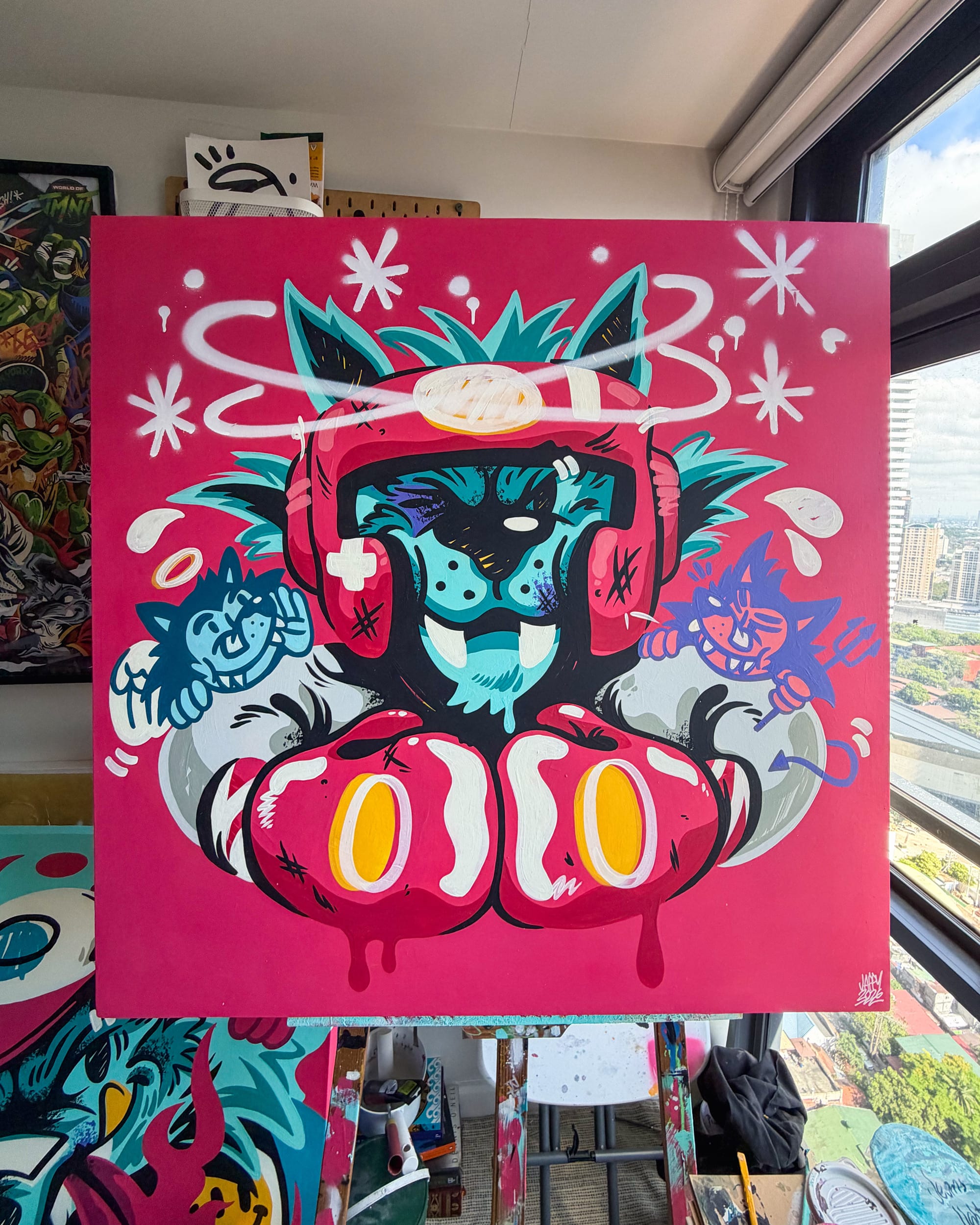
Take, for example, his painting of a boxer. Titled "Achilles," it references the mythological figure that Dante places in the Second Circle of Hell. “This piece is my favorite,” he says, “I’ve been an amateur boxer for 15 years, and I always likened my approach to art and my career as kind of a fight.” In this composition, he casts himself as Achilles, who confronts an internal battle against his desires. Through this, Agoncillo similarly urges us to think of life and careers as physical battles; they require grit, stamina, and perhaps even the willingness to take the occasional hit.
Part of the Story
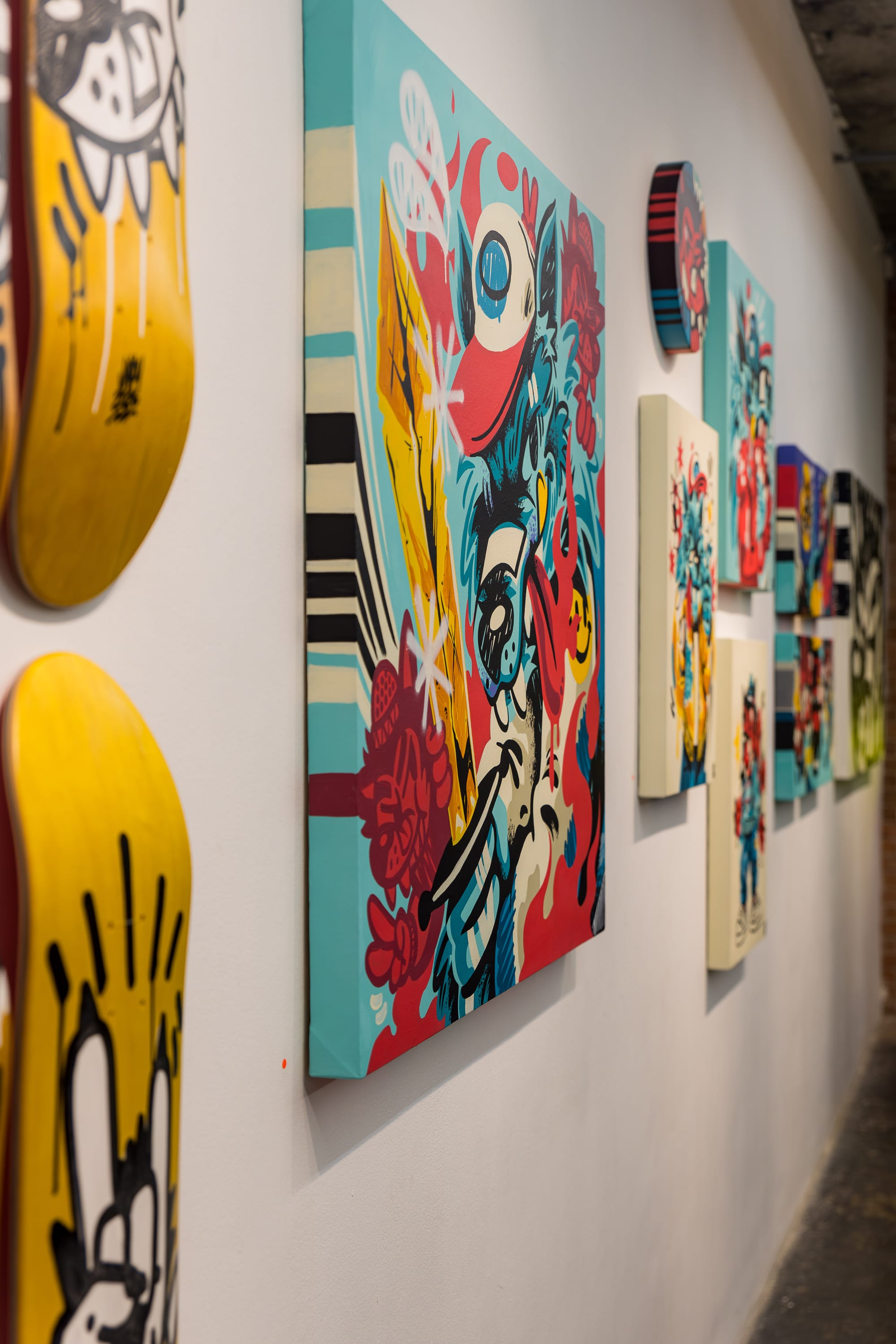
Over the past decade, Agoncillo has been recognized for his murals and commercial illustrations across Manila and other cities in Asia and North America. Although this exhibition is decidedly more inward, his approach to artmaking still keeps the public in mind. He continues to make work meant to be encountered by as many people as possible. Here, we see smaller works sit alongside larger pieces, offering a range of entry points for different kinds of viewers and collectors. “I don't like alienating my audience,” he explains. “It's an accessibility thing. Because what is art if it's not relatable? What is art if it’s not accessible to people? I make art, I put it out in the world, and it’s no longer just mine.”
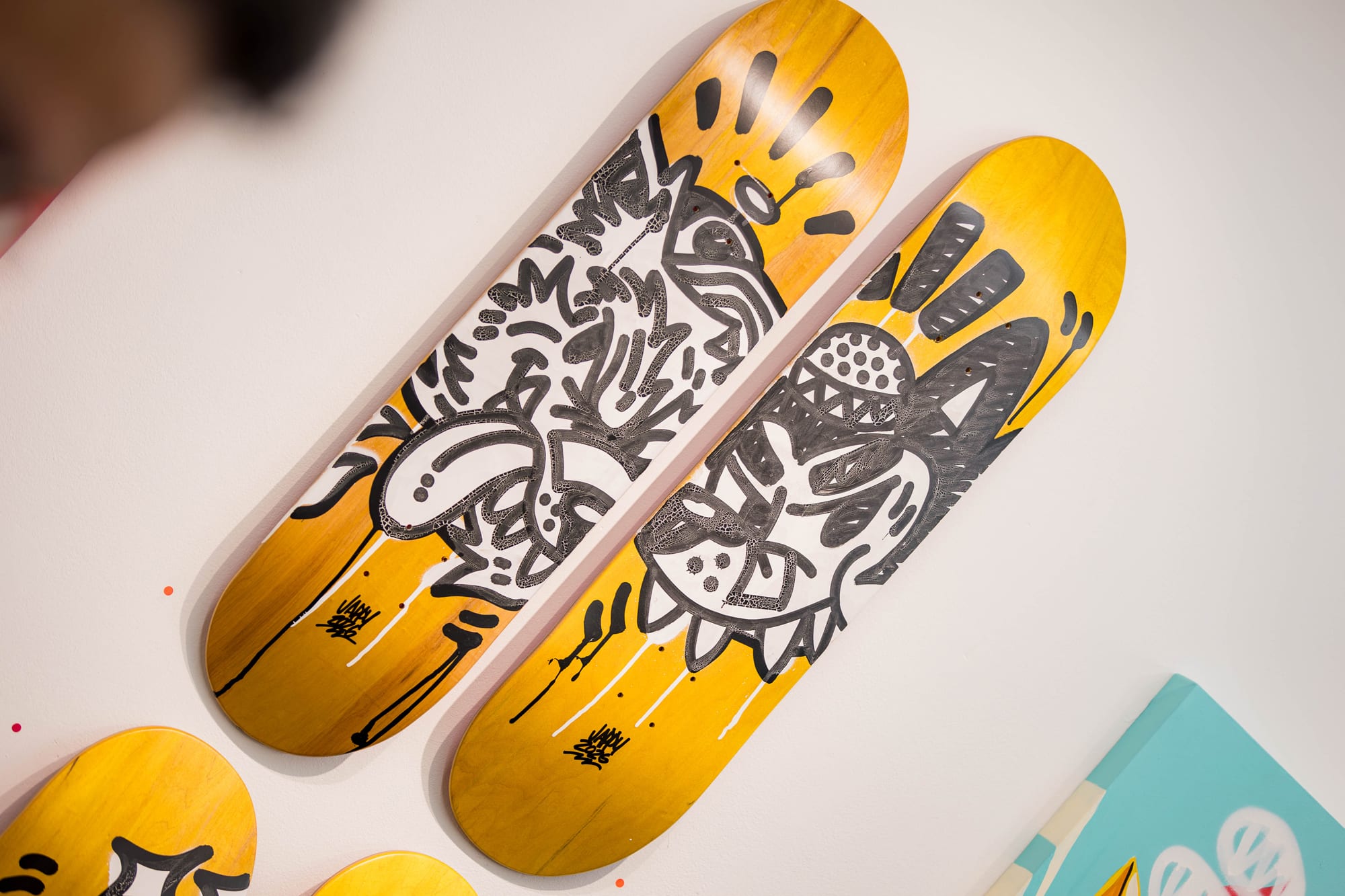
Whatever the scale of the piece, each one carries part of a larger narrative. To leave with a work is to take a fragment of his journey with you. Agoncillo, who grew up reading comics, approaches each work as if it were taken from an overarching story. Like comic book panels, they feel alive and suspended mid-scene. “I like storytelling, he says, “and I like the idea that every piece doesn't tell a complete story.”
What Comes Next?
While Inferno closes a chapter of Agoncillo’s life, his story is certainly not done. The exhibition feels more like a moment of reflection rather than a conclusion. Much like Dante’s passage through Hell, this is a first step toward ascent. If these paintings are fragments of a larger narrative, then the next phase is simply another scene, hopefully one filled with opportunities to complete his story.
Inferno is on view until April 10, 2026, at Space Encounters Gallery, 7/F Padilla Building, Ortigas Center, Pasig.
ALSO READ:
Esquire Philippines' Best Visual Artists Awards 2026
Why Benilde Open Bets on the Unfinished Ideas of Filipino Creatives
Jed Surio is an arts writer and museum professional currently based in the United States.
View More Articles About: