An Exclusive Look Inside the Macallan Distillery
From nearly unattainable bottles to accessible favorites, The Macallan puts care into everything it makes.
by Sean Evans
Published on Apr 19, 2026
By Sean Evans
There are Scotch whisky brands, and then there is The Macallan. The Speyside distillery has spent 200 years building something closer to a luxury house than a spirits company, one where a single bottle holds the world record for any wine or spirit sold at auction: $2.7 million.
In 1926, a sherry-seasoned cask—number 263—was filled with new-make spirit in Speyside, Scotland. Sixty years later, in 1986, The Macallan’s masters of maturation decided it had reached the apex. They created a scant 40 bottles from that single barrel.
Fourteen of cask 263’s bottles received The Macallan Fine & Rare label, reserved for the brand’s best expressions. Twelve were labeled by Sir Peter Blake—famous for creating “Sergeant Pepper’s” cover art for The Beatles—depicting notable events from 1926 in black and white sketches and photography. Another dozen were adorned with labels by Italian painter Valerio Adami, released in 1993. The remaining two bottles had no labels at all. One of those was hand-painted by Irish artist Michael Dillon to depict Easter Elchies House, The Macallan’s home on the estate.
Most people will never even see one of these bottles. It’s unclear how many were opened and enjoyed. Only ten Adami bottles are thought to remain. This is, partially, why the prices keep climbing.
In 1986, when the Blake bottles debuted, one sold in New York for $6,411, setting a Guinness record. That Michael Dillon bottle went for $1.8 million in 2018. Then, in November 2023, Sotheby’s in London sold an Adami bottle for that world record $2.7 million. If that number seems impossible to process, consider it this way: a 700ml bottle contains roughly 24 one-ounce pours. That’s about $79,000 per ounce. For that price, you should probably audition your drinking companions.
I finally witnessed a Fine & Rare myself at The Macallan’s headquarters. Just upstairs from the grand entrance, inside a freshly opened historical exhibit, global brand archive manager Cheryl Traversa gestures to a bottle.
“Yes, it’s real,” Traversa smiles. “No, we can’t open it.”
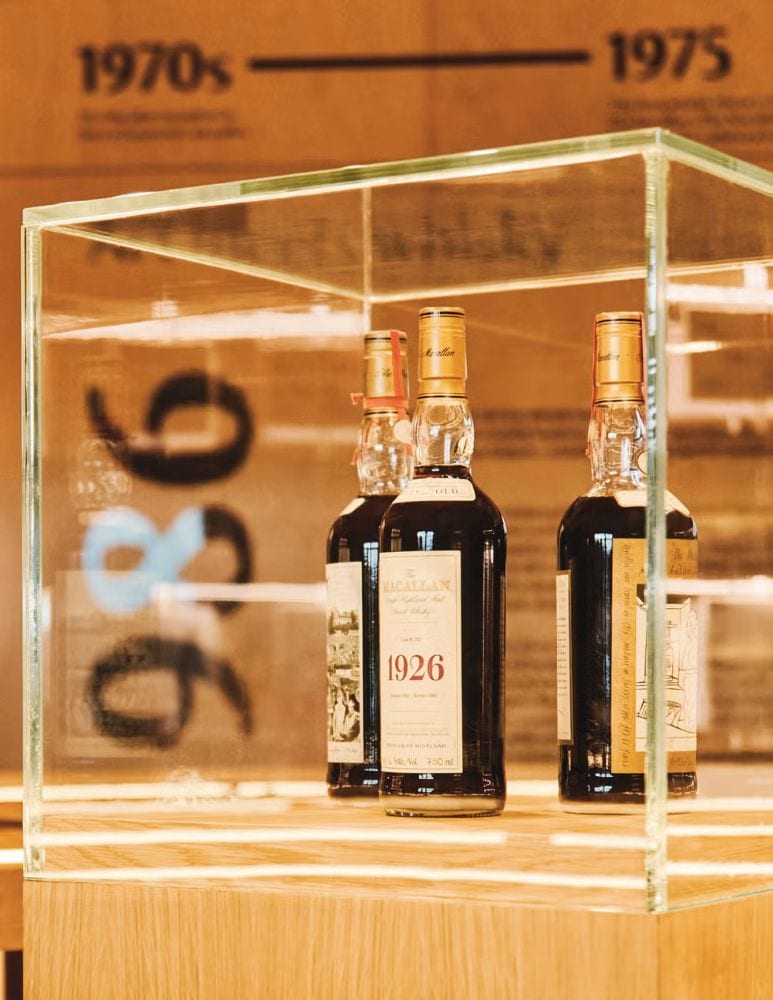
This liquid crown jewel has smartly been placed in the middle of a large circular glass display, elevated on a pedestal, far from arm’s reach. Traversa explains that it’s one of three cask 263 bottles retained by The Macallan. She also keeps track of every bottle that surfaces at auction.
“We keep an idea of where some are,” she says, “but it’s a bit of a mystery.”
Luckily for Scotch fans, not every bottle of The Macallan is nearly impossible to obtain. But the obsession behind the record-setters runs through everything the brand makes, from its $90 flagship whisky and beyond.
The Two Decisions That Changed The Macallan Forever
Traversa has spent years inside The Macallan’s comprehensive archive, cross-referencing distillery records with Scotland's national archives. Ask her about the single most important decision in the brand's history, and she doesn’t hesitate. No, it’s not the 1824 founding on the Easter Elchies estate in Scotland. It’s not the choice to use curiously small stills either, which still define the spirit's character. It’s a decision that didn’t make perfect business sense at the time, but defined The Macallan’s future.
In the 1960s, blended whiskies were an obvious play. Whisky makers would take the liquid from young casks across multiple distilleries and blend them into a product they could sell as soon as possible.
“Back then, they knew that The Macallan could be more than that,” Traversa says.
The Macallan instead held stock back to make a single malt Scotch, which has a stricter set of rules.
“To say, ‘We’re going to keep these casks for 12 years without seeing a return. We’re going to pay our warehousemen to look after them.’ It’s expensive to keep casks—that’s a wild risk."
The second big decision was to adopt luxury positioning. The Macallan aligned with fine art and artists to compete with the likes of Hermès as much as fellow Scotch brands like Glenfiddich. In 1975, The Macallan chairman Peter Shiach commissioned artist Sara Midda to create an 11-page illustrated folio in copper handwriting to introduce the distillery to distributors. A thousand copies went out.
“That was a conscious decision to bring our storytelling to life, to set us apart from our competitors,” says Traversa, “but also to elevate the handmade, the artistic illustration."
From there, The Macallan engaged with a creative agency and ran 250 pieces of artwork in The Times through the 1980s, a different artist for each. The strategy was deliberate: Put the whisky into a different cultural conversation than other distilleries.
By 1986, Sir Peter Blake was commissioned for the 1926 bottles, followed by Valerio Adami in 1993. Working with artists of that stature was unusual in the category then. Doing it consistently, across decades, built an identity.
How The Macallan Is Made
Beautiful artwork can inspire you to pour a glass, but what’s inside still has to taste good.
The whisky is distilled inside a building that itself is a work of art. The grass-roofed structure rises from the Speyside’s rolling hills and valleys like something that’s a cross between an art installation and a spacecraft. It is stunning to behold. I felt like I was inside a movie when the building first came into view.
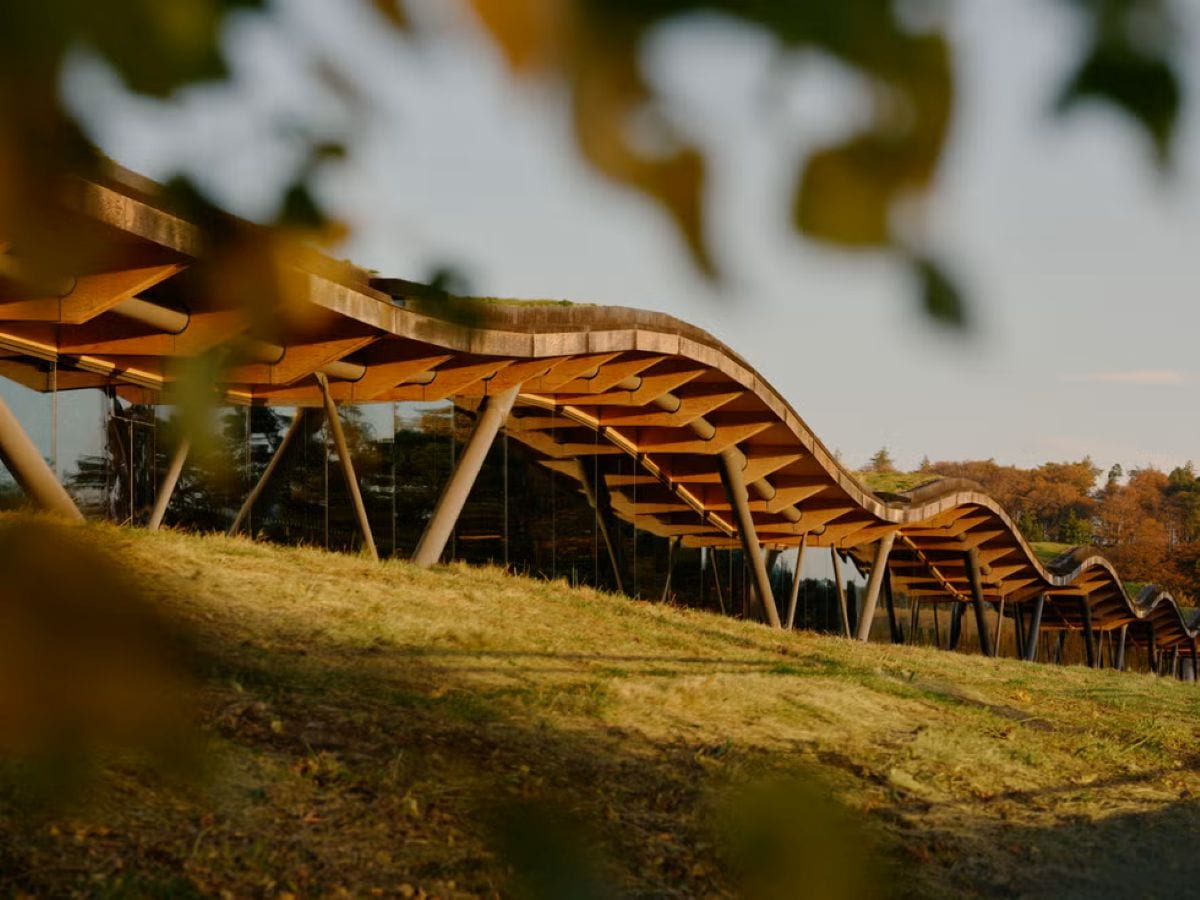
Inside, lead whisky maker Euan Kennedy and master whisky maker Kirsteen Campbell oversee a team of eight. Kennedy talks about casks as objects with stories still being written.
"We look at every cask multiple times in its lifetime," he explains as we stand in one of the dunnages, the Scottish term for whisky warehouses. Literal piles of casks surround us. “Every single cask gets looked at a minimum of two times. A 12 year double cask, or a 25 year Sherry Oak; they all get the same level of care. Same intention.” A staggering volume of work, considering there are more than 250,000 casks patiently waiting in The Macallan’s dunnages.
On average, each bottle of Macallan is subjected to more than 600 human quality checks before it’s shipped out. Kennedy notes that the number sounds hyperbolic, but it’s true. From nosing through bottling line checks, “we’re physically assessing at every stage,” Kennedy says.
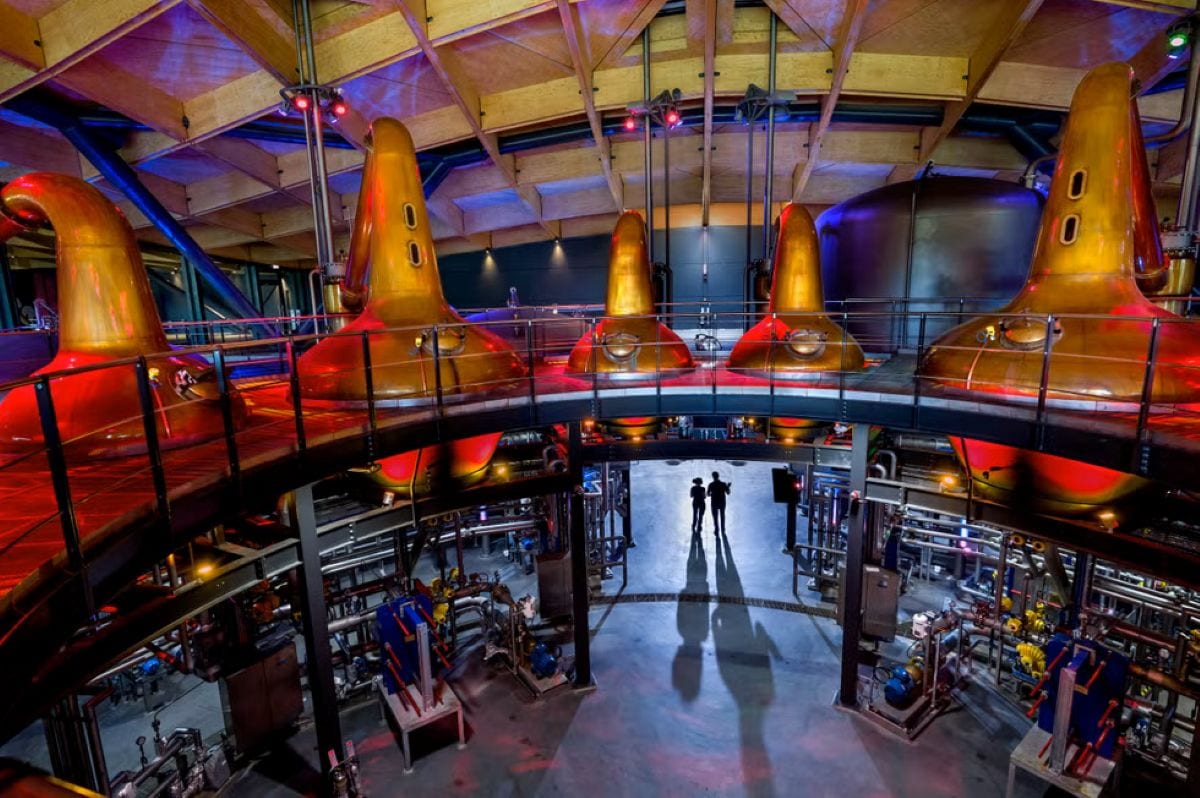
The sign-off process for each major release falls to Kennedy and Campbell. They don’t always align but always land on a positive outcome.
“Disagreements are good to work through,” Kennedy says. “Different palates and preferences are natural, and you want that feedback.”
The Macallan’s Core Whiskies
Two complementary collections define The Macallan’s house style.
The Sherry Oak collection is central to the whisky’s ethos. The Macallan has long aged its whisky in Sherry oak—specifically seasoned Spanish oak from Jerez. It’s not about a finish or accent; the Sherry is the point. Generally, Sherry casks impart the aroma and flavor of dried fruits—raisins, dates, figs—and nuts, in addition to warmer baking spices like cinnamon or clove. A colloquial tasting note is “Christmas cake.”
SHERRY OAK
The Macallan Sherry Oak 12 Year is where the house character is most classic: dried dark fruits, warm spices, hot butter, a pop of dark chocolate, ginger, never-cloying sweetness from the European oak. A hit of oak on the nose, palate, and in the finish make it a satisfying gateway into the world of Sherried single malt.
Next in line is Sherry Oak 18 Year. Compared to the 12 Year, there’s more toffee, more ginger, and more complexity. It’s also smokier, with cloves, cinnamon, orange citrus, and seasoned oak abound. You also get a hefty finish, which lives up to the three-figure price tag.
The Sherry Oak 25 Year continues to heighten the classic notes of its younger brethren. Rich raisins, ginger syrup, burnt sugar, flamed orange peel, milk chocolate, and the perfect amount of oak await you.
The range crescendos with Sherry Oak 30 Year, an oily, intense, robust, and divine celebration of aged Sherry oak whisky.
For its Double Cask range, The Macallan ages its whisky in both American oak and European oak, both of which are sherry-seasoned. While the Sherry Oak range is dark and dense, the Double Cask presents brighter, lighter on its feet.
DOUBLE CASK
The entry point in the Double Cask line, Double Cask 12 Year opens with honey and vanilla up front, then orange and lemon cut through the dried fruit. It’s sweeter than its Sherry cousin.
The Double Cask 15 Year melds the sweeter notes from the American oak—toffee, vanilla, butterscotch—with the orange zest, ginger, and chocolate notes from the Sherry.
Want spicier, oilier whisky? The Double Cask 18 Year is the right call. The extra years in wood tightened everything up without losing the range’s characteristic brightness. Think Christmas cake alongside coffee, black pepper, toffee candy, and burnt caramel.
The Double Cask 30 Year is rare territory, combining honeyed citrus with dried apples, flamed orange peel, vanilla cake, and aged oak. It’s a steal compared to any of the cask 263 bottles.
A plethora of limited edition releases exist, but the newest features a first for the brand: a red wine cask finish. The Diamonds Are Forever 55th Anniversary release is a James Bond collaboration that was distilled in 2007 (get it?) and matured for 18 years in bespoke hybrid casks combining sherry-seasoned European oak with American oak casks that previously aged in red wine. It’s all a wink to a scene in the film where Bond’s deep understanding of red wine helps save his life. The Macallan’s foray into red wine finishes works well. The dram is juicy, round, and full of creamy vanilla and chocolate notes. Consider it fit for active duty.
What to Do on The Macallan Estate
The Macallan Estate covers 485 acres in Speyside, near Aberlour. It’s about an hour and twenty minutes from Aberdeen airport. While they warmly welcome visitors, everything is appointment only. Some options are free, such as visiting the bar or the gift shop. Tickets to tour the distillery are available, as are £100 guided fly fishing experiences with the estate ghillie, the Scottish term for one who oversees a hunting or fishing expedition.
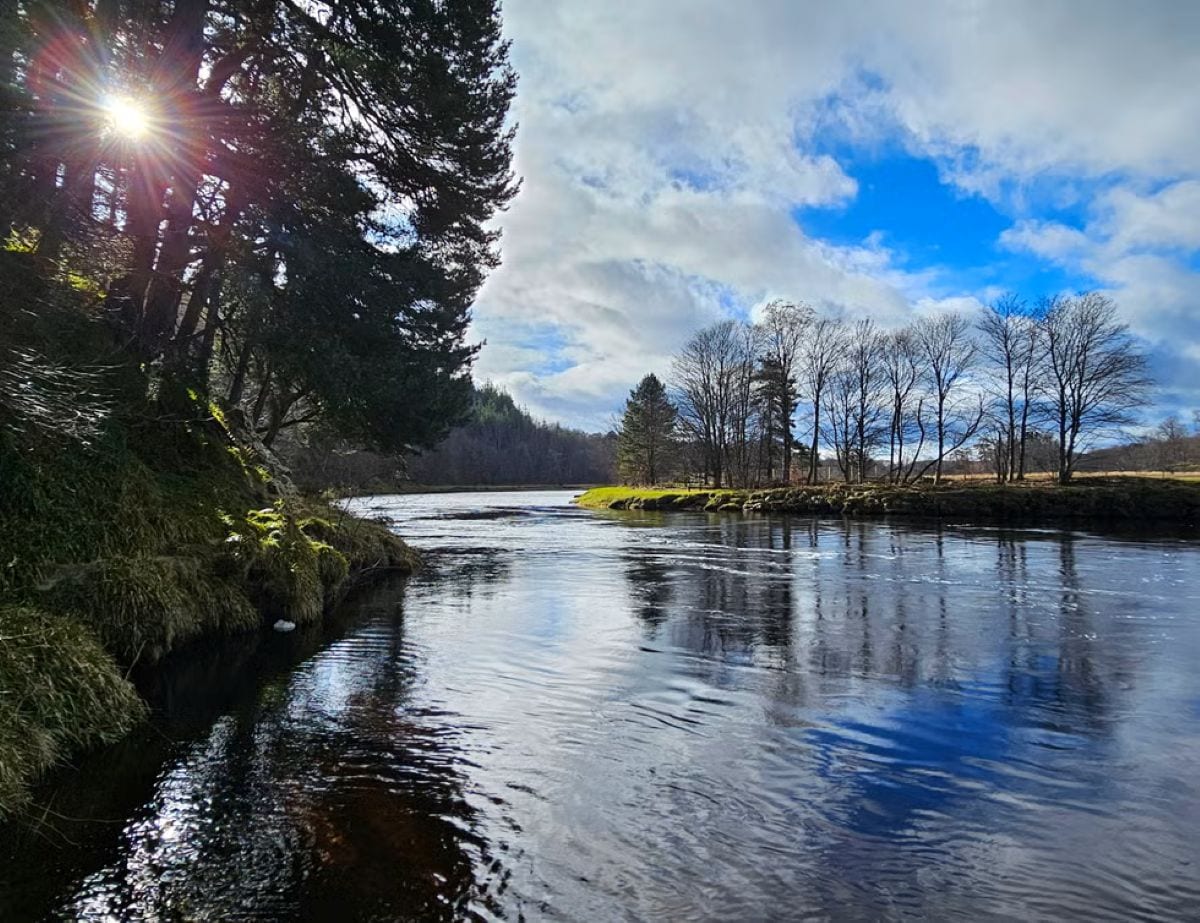
Because 1.8 miles of the River Spey runs through the estate, you’re in a prime location to catch—and release—fish. While showing my group how to properly cast, Richard Whyte, The Macallan’s head ghillie, landed a three-foot, 16-pound salmon. Once Whyte relinquished the rod, the remainder of the outing was spent hooking the riverbed and enjoying the beautiful vista.
Catching nothing still works up your appetite. The onsite dining experience, TimeSpace, features a nine-course tasting menu for £105. The Roca brothers, who helm the kitchen, were awarded three stars for their prior endeavor, El Celler de Can Roca in Spain. Calling the food exceptional is too understated. The whole experience is fine dining mixed with theatre. Plates arrive under mini-barrels and cloches and amuse-bouches are nestled inside boxes shaped like the distillery building.
The Macallan’s Bright Future
Something big is coming. Kennedy offers a preview while we’re in the dunnage, though the details stay locked until the announcement is official. What can be said: This project has been three years in the making, and on the day of our visit, it crossed a significant threshold. The Macallan, characteristically, isn’t rushing the reveal.
Makes sense though. A 200-year-old distillery that routinely sets world records for a bottle of wine or spirit has no reason to hurry now.
This story originally appeared on Esquire.com.
View More Articles About: