From Nurse to Social Entrepreneur: Narda Capuyan's Legacy of Handwoven Arts
Here are lessons everyone can learn from the founder of Narda’s Handwoven Arts and Crafts.

Published on Mar 19, 2026
How does one go from being a nurse to a social entrepreneur with a weaving business that introduced the Philippine weaving culture and creativity to much of the world? Some might chalk it up to her progeny and upbringing.
Leonarda Olat-Capuyan, or Gayyap (her Igorot name), was born in 1942 to a father who was a teacher and catechist, and a mother who was a trader and local store owner. She was the middle child out of the couple’s seven daughters. Theirs was a religious Episcopal household in Besao, Mountain Province. As children, the girls would help with different tasks at home, their backyard farm, and their sari-sari store. Narda also sold bread to have some pocket money.
She earned a scholarship and eventually graduated from the St Luke’s Hospital School of Nursing in Quezon City. Eventually, she married husband Wilson Capuyan, and they settled in La Trinidad, Benguet, where Wilson began running the family gas station. While working at a family planning clinic in La Trinidad, she got frustrated that despite the time and effort she took to explain the natural methods of family planning, she observed that intervals between births among the women in the community were short.
Crocheting and knitting were her hobbies. When she once asked the women if they had anything else that would keep them busy, one of them exclaimed: “If you give me some of that yarn, I can knit some things [and sell them to you].” Narda did so, and soon, the mother came back with a woven blanket. She paid the woman for her work. Upon hearing this, more women came around to get yarn from her and came back with blankets and knitted sweaters that they had made at home. Narda put them on display at their gas station. She also sold some to family and friends. They were inexpensive and essential, so they sold pretty much like hotcakes. This was her lightbulb moment. Narda saw this as an opportunity to keep the women busy with an income-generating endeavor from something they already knew: to crochet, knit, and weave.
She would buy overrun socks in bulk from a factory in Manila, have them brought to Benguet for unwinding by women in La Trinidad, Poliwes, and Baguio. Then would buy them back as balls of yarn, which she sold to the weavers. She provided them guidance and advice on how to improve their technique and what kinds of items would sell well. By doing so, they could earn with dignity from their homes as they fulfilled their duties as wives and mothers.
By 1972, Narda bought three knitting machines, then in 1973, some secondhand looms. By 1974, in consultation with Wilson, she decided to shift from nursing to entrepreneurship. The first store, Narda’s Knitting and Weaving Shop, was at their home in Km 5, La Trinidad, Benguet.
Theirs was a true partnership: Narda was free to be creative because Wilson made sure the day-to-day operations ran smoothly to fulfill all of his wife’s visions. He even invented and fashioned some contraptions that are still in use at the workshop today, including a spooling machine.
In their first year of operations, they applied for a loan from the Development Bank of the Philippines. They were conscientious about sticking to their payment scheme. But they were swindled by a wholesale buyer for hundreds of thousands of pesos. Desperate, Narda spoke candidly with the bank manager, who proposed a payment scheme that was favorable for both parties.
In 1975, Narda’s supplied the soon-to-open Hyatt Terraces Plaza Baguio with draperies, curtains, and bedspreads. Soon, other hotels also ordered woven products for their interiors.
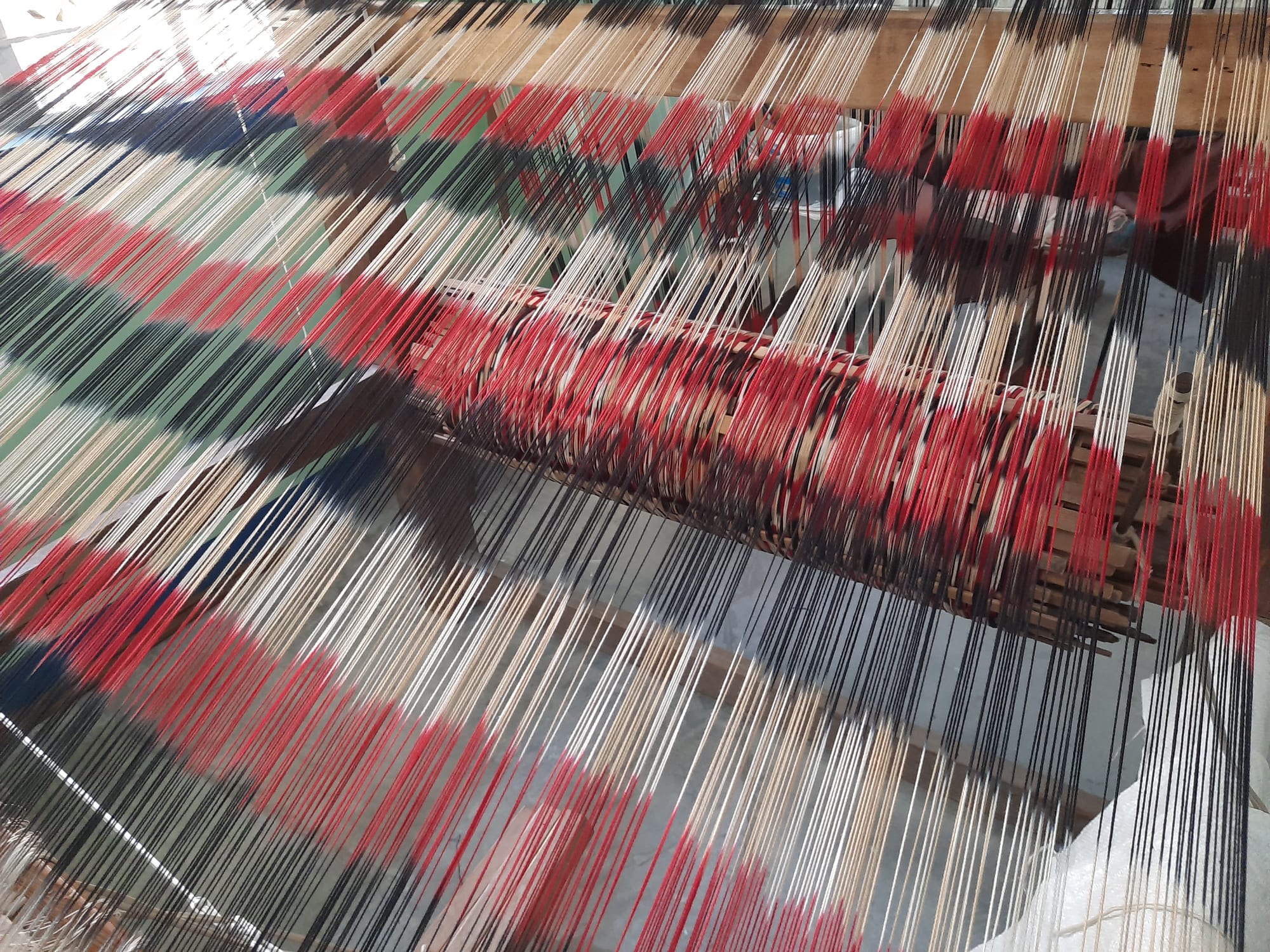
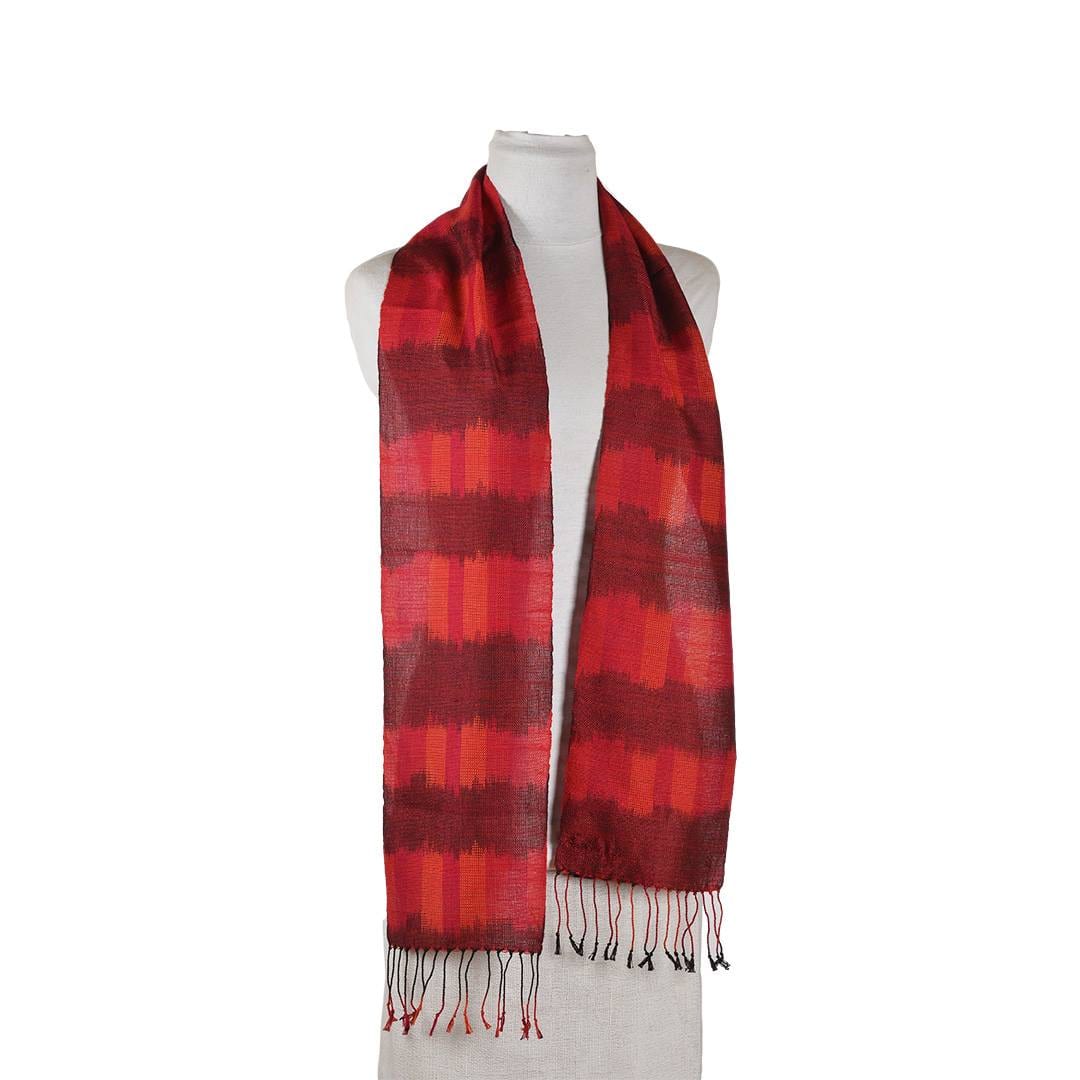
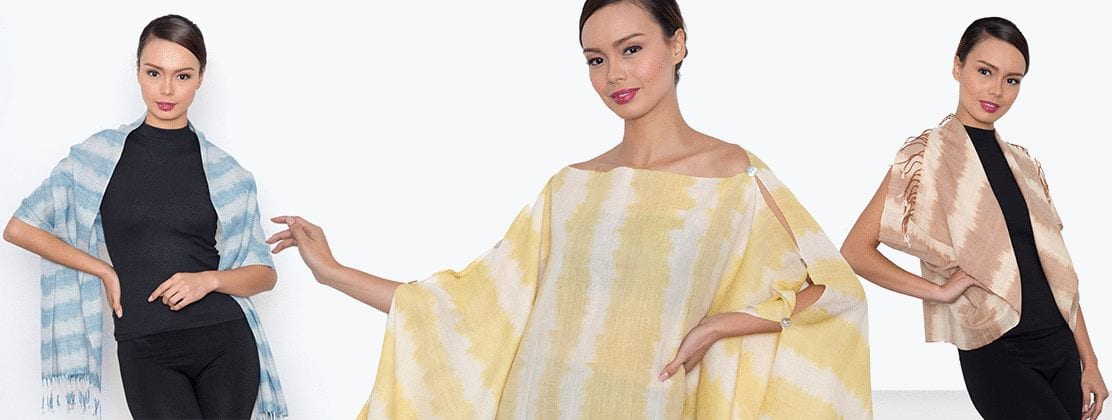
In 1977, American anthropologist and US Peace Corps volunteer (and friend) Ellen Schattschneider taught Narda the techniques of ikat, from the Malay-Indonesian, meaning “to tie”. It is a traditional practice in many Asian cultures, though the levels of preservation vary. To produce ikat, threads are tied together according to a certain pattern and dyed before being woven. The resulting patterns appear blurred. Narda saw the potential of ikat, but she took an entire year to experiment with mixing colors. To do this, she called upon what she learned from her nursing education. The results were her signature vivid purples and reds, dreamy pastels, and earth tones.
In 1978, she finally launched her ikat line. She debuted them at the gift shop of the Hyatt Terraces. That was where a designer from New York, Rafael Sanchez, saw them. Sanchez sought her out. He was so taken with the design and quality of the woven materials. He wanted to design bags that Narda’s could produce for him.
This opened the door to the international market. Those bags were sold at Lord & Taylor, a US department store chain, and were subsequently featured in the “fashion bible” magazine Women’s Wear Daily. Soon, American department store chain Bloomingdale’s invited Narda to New York to take part in an exhibition of Philippine products in 1982.
Not long after, Narda’s was weaving various products for brands like JCPenney, Neiman Marcus, Marshall Field’s, and Hudson’s Bay. The Cordilleran weavers’ works ended up in the United States of America, Canada, France, the Netherlands, Japan, among other countries.
In December 1982, she received the prestigious Golden Shell Award for reviving the ikat-weaving tradition using indigenous materials and introducing it to a wider, international market.
By 1989, they established a store along Upper Session Road–centrally located in the Summer Capital, where tourists from all over could peruse their displays and even observe weavers work the loom. That retail outlet remains their flagship store.
Narda’s was selling apparel, bags, blankets, table runners, curtains, and tapestries in stores in Baguio, Makati, and even Guam. More importantly, she employed 600 women.
But then, a magnitude 7.7 earthquake struck Baguio on July 16, 1990. Many lives and businesses were disrupted. Among them are the Hyatt Terraces. As soon as she got her bearings, Narda began organizing “Baguio, Isubli Tayo” (Let’s Rebuild Baguio), a series of trade fairs for all entrepreneurs producing handmade products held in different parts of Metro Manila. And this meant all, including former employees who had left and started their own businesses, in some cases, applying what they learned at Narda’s and coming up with similar versions. But, Narda insisted, everyone needed to earn a living. So they, too, were welcome to participate in the fair.
In the years that followed, not only did Narda expand horizons to create linkages with weavers locally (HABI: The Philippine Textile Council, Inc.) and internationally (World Eco-Fiber and Textile Forum and World Ikat Textile Forum) to ensure the sustainability of the craft; she also won more accolades, including the 1989 Outstanding Countrywide Investor Award, 1990 Agora Award from the Philippine Marketing Association, one of the Baguio Builders by the City of Baguio on the occasion of its centennial in 2009, the Philippines Ernst & Young Small Business Entrepreneur of The Year in 2013, and as one of the Women Icons of APEC (Asia-Pacific Economic Cooperation) in 2015. And she even made time to engage with various groups to teach and advise them on how to start and grow livelihood programs in weaving–the task took her as far as Antique.
In 2014, the Capuyans established the 33-hectare Winaca Eco-Cultural Village in Tublay, Benguet. Surrounded by a farm, operations of Narda’s shifted here. Weavers work from dyeing to warping, all the way to putting the finishing touches to the woven products–everything is done locally and on-site.
Here are five business lessons everyone can learn from Narda Capuyan, Founder of Narda’s Handwoven Arts and Crafts:
1| Inspiration can be found all around us
Narda was proud of her Kankanaey culture and in love with the landscapes of the Cordillera. She loved sunrises and sunsets–the changing hues and configurations of the sky with blues, purples, pinks, oranges–as well as the mountains, seas, rivers, trees, and flowers. She drew inspiration from all of these and more, especially for her tapestries. Thanks to the bold colors, Narda’s tapestries not only capture such natural occurrences but evoke awe as well.
Fiercely spiritual, she thoroughly appreciated God’s beautiful creation and brought the wonderful colors–blue with fuchsia, mauve gray–into her own canvas.
Narda was inspired by the hues of her highland home, as well as her heritage. She designed around tradition but made them into contemporary pieces that appealed to an even wider audience.
2| Value the human touch
When there is an existential crisis posed by AI on humans, Narda’s has always and continues to value the ingenuity, creativity, and dexterity of people. The germ of the idea for the social enterprise came from Narda’s desire to help women in her community. After all, there is no substitute for handcrafted items. Despite human error, there is also human intuition that drives the weaving, knitting, and sewing processes.
Narda’s employs people at every step of the process. Farmers harvest from mahogany trees, annatto and indigo plants, and cogon grass. They also process these into natural dyes. The yarns are warped in preparation for weaving. And, of course, weaving is all handmade. Sewers put form into the textile to make it into table runners, bags, wallets, apparel, and the like. Though the workforce is predominantly female, there are male farmers and sewers, too. This is time- and energy-intensive, but that is what makes each piece unique.
It is very telling that many of the weavers have been part of Narda’s for decades. They have even expanded their expertise–become designers and master weavers through the course of their interactions with Narda over the years. She helped empower weavers in La Trinidad, Tuba, in Benguet; in Baguio City; in Sagada, Besao, and Bontoc in Mountain Province. The more senior members of the staff also train new members in the different stages, contributing to the social enterprise’s sustainability.
All of these go beyond generating income. The happy consequences include preservation of traditional weaving and, in the larger scheme of things, preservation of the culture for future generations. Many children and grandchildren of present and former workers look back fondly and with nostalgia at how much their grandmothers, aunts, and mothers gained from being part of Narda’s. The crowds during Narda’s wake and funeral rites in 2016 are a testament to how far-reaching her impact has been.
3| Whistle while you work
In a manner of speaking.
Narda always found joy in what she was doing. She worked many hours to perfect dyeing and weaving techniques because she had a passion for the creative process. At a time when the Internet had yet to be ubiquitous, she travelled great distances and went to exhibitions and fairs on her own, without the aid of technology, to see how far she could take the handmade treasures meticulously made by her weavers. She lived her passion and was a testament to how it can drive you to even greater heights.
4| Innovate to elevate
Narda has shown that innovation drives business forward.
Though she never set out to be an entrepreneur, she committed herself to the role wholeheartedly. After tapping into the talents and capabilities of women in the Cordillera, she expanded their knowledge to ikat designs. After she learned the tie-dyeing techniques, she mixed colors, then, she mixed materials. Long before circular fashion was a buzzword, Narda incorporated denim cut-offs and leather scraps into her ikat rugs, tapestries, and bags–ensuring that nothing went to waste. These came from factories in the economic processing zone in Baguio. The staunch environmentalist combined raffia, buri, and abaca, interweaving them with ikat, and used seashells and semi-precious stones as embellishments for her eco-friendly designs.
Daughter Lucia and granddaughter Madeleine–who also bears her grandmother’s Igorot name–now manage the business. They have not merely continued to churn out the same sellable and reliable pieces; they have taken innovation and creativity, which seems to run in their DNA, to other areas. For example, Narda’s Naturals is a line that uses dyes from plants like indigo, turmeric, cogon, and mahogany. All of these are grown in their farm at Winaca. The idea started with Narda herself, but has only recently taken root. For the same product line, locally-sourced cotton is combined with other local materials like pineapple and abaca fibers
5| Treat everyone like family
Many of the women from whom Narda bought those woven blankets and knitted sweaters still work at Narda’s today.
Everyone who talks about her–and especially, her husband, Wilson–talks about her ready and easy smile coupled with twinkling eyes, showing deep sincerity. Her smile was infectious, they attest. And so was her zest for life. No wonder so many people gravitated toward her, forming a large web of “adopted” families.
Whatever one’s status in life, she treated each person with dignity. After all, she reminds people, as a child, she used to walk barefoot the one kilometer between her home and school.
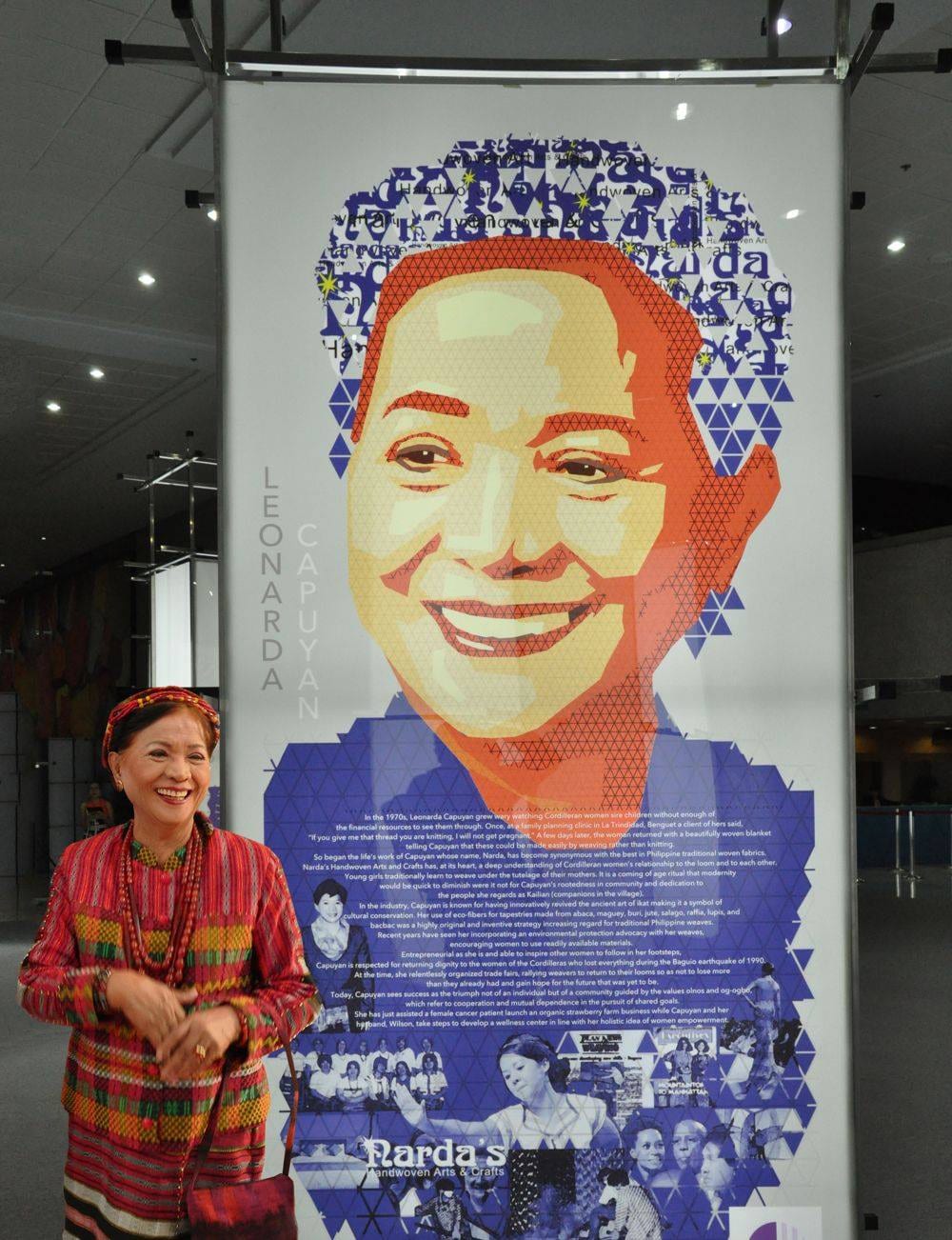
Narda passed away on March 11, 2016, but her legacy is being continued by the many artisans and staff members who grew up and have grown old collaborating with her. They carry with them not only the skills and best practices she taught but also the memories that bring laughter to the point of tears to their eyes. Much has been said about how she treated everyone like family, and it makes sense that her work family and biological (extended) family work together to keep her memory alive.
ALSO READ:
From Kalinga's Fields to Your Plate: Discovering the Slow Food Community in Pasil
Rooted in Kankanaey Soil: How Coach Mark Sangiao Cultivated Benguet's MMA Champions
Mari-An authored Star of Samar, which documents a private sector effort to deploy more than 200 boats to fisher-communities in Samar post-typhoon Haiyan/Yolanda.
View More Articles About: