
Rooted in Kankanaey Soil: How Coach Mark Sangiao Cultivated Benguet's MMA Champions

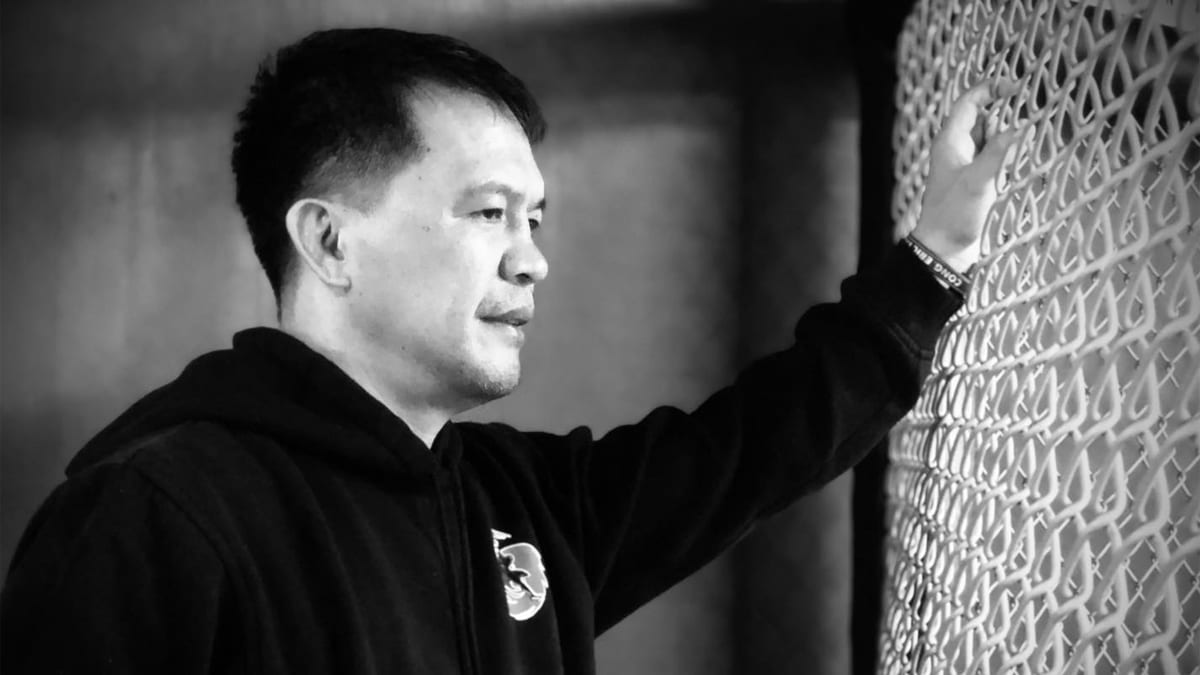
As I waited to meet Coach Mark Sangiao of Team Lakay, I was a bundle of nerves.
Even if you are not a hardcore mixed martial arts (MMA) fan, it’s difficult to ignore the fact that he is a multi-awarded athlete, and now, behind the most popular MMA gym in the Philippines.
When we finally came face to face, Mark’s bedimpled smile and calm demeanor put me at ease.
ALSO READ:
5 Life Lessons From the Founder of the Largest Mixed Martial Arts League in Asia
Meet the 23-Year-Old Who Started a Local MMA Tournament
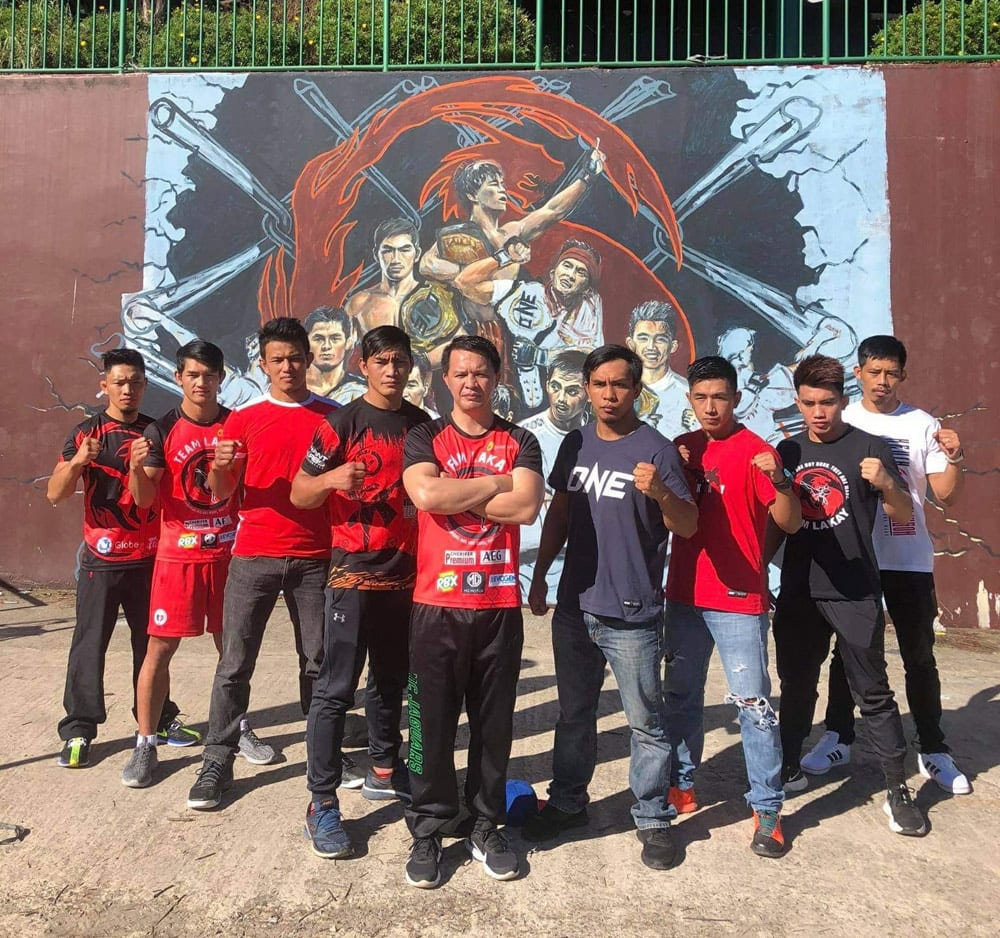
Coach Mark (center) with Team Lakay in front of their mural at the Baguio Athletic Bowl in 2020
Roots Run Deep for MMA Coach Mark Sangiao
The fourth of six children, Sangiao grew up amid the strawberry farms of La Trinidad, Benguet, where his parents worked as farmers. He worked as a shoe-shine boy and a newsboy, then as a farmer to earn some money while growing up. None of his relatives were athletic, though they descended from warriors, being of hardy Kankanaey stock.
He grew up playing traditional games like kinugtaran (kicking) and ginabu (grappling) in the grass. He also watched movies top billed by Bruce Lee and Jean Claude Van Damme, and WWF on television with his friends. But his first love was basketball.
"I woke up early to play an hour of basketball before going to class," he recalls of his pre-teens. But though he loved the adrenaline rush, it was plain to see that height was not his advantage. So he decided to redirect his efforts. Around the same time, he joined free summer taekwondo training camps, like the Eagles’ Training Camp in Benguet State University (BSU).
One sure crowd-drawer in La Trinidad in the 1990s was kickboxing tournaments held in the sprawling BSU campus. Once a month, he and his friends would watch fighters duke it out in the ring.
In 1995, as a high school junior, he decided to join free kickboxing classes held on weeknights outside a neighborhood chapel. Eventually, among his peers, he was the only one who attended religiously.
The conditions were spartan, with very little equipment (some old taekwondo pads and without a punching bag in sight), but with a lot of passion and discipline. This was Red Lion Kickboxing Club, then one of the most popular clubs in the province, under the guidance of Felix Agayas, fondly known as Master Felix. It was a mentor-student relationship that left a deep mark on the future Team Lakay coach, one of admiration that would continue until Agayas passed away.
The mentor must have seen something special in Sangiao because only six months after he started training, he competed in his first tournament. He lost his first and second bout. But Master Felix motivated him by egging him on. From then on, he started winning. There were no cash prizes, but they competed to bring glory to the club.
Sangiao entered the Baguio Colleges Foundation (which later became the University of the Cordilleras) with an athletics scholarship for the taekwondo varsity team. History repeated itself: after only six months of training, he competed at his first Benguet Invitational. And won.
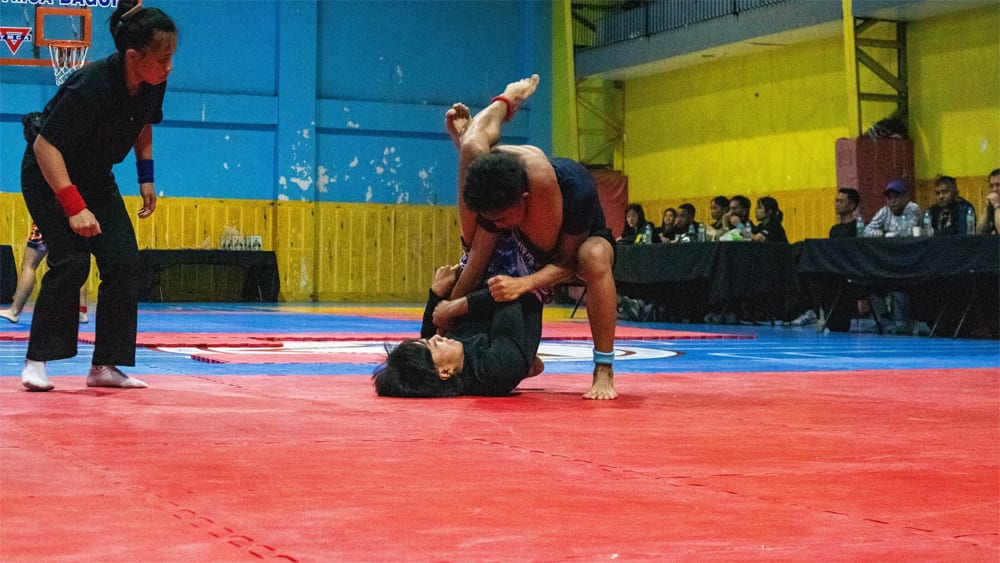
The 43rd Lakay Grappler's Cup, organized by Team Lakay, in partnership with the YMCA Baguio.
Everywhere, All at Once
For the next two years, he trained every day in taekwondo and every night in kickboxing, since he was still competing in and winning tournaments under the Red Lion banner.
"I just wanted to win competitions," he says. "In the process, I gained more skills."
The coach of the wushu national team spotted him while training at BSU and invited him to train with them in nearby Baguio.
In 1999, he was fielded in the Wushu National Championship, where he won gold. It was the first competition where he also took home a cash prize for his efforts. The succeeding year, now officially a member of the Philippine team, he duplicated the win. He decided to hit pause on attending college to concentrate on training and competition. In 2001, he brought home a gold medal from the Southeast Asian Games held in Penang, Malaysia.
It looked like Sangiao’s star was rising fast. But his momentum was stalled because his mother requested that he graduate with his Criminology degree first. The dutiful son focused on his studies for the next two years, but still coached the wushu varsity team on the side. In 2003, he graduated, then passed the Criminology Licensure Exam.
After getting his college education, he made a bid to compete again as part of the wushu national team. But management asked him to focus on coaching the team instead.
Sangiao also started teaching Defense Tactics at the University of the Cordilleras and wushu at the Philippine Military Academy. Periodically, he taught members of the National Bureau of Investigation. He was also cross-training in judo and jiu-jitsu at the same time.
If you’re amazed by how much he was doing everywhere all at once, you’re not alone. "There was a fire there," he explains.
To this day, Sangiao still coaches the wushu team at his alma mater. "I just want to give back. Many of the people I started out with have already left martial arts, derailed by vices. Without martial arts, I would not be here. I want to let the youth know that, to inspire them."
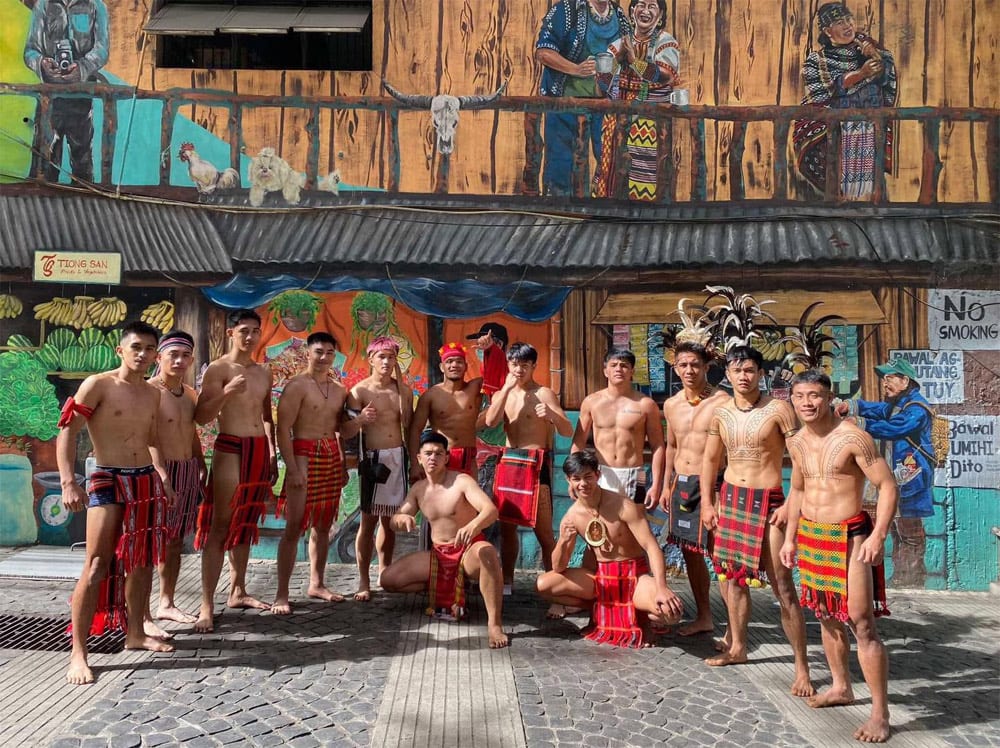
Team Lakay at Panagbenga 2025
Getting Into Mixed Martial Arts
A watershed moment occurred in the latter part of 2003. He joined friends who went all the way to Makati for tryouts in Mixed Martial Arts. At this point, Sangiao had never trained in MMA. He drew from his wellspring of combat sports knowledge and experience and "just learned the rules." His style worked. He won at the bantamweight category of the Universal Reality Combat Championship in 2004.
He was buying time slots at a gym in Baguio’s Maharlika Building to train aspiring fighters in wushu and kickboxing. Soon, more aspiring fighters came to learn from him.
When asked how he was doing all of that, plus organizing local competitions and serving as a wushu international judge, he chuckles: "I don’t know how I managed!"
There was a time when he was in China for a seminar on wushu that was supposed to extend until the weekend. But he had an MMA bout that Saturday in Manila, so he had to fly back by Thursday to make it to the weigh-in on Friday.
Since he was winning competitions in Metro Manila, he also attracted aspiring fighters to come to Baguio to train with him. There was no team at this point, only a lakay (man): Coach Mark.
He admits it was not an easy life. He had no management, no team behind him. He sought out opportunities to compete. Eventually, his name became well-known in the right circles, and organizers called him with invitations to tournaments. But he took care of all the preparation and logistics. He had to borrow money to fund his excursions to Metro Manila to compete, then from his winnings, he would pay off his loans.
Those experiences informed how he treats his team. "I experienced the hardships, I don’t want them to go through the same. They are spoiled now," he jokes, "they are driven to competition venues in air-conditioned vehicles."
Team Lakay, a Team of Brothers
In 2006, Sangiao officially registered Lakay MMA Top Team with the Securities and Exchange Commission. His teammates and trainees completed the roster: Eduard Folayang, Kevin Belingon, Mark Eddiva, Rey Docyogen, Honorio Banario, and Geje Eustaquio.
Team Lakay became even more popular, and their fighters became notorious for their fierceness in competition. It was inevitable that more of Sangiao’s time went into training other fighters than preparing himself for competitions. He retired with a 7-2 record.
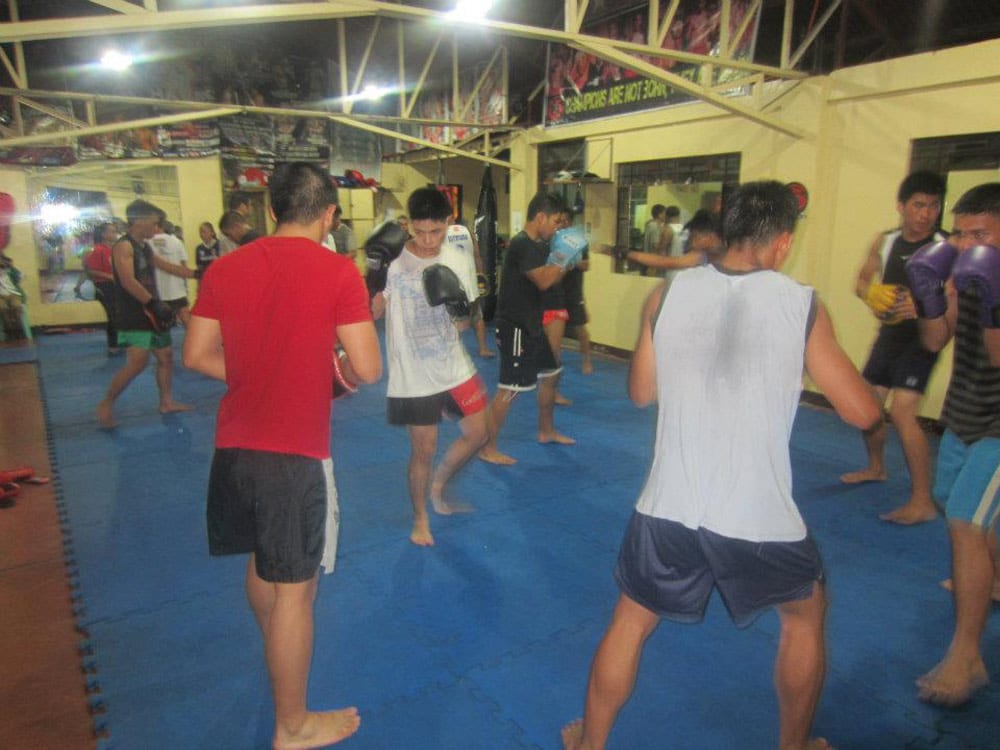
In 2008, he realized his dream of opening Team Lakay Gym at a rented space near the Baguio Central Market. It was a simple set-up, with little equipment but with lots of grit.
Training at the first Team Lakay Gym in 2012
In time, the team began to compete against international fighters. Though Team Lakay was dominating MMA in the Philippines, it was a different story in the international cage.
After a competition that returned five losses, they came home dejected. Sangiao even questioned whether he was in the right career. It was not to be the first time that Team Lakay seemed down for the count. This spurred a reassessment of the training regimen. Sangiao realized that they needed to increase time on training and developing skills, especially grappling. "We lacked preparation. We had to do more, we had to train more." So they did.
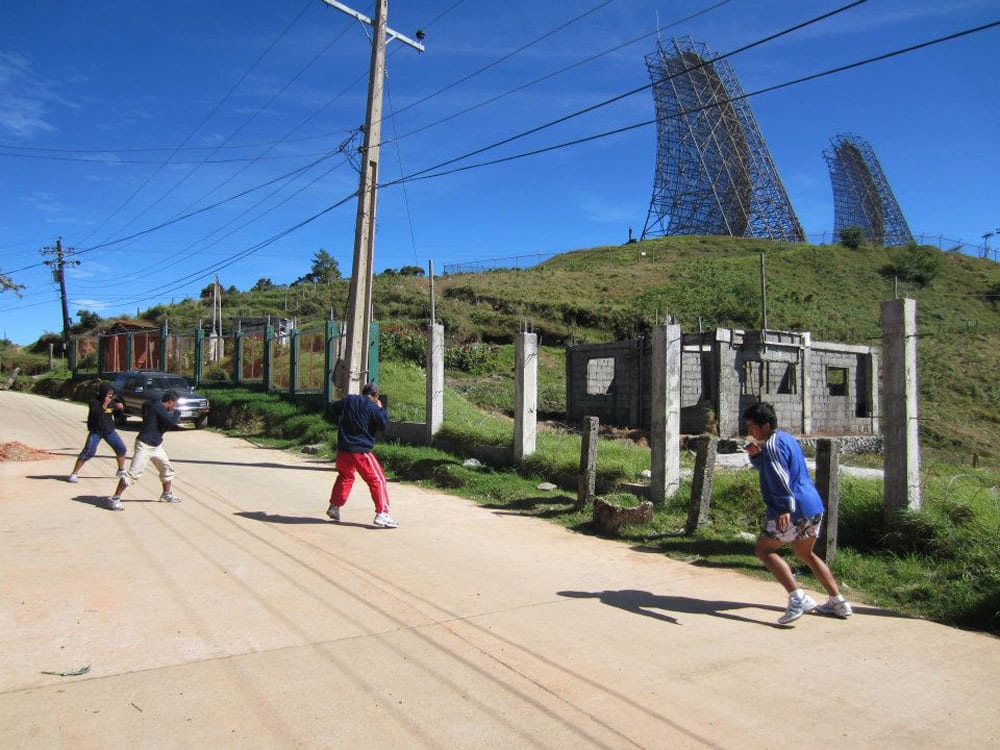
Training outdoors and uphill at Mount Cabuyao in Tuba, Benguet, in 2012
The formula worked, and they started to win belts. Fans asked to take selfies with them, crowds welcomed them at airports, and parades were organized to celebrate their successes. They were even lauded in the halls of the Philippine Congress. It was a heady, exhilarating period.
The year 2018 yielded a good harvest of championship belts, plus Team Lakay won as Gym of the Year at the Asia MMA Awards. In 2019, Sangiao served as coach of the Philippine kickboxing team for the Southeast Asian Games. They brought home three gold, two silver, and one bronze medal.
MMA enjoyed a rise in popularity in the Philippines, in no small measure, thanks to Team Lakay. They were riding high.
Team Lakay's Next Generation
They opened a bigger gym, reaping accolades, and surviving the pandemic through online courses. But in 2023, Team Lakay suffered blows as champions left one by one. First, Folayang, then Belingon, Banario, and Joshua Pacio. They later formed Lions Nation MMA.
What followed was a flurry of controversies and innuendos that, whether Sangiao will admit it or not, left the team flat-footed.
Looking back, he recalls, it was not the first time that a fighter left his stable. He, too, admits that when he left Red Lion, it was to start training fighters on his own. It’s the circle of life, so to speak.
Equipped with the lessons of building up talent with scant resources and experience, Sangiao started training the next generation of Team Lakay.
Aptitude vs Attitude
To the question of whether everyone could become a fighter, Sangiao says "no" but follows up: "But they can be trainers or fulfill other roles."
They have instituted a belting system so that those who may not become athletes might work as trainers or go into officiating matches as referees or judges.
Sangiao likes to mold his future fighters. Usually, an aspiring fighter will come to his gym or join the varsity team. He wants to provide the right environment, not only in terms of training but also to imbibe the Team Lakay culture.
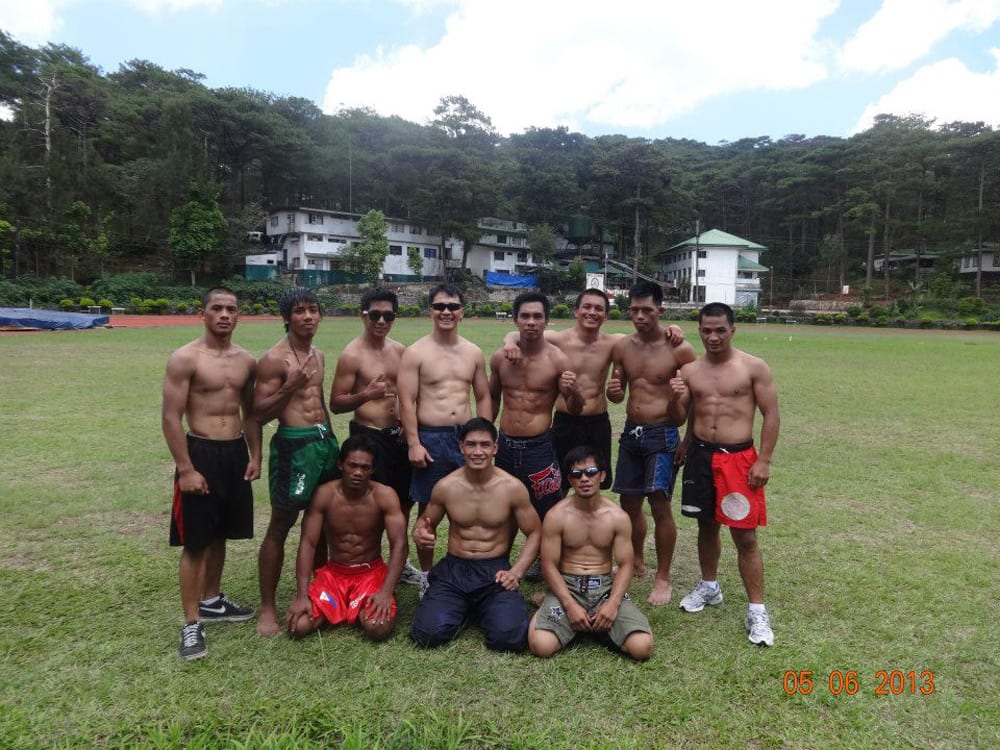
Coach Mark (standing, fourth from left) poses during training with Team Lakay at Baguio’s Teachers’ Camp in 2013
"Attitude is very important," he reiterates. The willingness to learn and devote time and energy to the sport spells the difference between someone who simply has potential and someone who becomes a fighter.
The soft-spoken coach admits that most people think of fighters as arrogant and that all they know is how to fight. But martial arts requires mental toughness. He insists his fighters remain humble. After all, "there are many fighters who are better than you."
Consistency and training, Sangiao says, will bring you success. "But to be a champion, you need patience and a good attitude."
The Team Lakay Brand
Team Lakay has built a good reputation, and many foreign nationals have come over to undergo training with Coach Mark. There are no fast-track options, however. Everyone goes through rigorous training. First, one undergoes an evaluation and, depending on their level, starts training using a specially-designed program. In time, they might be able to join the pros in training.
In the early days, lacking resources, Sangiao trained everyone altogether at the gym. That was advantageous for newcomers because they were motivated to learn and improve to keep up. But it was a challenge when he needed to prepare particular fighters for competition.
At the new gym, with more space and equipment, he is able to focus on preparing competitors for each of their bouts.
Coach Mark is no longer the lone trainer. Fighters now have a team behind them, built slowly over time (and as budget allowed): a head trainer, boxing trainer, strength and conditioning coach, and a nutritionist.
"We’re continuing to upgrade our skills, our services, our facilities," he says.
Seasoned fighter Geje Eustaquio has stepped into the role of trainer, too. The next generation of Team Lakay is led by Coach Mark’s son, Jhanlo Mark Sangiao, Carlos Alvarez, Carlo Von Bumina-ang, and Jean Claude Saclag.
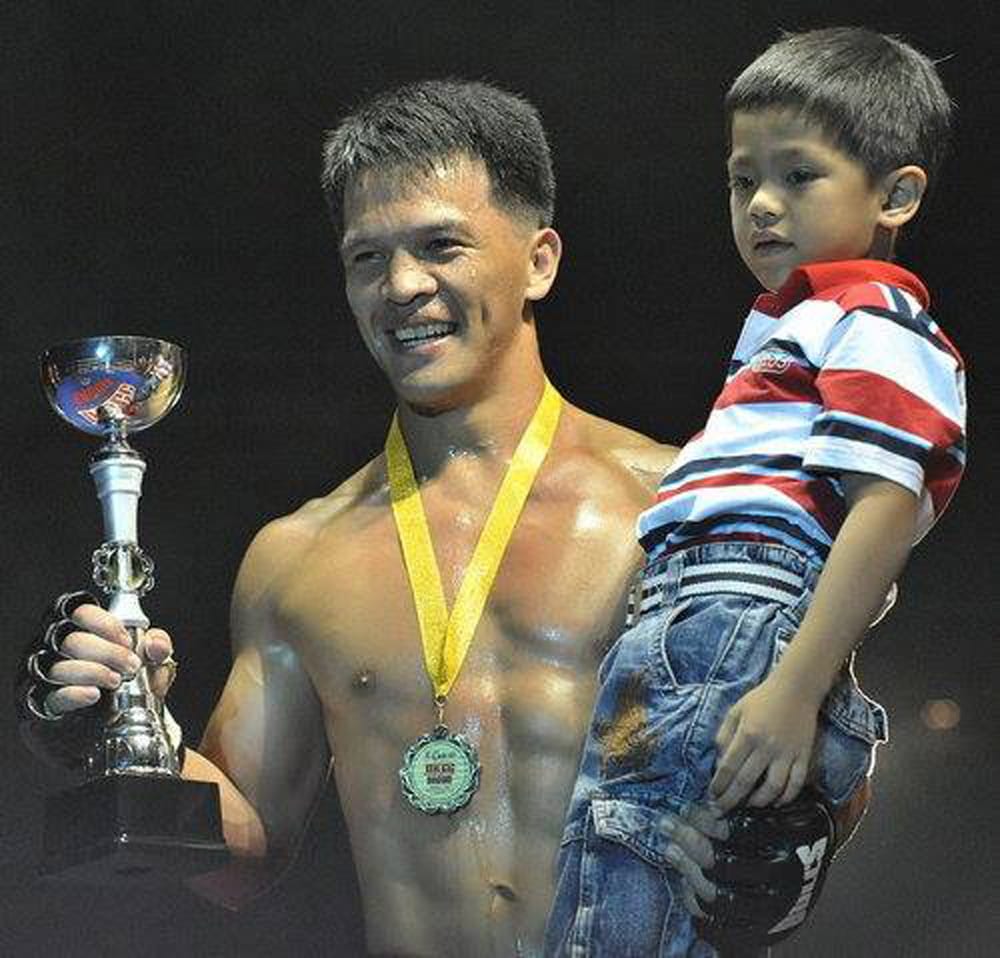
Coach Mark with his MMA trophy and a young Jhanlo in the 2000s
The team prioritizes training. They organized events, like the recent Lakay Martial Arts Grand Prix, to spot and hone raw talents as well as encourage athletes.
Sangiao is an advocate for completing formal education. He is proud to have helped many in the region earn their diplomas through athletic scholarships. "Some children of garbage collectors became student-athletes and now are working in different professions."
The Future is Bright for Team Lakay
On May 8, in a surprising turn of events, Coach Mark and Team Lakay sat down for a meet-up with their former teammates and members of Lions Nation MMA.
Of the reunion, he says: "We are a small community and we should support each other. There should not be division, but rather, healthy competition, especially when we face each other in the cage." He admits he was happy to see everyone together again.
Reflecting on his roller coaster ride of a career, Sangiao observes that he was taught by experience—"tinuruan ng panahon." He did not start out with a long-term plan to be the head coach of the most popular MMA team in the country. He started with a desire to excel in martial arts and become a champion. Having achieved that, he set a new goal: to start his own gym. The present location has more space and facilities: several cages, complete training equipment including treadmills (for cardio even during typhoon season), and even sauna and spa services. Soon, a new, multi-level Team Lakay sports facility will open. It will equip the fighters to be their very best and truly be their home.
Coach Mark trains members of Team Lakay
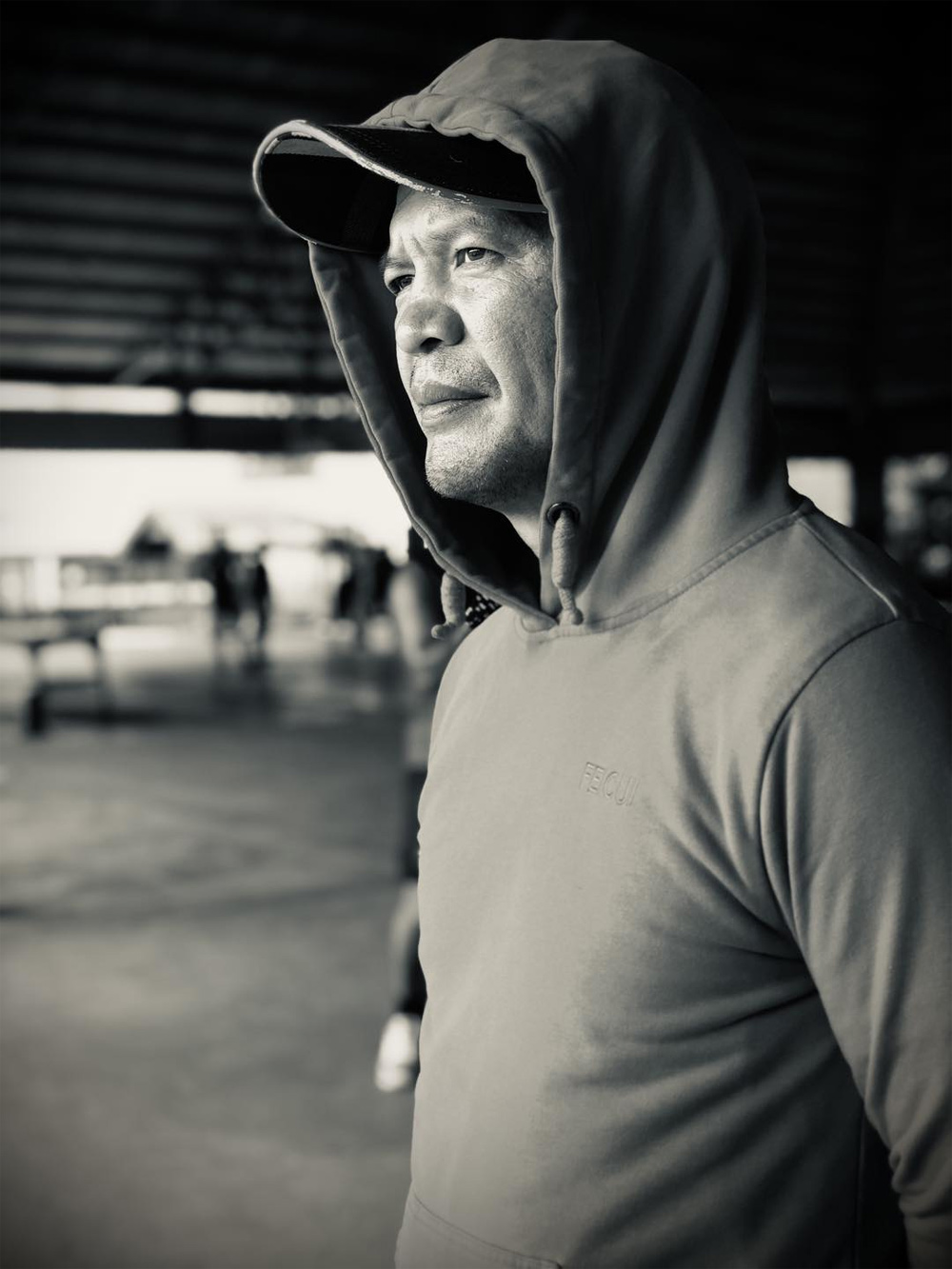
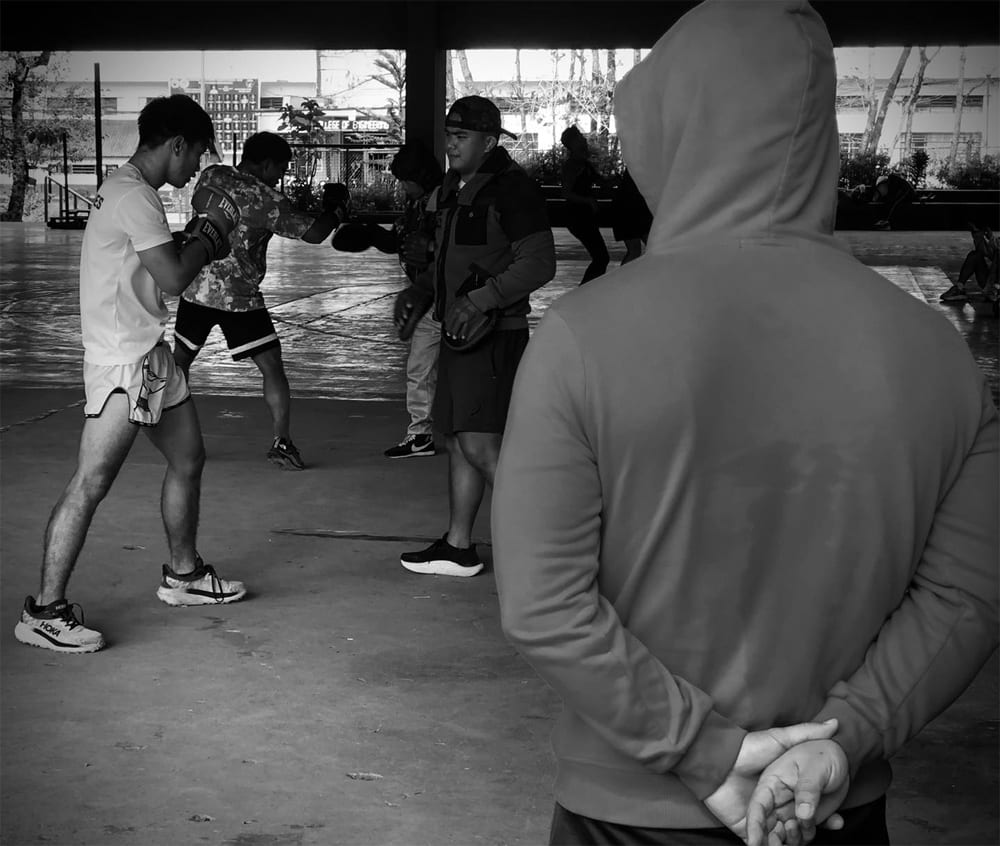
"There was no step-by-step guide. As soon as I achieved one goal, I assessed the situation and set a new goal. After every achievement, you need to upgrade."
Despite his international fame and prominence, he has not forgotten his roots. So, what is the secret to his longevity in competitive martial arts? Without hesitation, he says: "Passion with prayers."
Team Lakay’s mantra says: Champions are not born, they are made. Coach Mark sure is proof of that.
