Could Carol in Apple TV+’s 'Pluribus' Actually Be the Villain?
The science fiction drama from 'Breaking Bad' creator Vince Gilligan is an ethicist’s gold mine, but there are hints that its hero might not be the good guy.

by Zach Yonzon
Published on Dec 3, 2025
No other streaming service does sci-fi like Apple TV+. From epic sagas that span centuries and galaxies like Foundation to explorations of alternate history like For All Mankind to tender comedy dramas about homicidal robots like Murderbot, there’s no better place to find peak science fiction. Pluribus is no exception. The new series from Vince Gilligan, creator of Breaking Bad, is a post-apocalyptic scenario that finds the people of Earth receiving a recipe from outer space for an RNA that ends up uniting all of humanity into a benevolent hive mind. Almost all of humanity, anyway, because Carol Sturka (Rhea Seehorn) is one of only 13 people in the world who wasn’t assimilated into the collective. The show’s title is a reference to the United States motto of ‘E Pluribus Unum’, or ‘One Out of Many’, and it’s a relevant phrase in more ways than one.
Unlike your ordinary alien invasion or zombie apocalypse, Pluribus sees humanity coming together as one. The RNA sequence, kind of like a virus, binds humanity through some form of “psychic glue” that transforms the entire human race into one organism that ostensibly only wants what’s best for everyone. The collective reassures Carol that she’s in no danger and goes to great lengths to make her feel cared for and ensures that all her needs are met. It’s an interesting premise that upends most alien or zombie scenarios. For one, there aren’t any aliens or zombies. Humanity explains to Carol that she’s talking to human beings, all of them, everywhere, at the same time. The dead stay dead, and one of the very first things the united human race does post-unity is clean up, which includes the many dead who didn’t get assimilated.
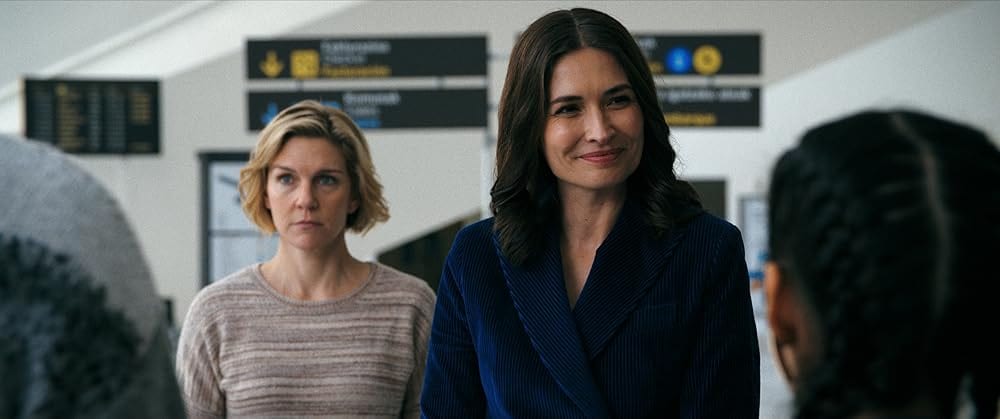
It’s almost like communist propaganda, a paradise where humanity shares absolutely everything, even knowledge and thought. There’s no need for private property or possession when the human race is essentially one being, and when Carol talks to someone in Albuquerque, she’s also talking to someone in Mumbai or Oslo. Consequently, because humanity is one and has a “biological imperative” to advance together, there’s no crime. There are no thefts, no murders, and no wars. It means the end of disease and hunger because humanity allocates resources quickly and efficiently to whoever needs them. For all intents and purposes, this is utopia.
But Carol isn’t happy, not one bit. Granted, she lost her lover, Helen (Miriam Shor), during the mass assimilation, as not all humans were able to process the RNA safely, so most of her anger towards collective humanity stems from grief. But despite her open hostility to the human race, it responds kindly to her, always ready to provide for whatever she needs. In fact, it doesn’t take much to do harm to collective humanity, who are so pacifistic and gentle that Carol’s outbursts of anger are enough to send the entire population into seizures. The collective human race is so “good” that they won’t kill another living thing, not even an insect.
So what’s the problem? For one, a collective humanity means there’s no longer individuality and personal freedom. There’s no privacy when everyone knows absolutely everything about everyone else, and everyone is aware of everyone else’s thoughts and actions, past and present. A collective consciousness eliminates some of the most fundamental human interactions, as there is no longer a need for the exchange of ideas or self-expression. With only one mind, there’s no free will, there’s no option or opportunity to make one’s own decisions, whether good or bad. Because the human race acts as one, there’s no need or desire to explore other options or make dumb or bad decisions. Conceivably, a collective humanity means the end of creativity, as people no longer need to make art, whether to express ideas or make something beautiful for others to appreciate. Sure, there’s now peace on earth, but a lot of what made us human is gone.
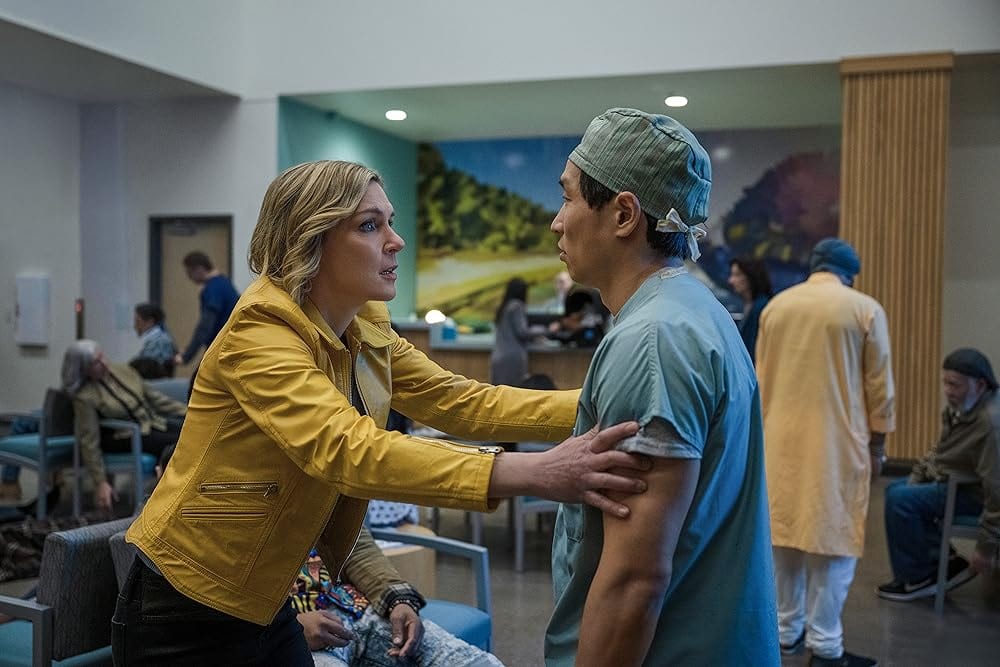
But is that really such a bad thing? For Carol, it’s the literal end of the world. Although she has retained her individuality, the human race makes no secret of their attempt to make her part of the whole, a process that might take weeks, months, or years, as the reason Carol wasn’t affected by the RNA is a mystery to them. Carol asks why, if the human race keeps telling her, “your life is your own,” it is so intent on assimilating her. Zosia (Karolina Wydra), the individual assigned by the human race to guide Carol through the new normal, explains to her that when you see someone drowning, you simply throw a lifesaver without thinking about it. Carol is drowning, and she just doesn’t know it.
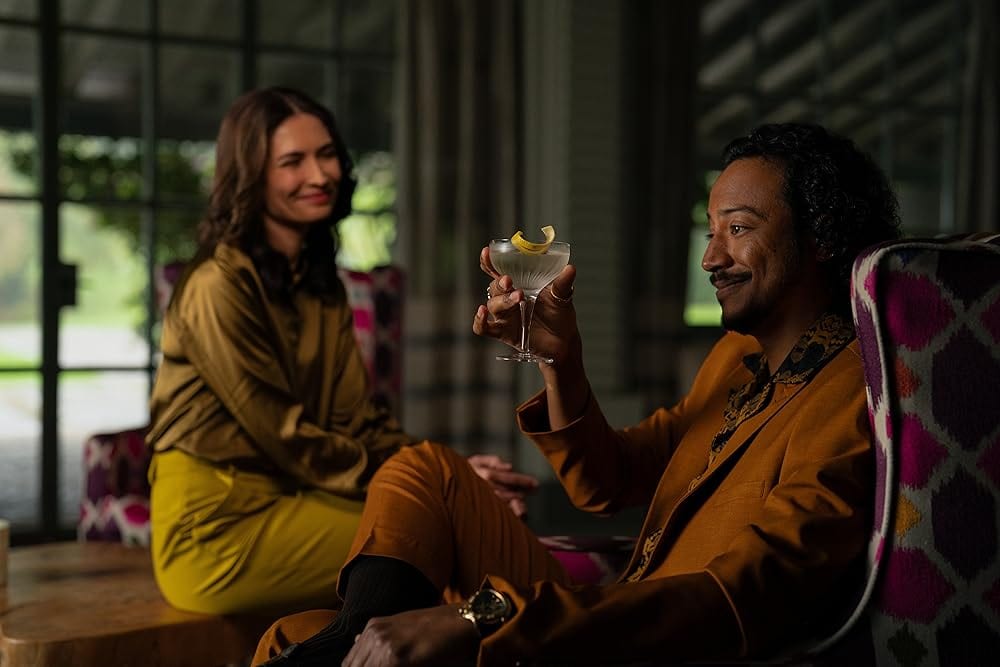
In the real world, we’re drowning, we know it, and worse, we can’t even do a thing about it. Gilligan’s premise is an ethical exercise that demands examination and discussion. World peace, individual safety, and food security require a balance of giving up certain freedoms and a measure of intrusive governance. But unlike the collective in Pluribus, we can’t trust those who govern us or even the most powerful individuals, the wealthy, to have our best interests in mind. Is losing our individuality and personal freedom truly that bad? One can argue that the theological concept of becoming one with God or a divine being is exactly the same as it means losing one’s self, the loss of desire or selfishness, and that having the sum total of human knowledge is pretty much omniscience. In the absence of conflict and violence towards one another, enveloped in pure bliss, isn’t this the very idea of heaven? In fact, among the few individuals who didn’t get assimilated is Koumba Diabaté (Samba Schutte), a hedonistic playboy who takes full advantage of humanity’s commitment to please by requesting a harem of women. The human race never says no because it respects a person’s agency. Koumba can have sex with all the women he wants because it’s done with the entire human race’s consent. But if collective humanity always just says yes, is it really consent? Or is the plurality of the human race just one hell of an enabler? As long as everyone is happy, I guess.
Interestingly, Carol Sturka might be the problem and not the solution. The show has dropped hints that Carol might be something of a white supremacist or at least a little racist. When she flips through channels looking for a broadcast that might inform her about what’s going on, she sees a man in front of the seal of the United States government and yells, “God bless America!” It’s an odd phrase said in place of the more generic, “thank God!” When Carol learns of others like her, she demands to meet only with other English speakers without stopping to consider non-English speakers who might want to join her. If they don’t speak English, they’re out. When Zosia teaches her the Sanskrit for ‘cheers’, she doesn’t try to learn it in earnest and just blurts out, “shoopy shoop shoop,” which is basically the same as saying, “ching chong chang,” in mock Chinese. Carol tries to insult one of the other unassimilated humans, Laxmi (Menik Gooneratne) from India, by telling her to “pound sand,” which is an almost exclusively Midwestern American idiom that means nothing to anyone outside of the United States. Carol is the Unum out of the Pluribus, exemplary of the American emphasis on individuality. This could be one big nothing, but Carol might not be the hero we think she is.
That said, Vince Gilligan has said that he wrote Pluribus because he was “weary from writing bad guys,” so maybe Carol is just unlikable. Pluribus is Gilligan’s response to audiences “taking their cues” from characters like Tony Soprano or his own creation, Walter White, whom he never meant to be an aspirational figure. Carol Sturka isn’t aspirational, either, at least not yet, so Gilligan at least has that covered. Pluribus isn’t quite like any show on television, and its premise hopefully holds out and surprises audiences rather than disappointingly turn into some body snatchers situation. What if a kind collective human race isn’t a fake out? What if humanity working as one, driven by compassion, empathy, and love, is actually real? What if the kindness and respect they show Carol isn’t a long-game sinister plot but a benevolent biological imperative? That would certainly be something. Pluribus is a show that should be watched and dissected in ethics and philosophy classes. For now, it’s one of the most interesting shows on streaming and at least one more reason to subscribe to Apple TV+.
Zach really, really, really loves films.
View More Articles About: