Noni Abao Turned a Thesis Film Concept Into 'Bloom Where You Are Planted,' the Four-Award Gawad Urian Sweeper
Director Noni Abao on how a thesis concept about the slain activist Randy Malayao became a three-part documentary that swept four Gawad Urian awards.
Published on Nov 5, 2026
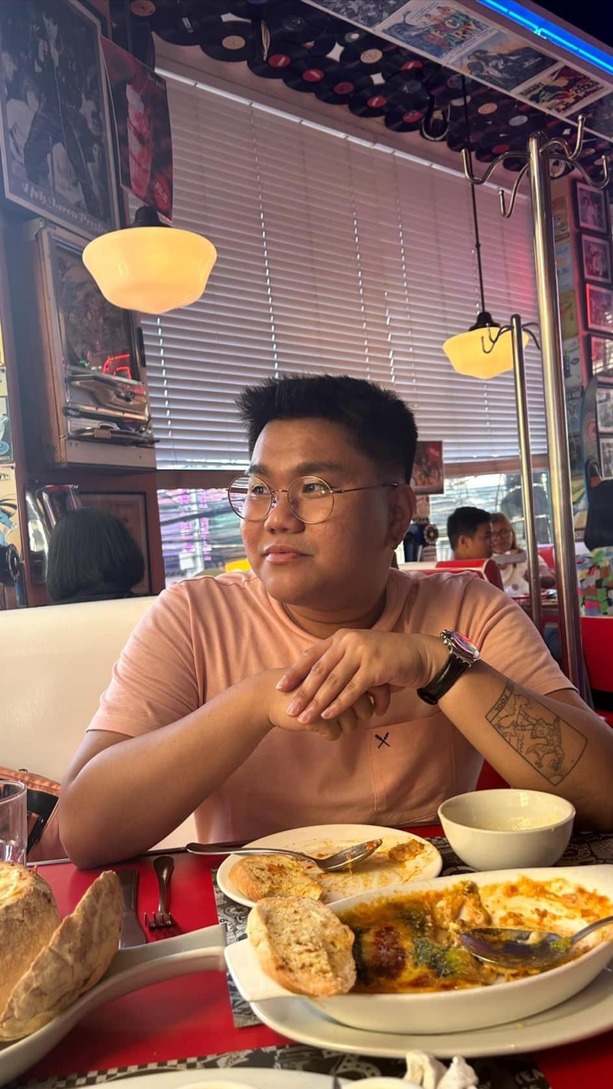
Agnes Mesina. Amanda Echanis. Randy Malayao. These are the three Cagayan Valley activists the documentary film Bloom Where You Are Planted focuses on. The film premiered as part of last year’s Cinemalaya Film Festival and won Best Film and Best Editing. A year later, it swept four awards in the recently held Gawad Urian: Best Film, Best Documentary Film, Best Director, and Best Editing. A few days after the Urian, I sat down with director Noni Abao to talk about what it means to win these awards, the origin and afterlife of his documentary, and how he translated his activism on-screen.
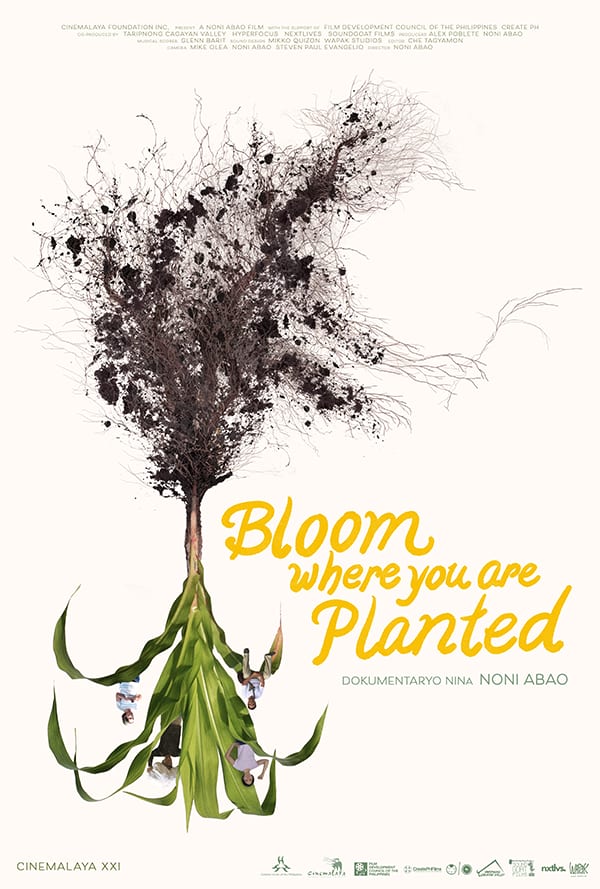
The official poster for Bloom Where You Are Planted, which was selected for the Gawad Urian Best Film, Best Documentary Film, Best Director, and Best Editing
The circumstances of how Bloom Where You Are Planted as a documentary is made complicate the categories that recognized it. Where does the role of the director and editor end and begin in a collaborative effort? What makes a documentary win Best Film when it already did in the category dedicated to it? Alas, these are questions only the Urian could answer. The Best Film win is consistent with Urian’s storied commitment to supporting films that have social relevance, as its citation states: “Dahil naipakita nito ang tapang at kabutihan ng pagsasapelikula ng katotohanan sa kabila ng kadiliman." Dahil sa pamamagitan ng Biswal at tunog ay inilarawan nito ang sinematikong paghahambing ng maaliwalas na lambak at ang karahasang pumapalibot dito.”
Abao later posed a contradiction: that the documentary's audience is ultimately middle class. The awards sweep is just one material truth the documentary, as much as it deserves the accolades (it really does!), lives with. “Binuo siya sa point of view ng privilege, ng petiburgis at intelektwal sa Maynila,” he confessed. “Pinalabas namin siya sa mga magsasaka sa mga vendors last year sa Cebu. Ang sabi nila alam na nila ‘yun e. Sabi nila sila ang direktang apektado ng danas. Totoo naman.”
Bloom Where You Are Planted is structured as a triptych, with each part focusing on one figure as stakes get higher. But it was never meant to be made that way. Abao originally wrote the three narratives to flow and spill into each other, citing Jet Leyco’s documentary For My Alien Friend (2019) as inspiration. That approach ultimately didn’t work.
Bloom Where You Are Planted's teaser on Cinemalaya's official YouTube channel
Abao credits editor Che Tagyamon for streamlining the film. Tagyamon would sit on the film for months before settling on the three-part structure. Abao even shared instances of tension he and Tagyamon had during post-production, tension resulting from creative clashes. “Kaya kung makikita mo ‘yung writers sa credits, kasama si Che,” said Abao. “Kasi diba tinuturo naman sa atin sa docu, kapag director ka, dapat hindi ikaw editor ng film mo. Dapat lumayo ka sa concept mo during editing.” Rigorous focus group discussions helped lock in the final edit of the film.
The documentary has its genesis as Abao’s intended undergraduate thesis film, then named "Transients," which would explore "impermanence" following activist Randy Malayao, whom Abao has a close relationship with. But his sudden killing would upend everything. Considering this was a time when Abao was already burnt out from activist work, he and concept co-writer Joanne Cesario had to process everything for a long time before proceeding with the concept again. They decided to expand the film to three subjects. This is where Agnes Mesina and Amanda Echanis, whom Abao is also close with, come in. Malayao’s close friend, journalist Raymund Villanueva, provides the well of anecdotes and archival material remembering the activist. Malayao’s sister was originally asked for the role, but she opted out of the project.
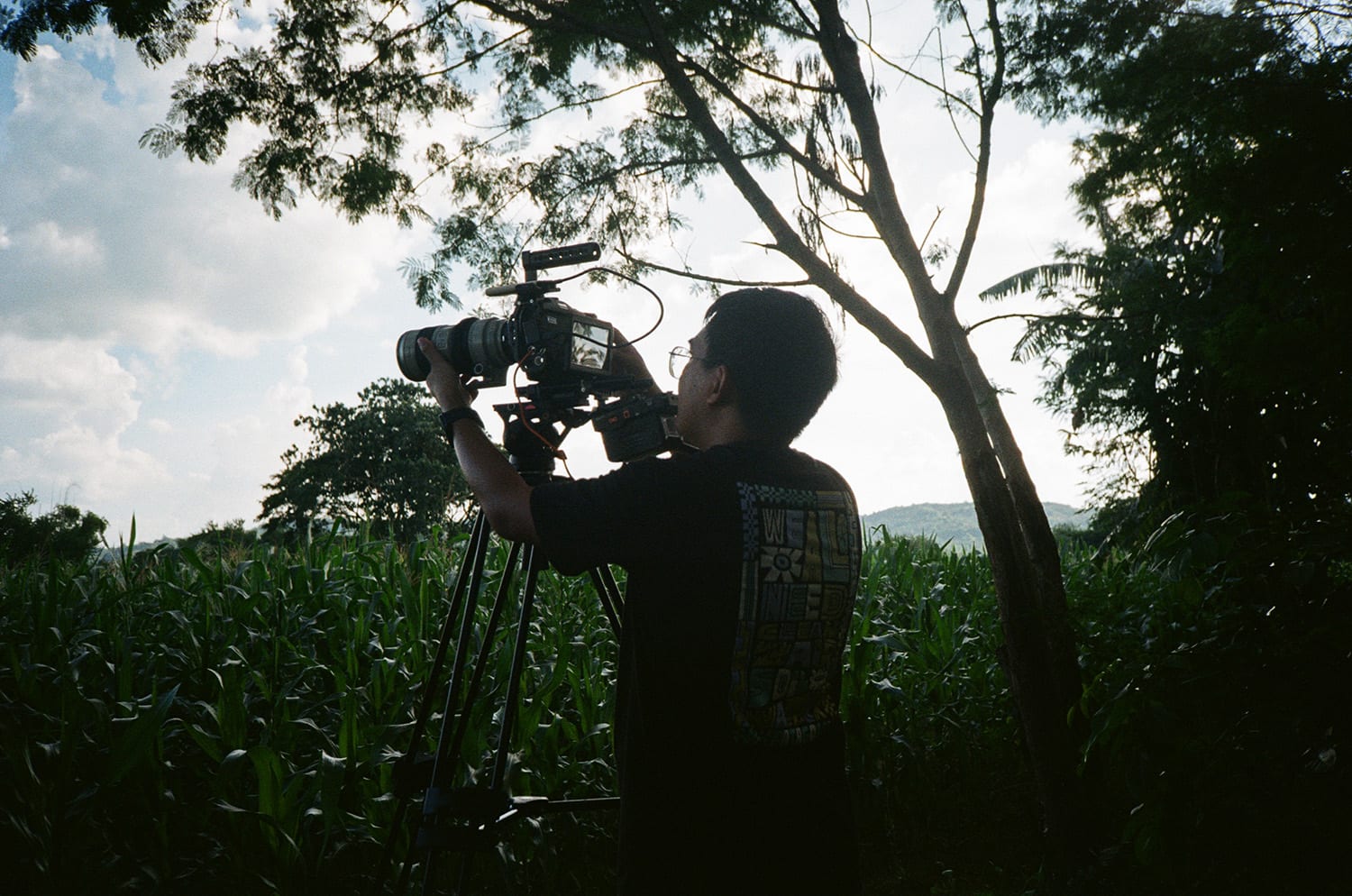
Abao shot most of the footage spanning the best part of a decade. “‘Yung first cut na ginawa namin, sobrang haba. Ang dami naming inayos. ‘Yung mga choices ng scenes, ako na namili kung ano ang mga important,” said Abao. This curation, the final say of what gets included from an ocean’s worth of material, would be the most important task Abao did as director.
Behind-the-scenes stills from the filming process of Bloom Where You Are Planted. Abao said his first cut was way longer than the final version
He showed some footage from animated sequences that they had to cut. This treatment would see an animated Malayao peppered in the background of some scenes as a present figure despite his death. Abao mentioned one other scene he believes to be the most thematically encompassing he shot. It is of Mesina singing the Eraserheads’ “Huwag Kang Matakot” on karaoke. Unfortunately, the high cost of licensing the song meant its exclusion from the film.
It was also Abao’s prerogative to attend the September 21 protests and shoot footage on the ground for the docu’s ending montage, connecting Cagayan to the overarching narrative of the nation. Abao disclosed it was a last-minute inclusion. The montage is frankly the documentary’s crowning glory, another feat Abao lauds Tagyamon for stitching and pulling off. For the sequence, they were fortunately able to license Ruby Ibarra’s rap song "Bakunawa," which they incorporated with Echanis’ own poem “Binhi ng Paglaya.”
A year after the documentary’s premiere in Cinemalaya, Bloom Where You Are Planted routinely screens in communities that invite it. Abao recounts moments during talkbacks where he encounters questions from the audience who seem to miss the point of the film.
The documentary also strives to be included in human rights film festivals overseas. In this venture, there are hits and misses. Even with the accolades from the Urian as an institution, there are still frustrations the filmmaker gracefully faces.
The documentary’s greatest triumph is how it directly affected its subjects. Echanis was freed this January and even participated in The Virgin Labfest later this year. Mesina continues to receive legal support as she faces trumped-up charges by the state. As for Malayao’s case, there’s unfortunately no development since then. But at the very least, the documentary keeps his legacy alive.
Abao and his team are developing another concept that would continue their activist commitment in Cagayan Valley.
Joker Manio is a freelance film critic and culture/lifestyle writer whose works have been published in various local broadsheets and magazines. His criticism is guided by the principle, "The form is the message."
View More Articles About: