'The Dog Stars' is a Languid Trudge Through the Post-Apocalyptic Landscape of Grief
Ridley Scott’s adaptation of Peter Heller’s 2012 novel of the same name is uncommonly slow and unexciting for its genre, but maybe that’s the point.

by Zach Yonzon
Published on Aug 26, 2026
The Dog Stars was published in 2012, eight years ahead of a global pandemic that shut the whole world down. It’s amusing to think of what author Peter Heller, a kayaker and survivalist who’d previously only written nonfiction, must’ve gone through when COVID hit. His debut novel would have, at the time, been terrifyingly prescient and portentous as the pandemic death toll began to rise. Five years later, the pandemic feels more like some distant fever dream in our collective memory, its impact and trauma dulled by the sheer lunacy of all that’s happening in the world today. It’s mind-boggling to think that humanity’s single greatest shared experience has been overshadowed by the madness of demagogues, wars, and genocide, but here we are. The Dog Stars never gets to this point. In the story, a global flu pandemic wipes out most of humanity, and the survivors are simply trying to find ways to carry on.
In many ways, The Dog Stars is a story where nothing really happens. This isn’t a zombie apocalypse; there are no sentient apes, and aliens haven’t come to enslave the planet. A pandemic hit, billions died, and The Dog Stars essentially asks the question: now what? Now, probably nothing. At least that’s what Hig (Jacob Elordi), an all-around handyman who must’ve been really successful before the pandemic because he owned a comfortable home and flies a Cessna, is trying to figure out. Hig lost his pregnant wife in the pandemic, and his best friend is a dog named Jasper. He sleepwalks through the post-apocalypse, making frequent visits to his former home whenever he flies into town for supplies and reminisces about his dead wife. Post-apocalyptic stories are always somewhat sad, but The Dog Stars reminds us that it’s also very, very lonely.
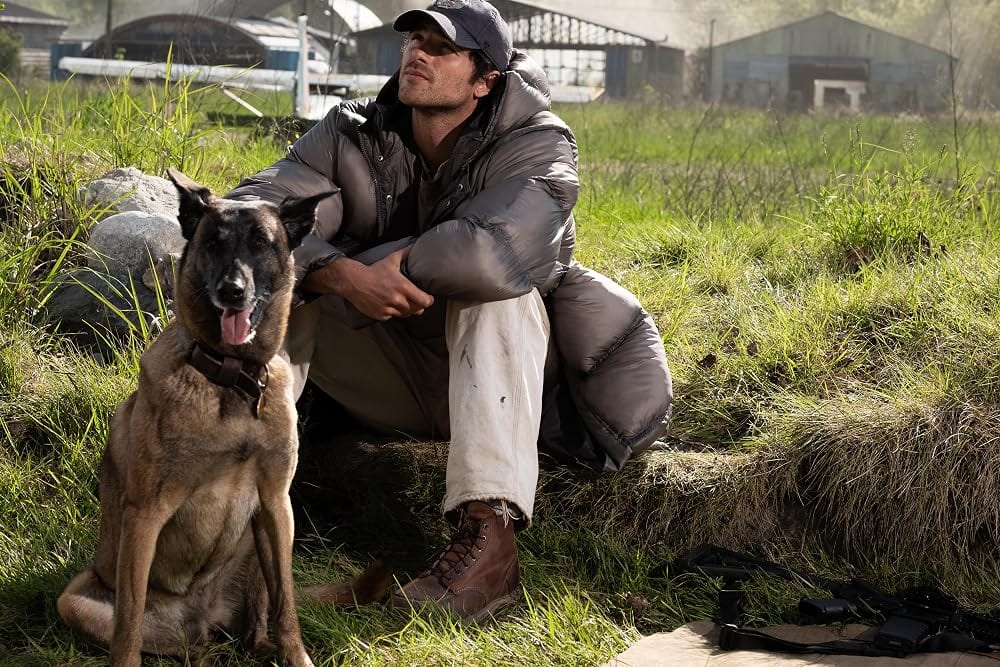
Hig actually has a human companion, an all-American gun nut and doomsday prepper named Bangley (Josh Brolin) who goes through humanity’s near extinction as though it were some Caribbean holiday. Hig and Bangley share a symbiotic relationship, watching each other’s backs while residing in their fortress converted from an old airfield. Hig performs recon and goes on supply runs in his Cessna while Bangley ruthlessly snipes any trespassers onto their property. Hig isn’t a fan of killing but is pragmatic enough to understand the risks of encountering other survivors in a world that has limited resources. It’s a horrible life and Hig no longer sees the point. Bangley, on the other hand, lives for this desolation, elated at his freedom to kill and license to claim anything in a world where money no longer matters. In one scene, Hig and Bangley play Poker and ante up massive stacks of cash that are impressive only in their worthlessness.
Hig eventually ventures out in search of the source of a mysterious broadcast that gives him a glimmer of hope: maybe there’s something else out there for him besides surviving. His flight gets waylaid, and he’s forced to land in unfamiliar territory where he encounters fellow survivors Pops (Guy Pearce) and Cima (Margaret Qualley), a father and daughter running a self-sufficient homestead. Cima immediately has an affinity for Hig, because a pair of 10s running into each other in the post-apocalypse is like winning the lottery. After all, if there’s anything at all to live for after the apocalypse, it’s probably love. Surprise, surprise, The Dog Stars is also kind of a love story featuring two people who’ve coincidentally lost their spouses and crave human connection. It’s a match made in post-apocalyptic heaven.
The Dog Stars is a slow-burn, elegiac exploration of how to recover from grief. It’s unexciting, slow, and in many instances plodding in its self-reflection. There are a few action-laden sequences that are best experienced through the cinematic lens, and all of them involve humanity’s devolution to barbarity, even if masked by a veneer of civility. When the world goes to shit, all bets are off. The entire sequence with Alison Janey’s Darlene at Grand Junction, expanded significantly from the book, is completely unhinged and something of a microcosm of today’s eccentric one percent.
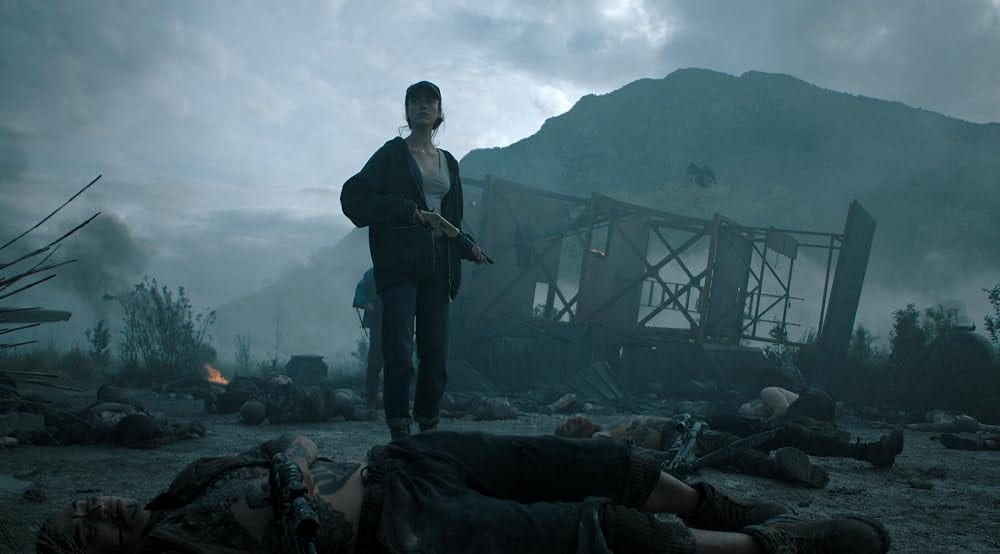
The film was shot in Italy, with its picturesque Dolomite mountains (yes, that Dolomite) standing in for the rocky mountains of Colorado. Ridley Scott gives us sweeping shots of grand mountain ranges that look stunning in IMAX, but there’s an oppressive loneliness to all this majesty. None of this beauty matters if there’s no one to share it with. Ultimately, The Dog Stars is all about grief and moving on. The film’s post-apocalyptic setting is just a shell, an overproduced, multi-million dollar metaphor for surviving our loved ones.
The film is long, arduous, and in several scenes breathtaking, but more than that it’s just extremely sad and lonely. Sure, it would probably help to have a Jacob Elordi or a Margaret Qualley to spend the rest of the post-apocalypse with, but it’s perfectly reasonable to have the same thoughts that Hig does, which is to just slam his plane head-on into the side of a mountain and end it all. The Dog Stars isn’t terrible — we are all familiar with grief to varying degrees — just that it demands going into the nearly two-hour experience armed with the knowledge that it’s a film where nothing much happens, just people trying to make it in a world none of them (well, except maybe Bangley) chose to be in. Kind of like life as most of us know it right now, and if the story helps us along to see another day, then that’s probably the entire point.
ALSO READ:
The End of Oak Street Is the Best Dinosaur Movie in Ages
Furious Reminds Us That We Aren’t Nearly Angry Enough
Zach really, really, really loves films.
View More Articles About: