If Someone Handed You a Gun Right Now, Who Would You Kill?
Trigger, a South Korean action thriller TV series on Netflix, doesn’t really want you to answer that question out loud. It just wants you to notice that you have one.

Published on Aug 3, 2026
Here’s an uncomfortable exercise. Not rhetorical, not hypothetical in the lazy sense. Actually sit with it for a second: if someone put a loaded gun in your hand right now, who would you point it at? Is there a name that surfaced a little too quickly? A face? Would you pull the trigger, or would something in you stop your finger before it got there?
That question is the engine of Trigger, and it is not a comfortable one to carry through 10 episodes.
My wife and I watched it almost by accident. We had just finished Teach You a Lesson — she wrote about that one for this magazine, about bullying, about an agency that solves school violence with their fists, about how satisfying and how troubling that fantasy turns out to be. Netflix, doing what Netflix does, served us Trigger next. The algorithm had clocked our appetite. We didn’t resist it.
We probably should have braced ourselves more than we did.
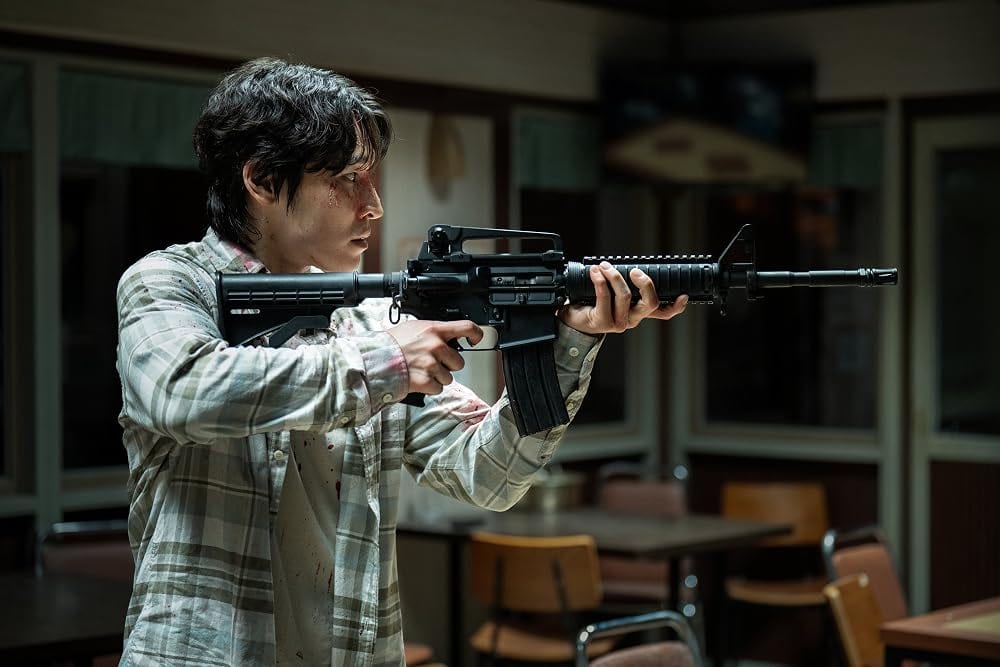
A Country Without Guns, Suddenly Full of Them
The premise is elegant in its cruelty. South Korea has one of the lowest gun ownership rates in the world, a society built, in part, on the understanding that civilians simply do not have access to firearms. Then a billboard early in episode one boasts about exactly that safety record, and within minutes the show is dismantling it. Illegal weapons start appearing in ordinary hands. A mass shooting breaks the calm. And the question the series keeps returning to isn’t really who is supplying these guns, even though that mystery drives the plot. The real question is what happens to a society, and to an individual person, the moment lethal force becomes available to them.
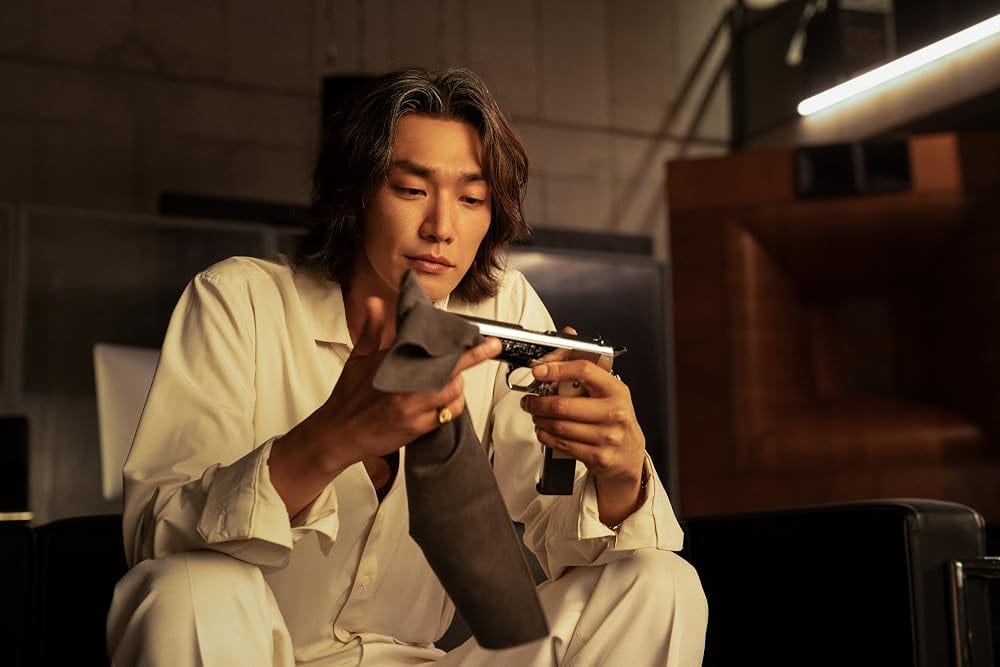
Lee Do (Kim Nam-gil), the police officer at the center of it all, carries his own buried trauma into the investigation. Opposite him is Moon Baek (Kim Young-kwang), a character whose motivations resist easy classification for most of the series’ runtime.
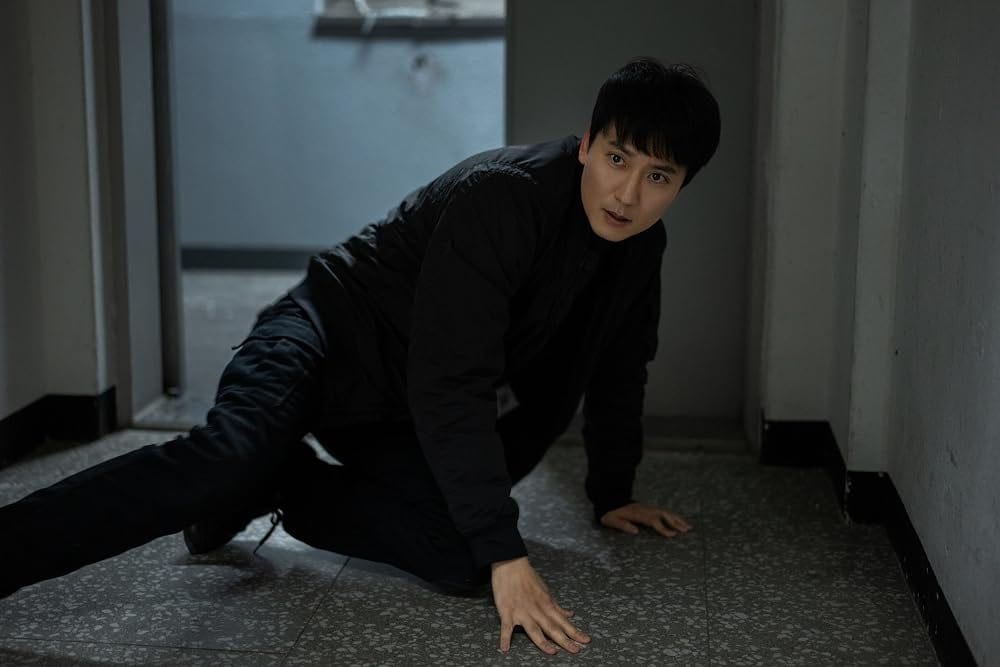
Keanu Reeves Energy, and I Mean That as a Compliment
I have to talk about Kim Nam-gil’s performance, because it bothered me for the first two episodes before I realized what was actually happening.
Lee Do is flat. Restrained almost to the point of looking checked out. His line readings rarely swing, his face holds a kind of permanent low simmer, and for a while I assumed this was simply a weaker performance buried inside a strong ensemble. Then it clicked. This is Keanu Reeves acting. Not in the dismissive way people use that phrase, but in the precise way it actually works when it’s deployed correctly: a character whose emotional circuitry has been damaged by something specific, who moves through violence with the eerie calm of someone who has already decided what he is and is no longer negotiating with himself about it.
That kind of performance asks the audience to do more interpretive work, and it pays off only if you trust the actor enough to read restraint as design rather than deficiency. By the midpoint of the series, I trusted it. Lee Do isn’t numb because the writing forgot to give him an inner life. He’s numb because the show is quietly arguing that a man who deals constantly in other people’s capacity for violence eventually has to flatten his own affect just to keep functioning.
The Bullied, Armed
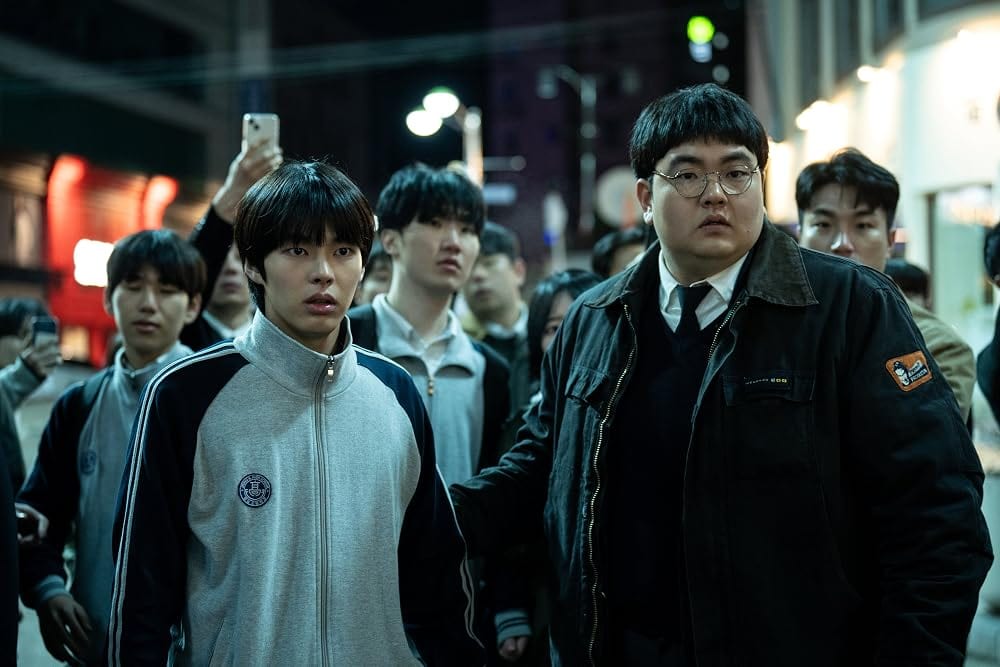
Where Trigger earns its most uncomfortable real estate is in the episodes where guns end up in the hands of the bullied rather than the bullies.
A student who has spent a school year being humiliated and assaulted by classmates and largely ignored by adults gets a weapon, and the show stages that scene with absolute clarity about the fantasy it’s indulging: finally, the imbalance flips. Finally, the person who has been powerless gets to be the one others fear. It’s the same emotional terrain my wife wrote about in her piece on Teach You a Lesson — that show’s entire premise runs on the satisfaction of watching someone get hit back. Trigger takes that same impulse and hands it an actual firearm instead of a fist, and the difference in stakes is the entire point. A punch in a hallway is recoverable. A bullet isn’t.
And crucially, the show refuses to let this be a one-directional morality tale. The bullies get guns too. Frustrated employees get guns. People nursing private, festering grievances against people who never even registered as enemies get guns. Trigger is not interested in a clean story where weapons only fall into righteous hands. It is interested in the much messier truth that almost everyone, given the means and the right provocation, can locate a person they’d like to hurt.
Catharsis, Again
There is a pattern forming here, watching these two shows back to back, and it’s worth naming directly: both Teach You a Lesson and Trigger are built on catharsis. They are engineered to let the audience feel, briefly and vicariously, the release of finally striking back at the things that have made them feel powerless. Bullying. Institutional indifference. The slow, grinding injustice of watching bad actors escape consequence because they had money, or connections, or simply because the system was never built to catch them.
That catharsis is real, and I don’t think it’s dishonest of either show to traffic in it. Korean television has gotten remarkably good at identifying a specific, widely shared frustration — the sense that institutions fail ordinary people on a near-daily basis — and dramatizing the fantasy of finally doing something about it. The appeal isn’t a mystery. The appeal is the entire design.
What People Snap Over
What Trigger does well, maybe better than most shows in this genre, is map out the actual texture of what pushes a person toward violence. Episode by episode, it walks through a kind of taxonomy of triggers, no pun avoidable: school bullying that no teacher intervened in, workplace humiliation that HR quietly buried, a justice system that handed down a sentence too light to feel like justice at all, a slow accumulation of being unseen and unheard until being seen, even through the barrel of a gun, starts to feel like the only available option.
None of these grievances are invented out of nothing. That’s what makes the show uncomfortable rather than simply violent. You recognize the frustration even while recoiling from where the character takes it.
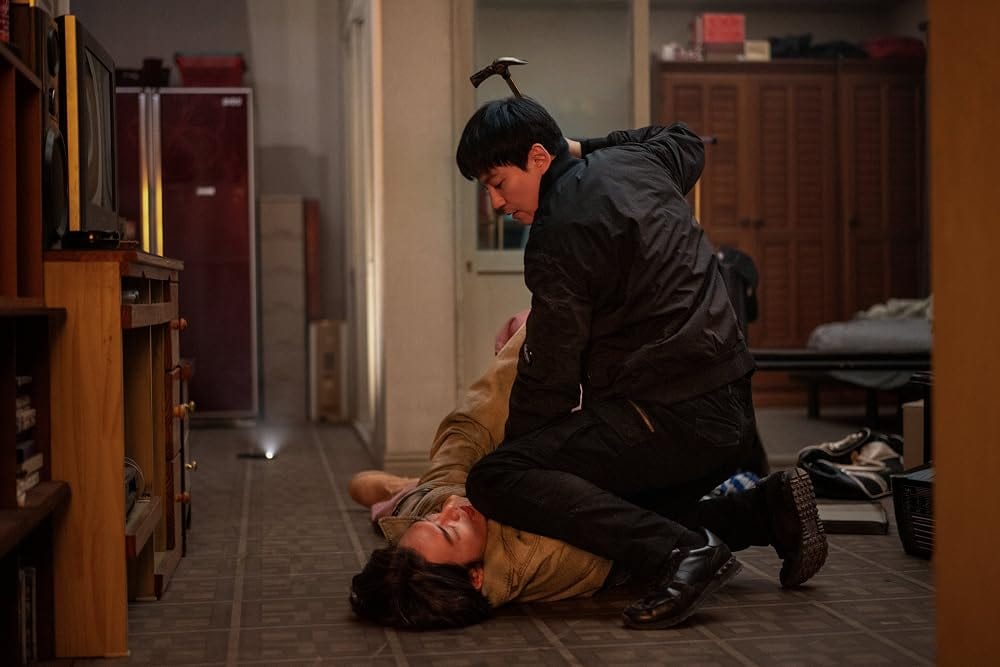
The Politics Underneath the Plot
There’s also a sturdier political argument running underneath the procedural mystery. South Korea’s strict gun control isn’t incidental to the show’s tension; it’s the entire premise. Trigger works precisely because it’s staged in a country that has, structurally, made this nightmare nearly impossible. Watching guns flood a gun-free society lands very differently than watching another American shooting drama, because the show isn’t depicting a chronic condition. It’s depicting an invasion. International critics picked up on this almost immediately, noting that the premise carries a freshness precisely because it inverts the assumption baked into most gun-violence media, that easy access to firearms is simply the unfortunate cost of modern life.
The series uses that premise to ask a sharper question than how do we stop the shooter. It asks what a society owes its most aggrieved citizens before they ever reach for a weapon, and whether the absence of guns was ever really the same thing as safety, or just a structural delay on a problem that was building anyway.
Where the Fantasy Ends and the Mirror Starts
Here is, I think, the place where a lot of commentary on shows like this goes wrong. People either dismiss Trigger as gratuitous, or they treat its violence as something to be morally graded scene by scene, as though the show were issuing policy recommendations. Both readings miss what the series is actually doing.
This is fiction. Entertainment, built with genre conventions, paced for suspense, dressed in a procedural mystery so that ten episodes don’t feel like homework. Nobody watching Trigger is meant to walk away with operational instructions for anything. The fantasy and the reality occupy entirely separate registers, and conflating them does a disservice to both the craft of the show and the seriousness of the real-world issue it’s engaging.
But fiction earns its keep by giving us a low-stakes space to examine high-stakes questions about ourselves. That’s not a new idea; Aristotle had a word for it. And the question Trigger keeps placing in front of you, gently and then less gently, is a real one even if the gun in your hand never will be: when you are wronged, badly and repeatedly, with no recourse in sight, what do you actually believe about how to respond?
Do you believe in an eye for an eye? Do you believe that the person who hurt you forfeits their claim to safety the moment they hurt you? Or do you hold yourself, even in the privacy of your own furious imagination, to some standard that doesn’t collapse the second you’re given the means to retaliate?
It doesn’t have to be a gun for the question to apply. It can be the comment section. It can be the petty, satisfying cruelty of a subtweet aimed at someone who hurt you first. It can be the quiet pleasure of watching someone else’s downfall and calling it justice instead of what it actually is, which is relief dressed up in a nicer word. Trigger just happens to use the most literal, most irreversible version of that impulse to make the question impossible to look away from.
The Verdict
Watch Trigger if you can stomach the bleakness, because it earns its bleakness rather than wallowing in it for spectacle’s sake. Kim Nam-gil’s flattened performance rewards patience. The plot occasionally stumbles in its back half, and some viewers have rightly pointed out that the ending doesn’t fully honor the moral complexity the early episodes set up. But the show’s real achievement isn’t its plotting. It’s the mirror it holds up, almost cruelly, asking you to sit with your own answer to a question you probably never expected to take seriously.
So go ahead. Ask yourself again. If someone handed you the gun right now, would you pull the trigger?
Trigger is currently streaming on Netflix. All 10 episodes are available now.
ALSO READ:
Teach You a Lesson: The Show That Punches Bullies—and Still Gets It Wrong
When the Bullied Becomes the Bully
Francis writes about film, culture, and how humans talk to each other and to machines. Email: [email protected]