40 Years Later, The Dawn Keeps Rising
The rock legends open up about the band’s evolution, the hard realities of the current music landscape, and why they refuse to become a mere nostalgia act.

by Gerald Grana
Published on Jun 14, 2026
I’ve been a fan of The Dawn since my high school days. Thinking back, they were actually the first band I ever saw perform live, right on my school’s covered court stage. Hearing “Salamat” blasted at full volume felt like pure adrenaline hitting all at once, like electricity running through the crowd and straight into your veins. It was both a celebration and a goodbye wrapped into one song. Even then, I knew it wasn't just a fleeting radio hit—it was an anthem built to stand the test of time.
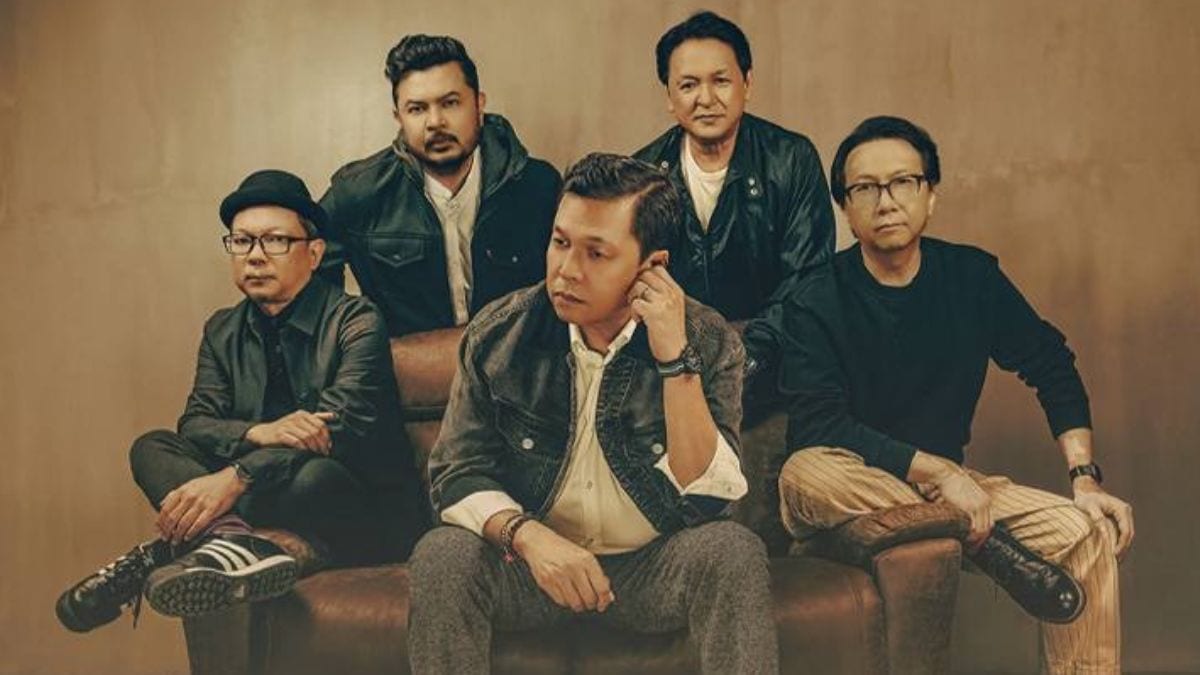
That electric connection comes full circle on June 27 when The Dawn takes the stage at The Theatre at Solaire for Kwarenta. Directed by Paolo Valenciano, this 40th-anniversary concert isn't just a nostalgic callback to the '80s and '90s; it marks a milestone few Filipino rock bands ever reach. Amid new music trends and rapidly changing listener tastes, their four-decade run proves that they are still a defining pillar of Filipino rock.
In this interview, The Dawn opens up about the band’s evolution, the hard realities of the modern music landscape, and why they don’t want to just be a nostalgia band.
Very few survive for 40 years. What has been the band’s secret to staying together?
Francis “Kiko” Reyes: It really starts with loving music and loving to play music. Musicality, creativity, fun, and camaraderie have always been the guiding principles. Most of the members who lasted in the band had that curiosity and that drive to create something fresh and cover new ground.
Forty years after Enveloped Ideas, what do people still misunderstand about The Dawn?
Jett Pangan: That we are a disbanded group that’s reuniting. We still get that to this day. There will be a gig, and then some will think it’s a reunion concert. I’ve gotten tired of explaining it. We kept on. Even with social media, it’s hard to let everybody know. We’re here. We are celebrating and doing a 40th anniversary concert this time. It’s funny in some ways.
Sancho “Rommel” Sanchez: We never really left.
If The Dawn were starting from scratch in 2026 instead of 1986, do you think you’d still make it as a band?
Bim Yance: Kung hindi ko naging full-time job ito, hindi ko iisipin na gawin ito this late. Kung passion din lang, of course.
Jett: Maybe I would approach it with more trepidation. I always see this as a challenge for young musicians. Grabe yung competition for eyeballs and ears now. Dati pwede ka pa talagang mag-stand out. But now with Facebook, YouTube, and everything vying for attention… I probably wouldn’t. Honestly. Andaming magagaling na banda ngayon. The “tito” in me would ask, galing ha, sikat ba ‘yan? Yun pala hindi—pero ang galing-galing nila. Then you realize, when you release new material now, there are probably 10,000 others releasing at the same time.
The Philippine music scene has changed from vinyl to streaming, MTV to TikTok. What has been the hardest shift?
JB Leonor: Ang daming changes. We had to adjust to the internet, the download thing, because that wasn’t our era. In the ’80s and ’90s, there was a physical product—the seven-inch vinyl single, one song on one side, another on the flip side. Minsan minus-one pa yung Side B. We had to adjust, we had to move forward. Technology has made things easier—before, you needed a big studio. Now you can record a good quality song on a laptop. There are pros and cons. I miss the physical product—the album cover, the artwork.
The loss of founding guitarist Teddy Diaz remains an indelible chapter in your story. Four decades later, how does his influence still shape the band?
Jett: We still play a lot of songs Teddy co-wrote and co-arranged when he was still with us. The energy that became known with the band from 1986 to now—we still carry that. Dinadala pa rin namin yon. It has become part of the band’s DNA.
How do you balance nostalgia with staying creatively relevant?
Jett: If there’s anything we can all agree on, it’s that we don’t want to become a nostalgia band. I think any senior band doesn’t want to be a nostalgia band. There are gigs where we’re hired because the theme is ’80s or ’90s—that’s fine, we are from that era. We love to be a part of that. But we are not doing cover versions of ourselves. A lot of our songs have iterations, when you play them live—they don’t sound exactly like before. Except for legacy songs like Enveloped Ideas and I Stand With You. More or less, the arrangement stays. But we evolve. We are not stuck. May ‘botox’ na, may collagen na yung songs. Looking back doesn’t mean getting stuck there. It’s about using it to move forward.
For Kwarenta, was there a song that absolutely had to be included?
Jett: Salamat.
Sancho: Of course. I Stand With You.
Which song in your catalog has aged the best?
Kiko: We tend to rearrange old stuff anyway. So it’s not exactly a rewrite—we reimagine how to play them. Technology changes, techniques improve. We’re still evolving as musicians.
Which current OPM artists still give you that same excitement you felt in your early years?
Kiko: Autotelic. IV of Spades. Indie with that new wave atmosphere. I reacted the same way people did when they first heard The Dawn—“Is that a foreign band?”
Pangan: Urbandub.
After 40 years of music, loss, fame, and reinvention, what has The Dawn taught you about growing older?
Jett: How lucky we are. Really. We started without expectations. Of course there was a dream, but no roadmap. When Enveloped Ideas came out, we didn’t even know it would be a hit. Now we’re here—40 years later. Getting old is cool.
Photos: From The Dawn's official Facebook account
View More Articles About: