

‘This is a Comprehensive Deconstruction of the Eraserheads’ Mythology and Humanity’

On December 22, 2022, an estimated 75,000 people gathered at the SMDC Festival Grounds to witness the Eraserheads perform in Huling El Bimbo, the band’s third reunion concert. The event was a massive success—an audio-visual spectacle and an emotional rollercoaster for fans who sang along to their favorite hits.
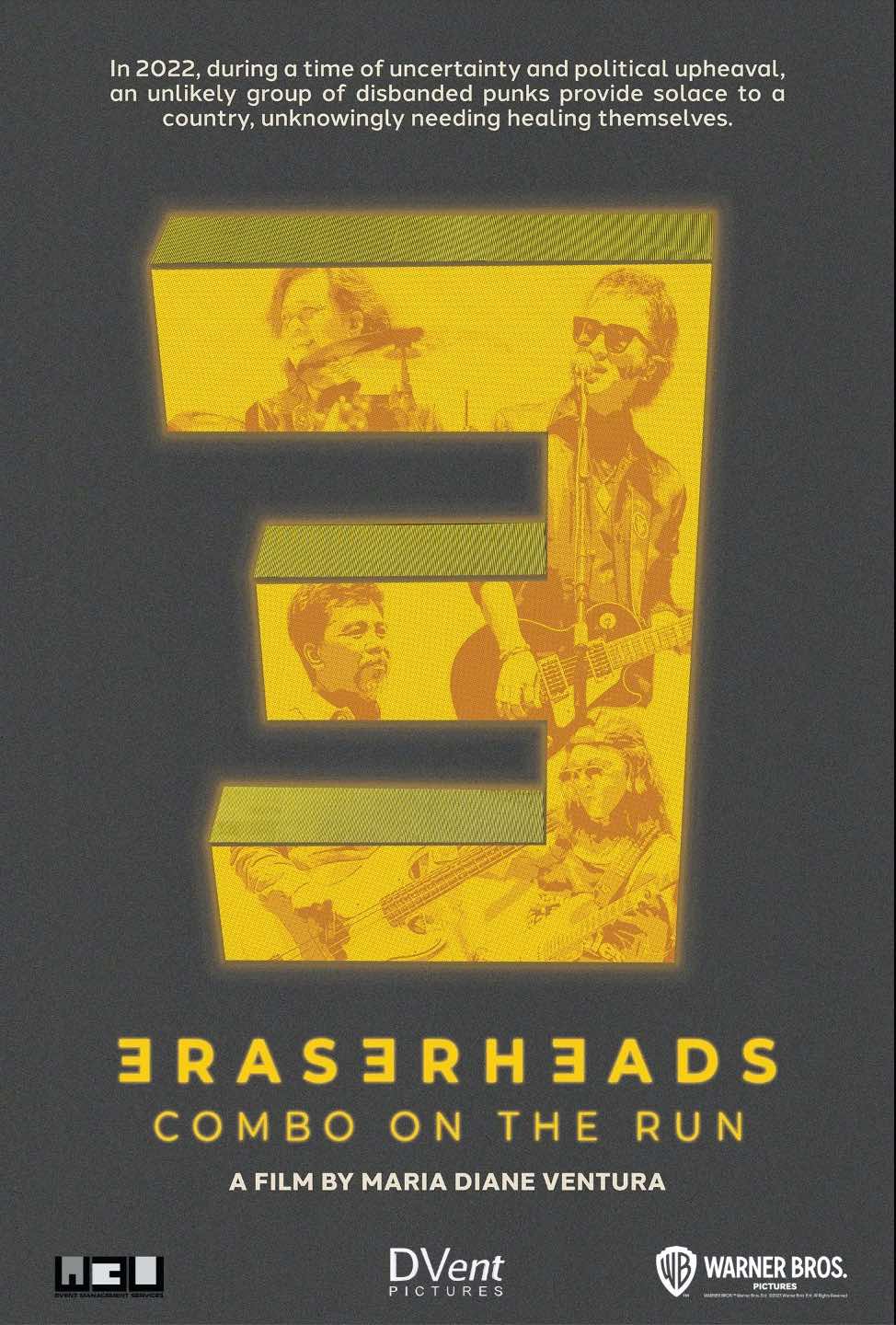
An unfiltered, behind-the-scenes look at that show is the subject of the upcoming documentary film Eraserheads: Combo on the Run. Directed and co-produced by Diane Ventura, the documentary not only examines the challenges of staging such a monumental event but also provides an intimate portrait of the band’s members—Ely Buendia, Raimund Marasigan, Buddy Zabala, and Marcus Adoro—at their most honest and vulnerable. It also reveals the untold story of their painful breakup and the obstacles they overcame for their historic 2022 reunion.
“This is a comprehensive deconstruction of the band’s mythology, humanity, complex relationship and the lasting mark they left on Filipino culture—one that transcends generations and differences,” Ventura said in press statement.
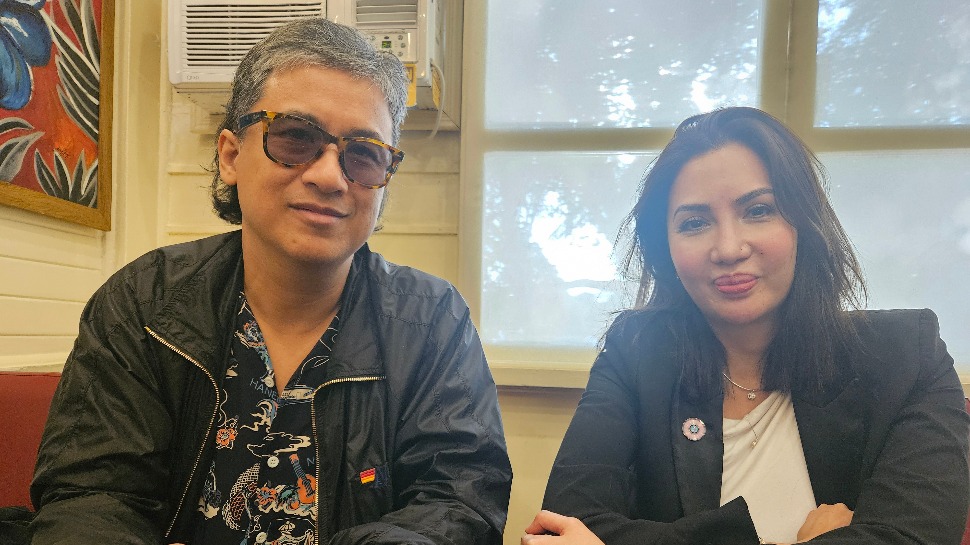
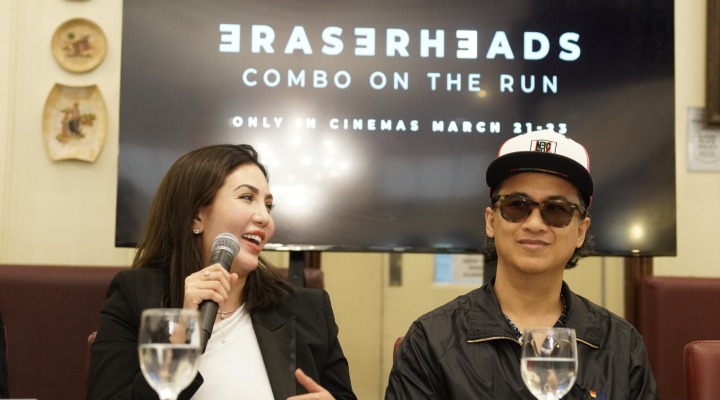
Ventura and Eraserheads frontman Ely Buendia sat with Esquire Philippines for an exclusive interview to talk at length about the rockumentary. Excerpts:
ALSO READ
A Documentary About the Eraserheads Reunion Show is Coming to Theaters
Nostalgia Is a Powerful Drug: Notes on the Eraserheads Reunion Show
Esquire Philippines: Making the film was perhaps a period of self-discovery for you. What did you discover about yourself as an artist and individual while making this film?
Diane Ventura: I've always mentioned in the interviews na, my biggest takeaway from this not as a filmmaker, but personally, is I think the importance of expressing yourself and confronting even difficult truths about yourself, na parang we're not taught how to cope with our emotions. Nobody teaches you this in school. Nobody really processed things healthily, so our tendency is to repress and not even acknowledge it.
I guess seeing the (band members) open up unfiltered, and honestly and intuitively, has sort of given them a sense of lightness. And afterwards, seeing how that expression changed their dynamic. It makes me think now, okay, this is not just a theory. Like communication and expressing is in itself therapeutic.
Ely Buendia: Well, it's something similar din na parang I've always been averse to responsibility. I mean, I guess that's why I chose this career because I didn't want to own my own mistakes and but let others do the–-and I say this in the movie—do the professional stuff. It's not for me because I'm a rocker and I’m punk and I don't need to do that, but as you grow older, you learn to take responsibility again for whatever you do and with this movie, I think this is me trying to take responsibility for my actions in the past and for the decisions I've made, whether they be good or bad. And being responsible for my art.
What are some things you discussed in the film that you would never have discussed openly in the past?
Ely: Yeah, for me, I guess it's again admitting my mistakes and being vulnerable in front of the camera, which, back in the day we would never think of doing because, you know, you have to keep this facade going that you’re a person playing a role and that role was again, I'm a rock star and stuff like that. You're not allowed to be vulnerable.
Diane: I think we're living in a society where you're conditioned that vulnerability and admitting or acknowledging one's own imperfections is a weakness when in fact, it isn't. So I think a lot of the themes of the film touches on accountability, and on growth.
What were some of the biggest challenges of putting the film together?
Diane: I mentioned na the technical, that we shot it in three different countries, combing through like hundreds of hours of footage. It was physically, emotionally, financially taxing. It was an odyssey. And also, I guess, like mustering up the courage to ask these sets of questions to the guys who are notorious for being, you know, aloof and deflecting serious, even semiserious, questions with humor. How will I get that content and how do I push past that wall? And I guess, like Ely mentioned before, the timing had a lot to do with it.
There was enough time that had passed that allowed them to detach themselves from a difficult situation in the past, and sometimes when you have enough distance, that's when you kind of have a better perspective on things. And so I was able to catch them at that particular moment where they were ready for these kinds of things, and if they refuse to answer the questions, we would have an iteration of the same question that you know, until they're able to really get to that. Pero it wasn't difficult at all with Ely. I think I think he was really one of the men that was really ready to heal.
(To Ely) Was it difficult for you to be honest?
Ely: No naman.
Diane: What made it easy?
Ely: Yeah, the fact that this was going somewhere. There was a goal here and the goal nga was to present the band in a new light.
Would you say that making this film, going on tour, and having a reunion brought you closer together?
Ely: Oh yeah, definitely more than the previous reunion which was, parang done, I guess cynically. Dahil it was just to please the fans and, I guess to, let's face it, we need to work also and have bills to pay. But this time around it was more than money, or it was more than pleasing the fans or shutting people up, you know. This was really more for our own health.
Diane: And just to add to that, the film sort of juxtaposes the headspace of the guys in the first reunion versus the most recent one. And yeah, the most recent one being exactly what he said, like the intention behind wanting to do it for the first reunion is so much different from what their headspace and intentions were during the recent reunion, which was something bigger, something more profound than what they did in the past.
Does the timeline of Combo on the Run start from the first reunion?
Diane: It's not super chronological, but there are parts. Pero we wanted to highlight na parang, how maturity can change your perspective and change your goals and change your willingness or change your objectives.
Whereas dun sa first, yun nga. They felt they were practically forced to do it for whatever superficial reasons they had in the past. Pero this one, you know, it was a time of people coming out of the pandemic, I think, and a lot of reflection was going on, political polarization and them actually like kind of uniting at this time set the stage for such a…I don't know, parang it all just aligned, and yeah, it brought life to the story.
How have your dynamics as a band improved because of making this film and going on tour together?
Ely: We are now more open to hearing or taking criticisms in our playing and whatever musicality. We're more open to discussing things no matter how uncomfortable they are. That goes a long way.
Diane: To add to that, like with any relationship conflict, healing is a work in progress. It's a process. It's not this destination and even in good relationships, conflict will never disappear. It's always going to be there. The difference is in how you resolve them or approach them. And I mean, I can only speak as a witness to how Ely and the guys approach things now. Yun nga, I think the ability to sit with very difficult emotions and being able to talk about it kind of brings enlightenment, or like a resolution, because sometimes we don't even get to that point. Because we're unable to deal with difficult emotions. So just the importance of that, I was able to see how they were able to solve such difficult things that I don't think they would have been able to address in the past. They're able to do so now.
Eraserheads fans and ‘90s kids would want to watch this film but for a generation of younger fans and younger musicians, what do you think would be the most compelling reason for them to watch it?
Ely: I think, especially if you're a musician or you’re an artist, you’d be at the very least intrigued by the dynamics of a band like Eraserheads. Like, personally, I love watching musical documentaries. I mean, it's knowledge that you can't get anywhere else. There's some insights there that you would never think of and I think this movie is no different. You will really get an insider’s look into what happens behind the scenes, and that alone is worth the price of admission.
I’ve actually spoken to some young artists, because as you know, I handle a new generation of artists through my label. I was surprised when they told me that they really, really want to see this. Because again they are intrigued by what goes on behind the band.
Diane: Their legacy and their genius—that's already a given. I think that's definitely going to bring the fans in, if not the music, to sort of inspire new generations because their music transcends differences in generations as well.
I think more than that, this film is about growth, redemption, second chances. And basically humanity. Also, the highs and lows, the mistakes and the triumphs. And I think that's something very human, something that can resonate with everyone. You don't have to be a music fan to resonate with, you know, being human or being imperfect. Right now, we're living in a society where it's so easy to judge and to antagonize people that don't share the same opinions as we do. Pero I think to just be able to approach things in a way that's more open-minded, and to acknowledge that we are flawed ourselves, so no one is in any position too to say who's worthy or who isn’t worthy of second chances.
Do you remember the exact moment when you realized you wanted to make this documentary? Is it your first?
Diane: It's my first documentary, my fourth film, but I was used to doing narrative features. So I would have never conceived doing a documentary. It wasn't premeditated. It wasn't like a 10-year oh-I'm-going-to-make-a-film-about-the-Eraserheads, it was actually intuitive and spontaneous. Maybe I saw the stage or something or you know, just all the circumstances that were or like the things that were happening at that specific point…
Ely: Nung rehearsals ba ‘to?
Diane: I don't know. I don't know the specific moment, but it was exactly during that time that we were preparing, that we knew that there was going to be like a concert and again people coming out of the pandemic where you know, like it was just a turbulent time. And then this group of guys are going to heal. I mean, they are going to go to a concert, and these are the guys that like have this power to unite, unite people through their songs. And yet, even having that purpose of healing, it was a little bit of a paradox—paradox ba?—or ironic because they were internally fractured themselves, di ba?
Ely: Until the first meeting, we were awkward pa nga.
Diane: Very awkward.
Ely: That’s also the time when I decided, there has to be something more meaningful behind this. And so I called up the boys and settled our differences and that’s how we started it.
What was most rewarding thing about the entire experience of making this film?
Diane: Making a film and finishing the film is already rewarding. I think when Ely watched the film and he mentioned that it was moving, I think that reaction alone kind of made it all worth it because, like I said, it was taxing and stuff. So to have someone have that sort of reaction to it, especially the subject, I know that maybe I did my job in at least making sure to honor their truth, and I was able to appreciate that that's what I did.
Ely: I had to wear two hats in this in this movie. I was a subject but I also kind of was the producer. So, if I had the choice, I wouldn't watch the movie. It's like some actors, hating to see themselves on screen, right, especially in a film like this, where you're not even playing a role—you’re being yourself. You're saying things that are very promotional.
It’s something that you don't necessarily talk about to others and much less in a movie, right? But I had to watch the film and wear my producer’s hat, because I wanted to make sure the movie's good and that the themes are being tackled properly. And I think that's what the producer's job is, and the quality of the film, and having seen the film and to be able to contribute to it not just as a subject, but also as a producer and helping iron out the kinks, kumbaga is all the more rewarding for me.
Eraserheads: Combo On The Run will hit theaters nationwide from March 21 to 23, 2025. It is the first Philippine documentary to be screened in Dolby Atmos. Eraserheads: Combo On The Run is brought to theaters courtesy of Dvent Pictures and WEU and distributed by Warner Bros. Pictures.
