Today I Learned: Why Lake Malawi in Africa Is the Ultimate Species Factory
Find out how this one lake produces more new fish species than any other place on Earth.

by Gregg Yan
Published on Jun 2, 2026
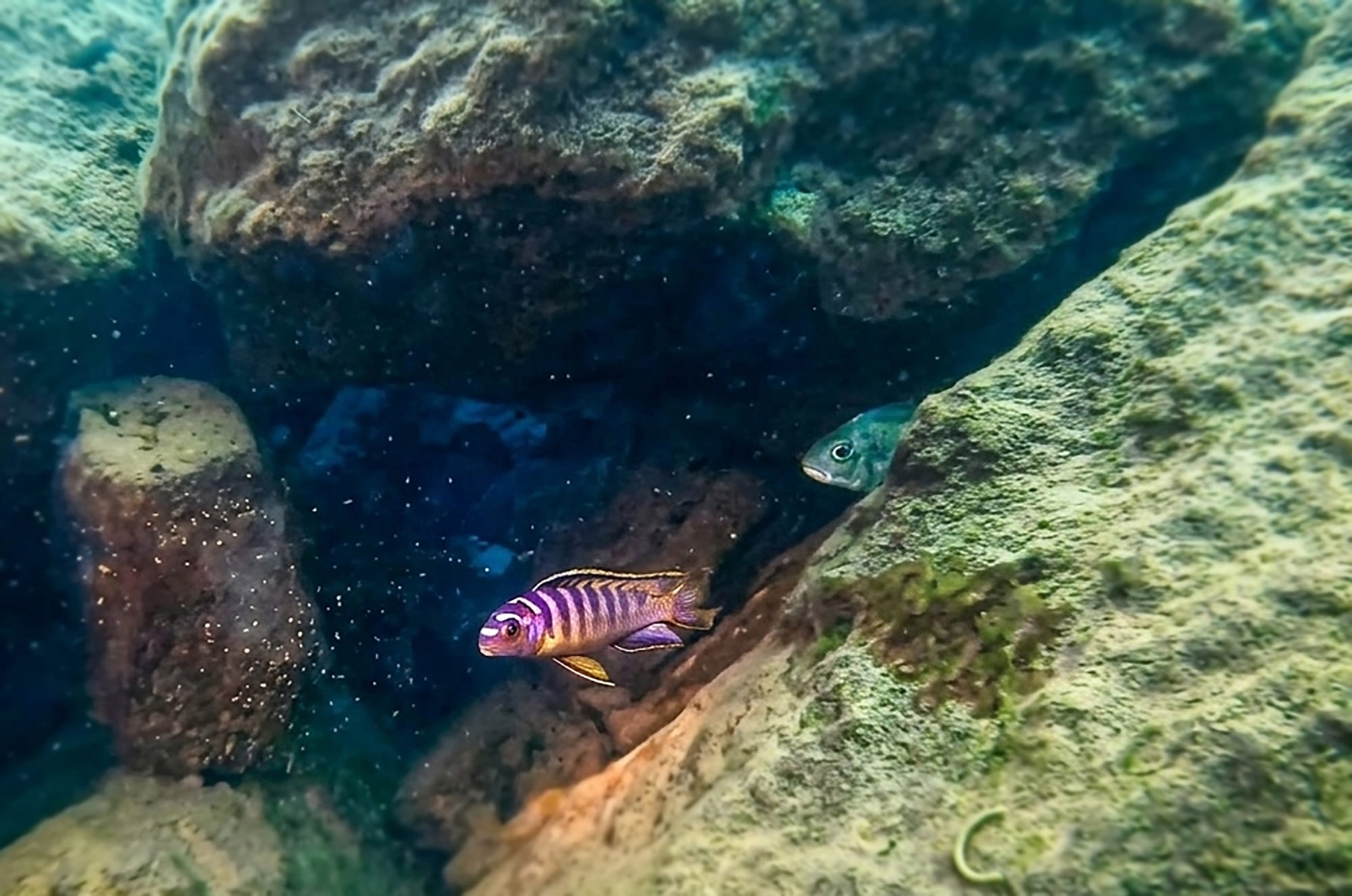
Main image: Colorful Auratus (Melanochromis auratus) fight and cavort with less impressive Metriaclima and Pseudotropheus cichlids in Masasa Reef. Lake Malawi hosts over 1000 fish species, most of which are newly evolved cichlids. In comparison, Laguna Lake, the Philippines’ largest, has little over 30 fish species.
I’m facing off with a pair of Auratus.
Normally, these striped yellow fish just watch me from inside my bubbling aquarium. But today, the tables have been turned. I’m the visitor in their backyard. And their backyard is absolutely massive.
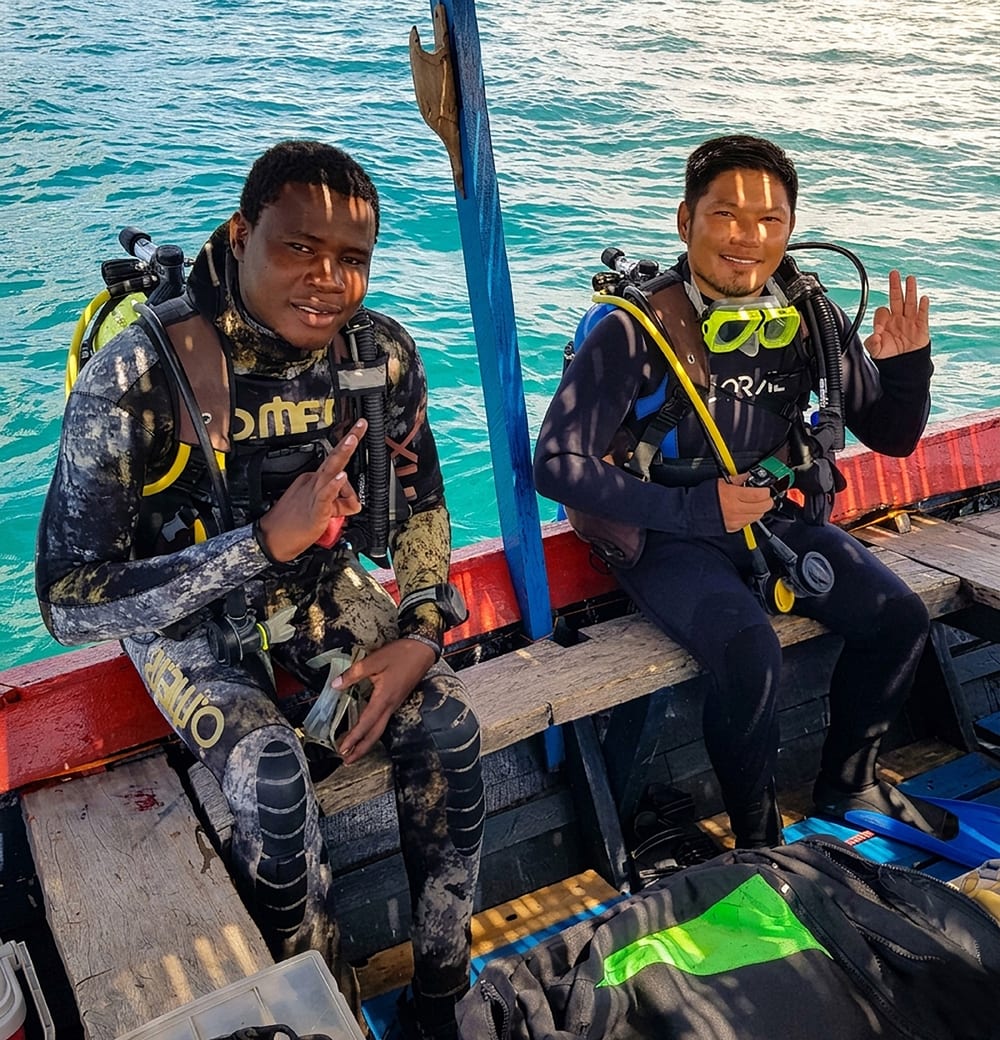
I’m SCUBA diving in the middle of Lake Malawi in South Africa – something I’ve dreamt of doing for decades.
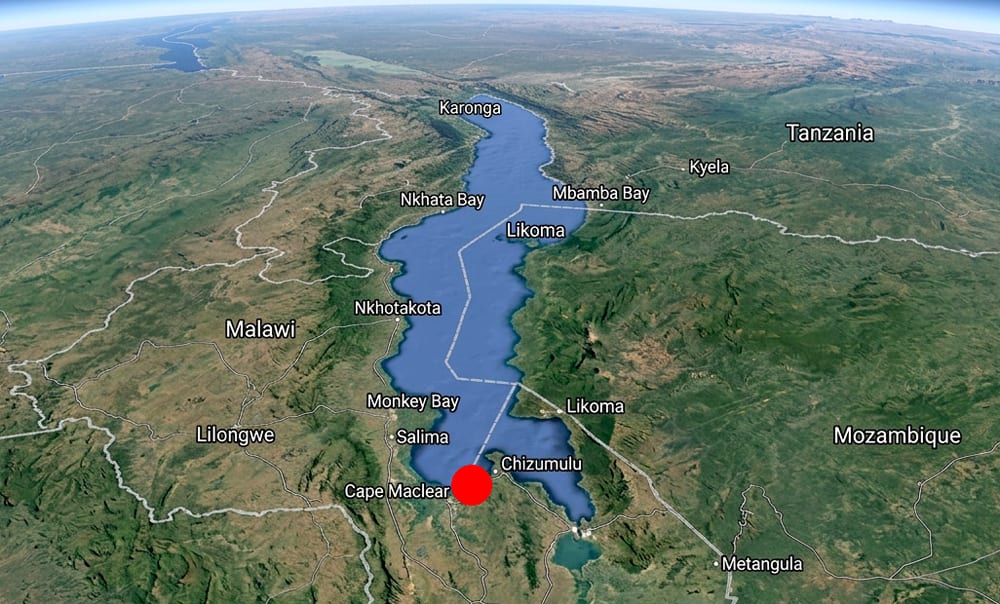
This place is so insanely huge that standing on the shore feels like looking out at the open ocean. At 580 kilometers long, traversing it from end to end is the equivalent of flying from Manila to Cebu. It’s so vast that its waters are shared by three different countries: Tanzania, Mozambique, and Malawi.
I’m here to solve an evolutionary mystery: how does this one lake produce more new fish species than any other place on Earth?
Most Pinoys already know cichlids (pronounced sick-lids) without even realizing it. That classic tilapia you love fried, steamed, or grilled? Yep, that’s a cichlid.
With over 1500 species of fish finning through African and American waterways, cichlids are among the biggest fish families on the planet—but Lake Malawi is the ultimate hotspot.
Over 600 species, a full third of all known cichlid species, evolved right here. That’s wild. Even wilder? They did it in just over three million years. In evolutionary terms, a blink of an eye. Faster than it’ll take you to read this TIL.
Everywhere else, it takes two to three million years just to spark the evolution of just one new species. Somehow, Lake Malawi has cracked the ‘Code of Life’ to churn out species in as little as a thousand years.
How?
Think of every new lake or island as an evolutionary gold rush.
A 2018 study by Malinsky et al. suggests how a relatively pristine and untouched habitat can offer the ultimate playground for life to colonize, multiply, and even reinvent itself.
When life stumbles into these underutilized spaces, it triggers a phenomenon scientists call "adaptive radiation," which is an explosive and rapid form of evolution that splits one species into its own specialized family tree.
Charles Darwin was the first to notice this. Out in the Galapagos Islands, he watched tiny, ordinary-looking birds called finches morph into wildly different species, just to make use of different food sources and survival niches.
Scientists believe the same magical phenomenon happened right here in Malawi.
Three million years ago, just one or two pioneer fish species found this lake. They didn't just find an empty paradise, they struck a goldmine of a hundred untapped ecological niches.
Just like Darwin’s finches, these pioneer cichlids adapted on the fly, evolving rapidly to dominate every single food source they could get their grubby fins on.
Most transformed into Mbuna (pronounced em-buna)—colorful rock-dwellers.
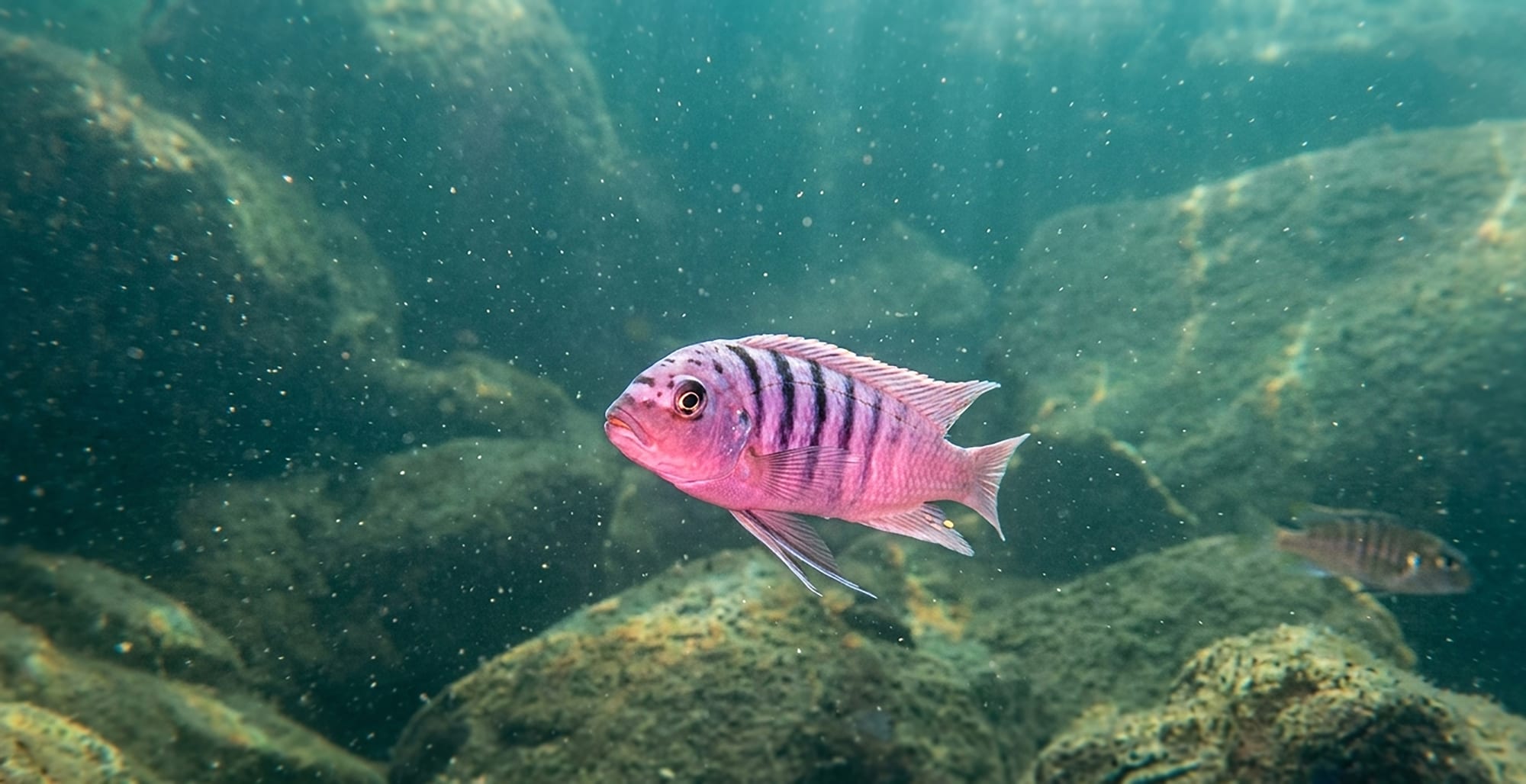
Though sharing the same turf, they had different menus. Different Mbuna species evolved different mouth shapes to graze on different types of food, from goopy slime algae to tough hair algae.
Others sift sand, snuffling through the lake floor for worms and other wriggly tidbits.
Some fish turned downright sinister. Venustus and Livingston’s Cichlids (yes, named after Dr. Livingston, I presume?) intentionally fade their colors and play dead on the lake floor, waiting to ambush and attack unsuspecting prey. Others, like the Shiranus, are straight-up pirates, ripping the scales clean off their neighbors for a quick snack.
Further yonder (I always wanted to use yonder in an adventure story) are the Utaka – open-water cichlids rarely seen in home aquaria. These schooling fish form massive aggregations to dine on drifting plankton (the reason they’re so hard to feed and keep in captivity).
And sitting at the very top of this fishy food chain? The carnivores that evolved to hunt and eat their fellow cichlids – Malawi Hawks, Breams, and Haps – specialized pursuit hunters that are equivalent to the Tyrannosaurs and Allosaurs of their watery world.
"The colors of these African cichlids are so blindingly brilliant you’d swear they were coral reef fish," says Pinoy cichlid keeper Angel Ampil, who has been breeding fish for over half a century. "Mbuna also have interesting courtship rituals, and they’re incredibly easy to breed at home."
If you’re into the aquarium hobby, you already know the heavy hitters: Auratus, Labs, Haps, Peacocks, and the brutally-named Eye-biters. Almost every fish store in the country sells Malawi cichlids.
Back in 1984, the entire lake was locked down as a UNESCO World Heritage site, cementing its status as the ultimate natural laboratory for fish evolution.
But paradise is under siege. Today, this evolutionary wonderland is facing its toughest battle yet against the dual threats of human overpopulation and climate change.
Climate Change and Overfishing
Malawi is facing a massive human crunch.
Back in the 1960s, this nation was home to fewer than four million people. Today, that number has exploded past 20 million, with roughly half the population treading to keep their heads above the poverty line.
Lake Malawi isn't just a dive site for explorers and fish researchers—it’s a literal lifeline. The lake provides up to 60 percent of the entire country’s protein.
From the bustling markets of Lilongwe (Malawi’s capital, which looks like the Philippines in the 1980s) down to the southern reaches of Mangochi, you can see miniature mounds of dried Utaka cichlids and Usipa sardines being hocked in markets. They sell for as low as P60 a bucket.
These tiny fish help keep the nation fed. Locals buy and eat a little over eight kilograms of fish every year.
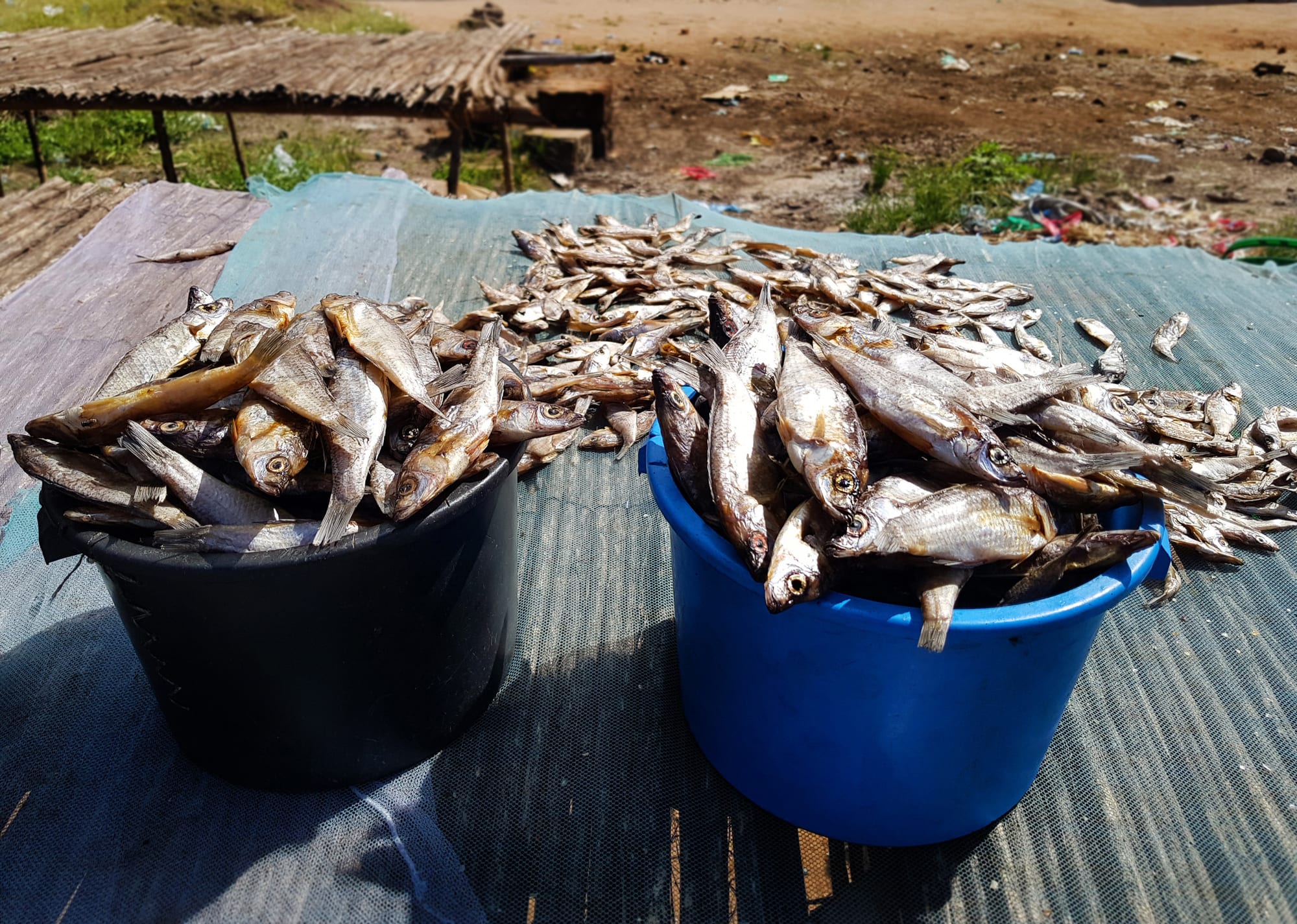
However, decades of relentless overfishing are choking the lake’s productivity. Local fishers who used to pull in massive hauls are now heading back to shore with just a bucket or two. In a world where fuel prices to operate fishing boats are spiraling out of control, this is a losing game.
"Malawi’s rapidly growing population is exerting enormous pressure on our country’s natural resources, particularly small fish like Usipa (freshwater sardines) and Kambuzi (shallow water cichlids)," adds Dr. Harold Sungani, Deputy Director of the Monkey Bay Fisheries Research Centre.
To make matters worse, climate change is closing in. Since the early 2000s, brutal droughts have been punishing East Africa, triggering catastrophic crises in nations like Somalia and Ethiopia.
While Malawi has escaped the worst of the devastation, its crown jewel is shrinking. The water level of Lake Malawi has plummeted by a staggering three meters since the '80s.
Looming Alien Invasion
An even darker threat looms on the horizon – alien invaders.
To see how bad things can get, we only have to look at Africa’s largest body of water, Lake Victoria—a place that theoretically should have even more cichlid species than Lake Malawi.
In the 1950s, government officials introduced the predatory Nile Perch (Lates niloticus) to boost fishing hauls. It was a catastrophe. Growing into two-meter-long monsters, these apex invaders went on a relentless killing spree, wiping out over 100 native species. They obliterated 60 percent of Lake Victoria's endemic cichlids in what’s pretty much the largest vertebrate extinction event of the 20th century. Only 300 cichlid species remain in Lake Victoria—and they all have to hide from patrolling Nile Perch.
Malawi can’t afford the same mistake. “What we need is sensible management to ensure that these special fish sustain both local communities and ecotourism for many years to come,” says Dr. Sungani, pointing out that Malawi’s cichlids are probably the country’s best ambassadors.
"The tropical aquarium trade has shipped our cichlids to every corner of the planet. They don't just generate vital revenue that we can pump right back into conservation and rural development. They create a massive global fanbase. People fall in love with them in tanks and then book flights to Malawi to see them in the wild. This gives our people a direct, financial reason to defend Lake Malawi.”
Back in the depths of the lake, the view is nothing short of breathtaking.
As I watch the tiny Auratus darting between algae-covered rocks, I realize this underwater factory is far from finished making new fish.
Lake Malawi is still actively forging life, rewriting the rules of biology in real-time.
Who knows what bizarre, beautiful new species this evolutionary crucible will churn out next?
For sure, the divers and aquarists of tomorrow will be waiting—and beneath the surface of this magical lake, the cradle of evolution will keep spinning.
ALSO READ:
The Tragedy of Lake Lanao, Southeast Asia's Only Ancient Lake
Today I Learned: You Can Swim With Whale Sharks in Leyte, Too
Gregg Yan is an adventurer and explorer based in the Philippines.
View More Articles About: