Today I Learned: The Private Island of Balesin Runs Like a Small Country
Seven villages, island-grown food, private beaches, and everything you could need. This 500-hectare island is the kind of place you’d want if the world ever went sideways.

by Rhia Grana
Published on Jan 19, 2026
If a zombie apocalypse were to break out tomorrow, where would it be best to go? Ideally, a sanctuary with its own power source, clean water, a steady food supply, secure borders, and controlled access by air only. Somewhere that doesn’t just promise escape, but a good life. In a world where money is no object, a great choice would be the members-only island enclave of Balesin.
I had the opportunity to enjoy a four-day stay on the close to 500-hectare private island during the holiday season, when it hosted a Tastemakers Dinner featuring Esquire Philippines’ Man at His Best 2025 Chef of the Year honoree Jorge Mendez. The island revealed some fascinating discoveries, enough to tempt discerning travelers with a P2 million membership.
What’s in a Name?
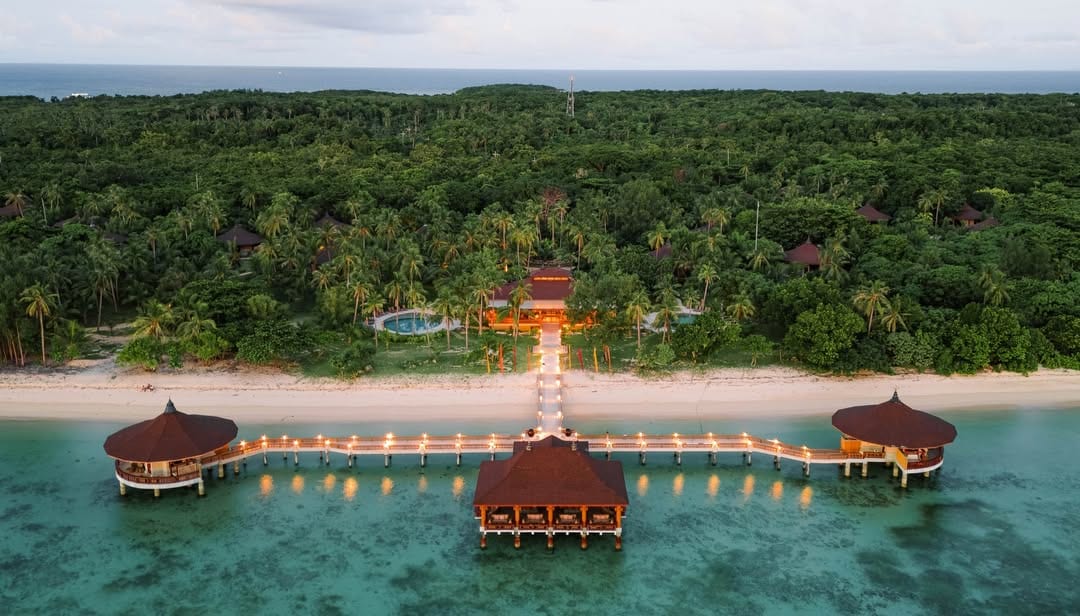
The island is named after the majestic saltwater banyan trees native to its shores. Balesin is a portmanteau of the Tagalog words for banyan (balete) and salt (asin). It is located in Lamon Bay and is part of the Polillo Islands group within the province of Quezon.
According to a story posted on Alphaland Corp.’s website, Balesin was born in the 1960s, when property developer and licensed pilot Edgardo “Ed” Tordesillas first discovered the island, establishing Balesin Corp. By the end of the decade, he turned it into a private escape, flying his family there on weekends.
In 1976, Tordesillas introduced the idea of an “island resort community,” developing a small portion of the land into beachfront lots sold to a select few. Under Tordesillas, Balesin thrived. However, when the patriarch passed on, no one among his heirs was interested in carrying on the business.
Fortunately, longtime member and business magnate Roberto “Bobby” Ongpin stepped in and acquired the island, committing to its transformation into a world-class luxury destination. Currently, Balesin Island Club is managed by Alphaland Corp., the company behind a portfolio of properties including The Balesin City, Balesin Pines, The Alpha Suites, Alphaland Baguio Mountain Lodges, Alphaland Makati Place, and Alphaland Corporate Tower. It also operates Alphaland Aviation, which provides private charter flights to different destinations around the Philippines.
The World in One Island
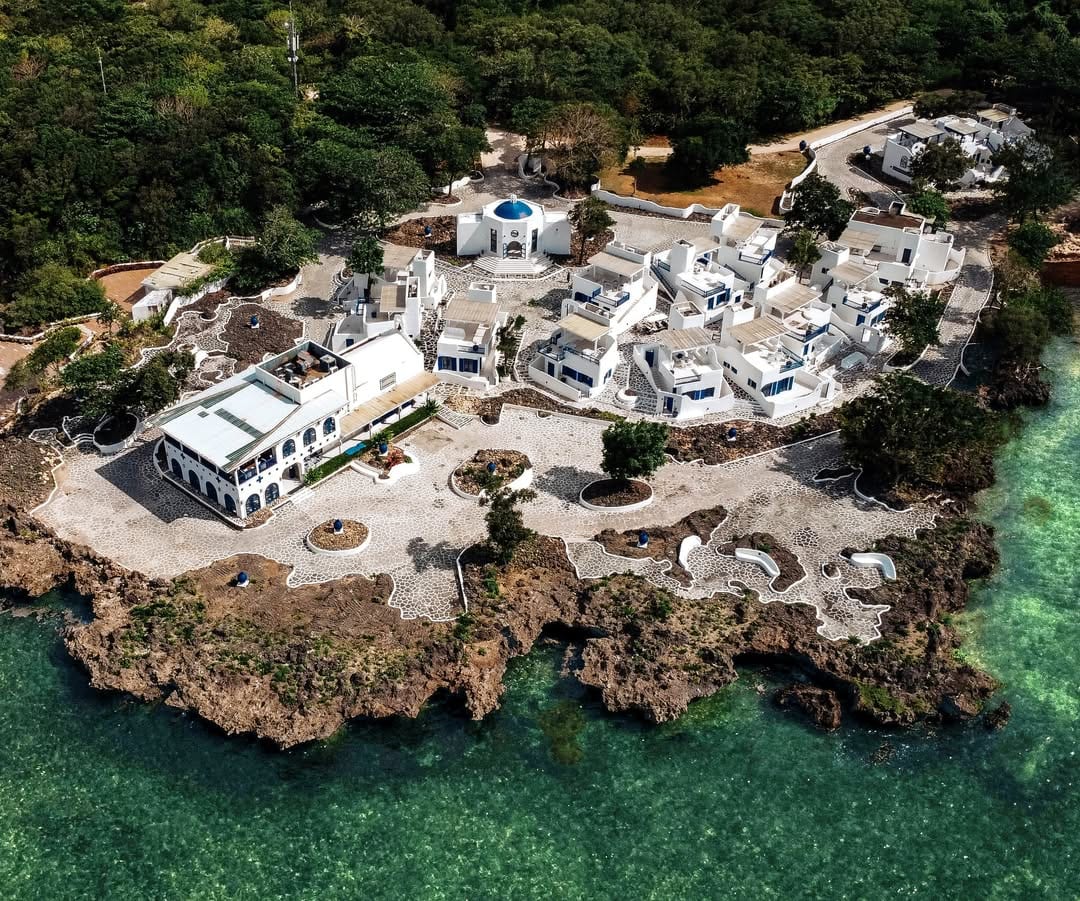
One of the unique draws of Balesin Island is its seven themed villages, inspired by Ongpin’s favorite travel destinations: Mykonos (Greece); St. Tropez (France); Costa del Sol (Spain); Toscana (Italy); Bali (Indonesia); Phuket (Thailand); and Balesin (Philippines).
As our guide Mikey puts it, the best way to enjoy the island is to 'village-hop.' Balesin the only place on Earth where you can have a French breakfast, a Thai lunch, and a Spanish dinner without ever clearing with customs or dealing with the immigration. What’s even better is that every village sits right on the coastline, making everything essentially beachfront. The European villages face the Pacific, offering front-row seats to the sunrise, while the Asian villages look out over Lamon Bay, the perfect spot for sunset.
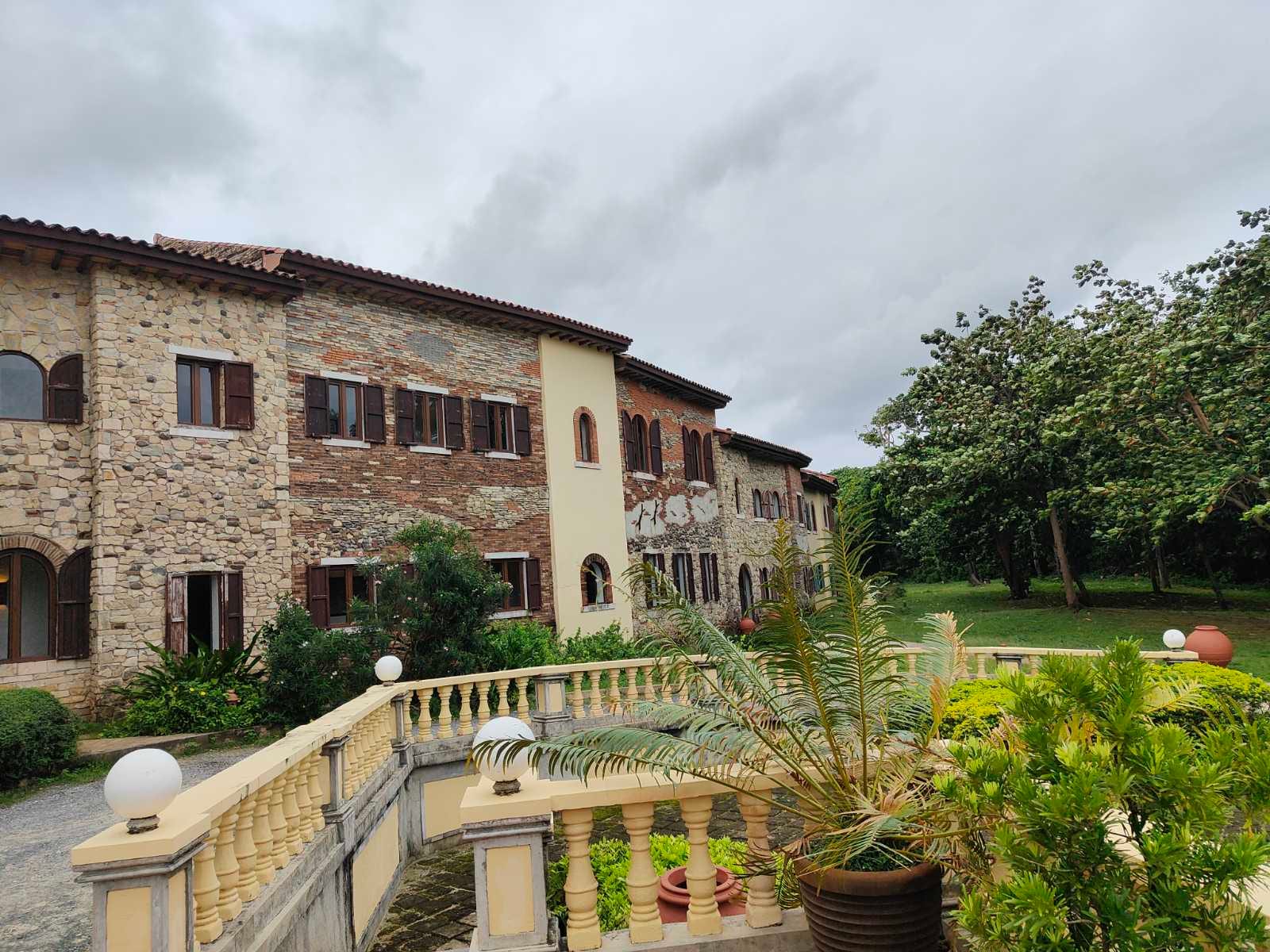
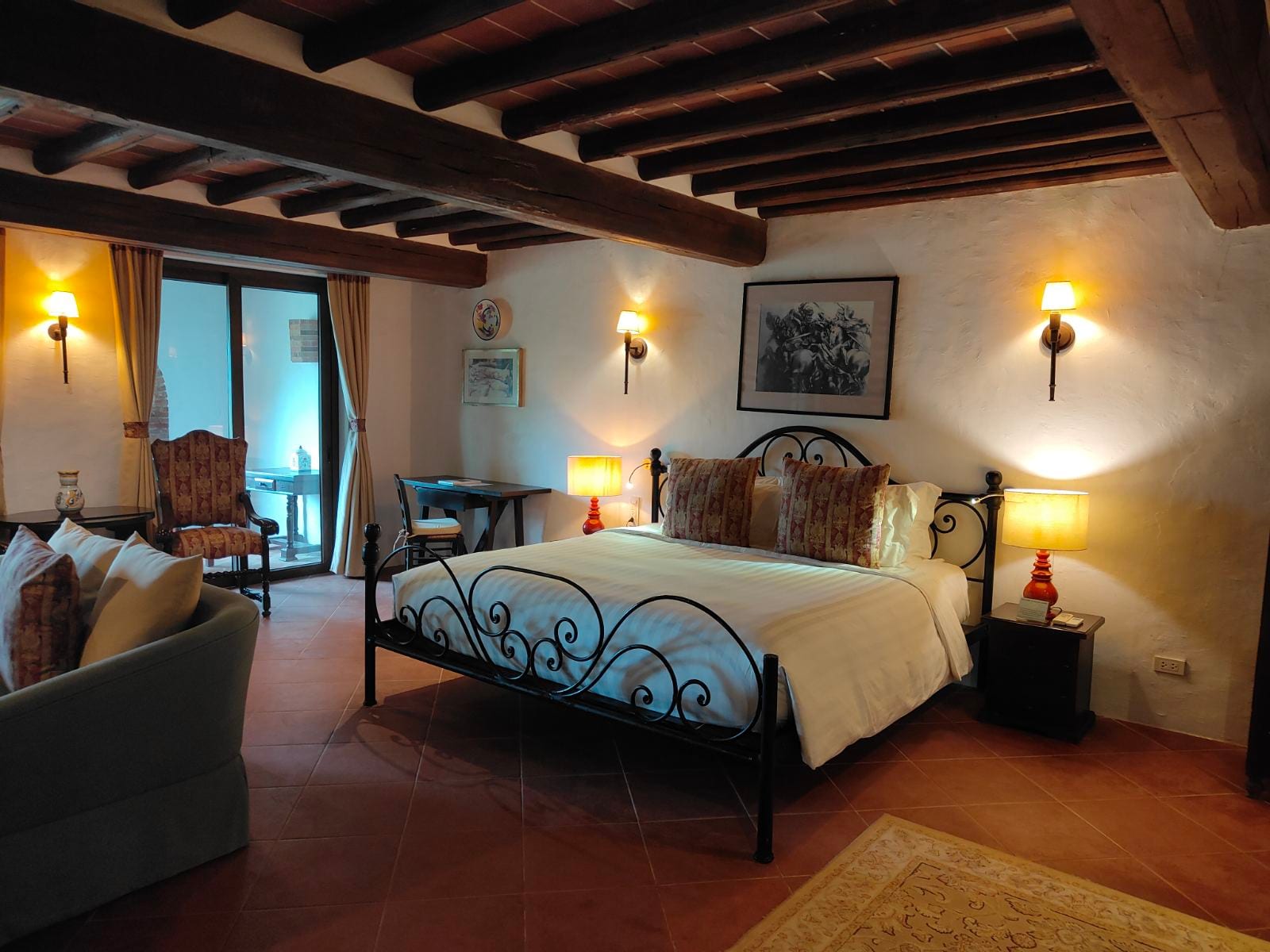
We stayed in Toscana, which felt like being transported to a rustic villa in the heart of Italy. The architecture stayed true to the Tuscan aesthetic—arched doorways, thick stone walls, exposed dark wood ceiling beams, and terracotta-tiled floors that provided a warm, earthy foundation for the structure. The quiet, muted lights brought a contemplative calm, especially during golden hour.
I stayed in an expansive suite that exuded old-world charm but offered modern comforts, including a large flatscreen TV and a Nespresso machine. A sliding door led to a private veranda with direct access to the pool.
We agree with Balesin Island General Manager Roberto Rossino when he said that what sets the Balesin experience apart from other luxury resorts is the privacy you feel once you’re on the island. There are no crowds to navigate, no noise to filter out, no pressure to perform leisure. Instead, there’s an unspoken permission to slow down, to disappear for a while, to exist without urgency.
What to Do in Balesin
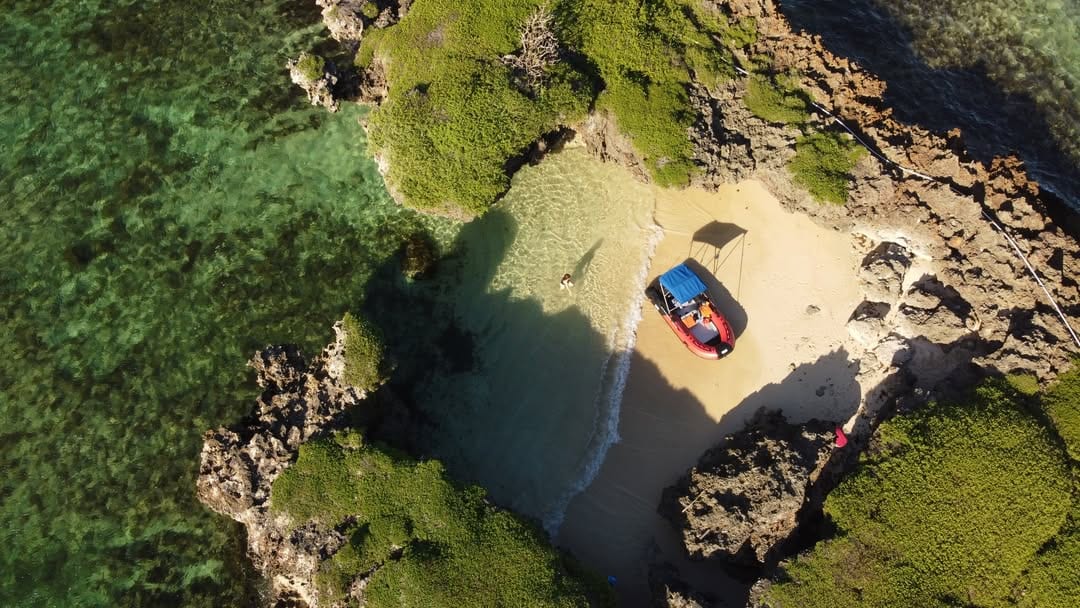
Depending on the weather and guests’ preferences, there’s no shortage of activities to enjoy on the island. On clear days, those drawn to water adventures can go diving, wakeboarding, water skiing, snorkeling, do a private boat tour, or even try horseback riding along the beach. Sunset cruises can also be arranged, with the island offering yacht charters for a more leisurely experience. On rainy or stormy days, like when we visited, guests can retreat to the sports center, where they can play pickleball or tennis, try rock climbing, join fitness sessions such as yoga and Pilates, or indulge in spa treatments.
Meanwhile, gourmands will find plenty to love in the island’s diverse lineup of restaurants. During our stay, we journeyed through a delicious culinary tour that spanned continents. We started with a Spanish lunch at Costa del Sol, where we indulged in paella valenciana, croquetas de jamón ibérico, gambas al ajillo, and cochinillo, among other classics. At Bali Warung, Indonesian comfort dishes like saté, laksa, nasi goreng, mie goreng, and smoky iga bakar took center stage.
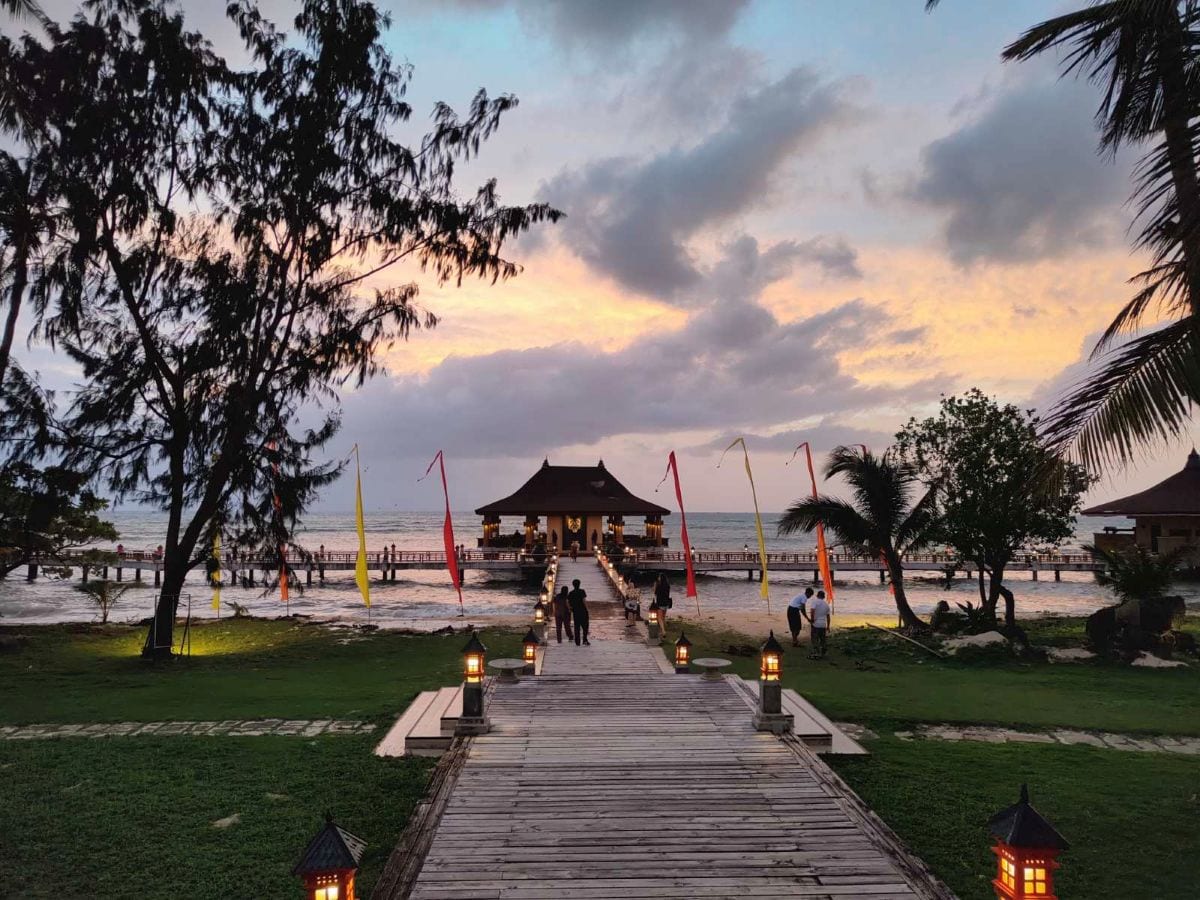
Mornings at St. Tropez were a sweet affair, filled with buttery croissants, fluffy French toast, and delicate crêpes. A Thai lunch brought vibrant flavors to the table, from tod man goong (Vannmei shrimp pancakes) and pad Thai goong to yam pla dook poo (crispy catfish salad) and sticky rice with ripe mango. At Tang Palace, we feasted on roasted Peking duck, xiao long bao, steamed grouper, and salted egg prawns. At Toscana, we eased into lighter fare—fresh salads, comforting risottos, and satisfying pasta dishes that proved simplicity can be just as memorable.
The highlight of our stay is the “Tastemakers Dinner at Balesin,” a thoughtfully curated, multi-course experience crafted by by Chef Jorge Mendez of Modan. The evening opened with a striking combination of taro foam and bone marrow consommé, paired with fish lips nuggets, wasabi beet cream, and miso caramel. This was followed by a delicate gambero rosso crudo accented with katsu-dashi konnyaku, jicama tsukemono, nira oil, and Tosa yuzu, offering a refreshing interplay of sweetness, acidity, and umami.
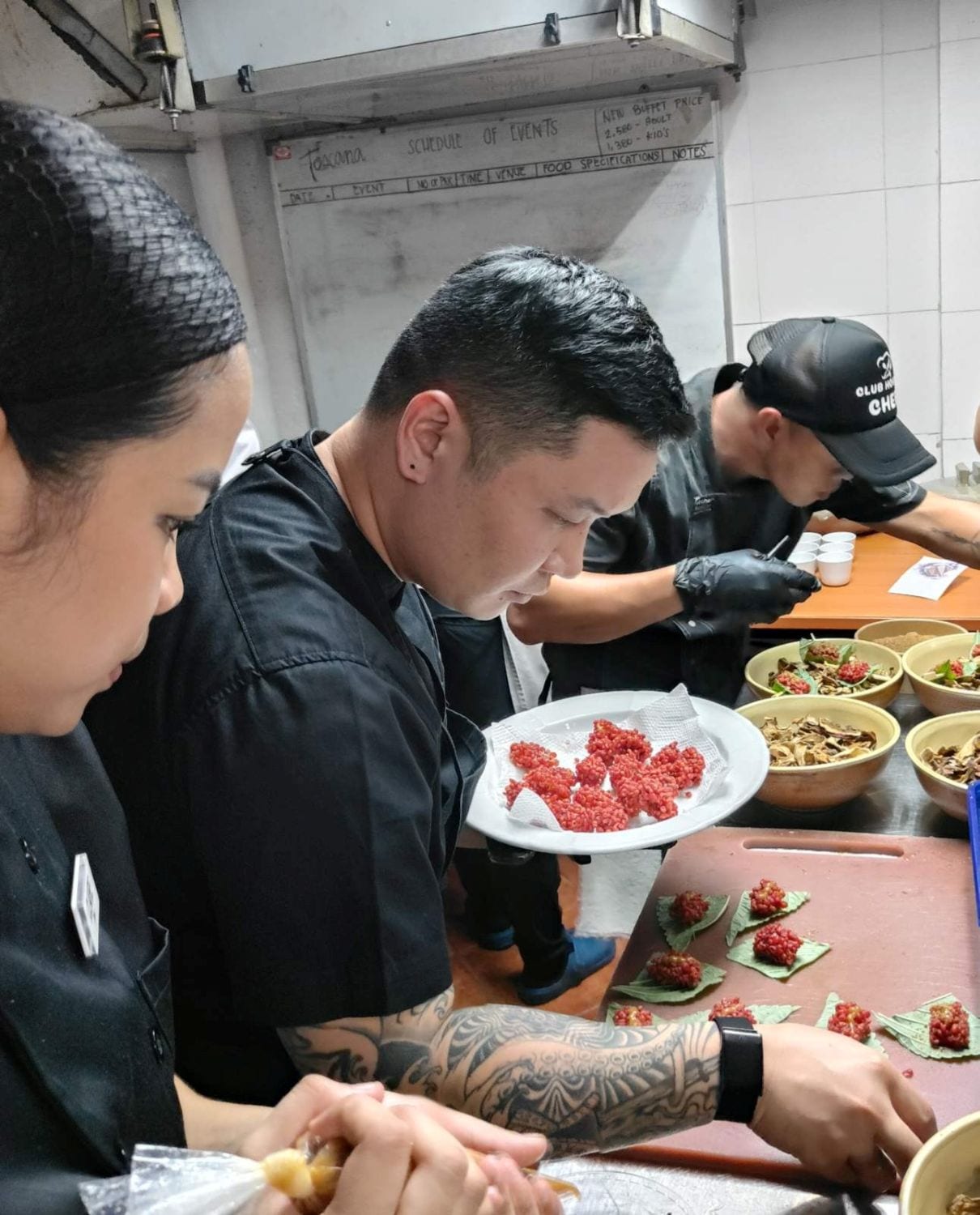
One of the highlights was Modan’s signature tebasaki, generously stuffed with king crab and served with whipped uni, shoyu-zuke egg yolk, and Japanese-style focaccia with seaweed butter. The main course showcased A5 Wagyu alongside smoked, aged scallops, ikura, savory dango, and sukiyaki-style lotus root, finished with sea collagen nabe rice and vegetable tsukemono.
Dessert was equally memorable: a buckwheat pavlova layered with osmanthus jelly, Camembert chantilly, and aerated white chocolate, providing a light yet luxurious finale. Each course was paired with wines including Aimery Crémant 1531 NV, Faively Montagny Blanc 2022, and Calera Central Coast Pinot Noir 2022, making the evening a celebration of craftsmanship, flavor, and indulgence.
According to Rossino, Balesin’s general manager, the Tastemakers Dinner is designed to give members rare access to the culinary artistry of some of today’s most celebrated chefs. The next Tastemakers Dinner will be held at Balesin Pines in Itogon, Benguet on March 7, featuring Spanish chef Chele Gonzalez of Gallery by Chele and Asador Alfonso.

A Self-Sustaining Paradise
Apparently, it was the dream of Balesin’s late chairman and CEO, Roberto Ongpin, to make the resort sustainable. During the pandemic, when Balesin closed for eight months, that vision quietly took root, quite literally. Instead of staying idle, the team expanded the island’s farm, planting fruit trees and growing their own produce.
Hundreds of avocado trees were added, alongside rows of citrus like calamansi and dalandan, turning the downtime into an investment in long-term self-sufficiency. Fresh herbs and leafy greens, including lettuce and arugula, are now also grown on the farm and make their way straight to the resort’s tables.
Beyond farming, Ongpin also envisioned an aquaculture program, which led to the creation of shrimp ponds on the island. Today, four ponds supply fresh shrimps to Balesin’s restaurants, with some harvests even available for guests to take home. Each pond follows its own cycle and scale of production, yielding up to 2.5 tons of shrimp every few months.
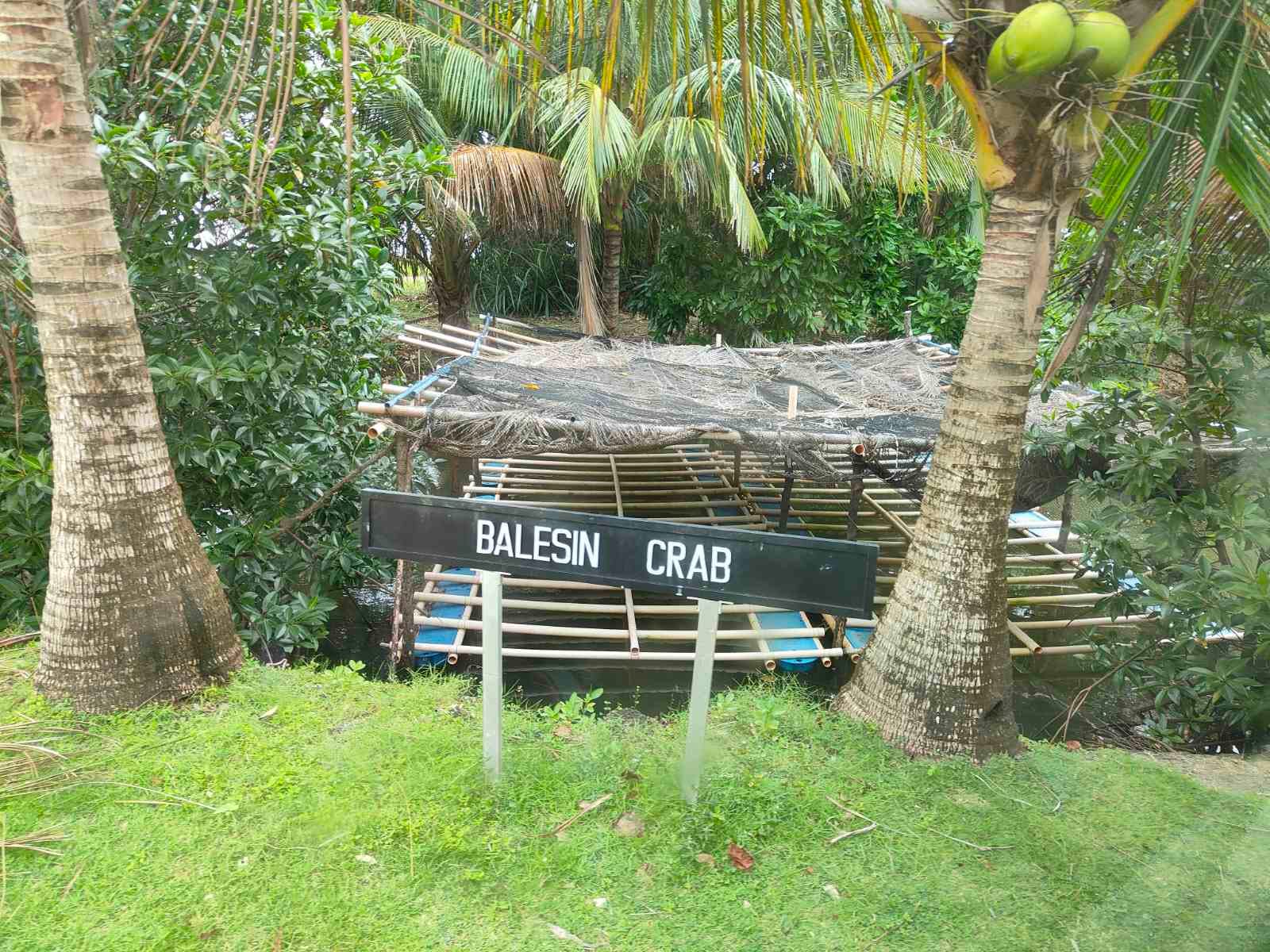
Alongside shrimp, the island also raises sea bass, tilapia, bangus, groupers, and red snappers, as well as blue mud crabs. It’s a carefully managed ecosystem, ensuring that much of what lands on guests’ plates comes straight from the waters surrounding them.
Red meats are among the few food items that Balesin doesn’t produce, as the island avoids raising certain livestock to keep flies and pests at bay. Instead, it focuses on a thriving population of free-range chickens and ducks. The farm now supports about a thousand chickens, yielding 400 to 700 eggs daily, while the ducks roam freely, naturally producing duck eggs and the occasional balut.
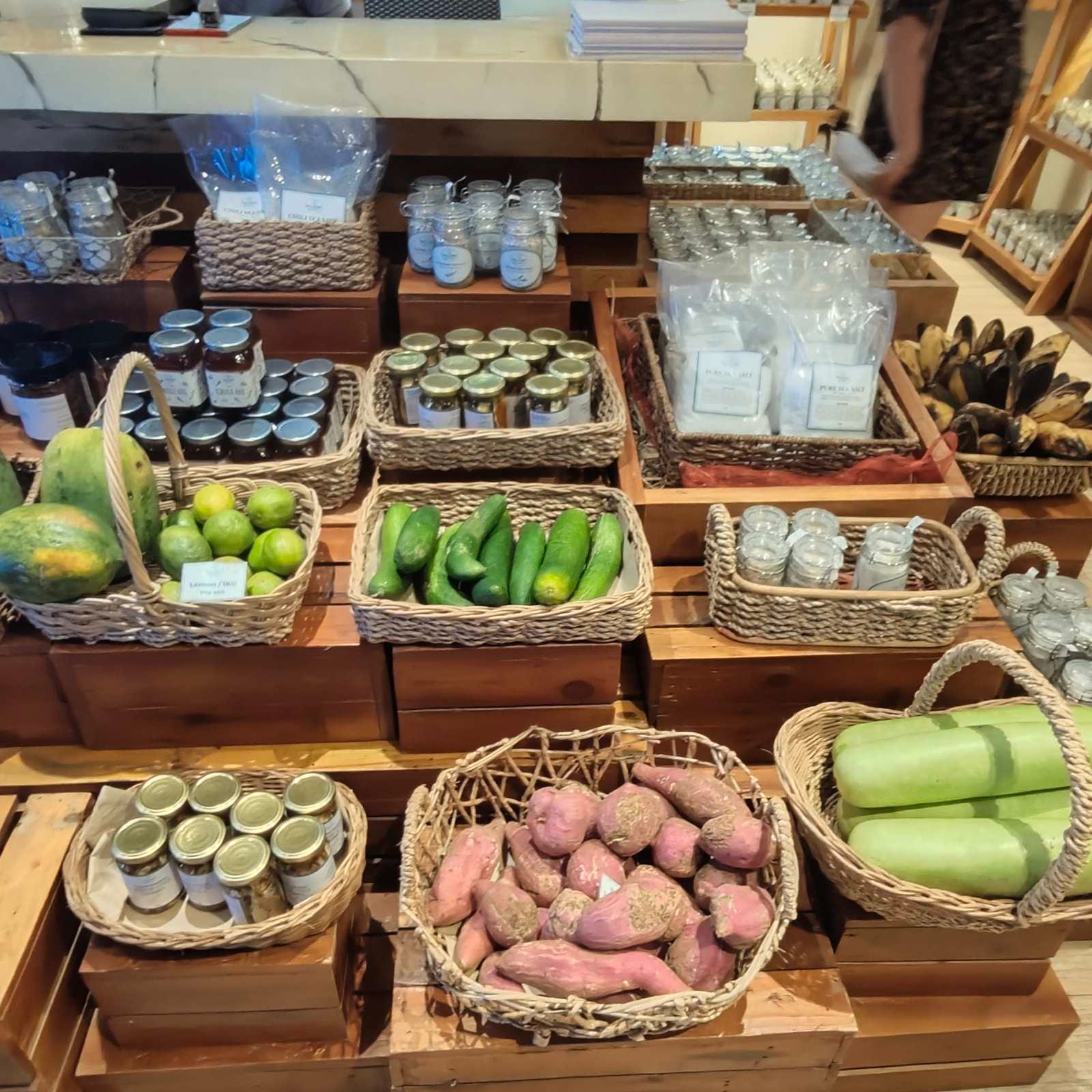
Balesin has also developed its own salt production, transforming its coastal areas into functional salt beds. The resort now harvests and packages its sea salts, which are used in-house across all restaurants; flavored salts are also sold to guests through a store located at the Balesin airport.
Sustainability on the island is likewise built into how the island manages its most vital resources. Rainwater is collected through a network of catchment systems, filtered, and treated before being distributed across the villages. Six man-made lagoons serve as reservoirs. Even the 1.5-kilometer runway is lined with gutters, that double as a rainwater collector, channeling water into storage whenever the skies open up.
More recently, the island took a decisive step toward clean energy with the opening of its solar farm in September last year. Spread across three hectares and outfitted with 5,800 panels in partnership with Aboitiz Power Corp., it now supplies roughly 70 percent of Balesin’s energy needs, reducing its dependence on diesel generators.
The Challenges of Island Operations
Running a private island resort like Balesin comes with a set of challenges that are unlike any mainland operation. According to Rossino, the top concern is the weather—a factor that affects almost every aspect of island life. Aviation follows closely behind, as flight schedules are heavily dependent on weather conditions, while logistics present another hurdle: every material, supply, and ingredient must be carefully coordinated and transported from the mainland to the island.
“To manage this, we put systems in place to minimize delays,” Rossino explains. “We have a centralized purchasing system in Makati, logistics to transport goods all the way to Quezon province and Port Real and barges to bring them to the island.” Despite the complexities, the system works, ensuring that both the resort and its guests remain well-provisioned.
Climate resilience, he notes, is about acceptance. “You cannot control it,” Rossino says with a chuckle. “As long as guests aren’t badly affected—maybe they miss a meeting because flights are canceled—they usually enjoy an extra night on the island, which we provide for free. Most of the time, they actually appreciate the added time.”
Improving aviation logistics has also been a priority, particularly with growing demand. While flights are currently split between Manila and Clark, the plan is to centralize operations in Clark, where there are fewer restrictions on flight times. This allows the resort to schedule departures and arrivals in advance, giving guests certainty in their travel plans, a flexibility that Manila’s airport cannot offer.
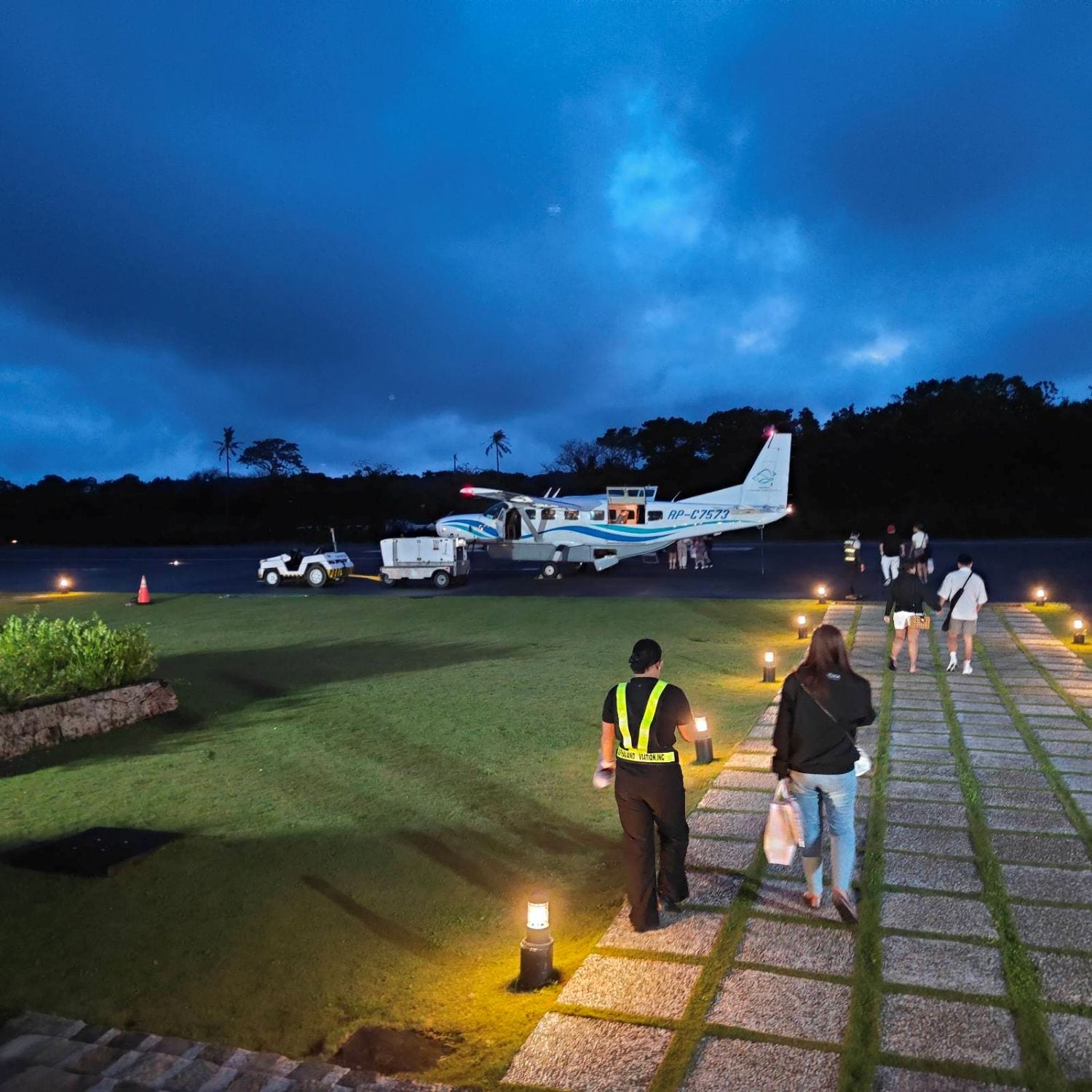
Currently, Alphaland Aviation operates four planes to serve Balesin. Two smaller Cessna aircraft accommodate 12 passengers each, while two ATR 500 planes carry up to 70 guests per flight. When needed, it also charters aircraft from other operators.
So, if a zombie apocalypse ever did break out, Balesin might just be the safest—and most comfortable—place to ride it out. But beyond its strategic advantages, the island offers something rarer: a chance to slow down, savor life, and feel fully removed from the chaos of the outside world. In other words, even without the zombies, it’s the kind of sanctuary most of us wouldn’t mind escaping to.
View More Articles About: