How El Nido Resorts Protects Its Paradise
In this part of Palawan, sustainability isn't a mere policy—it’s a carefully guarded promise kept to the land, the wildlife, and the local community.

by Rhia Grana
Published on Jul 15, 2026
There’s a distinct, almost cinematic magic that takes over the moment our kayak glides into Small Lagoon on Miniloc Island in El Nido, Palawan. It’s in the way the midday sun catches the stark contours of the limestone cliffs, and how the water shifts seamlessly from a deep sapphire to turquoise green.
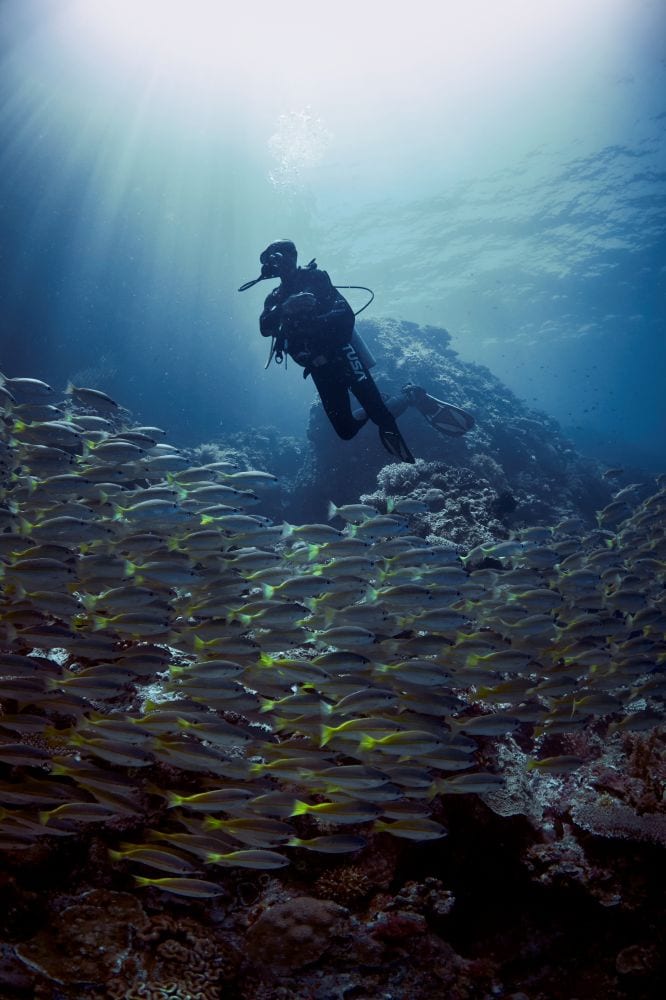
A short boat ride away, Shimizu Island reveals its own spectacular world. Plunging beneath the surface feels less like swimming and more like falling into a dreamscape. Snorkeling here reveals a thriving sanctuary where intricate coral formations provide a beautiful backdrop for schools of exotic reef fish darting through the crystalline water.
I gasp at the magnificent beauty embracing me. How did the people of El Nido maintain this pristine paradise all these years?
Turns out the real magic of El Nido Resorts isn't what meets the eye. It's what the community has been doing behind the scenes.

Environmental stewardship
“Ever since the beginning, the core idea behind our sustainability has been that conservation makes good business sense,” says Gian Manuel Lopez, Sustainability Officer of El Nido Resorts, a pioneer in eco-luxury hospitality in Palawan. “This philosophy has guided us, from the very first owners in the 1980s with Miniloc, to the opening of Pangulasian in 1993, and later Lagen in 1998. If we continue to protect our environment and share with our guests why it matters, it gives them all the more reason to keep coming back.”
Lopez tells us about guests who first visited Miniloc when it was just a dive camp and still return even 10 or 15 years later. "And they don’t come alone. They bring their friends, families, and partners. That is something we are incredibly proud of and happy about," he says.
“The main goal here is to be very good stewards of the land and the community,” says Gustavo Morales, Chief Operating Officer of Ayala Land Hospitality, the group managing the company's portfolio of luxury island resorts such as El Nido Resorts (Lagen, Pangulasian, and Miniloc), Seda, and Huni.
The hospitality chief maintains that sustainability was integrated into every stage of development of El Nido Resorts, from initial planning through construction. “We partnered with the Department of Environment and Natural Resources (DENR) and local government units to assess the entire area,” he offers. “No trees were removed without prior approval. In fact, if you look at the rooms built near trees, the roofing was designed to build around them. Even during construction, with all the personnel and materials on site, the beaches remained clean and the marine ecosystem was preserved. This is thanks to the work of Gian and the sustainability team, as well as our security personnel and contractors who adhered strictly to the environmental guidelines provided to them before arriving on the islands.”
Lopez adds that all external contractors undergo mandatory sustainability training, starting with project heads down to the individual workers. Those who don’t meet the resort's strict environmental standards face penalties.
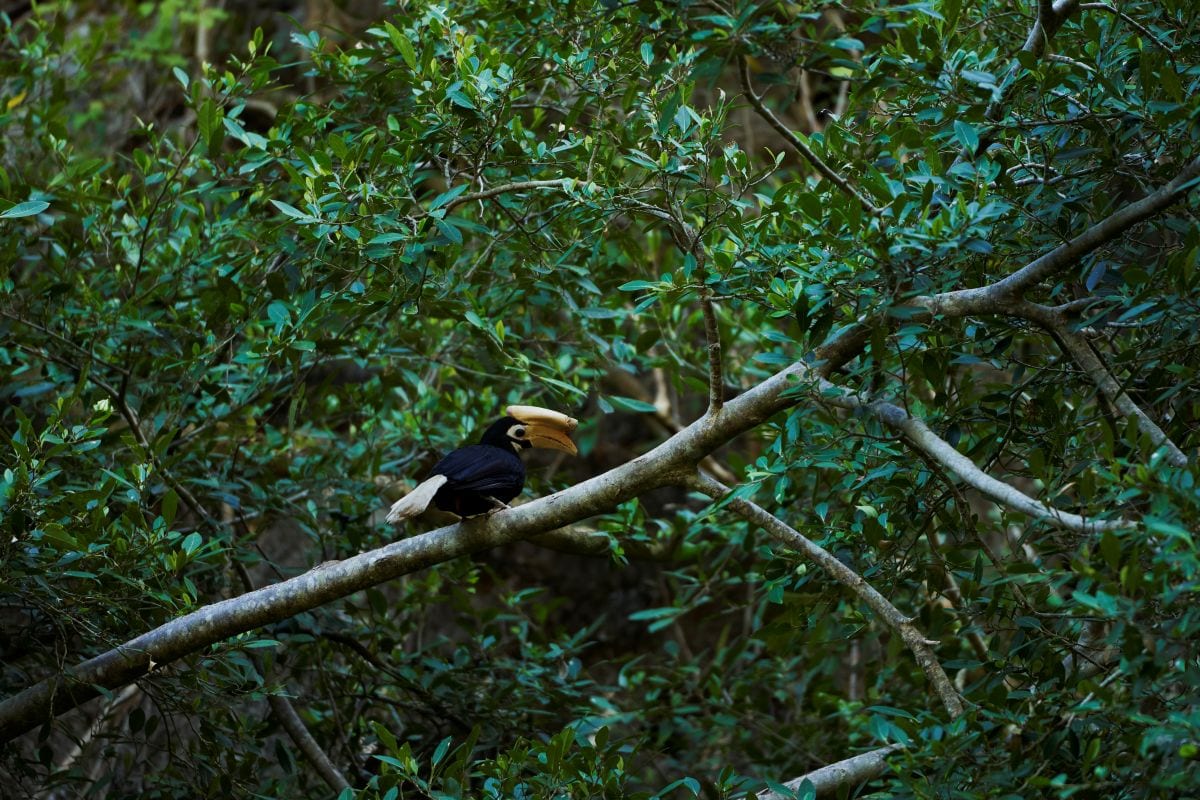
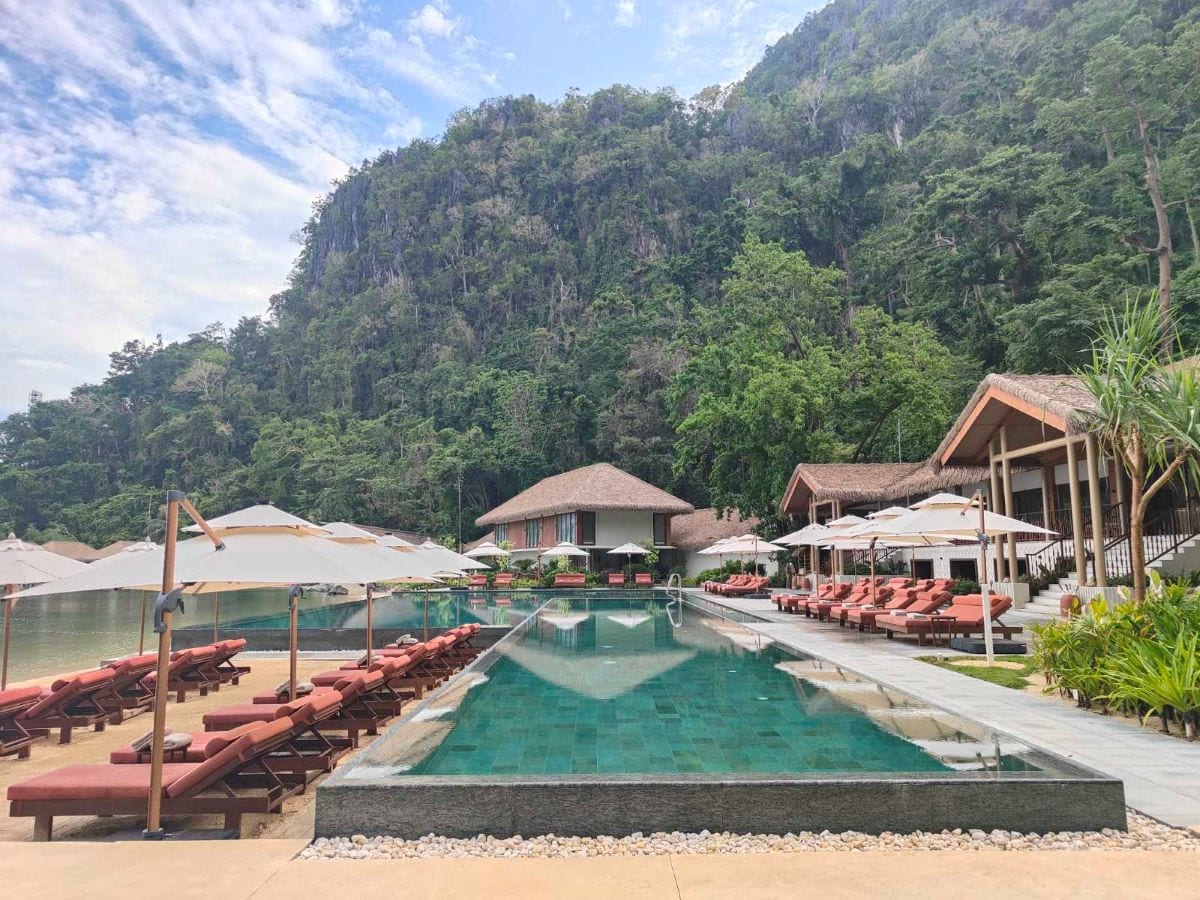
The payoff of these conservation efforts is visible all around the island. At Lagen Resort, for instance, you don't even have to look hard to spot the incredibly elusive Palawan hornbills. “Usually, if you want to spot a Palawan hornbill on the mainland, you’d have to trek deep into the forest for a week with a really good guide. But here, our guests will just be lounging by the pool and suddenly a whole flock of them is right there, perched on the trees. Whether it’s the hornbills or the monkeys, guests just love seeing that wildlife is thriving right alongside them,” says the sustainability officer.
A month after Lagen reopened last January, after a year of extensive upgrades, the team spotted the Asian small-clawed otter (Aonyx cinereus), which is listed as vulnerable on the IUCN Red List. “Here in Palawan, this species is considered vulnerable because of poaching,” Lopez points out. “So we were thrilled to capture footage of a few of them just hanging around right by our water villas.”
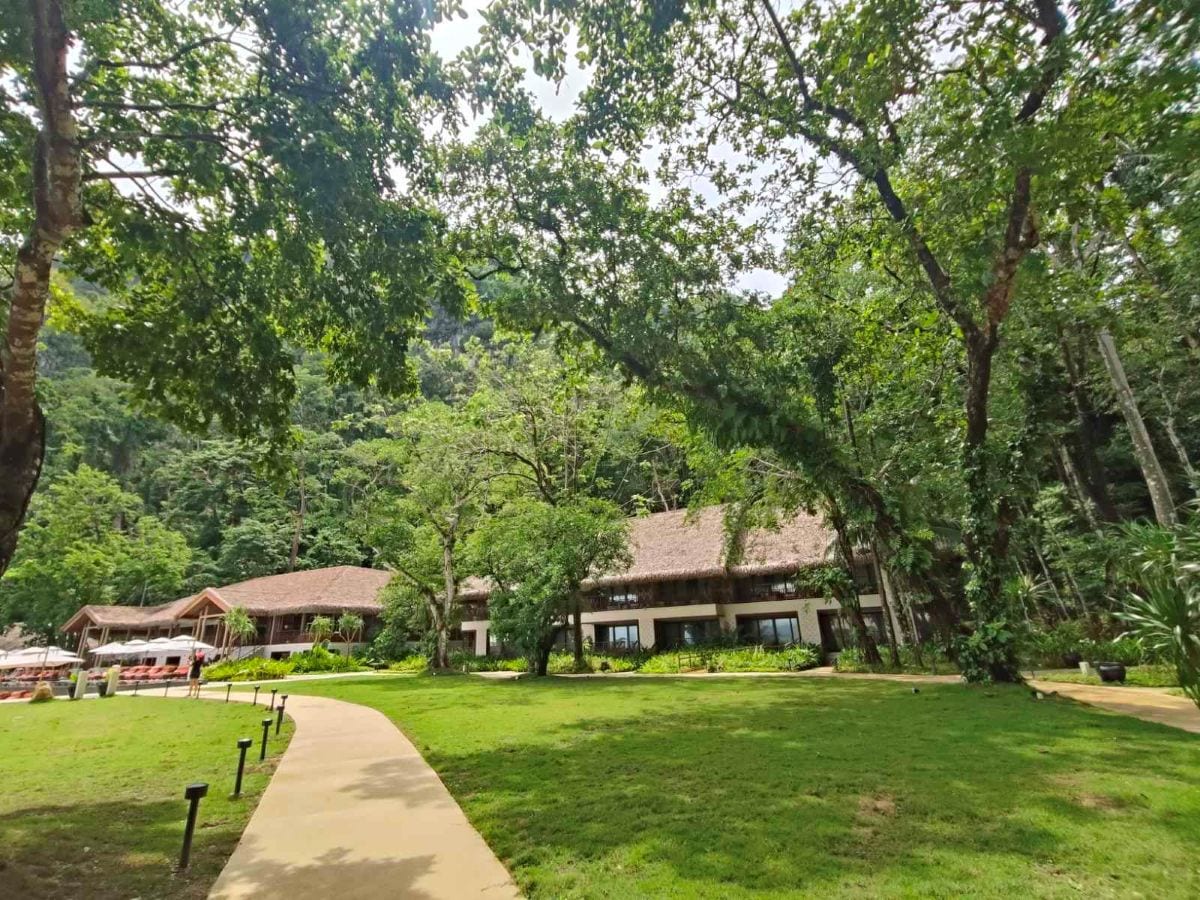
To protect local ecosystems from the impact of development, the group enforces a zero-tolerance policy for its construction teams. Any harming, capturing, or killing of wildlife results in immediate termination. Vandalism, including carving on trees, is strictly prohibited. Furthermore, all contractors must strictly adhere to the company's waste segregation systems.
At El Nido resorts, environmental stewardship is embedded into the staff's DNA. The staff culture is built on a collective ownership of the surrounding ecosystem, where everyone from security personnel and housekeeping to food and beverage teams acts as an active guardian of the land and sea.
Case in point: while Lopez regularly dives to monitor the house reefs for signs of coral bleaching, the resort’s guides and divemasters also treat every guest excursion as a conservation mission, actively scanning for threats like coral-eating Drupella snails or invasive crown-of-thorns starfish. When an outbreak of crown-of-thorns is spotted, the team immediately coordinates dedicated cleanups in partnership with the DENR.
Working with the community
El Nido Resorts’ community programs are likewise anchored on sustainability. “What our team does is scout communities and neighboring islands to establish partnerships. Our tours offer guests an immersive community living experience, with the majority of the proceeds going directly back to the host community,” says Lopez.
Through the resort’s "Fishing with the Community" initiative, for instance, guests learn traditional hand-and-line fishing directly from local fishermen of Sitio Kiminawit and Barangay Bebeladan. Designed to bridge cultural gaps for international travelers, the activity offers a firsthand introduction into the coastal livelihood of Palaweños. Guests can choose to have their catch prepared by the resort's culinary team, though many opt to gift it back to the fishermen. The program serves as a rewarding cultural exchange that generates supplemental income for the local guides.

Guests can join local partner Ate Gina and her family in the mangroves for a hands-on crab-harvesting excursion. The tour highlights native sustainability practices, as the family teaches guests why they release undersized crabs and egg-bearing females to protect the delicate marine balance of the forest. The whole experience was curated by Lagen Resort.
Pangulasian’s community tours in neighboring Sitio Kiminawit allow guests to experience local culture firsthand. Led by community partners, visitors can learn local culinary techniques and try their hand at traditional weaving to create handmade stuffed toys and keychains.
“Beyond the tour itself, we actively support local development by helping build and repair essential infrastructure, such as schools and recreational facilities," adds Lopez.

The amenities in the guest rooms are handcrafted by local artisans in Palawan. “We always try to elevate local craftsmanship and integrate the richness of our host culture into the resort experience,” says Morales. A selection of these pieces is also showcased at the resorts’ boutique.
To optimize supply chain efficiency and support the regional economy, the resorts source 70 to 80 percent of their perishables from local vendors in El Nido. This strategy not only avoids the high costs and logistical delays of flying goods in from Manila or trucking them from Puerto Princesa. By prioritizing nearby suppliers, the properties enjoy a more cost-effective operation while actively investing in the local business community.
Finally, ALH actively prioritizes regional employment, with locals accounting for 80 percent of its resort staff. This workforce is recruited from key areas across Palawan, including El Nido, Taytay, Puerto Princesa, and the Cuyo Islands.
For the remainder of the year, the sustainability team is focused on the daily operations required to meet Ayala Land’s 2030 sustainability targets—a key milestone in its broader roadmap to reach net-zero emissions by 2050. This includes conducting regular on-site audits to ensure staff are practicing proper waste segregation. Lopez compiles detailed monthly data on food waste, electricity, water, and fuel consumption, forwarding these metrics to Ayala Land’s corporate sustainability team to help track and benchmark the group’s overall environmental footprint.
This relentless attention to detail is what keeps the El Nido dream alive. When guests glide into the Small Lagoon or look up to see a flock of Palawan hornbills nesting near their villas, they are experiencing the direct result of a carefully guarded ecosystem. In proving that luxury and conservation can walk hand in hand, El Nido Resorts ensures that the pristine paradise of today will remain just as magical for the next generation of travelers.
View More Articles About: