Today I Learned: How Vietnam Won the War Against America
There’s a lot we can learn from the Land of the Ascending Dragon.
by Gregg Yan
Published on Sep 14, 2026
Vietnam, now my second home, is known for many things.
It’s famous for its coffee, some of the strongest you’ll ever sip. It’s renowned for phở (pronounced "fuh", by the way). And of course, it’s known for the Vietnam War—America’s first-ever defeat.
Ever since I binge-watched every Vietnam War movie I could get my Chippy-stained hands on in the 1990s (several directed by my distant uncle, Cirio Hermoso Santiago), I’ve been fascinated by the war. As a kid, I built scale models and dioramas featuring the war’s troops, tanks, and aircraft. My office brims with Vietnam War artifacts. I even spent 20 years programming a freely downloadable video game about it.
.jpg)
.jpg)
But it was a recent trip to the newly launched Vietnam Military History Museum in Hanoi that made me realize why defeating not just the Americans—but the French, Japanese, and Chinese—came so naturally to the Viets.
Chronicling over 2000 years of history across its sprawling, air-conditioned exhibitions, the museum shows how the Vietnam War—the "American War" as locals call it—was just the latest chapter in a staggering list of invasions the country has had the (mis)fortune to repel.
Exploring history through museum dioramas, artifacts, and an occasional short documentary where you can thankfully sit and rest awhile, I realized that the story of Vietnam is the story of fighting back.
Just one example: 1000 years ago, China launched a massive naval invasion of Vietnam. At the Bach Dang River, the crafty Viets planted thousands of iron-tipped wooden stakes into the riverbed during low tide. When the tide rose to submerge the spikes, the Chinese armada was lured in. When the water receded, their massive warships were impaled, pincushioned by arrows, then burned (in that order)—gutting the entire invasion. Not bad for just one afternoon’s work.
.jpg)
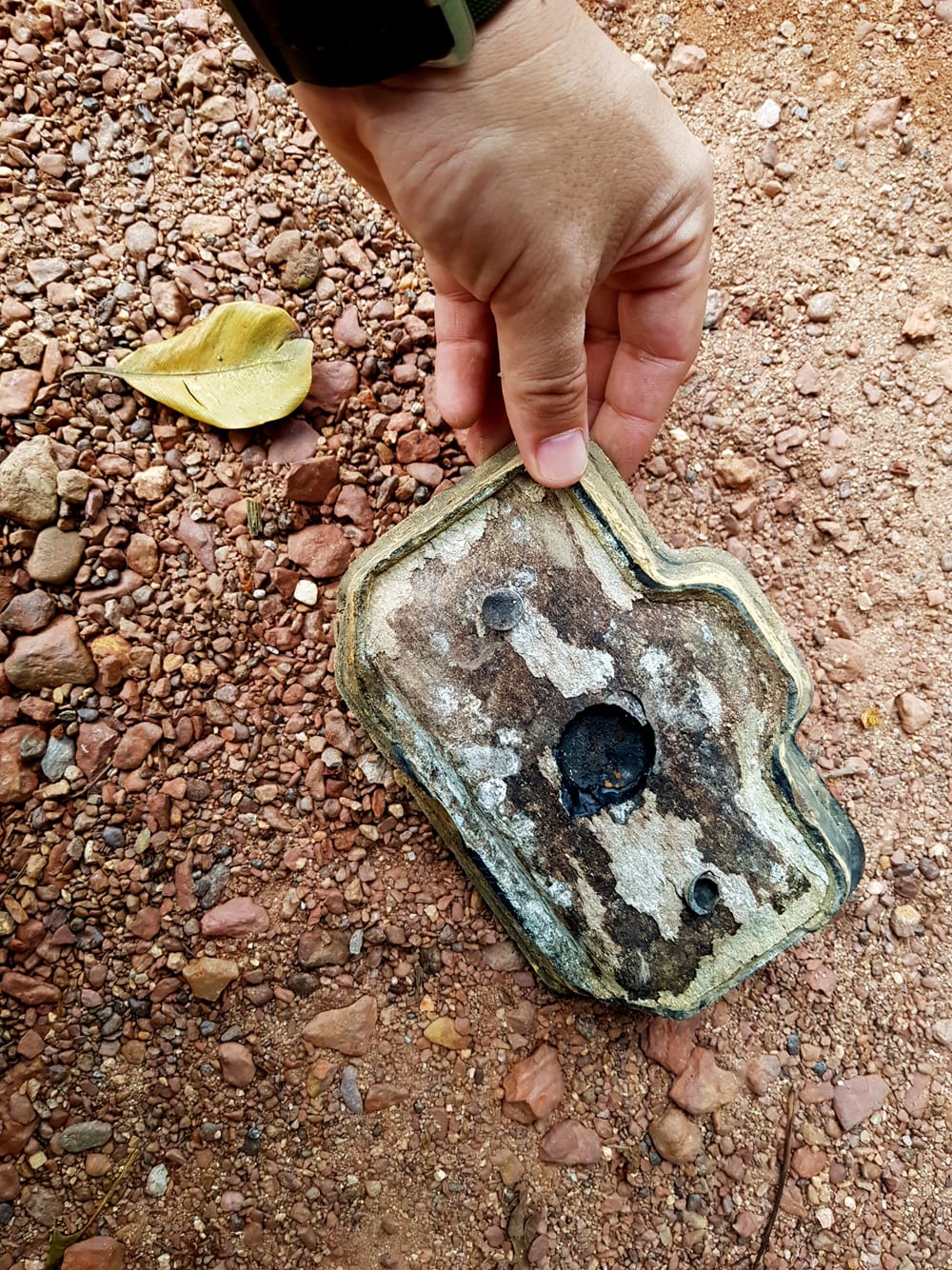
Centuries later, when the French invaded in the 1800s, Vietnam fought back in La Guerre d’Indochine, or the First Indochina War. In the remote valley of Dien Bien Phu, one of history’s most stunning military upsets took place.
Over 16,000 elite French colonial troops dug into a seemingly impregnable base, arrogantly believing that Western technology and raw firepower could easily overcome a peasant army. Led by Vo Nguyen Giap, a former history professor with no formal military training, the Viets managed the impossible.
They manually hauled heavy artillery pieces up the sheer, muddy slopes of the surrounding mountains with ropes, which the French never expected. "We shouldn’t be overawed by machinery or modern weapons," said Giap. "In the end, human beings, not machines, shall decide who wins." The titanic siege raged for 55 days and concluded in a crushing Vietnamese victory, ending France’s colonial grip over Vietnam, Laos, and Cambodia.
The Americans arrived roughly a decade later, fighting the Viet Cong and the North Vietnamese Army across legendary battlefields like the Ia Drang Valley, Hamburger Hill, Dak To, Hue City, and the Mekong Delta—contending not just with hidden tunnel networks and brutal jungle ambushes, but ingenious traps like punji stakes. These are smaller versions of the traps used to destroy the Chinese fleet, except they target your feet and are liberally smeared with shit for some added biological warfare.
The American-backed South Vietnamese government ultimately fell in April 1975, when General Giap’s protégé, General Van Tien Dung, executed a tank-led campaign that captured the South Vietnamese capital of Saigon in less than two months.
.jpg)
Other wars followed even after Vietnam’s reunification. Viets deposed the diabolical Pol Pot and his Khmer Rouge in Cambodia while simultaneously throwing back yet another Chinese invasion in 1979.
My Vietnamese wife Ngoc and I have since visited many of these old battlefields. Most have quietly reverted to farms or fruit plantations, but some remain abandoned enough that a patient historian can easily find old trenches or craters and pick out rusty tank tracks or artillery shells if they look closely.
Hanoi’s new military museum was launched in November 2024 and features thousands of war artifacts—from ancient swords and spears to a modern MIG-21 jet that reportedly shot down 14 American warplanes.
Interestingly, the Vietnam War, or "American War," only occupies a small part of the museum—perhaps because the Americans were simply the most famous in a long line of foreign invaders who completely underestimated a people who had already spent a thousand years mastering the art of survival.
The Vietnamese didn’t just rely on crafty tactics like boobytraps or tunnels. They survived and thrived because they knew exactly how to unite against a common threat.
.jpg)
As we left the museum, this realization struck me hard.
Our nation, the Philippines, remains profoundly fractured not just against foreign invaders, but against itself.
Philippine history is a tragic chronicle of betrayal—from Emilio Aguinaldo orchestrating the execution of his own brilliant generals like Antonio Luna and Andres Bonifacio, to the modern political circus where we tribalize ourselves into greens, reds, pinks, or whatever color faction happens to be the flavor of the month.
While we Pinoys break into tribes and fight each other for the scraps of local power, the Vietnamese have looked outwards and onwards.
Those new green electric taxis you see in big Pinoy cities? Vietnamese. The cool North Face bags you’re saving up for? Vietnamese. One-fifth of all the rice we eat? Vietnamese (and we taught them how to improve their rice yields in the 1960s).
The Viets have already left us behind and are developing into a prosperous export nation. A hundred pesos in Vietnam buys you a full meal and a drink—half the cost of a fast-food meal in the Philippines. Fuel and electricity there cost half what we pay in the Philippines. The Viet quality of life has quietly surpassed Pinoy standards.
During one of my old trips to the Vietnamese capital, I personally visited the house of General Giap, whose philosophy I’ll always remember. He believed that when a people are united in their fight for freedom, then they shall always be victorious.
Fellow Pinoys, there’s a lot we can learn from Vietnam. After all, they’ve got a pretty good track record of winning.
Pinoy Explorer Gregg Yan is an amateur historian and videogame developer based in Southeast Asia.
ALSO READ:
Why Vietnam Is Betting Big on the Filipino Traveler
A Filipino Explores Vietnam in Search of the Legendary Bigfoot
Gregg Yan is an adventurer and explorer based in the Philippines.
View More Articles About: