
A Filipino Explores Vietnam in Search of the Legendary Bigfoot

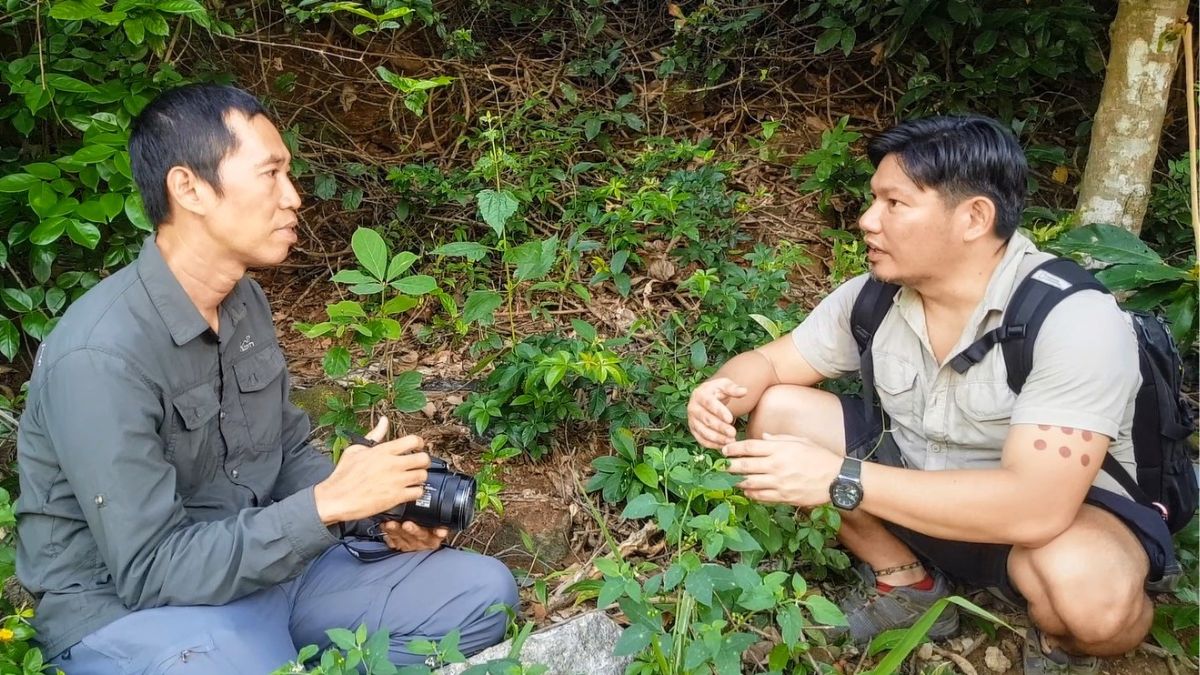
This is my strangest wildlife adventure yet. Through the years, I’ve searched for various rare animals—forest elephants in Borneo, tamaraw in the Philippines, lions in Africa, Komodo dragons in Indonesia. Today, we’re on the trail of an animal that probably doesn’t even exist.
This is my first foray into the field of cryptozoology, the study of unknown animals. Bigfoot of North America, the Loch Ness Monster of Scotland, the Yeti of the Himalayas, and the Chupacabra of Mexico are among the world’s best-known cryptids. Most cryptids, like the Loch Ness Monster, probably aren’t real, but the giant squid and the gorilla were also dismissed as hoaxes before being formally discovered by science.
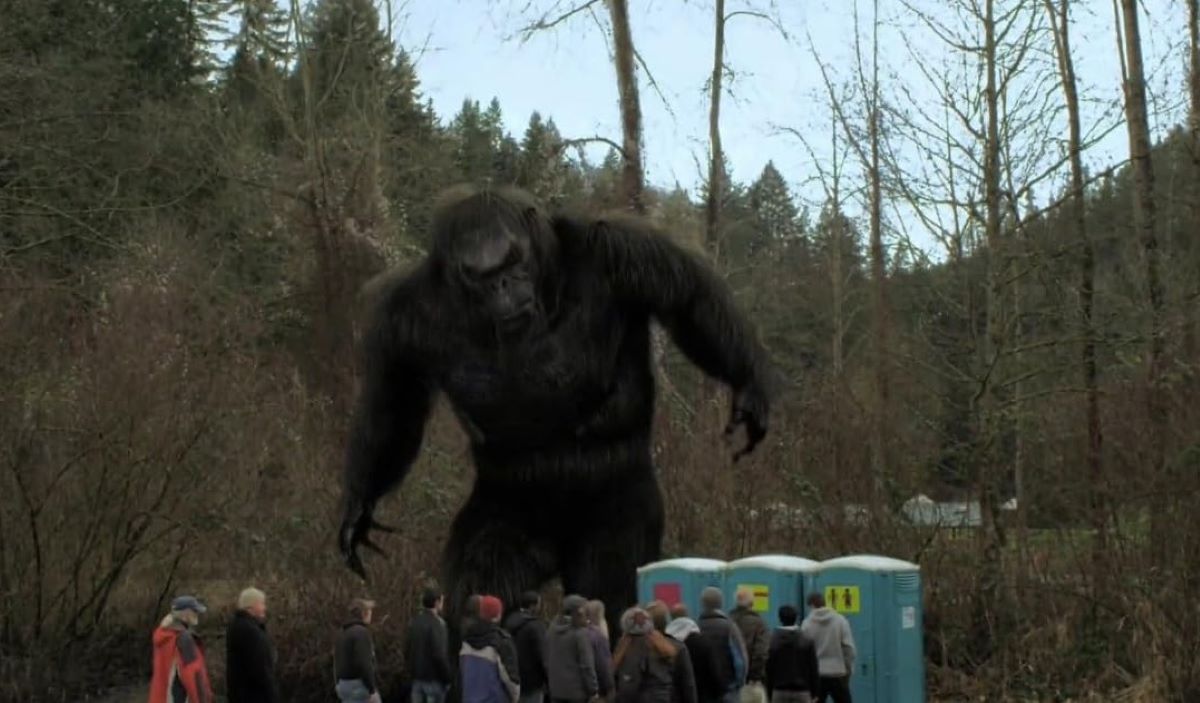
The bigfoot as depicted in the TV movie Bigfoot (2012)
'Man of the forest'
Now, I’m deep in the jungles of Central Vietnam in search of the Nguoi Rung, which is Vietnamese for ‘man of the forest,’ and is known to American soldiers as the Rock Ape due to its supposed habit of throwing rocks at people and buildings.
Described by eyewitnesses as being five to six feet tall, Rock Apes are strongly built, with long limbs, protruding stomachs, and reddish-brown hair. Said to have humanlike mannerisms, they are thought to live quietly in groups deep in the jungles of Vietnam—once quiet and unexplored places heavily scarred by decades of war.
Both American and Vietnamese soldiers reported Rock Ape encounters. In 1968, USMC Lance Corporal Alfonso Villarreal recalled how one night his squad saw what looked like a large medicine ball moving toward them through a ravine. When it was nearly upon them, they realized it was a baby ape, which soon panicked and ran into the brush.
Soon, something started rolling down rocks from the steep sides of the ravine. The boulders were being pushed down by what Villarreal was sure were adult Rock Apes. “They were just like gorillas,” he recalled.
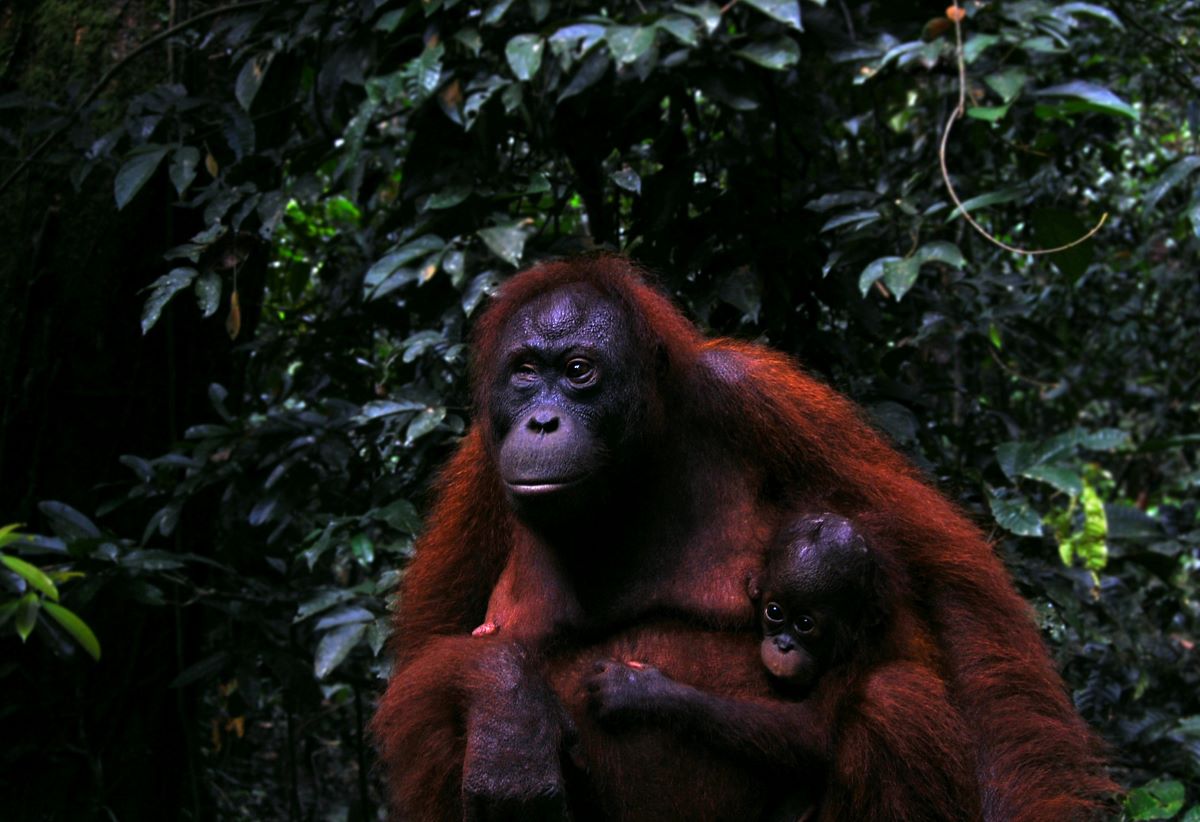
Eyewitnesses have described the Nguoi Rung as looking much like an orangutan, which are currently only found in Malaysia and Indonesia. Unlike the aggressive, fast-running descriptions of Rock Apes, orangutans are gentle tree-dwellers.
ALSO READ
Hanoi Deserves a Spot on Your Travel Bucket List. Here's Why
7 Less Explored Destinations in Vietnam
Eyewitness accounts
USMC Sergeant Thomas Hodge described the animals in an official interview for the Library of Congress:
“There's only one animal that I used to get a kick out of. It's what they call a Rock Ape. You see them up in the mountains: little, short, probably about four feet high, something like that, you know, and if we—it wasn't a matter of us shooting them, so we tried to throw stones at them or, you know, to get them out of our area, and they would pick them up and throw them back at you, you know, so those were the apes.”
US Army Sergeant Kregg Jorgenson even wrote a book with an eyewitness account of one of the creatures in "Strange but True Stories of the Vietnam War."
“It was a hot day. The six men from the 101st Airborne Division were taking a break in the middle of a mountainous jungle when the event took place. Suddenly, according to the men, a few small trees located fifteen yards uphill began clearly shaking. The soldiers had trained for this, and as they got ready for combat to fight the expected VC soldiers jumping out the bushes, they never imagined what they saw next.”
“A long, cucumber-shaped head showed up. The face, the soldiers said, was covered in red hair with a pair of dark eyes and a huge mouth. The creature then stepped out of the vegetation into a clearing, allowing the group to observe the rest of its muscular body, which was also featured by the same type of red hair. It wasn’t taller than five feet and walked upright. It stopped, looked at them as though scrutinizing each of the soldiers.”
Rock Ape footprint cast made by Professor Tran Hong Viet in April 1982. The print is 11 inches long and 4.5 inches wide. Though no recorded species matches the footprint, mud prints can be easily distorted by natural weathering factors like wind and rain. (Pedagogic University of Hanoi)

Footprints in the jungle
Toward the end of the war, Viet Cong and North Vietnamese soldiers reported so many sightings of Rock Apes that the North Vietnamese Communist Party Secretariat ordered an official scientific investigation.
Dr. Vo Quy, a respected ornithologist and environmental researcher, was dispatched from the Vietnamese capital of Hanoi and eventually found Rock Ape footprints, which he soon made casts of. Wider than a human foot, the prints were too large for a typical ape.
Another Vietnamese scientist followed suit after the war. In 1982, Tran Hong Viet from the Pedagogic University of Hanoi discovered further Rock Ape footprints.
While no photographs, bodies, or bones of these Bigfoot-like cryptids were ever recovered, the fact that so many soldiers from both sides attested to their existence piqued my curiosity enough to fly to Vietnam to look for them around Nui Son Tra, nicknamed ‘Monkey Mountain’ because of numerous sightings during the Vietnam War.
The joint US Marine and US Air Force radar base atop Nui Son Tra in Central Vietnam was supposedly the site of several Rock Ape encounters. Today the facility is being used by the Vietnamese government.

Uncovering the mysteries
With shafts of sunlight streaming through the forest canopy, we searched for signs of the animals in the jungle surrounding a former US Marine radar facility, interviewing people in and around the mountain.
"Many Vietnamese have heard of the legendary Nguoi Rung, or Bigfoot," shares Dr. Nguyen Vinh Thanh, a primatologist (an ape and monkey expert) from Vietnam National University in Hanoi. "But aside from unverified accounts from locals and old footprints embedded in mud (which can easily be distorted by rain and natural weathering), no conclusive evidence has ever been found of their existence."
Dr. Thanh has been studying primates for 20 years and knows Indochina's 45 or so recorded species of apes and monkeys well. "Russian explorers also tried looking for the Nguoi Rung but found only bone fragments inside the caves of Than Hoa province, which again proved scientifically inconclusive. If there really were Nguoi Rung in the past, they are most probably extinct since they haven't been seen in 50 years," he says.
We left Central Vietnam without finding any evidence of Vietnam's version of Bigfoot, but Dr. Thanh shared some parting words. "Instead of concentrating on the legend of the Nguoi Rung, we should intensify efforts to save the animals that we know still live in Vietnam, from endangered bears and tigers to primates like monkeys and apes."
Yan talks with Vietnam National University Primatologist Dr. Nguyen Vinh Thanh about the possibility of finding the Nguoi Rung. Dr. Thanh’s professors searched the jungles of Vietnam for evidence of the creatures, bringing back plaster casts of footprints.
Misidentification or myth?
Still, how can the historical Rock Ape sightings be explained? It’s definitely possible for American and Vietnamese troops to misidentify Vietnam’s other monkey species for Rock Apes. Vietnam, after all, has its fair share of macaques, langurs, doucs, and gibbons—but none of them grow taller than three feet, compared to the human-sized Rock Apes. The closest living ape that matches descriptions is the orangutan—which doesn't really walk on the ground (it is arboreal or tree-dwelling) and has been extinct in Vietnam for millennia.
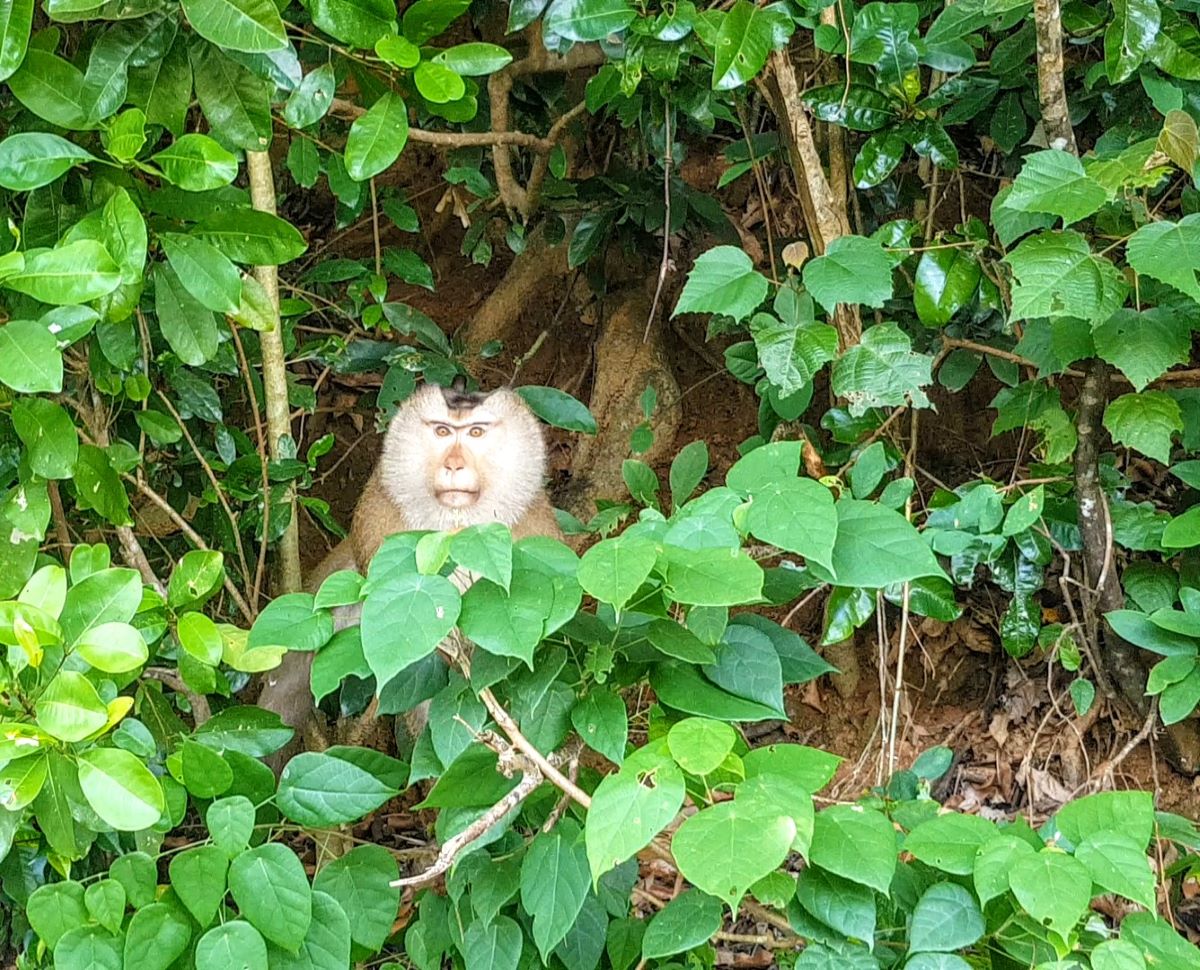
From out of the jungle peered this large troop leader, an Indochinese Rhesus Macaque, as big as a dog. Vietnam and the greater Indochina Region—spanning Vietnam, Laos and Cambodia – hosts around 45 primate species.
Finally, there's the story of the Saola: in 1992, a previously unknown species of cattle was found in the Vu Quang Nature Reserve in the Annamite Range of Vietnam. Hailed as the Asian Unicorn, the Saola (Pseudoryx nghetinhensis) is considered critically endangered and one of the rarest animals, with as few as 70 individuals left on Earth. Unsurprisingly, numerous Rock Ape encounters were also logged in the same Vu Quang Nature Reserve.
Is the Vietnamese Bigfoot real? Is it some new species of orangutan? Until the world finds science-based evidence—bones, GPS-corroborated videos, or even live specimens—we would be wise to consider the Nguoi Rung and other cryptids as animals of fiction.
Nevertheless, a wayward rock might someday be thrown at someone with a camera... and we’ll get a glimpse of something that hasn’t been seen since the Vietnam War.
