What I’ve Learned: Josh Groban
The multi-platinum recording artist looks back on 25 years of music, growing pains, and the emotional truths that shaped the artist he is today.

by Rhia Grana
Published on Jan 16, 2026
Josh Groban’s recent interview with Philippine media felt less like a routine interview and more like opening a personal time capsule—one that traced the long arc of a career built not just on talent, but on emotional honesty and an evolving sense of purpose. “The kid from Los Angeles,” as he calls himself, entered the music industry at just 17, still figuring out who he was while the world was already paying attention.
“I started so young… And yet, I was given this platform and a style of music that was very grand and emotionally deep,” he reflects. “I felt a responsibility at a very young age to be a pillar of those emotions for so many people, many of whom were older than I was. It’s like a puppy with big paws—you’re wearing the coat, but the coat is long.”
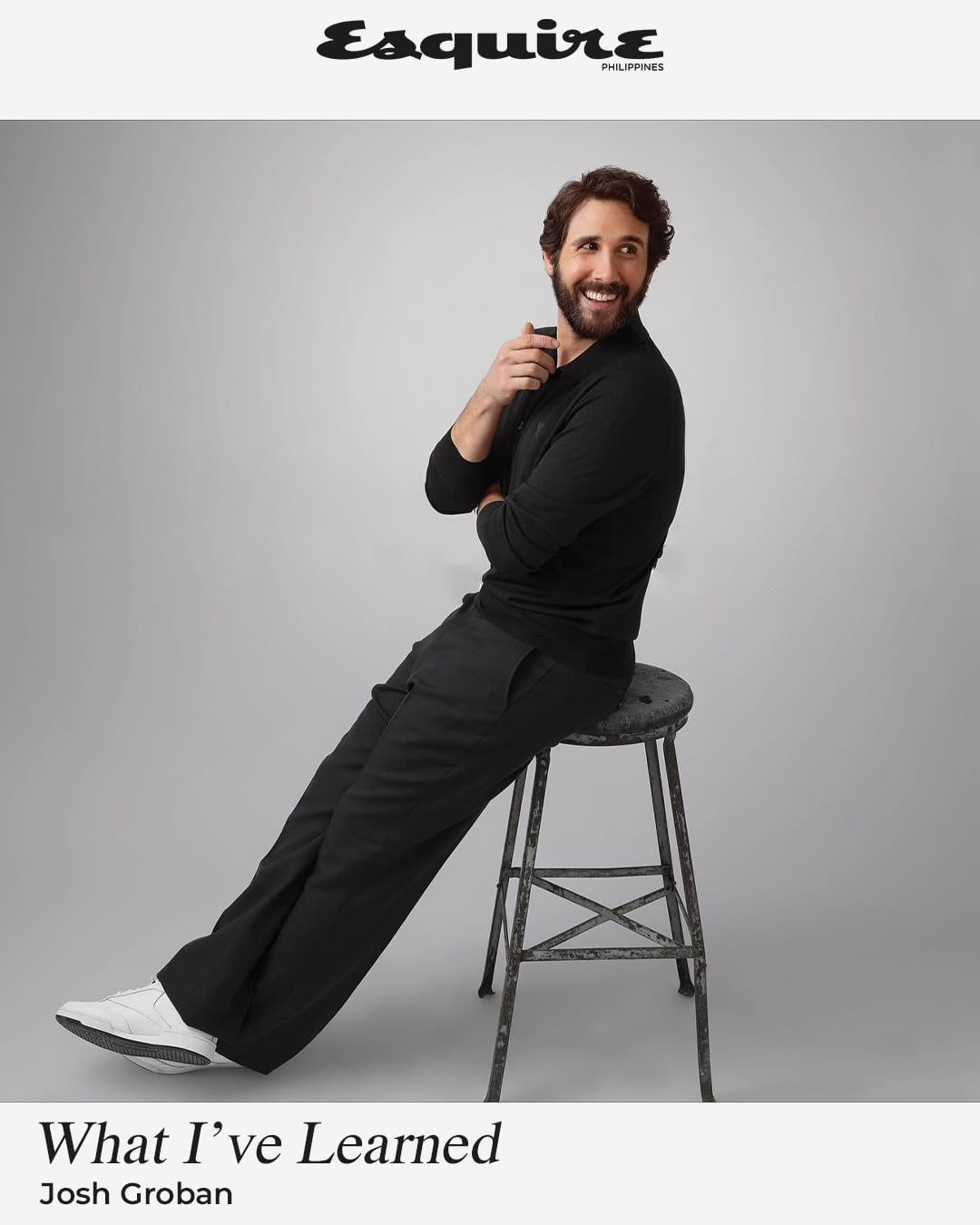
That early sense of responsibility would shape much of Groban’s life. Over the next 25 years, he would sell more than 35 million albums worldwide, earn multiple Grammy and Tony nominations, perform at global milestones like the 2002 Winter Olympics closing ceremony, and eventually found the Find Your Light Foundation, which supports arts education and young creatives. But if his résumé tells one story, his reflections reveal another—of learning how to live inside the songs, how to grow into the emotions he once had to perform before he fully understood them.
The Philippines, he says, holds a special place in that journey. “I never had to explain myself to the Philippines… my Filipino fans have gotten me from day one,” he says, smiling.
Which is why he’s eagerly anticipating his GEMS World Tour stop on February 18 at the SM Mall of Asia Arena. “Every time I visit, I try to craft a setlist that reflects our connection,” he says. “A mix of the old, the new, surprises, and collaborations… a combination of the music they’ve loved and my expression of love—for music, for the talent, and for the people of the Philippines.”
For Groban, performing has long ceased to be just about songs or spectacle. It has become a way of making sense of time, fear, growth, and gratitude—a way of reconnecting with his own humanity as much as with his audience’s. Reflecting on his journey, he shares how the years have reshaped his relationship with his music, his fans, and himself:
I never take for granted the fact that, in my job, to be able to travel the world and connect with my fans through music is the luckiest thing that I ever get to do.
I love singing my songs from my first album now more than I liked singing them then because I've actually lived the songs now. I know what a song like “To Where You Are” feels like. I know what that loss feels like. I have people I can think of when I sing “You Raise Me Up.” I know what love feels like when I sing “You Are Loved.” There's a life experience that gives me a much deeper experience that I'm very grateful for.
In this life, we all try to find whatever purpose we have in this time we're given on this planet. My purpose, I believe, has been to connect through music. And so that reminder every time I get to experience that in front of an audience brings me right back up to where I need to be.
I try to stay a student. I try to stay scared and learn new things. And if I feel like I'm getting too stagnant or too bored with a certain thing, [that’s a sign] that I have to take the risk to try something else, to try new endeavors, things that keep me on the edge. I think that a big part of longevity is having the bravery to know that your fans want to go on a journey with you. They don't want just the same thing all the time. They want to feel your excitement and enthusiasm.
I think the music business has changed since I started, when you had to be very careful about your brand. Now, people want to see all the things that make you weird and different—the things that are funny, goofy, serious, and all of it wrapped up into one.
There was a time when I wanted to quit. That was when I had a lot of success and didn’t know how to handle it. David Foster said, “Well, you’re turning down a lot of songs. You obviously seem very over it. Don’t be lazy. Go sit down and write what you wanna write and sing from the heart.” Those became the lyrics: (sings) “I never want to let you down. Forgive me if I slip away. When all that I've known is lost and found. I promise you I, I'll come back to you someday.”
When you're younger and just starting out, a lot of things terrify you. There's a lot of energy coming at you from all sides. You've got pressure. You don't know if this is going to last. You're getting a lot of hot air about how great you are, and you're getting a lot of criticism. You don't know which way is which. There’s this weight of the world on you as a new artist.
I think as I've gotten older and continued to grow in this business, I stopped caring so much about results and pressures... all of that noise that you have when you're younger isn't there anymore. Every time I come on stage now, I have one goal and that's to connect with my audience, to have an amazing time with them.
Gut check is so important. Every time I've gone for the thing that was scary, but something in me was saying, “You got it,” I’ve gone through the scariness of it, and then it has become one of the most rewarding things in my career.
I think that I’ve been the most commercial, as far as success goes, when I didn’t try to be commercial. When I’ve done things that I thought were a little bit left of center or zigging when everything else in the world was zagging, but that meant something to me, I’ve always been pleasantly surprised by how commercially successful that thing has been.
I say this to young artists: “When you find the thing that makes you unique in a very crowded and noisy world, that's a precious thing.” Finding ways to include influences into my music is always the goal. But trying to make sure that I don't drift too far from what makes me special is also a goal.
Music is the antidote to division and to anxiety, to fear and other-ism. And there is so much out there that is almost too much to bear. If I listen to the news or go on social media too much, it just breaks my heart every single day. And the one thing that I feel hope from is the fact that through art and music, and through the connectivity of that, we can all share something together that feels uplifting, that feels like our souls are just a little more recharged when we walk out than they were when we came in.
View More Articles About: