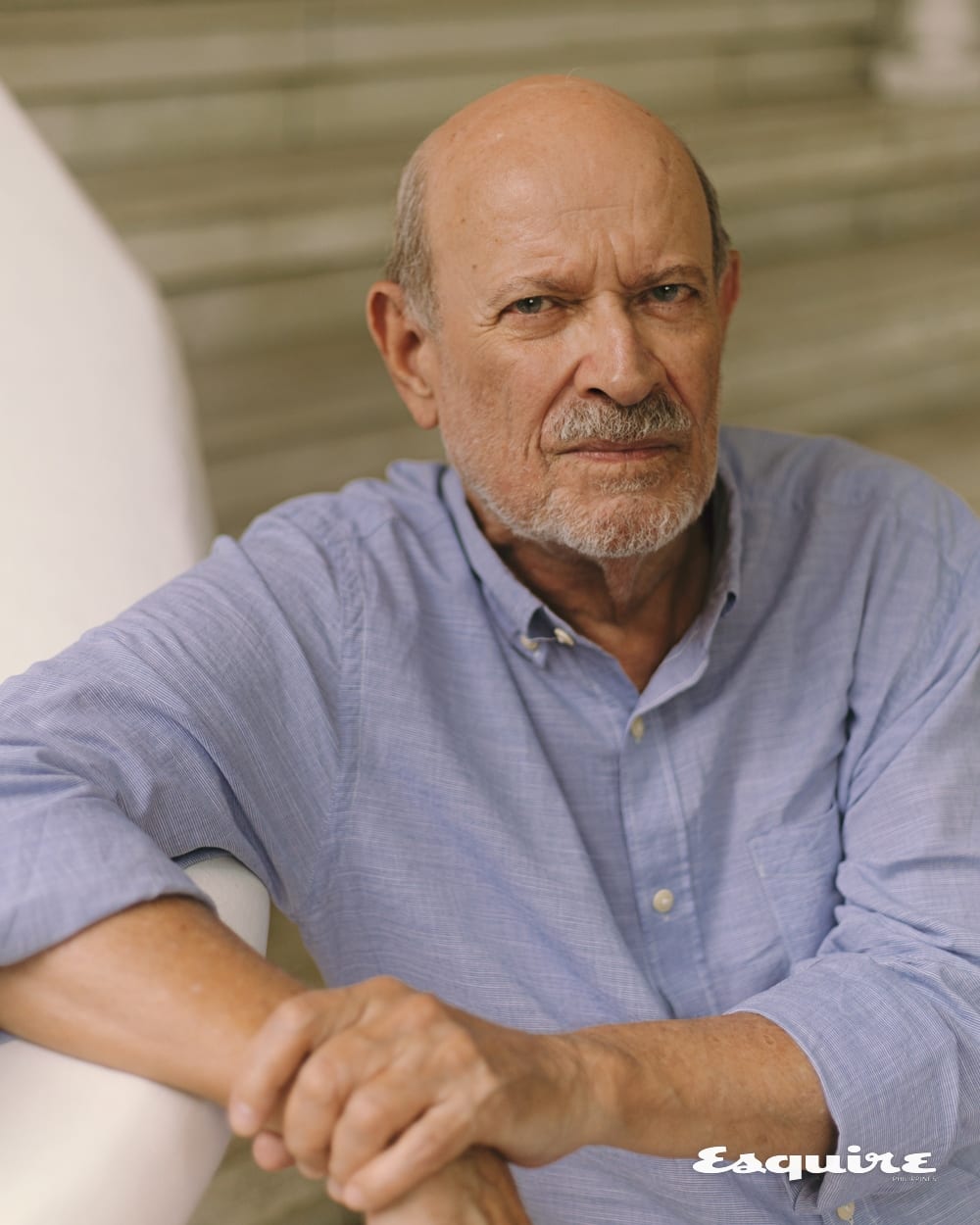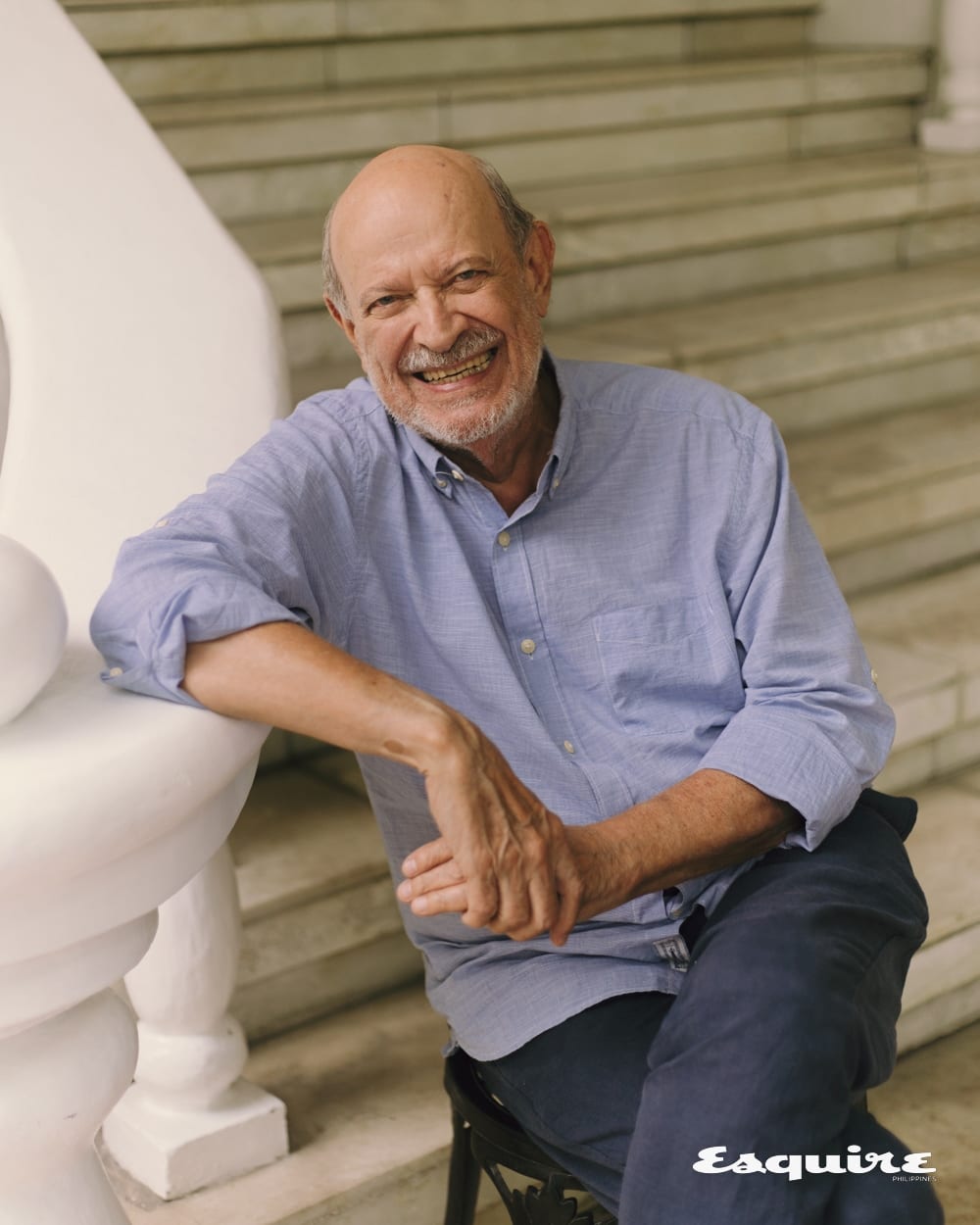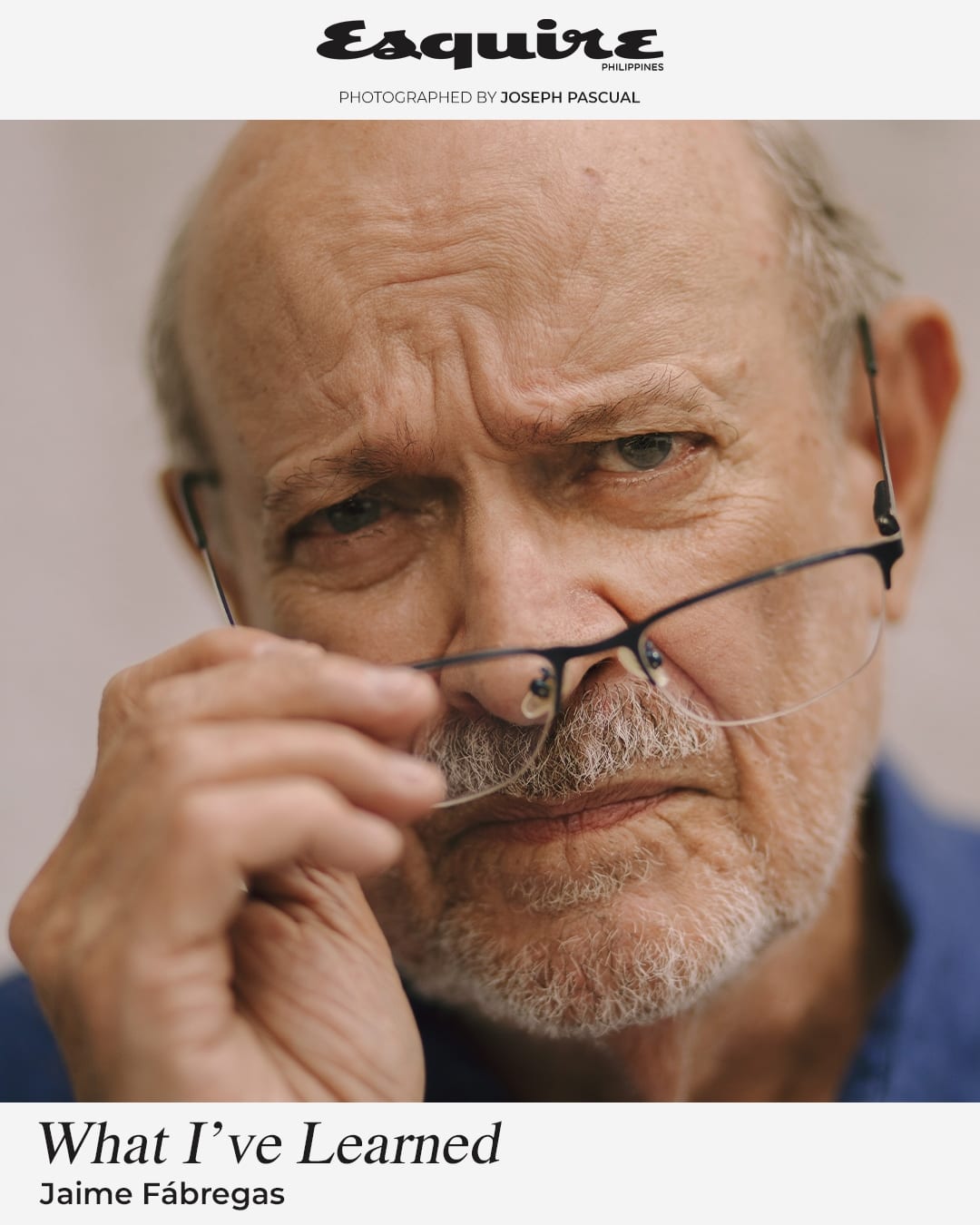
Jaime Fábregas is known across generations through his numerous projects in theater, film, and television. His diverse work includes his role as Oliver Warbucks in Lea Salonga’s theater debut in the Repertory Philippines play, Annie (1980); being a news anchor in the satirical program Sic O’Clock News (late '80s); starring in the action-drama series FPJ’s Ang Probinsyano (2015 to 2022); and appearing in films such as Ganito Kami Noon...Paano Kayo Ngayon (1976), Isa-Isa Lang! (1985), Jose Rizal (1988), Here Comes the Bride (2010), Delia & Sammy (2018), and Isang Komedya sa Langit, which will be showing in theaters on May 28th.
Besides being an actor, Fábregas is also an award-winning musical scorer for films such as Shake, Rattle & Roll (1984), Scorpio Nights (1985), Virgin Forest (1986), Tagos ng Dugo (1988), My Other Woman (1990), Narito ang Puso Ko (1992), Mumbaki (1997), Rizal sa Dapitan (1997), and Kutob (2005).
“If we’ll count the year I started doing theater in school at age nine, yes, I’ve been in the entertainment industry for over six decades, ” he confirms, almost in disbelief at his long career journey.
He reflects on his experiences through these different fields, noting how everything seemed to align effortlessly, as if his path was predestined.
Fábregas attributes his musical inclination to his family's love for music. “My father used to listen to a lot of music. My mother sang,” he recalls.
The nine-year-old Fábregas performed his first operetta, The Inspector General, in grade school at the Naga Parochial School, and from thereon would become part of annual school plays. This continued through high school at the Ateneo de Naga.
While pursuing a degree in Chemical Engineering at De La Salle University, the young thespian was drawn back to the stage through an interdepartmental theater competition. "The director of our play was Jon Achaval, who also acted in the play," he recalls. "We lost in the finals to a competing play directed by Ricky Gallaga, but Ricky's older brother, Peque [Gallaga], took notice of my performance asked me to join the dramatics guild of La Salle. That started everything rolling [for my theater career]. Peque and Leo [Martinez] were moderators handling the dramatics guild."
Fábregas performed in several experimental plays with Gallaga, which led to his discovery by Repertory Philippines. "That's when I realized that I could actually make a professional career out of acting. Initially, it was just a hobby," he says.
At age 19, he explored his knack for comedy through the television show The Fabulous Gamboa Show, also with Gallaga, in 1969. “It was the forerunner of the American Laugh-In. Gallaga and Butch Perez, who were the ones handling that, were way ahead of their time at that point,” he says. This was followed by a hosting stint with June Keithly on a musical show called Changes on RPN-9.

Fábregas left acting for a bit in the '70s to dabble in music. "I started playing in bars and discos around Malate and Ermita. I would walk around with my guitar. I played with a band," he recalls.
During Martial Law in the '70s, Fábregas worked under the National Media Production Center, producing a show called Metro Magazine. There, he learned the ropes of filmmaking—from writing scripts to using cameras and doing musical scoring. Through the show, he had the chance to work with film directors Abbo dela Cruz and Ishmael Bernal, which led to his first musical scoring gig for the period drama-political thriller Misteryo sa Tuwa, earning a Best Music nomination at the Gawad Urian.
His experience in theater, and his association with directors, also paved the way to earning a variety of roles in film and television. “I've played a doctor, a priest, a rapist, a murderer, a woman abuser. I’ve done it all,” he says, smiling.
Fábregas says he had all these opportunities because he was never afraid to try new things. "Fear is your biggest enemy. If you get scared to fail, you're dead meat. If you don't try, you won't fail, but you won't succeed either,” he says.
In this edition of "What I’ve Learned," the veteran Filipino actor and musical scorer shares some reflections from his remarkable journey.
I think the knack for acting was innate. I had it in me, and it was recognized by people like Peque Gallaga and other directors, as well as the Jesuit priests at Ateneo de Naga, and my teacher at Naga Parochial School. They saw my potential and they were very encouraging. Nobody at any point in my life did they say, “Don't do it.”
I was never scared of trying new things when I was young. There was no saying, “I can’t do this, I can't do that,” or “I'm scared to do that, I might fail.” None of that because, as far as we were concerned at the time, fear didn't exist. And it was what catapulted my entire life.
“Where did he come from?" If you tell me that my character is a 50-year-old man, married, with five kids, successful, and lives in a gated community… [I’d ask], “How did he get there?” That's the process I always follow. Because what we are in the present is a subtotal of what we were in the past, of what we've gone through.
As actors, we’re supposed to pretend. But, for me, you don't just pretend. You have to have some basis for that pretension, so that it becomes a three-dimensional character. It becomes a real human being that the audiences are seeing on stage or in a film. And that is important. That is usually the process that I go through when I accept roles. You have to build a past in order for your present to be credible.