Going Home to Rockwell: Why Gabby Lopez Chose a Neighborhood Over an Empire
Why is Gabby Lopez giving up a seat on the top floor of a conglomerate that powers a fifth of the country just to own a real estate developer?
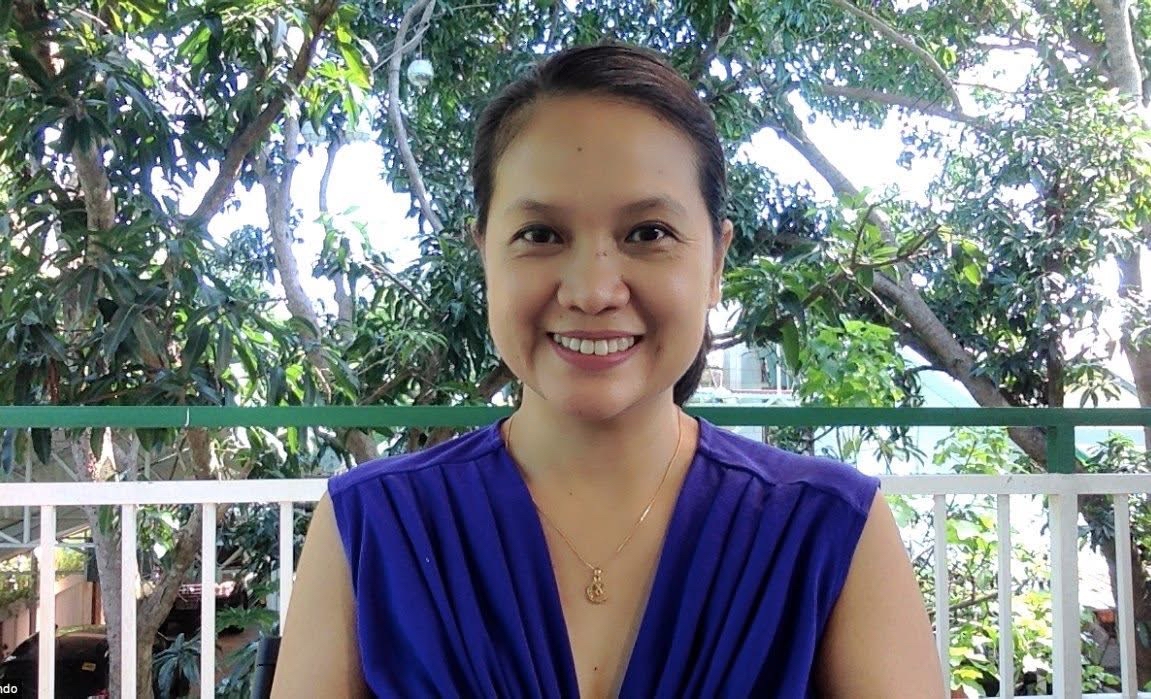
by Lala Rimando
Published on Nov 16, 2026
On November 12, 2026, the board of First Philippine Holdings Corporation (FPH) approved selling its entire controlling stake in Rockwell Land—90.74 percent of total voting shares, consisting of 86.58 percent of common stock plus 2.75 billion voting preferred shares—to Crème Investment Corporation, the private holding firm of Eugenio "Gabby" Lopez III’s family branch, for P15.92 billion. On the business pages, the transaction immediately became a math problem: P3.00 per common share, a 20 percent premium over the previous day's P2.50 close, mandatory tender offer rules for the remaining public float, whether FPH left money on the table.
On paper, Gabby looks like he traded down.
Three months earlier, in August, he did something nobody in Philippine corporate history expected a Lopez heir to do: he sold Crème’s entire 25.68 percent stake in Lopez, Inc.—the unlisted private holding company sitting at the very top of the family pyramid—to Ramon S. Ang for an undisclosed sum estimated at P11.56 billion. In September, his cousin Federico "Piki" Lopez swept the boardrooms at Lopez Holdings and FPH, locking down the group’s clean energy and industrial engines. Now Gabby’s branch is taking its cash and buying Rockwell Land straight out from under Piki’s FPH—even after Piki turned down a P10.6-billion offer from KKR for First Gen shares in July and brushed off an unsolicited $5-billion bid from Indonesia’s PT Barito Renewables for Energy Development Corporation (EDC).
Why give up a seat on the top floor of a conglomerate that powers a fifth of the country just to own a real estate developer?
Because Rockwell—and above all its flagship neighborhood in Makati—is the one piece of the empire left that still feels like home.
ALSO READ
The Long War: What the Lopez 'Ceasefire' Really Says About Power and Fatigue
The Lopez Moat: Built to Survive Everyone But Each Other
Explainer: Who Really Owns Lopez Inc.—and Why the 29% Cousin Is in Charge
The Rockwell-Meralco connection
Rockwell Land has long since outgrown its original footprint. Today it builds resort-style residential enclaves like The Grove along C5 in Pasig and master-planned communities from Cebu and Bacolod to Pampanga, Laguna, and Batangas. Yet in the public imagination, the Rockwell name remains inseparable from Makati—from ultra-luxury high-rises like Joya, One Rockwell, Edades, and Balmori Suites, to the expanded Proscenium towers across Estrella Street on the old Colgate-Palmolive lot.
Walk around that original 15.5-hectare Makati compound at dusk and it is easy to forget what used to sit underneath Power Plant Mall and the manicured pocket parks. From the 1950s until 1994, this riverfront stretch was an industrial brownfield housing the Manila Electric Company’s flagship thermal power plant, named after Meralco’s first president, James Chapman Rockwell.
And for more than 30 years after the 1986 EDSA Revolution, Meralco was the life’s work of Gabby’s late uncle, Manuel “Manolo” Lopez.
When the Marcos regime fell, Manolo inherited a utility gutted by crony mismanagement and buried in debt. Alongside his older brother, Gabby’s father Eugenio “Geny” Lopez Jr., Manolo rebuilt the family’s post-war pillars piece by piece—restoring the electric utility their father, Eugenio Sr., had bought from American owners in 1962 to prove Filipinos could run their own industrial destiny.
In 1995, a year after the old Makati thermal plant was shut down, Meralco and the family holding firms formed Rockwell Land, turning a retired power station into a walkable city within a city.
Then 2009 happened.
Caught between a hostile Arroyo administration and the 2008 global financial crisis, FPH faced a wall of maturing dollar debt from the other side. Two years before the Global Financial Crisis hit, Piki Lopez and First Gen had made an aggressive, debt-heavy $1.36-billion bet to acquire geothermal giant PNOC-EDC at a steep premium, leaning heavily on short-term dollar loans. When credit froze in 2008 and the peso slid, First Gen ran straight into a wall of maturing debt. To rescue the power generation arm and pay down parent obligations, Oscar and Piki Lopez made a painful call: FPH sold off its controlling stake in Meralco.
For Manolo’s branch, that sale never stopped hurting. Manolo admitted to reporters in May 2009 that he hadn't even been privy to all the terms of the initial sale agreement with PLDT, and in November that year, while he was abroad, the FPH board voted unanimously to grant Metro Pacific a call option that reduced the family’s Meralco board representation down to a single seat. Normally measured in public, Manolo broke his silence with a line that lingered in family memory for years: “Meralco would have been my parents' legacy.”
Meralco was gone, never to be bought back. Yet for 17 years, Rockwell stayed inside the Lopez loop by moving from one corporate pocket to another whenever a parent company needed cash.
Rockwell’s story
Originally, Rockwell was split across three family-controlled firms: Meralco held 51 percent, while sister holding companies Benpres and FPH held 24.5 percent each. When the 2008 financial crisis squeezed the group, debt-laden Benpres sold its 24.5 percent stake to FPH in August 2009 for P1.5 billion to raise cash. Then, after FPH sold control of Meralco to pay off First Gen’s geothermal loans, Meralco spun off its 51 percent Rockwell stake in May 2012—prompting FPH to spend over P4 billion buying back at P2.01 a share the Rockwell stock that had landed in the hands of Meralco’s new owners, Manuel V. Pangilinan’s Beacon Electric and Ramon Ang’s San Miguel.
By the time the dust settled, almost all of Rockwell sat inside FPH’s pocket: 86.58 percent of its common stock, or 90.74 percent of its total voting shares. Four months after buying Gabby’s branch out of Lopez, Inc. in August 2026, Ang watched that same branch agree to buy back at P3.00 a share the very developer San Miguel had exited at P2.01 14 years earlier.
Over the 15 years after the Meralco sale, two completely different—yet equally genuine—business convictions hardened inside the Lopez group.
At FPH and First Gen, Piki Lopez built an uncompromising, climate-driven energy enterprise. His world runs on megawatts, deep volcanic geothermal steam fields, pumped-storage hydro dams, and 20- to 50-year decarbonization targets. Convinced that fighting global warming requires patient, heavy infrastructure, Piki has poured tens of billions of pesos into projects—like the Wawa and Pakil hydro facilities—that will not generate a single peso of operating cash until 2031.
In April 2026, at an employee town hall held while his cousins were trying to unseat him, Piki explicitly rejected the family’s old romantic myth of itself as a phoenix that burns and rises from the ashes: “I don't want that for our companies,” he said. “I want us to keep going and going and building and building.”
That no-frills, capital-intensive world could not be further removed from the klieg lights of ABS-CBN’s entertainment studios or the velvet-rope luxury of Rockwell.
Gabby Lopez, like his father Geny Jr. and his Uncle Manolo, grew up on the consumer side of the family business. Television, storytelling, hospitality, urban retail—businesses that live or die on public goodwill, taste, and connection. And for Manolo’s children, led by Rockwell executive and director Miguel “Mike” Lopez, Makati was the living monument to their late father’s life’s work.
Inside Rockwell, that cultural divide was an open secret.
Rockwell was never built by power engineers. It was built on taste, service, and an obsessive attention to how people actually live. After Manolo passed away, anxiety ran high inside Rockwell’s executive suites that Piki’s “one-size-fits-all” energy-sector management style would eventually descend on Makati. People close to the company knew Rockwell’s longtime leadership would walk out the door if the power side of the clan took direct control of the boardroom. Gabby stepped in early, rallying his cousins to protect Rockwell’s leadership and keep FPH’s heavy hand at bay.
At the same time, the dividend pipeline was choking. After ABS-CBN lost its broadcast franchise in 2020 and bled over P45 billion in cumulative losses, Gabby’s branch and his cousins looked upward to the holding firms for relief. When they checked the numbers, the math was frustrating: Rockwell earned P4.73 billion in 2025 and P3.8 billion in the first nine months of 2026 (boosted by its takeover of Alabang Town Center’s operator), yet under Piki’s spending rules, dividends were decided two corporate layers down. Of the roughly P560 million in dividends reaching Lopez Holdings annually, only around P240 million ever made it up to Lopez, Inc., leaving Crème’s share of the whole conglomerate's payout at roughly P60 million a year. Owning FPH’s Rockwell block directly—which collected about P640 million at 2025 dividend rates—changes that arithmetic overnight.
War of the cousins
By April 2026, the “Cousins' War” had spilled into courtrooms, boardrooms, business broadsheets, and family dinners. Twelve third-generation cousins holding a 71 percent voting majority in Lopez, Inc. had voted in February to oust Piki as president, only to be frozen by a Mandaluyong trial court injunction. From the outside, it looked as though the cousins were ready to liquidate the entire century-old empire and scatter.
Yet even at the height of that standoff, Gabby Lopez was blunt in private about what was not for sale. While negotiating with outside tycoons to exit the energy and holding structure, he drew a clean line around two businesses: “We’re happy to keep ABS-CBN,” he said flatly, then added: “We’re happy to keep Rockwell.”
Everything that followed over the next six months followed that exact script.
When Gabby sold Crème’s 25.68 percent stake in Lopez, Inc. to Ramon Ang in August, he cited two reasons: “the restoration of family peace” and channeling his family’s resources into “businesses aligned with our personal mission.”
Forty-eight hours later, Crème’s Gabby joined his cousins from Manolo’s branch (Mantes) and Presy’s branch (Presta) to put P2.2 billion of their own personal money directly into recapitalizing ABS-CBN. Now, with Crème’s P15.92-billion buyout of FPH’s stake in Rockwell Land—plus two remaining P7.2-billion installments on Alabang Town Center due through December 2027 and a mandatory tender offer that could cost another P2.46 billion—Gabby’s branch is anchoring the profitable consumer engine that can pay for a mission, while keeping Manolo’s heirs tied to the property they helped build.
The split is clean on the surface, even if the underlying corporate wiring remains tangled. Piki keeps his pure-play clean energy fortress—First Gen, EDC, and the turbines that light up the national grid, unburdened by cousins asking for dividends and free of any upstream change-of-control triggers that could jeopardize his Prime Infra hydropower deals or BDO credit lines. Manolo’s and Presy’s branches still hold their stakes in Lopez, Inc. alongside Piki and Ramon Ang, and Piki’s removal case remains pending in court. Yet for the first time in generations, the Lopezes are learning how to own their biggest businesses separately rather than fighting over a single common pot.
Going home
There is one hard question the family settlement passes over. Rockwell did not belong to either cousin; it belonged to FPH, and roughly 39 percent of FPH is owned by public investors and state pension funds like the Social Security System outside Lopez Holdings’ 60.67 percent controlling block. FPH’s filing notes that BDO Capital & Investment Corporation provided an independent valuation alongside guidance from independent directors, yet minority shareholders have been given almost none of the underlying math—and unlike Rockwell’s minority holders, who get a P3 tender offer exit, FPH’s outside stockholders get no vote on the sale. Family peace is the Lopezes' to make; proving it wasn't struck at the expense of minority shareholders is FPH's job.
Step onto the tree-lined streets of Rockwell Center at dusk, though, and the personal logic of the trade needs no footnote. Nobody takes a leisurely Sunday stroll through a restricted geothermal steam field in Leyte, and nobody sits down for coffee inside a high-voltage transmission line. Built over the remains of Uncle Manolo’s old power plant, Rockwell’s residences, plazas, and the upscale shops and restaurants of Power Plant Mall make up the one physical neighborhood in the country where the Lopez name still meets the public at street level.
After 17 years of watching his uncle’s utility slip away, and six years of fighting to keep his father’s network alive, Gabby Lopez isn't retreating for P15.92 billion. He’s just going home.
This year is extra special for Esquire Philippines. In addition to our annual Man at His Best awards, where we honor the individuals shaping Philippine sports, creativity, business, culture, and entertainment, we're also celebrating our 15th anniversary. It's a significant milestone for any publication, but it's especially gratifying to reach this point as the leading media platform for the modern Filipino gentleman.
Over the years, Esquire Philippines has evolved from its print magazine roots into a fully digital publication with a strong presence on social media. But while the way we publish has changed, the ideals that have defined us remain the same: literary excellence, irreverent humor and wit, and an almost obsessive focus on the concerns and interests of the man of today.
We're grateful to our partners and friends for their continued support, and we look forward to many more years of telling stories as only Esquire can.
A former banker, Lala Rimando wrote about Philippine business and managed newsrooms for over 25 years. She’s now based in La Union, working on the biography of the late John Gokongwei.
View More Articles About: