The Pieces from This High Jewelry Brand Look Good on Both Men and Women
German brand Hemmerle blurs the line between genders in its fine jewelry pieces.

by Ingrid Chua
Published on Jun 5, 2026
Jewelry is one of our world’s most lasting universal languages, serving as an expression of identity, wealth, power, and status. In ancient civilization, Egyptian pharaohs adorned themselves with gold, lapis lazuli, and turquoise not just for ornamentation but also for protection. Roman men of rank wore carved intaglio rings made from carnelian, agate, or jasper as portable objects of authority and personal signature.
During the Mughal period, Indian maharajahs commissioned some of the most extraordinary collections of jewelry, transforming precious emeralds, large diamonds, and natural pearls into statements of dynastic identity and prestige. From early on, authoritative figures already understood that jewelry was more than just decorative, it also functioned as a powerful instrument of communication.
And just like languages, jewelry evolves.
ALSO READ
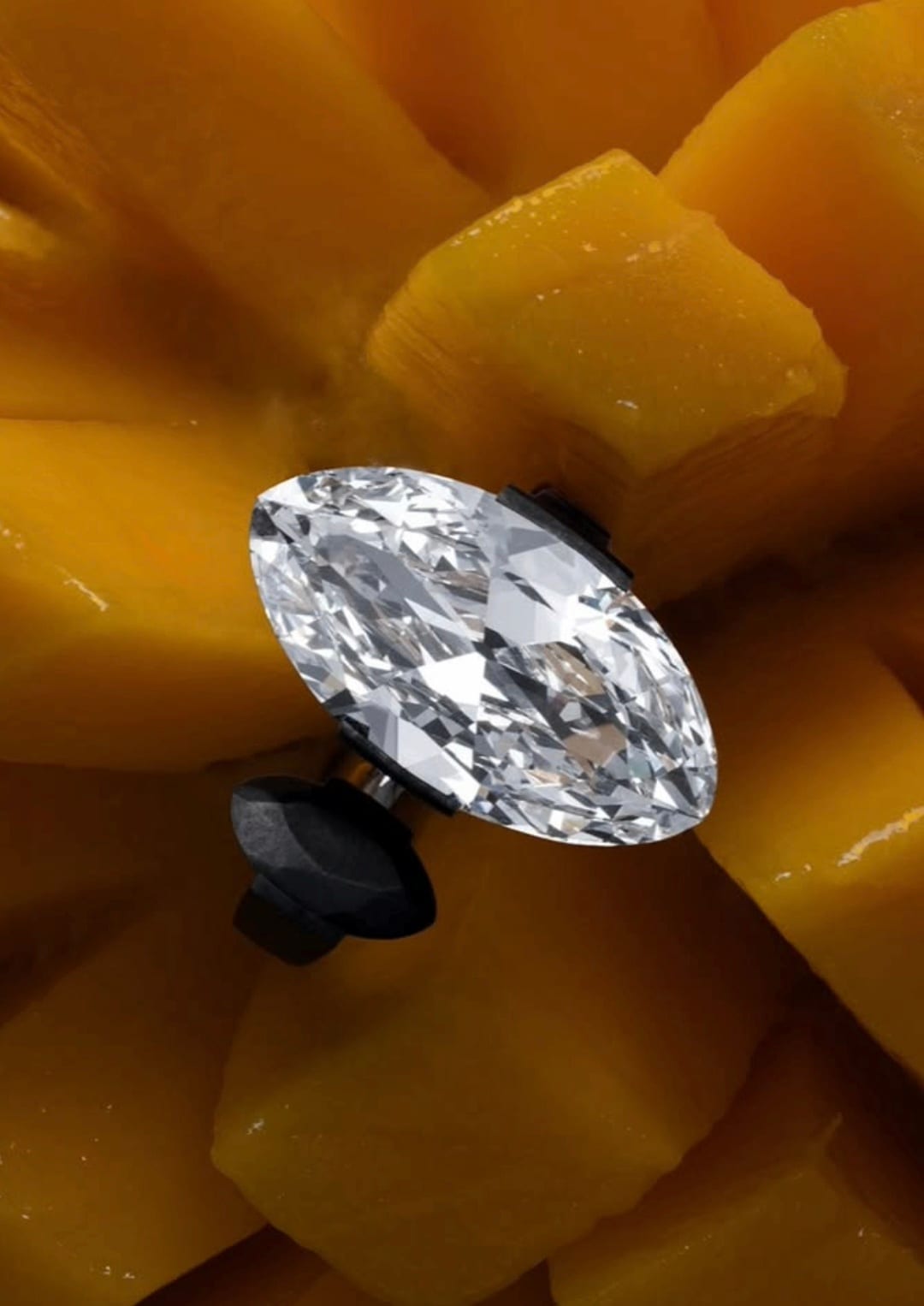
A monumental shift
By the late 18th century, a shift in male dressing was unfolding. Known as La Grande Renonciation Masculine (a term later coined by British psychologist John Flugel in 1930), this movement was precipitated by the French Revolution and saw wealthy men across Europe forego bright colors and ornamentation in favor of more sober and visually restrained dressing. This Western convention of men abandoning “finery” spread worldwide, creating the boundaries of jewelry and shifting that domain to women. By the 20th century, fine jewelry had been marketed almost exclusively to women and for women, as it had been deemed unconventional for men to wear anything beyond a wristwatch and a wedding ring.
Today, those social conventions have since softened. Sportsmen like Formula One champion Lewis Hamilton, basketball superstar Lebron James, and even Major League baseball players like Miguel Rojas have all been seen wearing necklaces and bracelets, while the recent MET Gala saw celebrity A-listers like Hugh Jackman, Adrien Brody, and Rami Malek pair their looks with bejeweled brooches.
In a recent interview for Esquire, Malek who wore Cartier, said he saw wearing jewelry not as “accessorizing” but “as a way to hold presence. It suggests a certain character and history, and it comes with intention.”
According to “The State of Fashion 2026,” a Business of Fashion-McKinsey & Company report, 35 percent of men are purchasing more jewelry for themselves compared to two or three years ago. The report also stated that even though men still represent a smaller share of the market, men’s jewelry is among the fastest-growing segments in luxury, projected to grow between seven to eight percent per year through 2028. Beyond the sports arena and the red carpet, it’s clear that jewelry no longer belongs to any single gender.
But there’s also an equally interesting shift taking place alongside this important gender conversation. A growing number of men are not just considering jewelry as adornment but also as an investment instrument, and in doing so, they are discovering one of the most rarefied worlds luxury has to offer – high jewelry or haute joaillerie, where pieces are no longer about commercial and mass-recognized creations but are of the rare and one-of-a-kind, where artistic design, unusual or premium materials, engineered innovation, and exceptional craftsmanship converge.
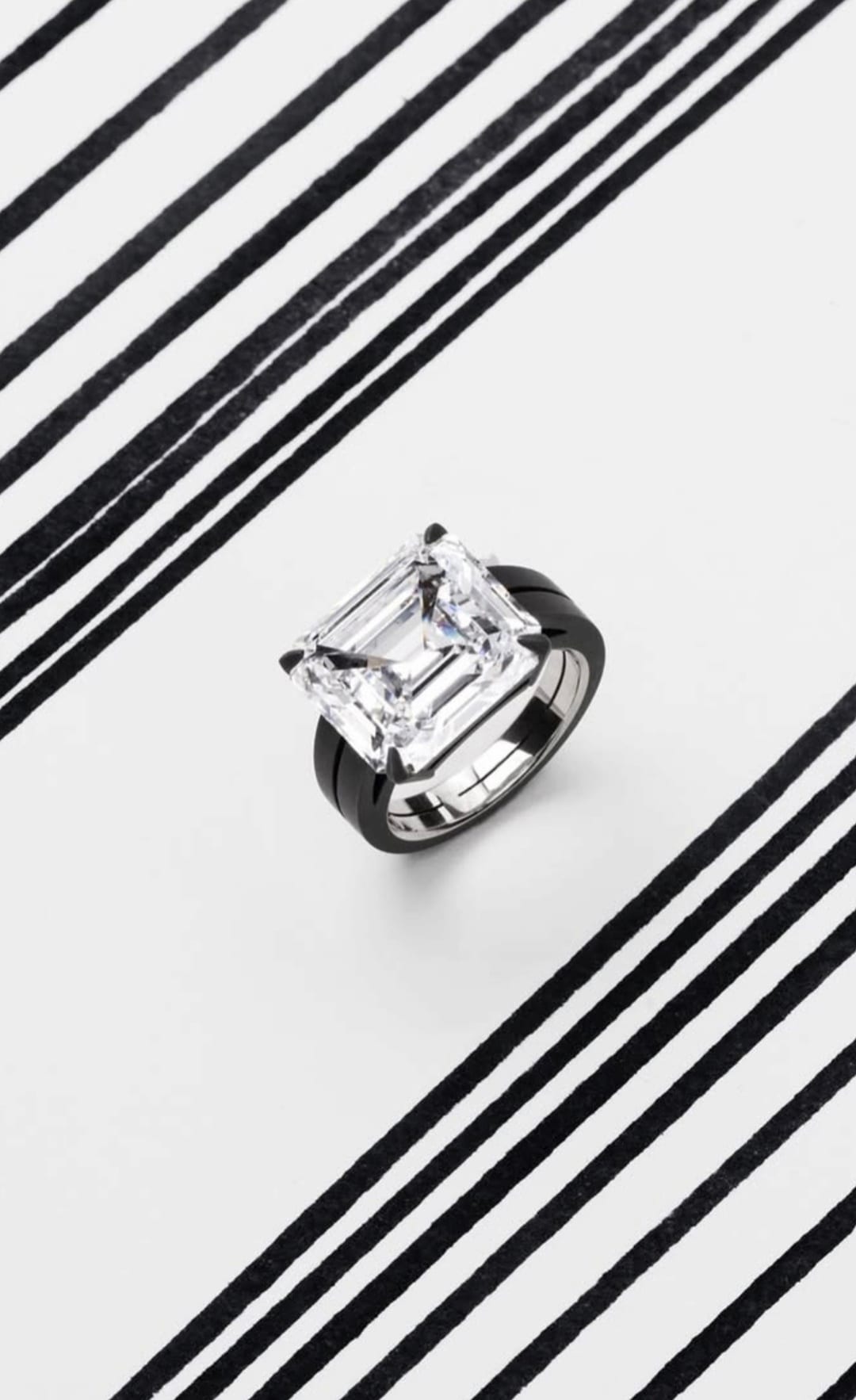
Haute joaillerie is likened to valuable objets d’art, perhaps only better, because unlike conventional art that can only occupy spaces or be hung on walls, this is art that can be worn. And while haute joaillerie has always had female devotees, it is already attracting the more discerning male connoisseurs.
A German high jewelry brand
One of the contemporary haute joaillerie houses that occupy this extraordinary space is Hemmerle. The brand was founded in Munich, Germany over 130 years ago by brothers Joseph and Anton Hemmerle after acquiring a goldsmithing and medal-making business (they were appointed purveyor to the Bavarian Royal Family and later, a supplier to the Vatican). It was in the 1990s when Stefan Hemmerle (third generation) rewrote the house's creative trajectory. The catalyst was a client who placed a bespoke commission; she “detested flashy gems and wore examples of early 19th century Berlin iron jewelry.”
Stefan's creation for her pioneered an unexpected but brilliantly modern design in the form of a ring that housed the important diamond in textured iron. The unconventional combination of ordinary, even industrial metals with rare, top-of-the-market stones or unique cultural artefacts became the avant-garde Hemmerle design language that continues to be distinctive and relevant today.
At their new, airy space in the historic boulevard of Maximilianstrasse (just steps from their original century-old home), Hemmerle, helmed today by Christian Hemmerle and his wife Yasmin, with his parents Stefan and Sylveli, continue to operate with a modern, inventive spirit while preserving heritage and honoring tradition. Hemmerle creates only around 180 unique jewels per year, deriving inspiration from architecture, history, culture, the arts, and nature. Each piece is hand-made, taking over 500 hours to complete, and is a testament to the house’s relentless pursuit of design and technical innovation. This particular level of detail and attention dedicated to artistry and craft is exactly why Hemmerle creations are seen as a successful marriage between jewelry and sculpture, and are regarded as true objects of wearable art.
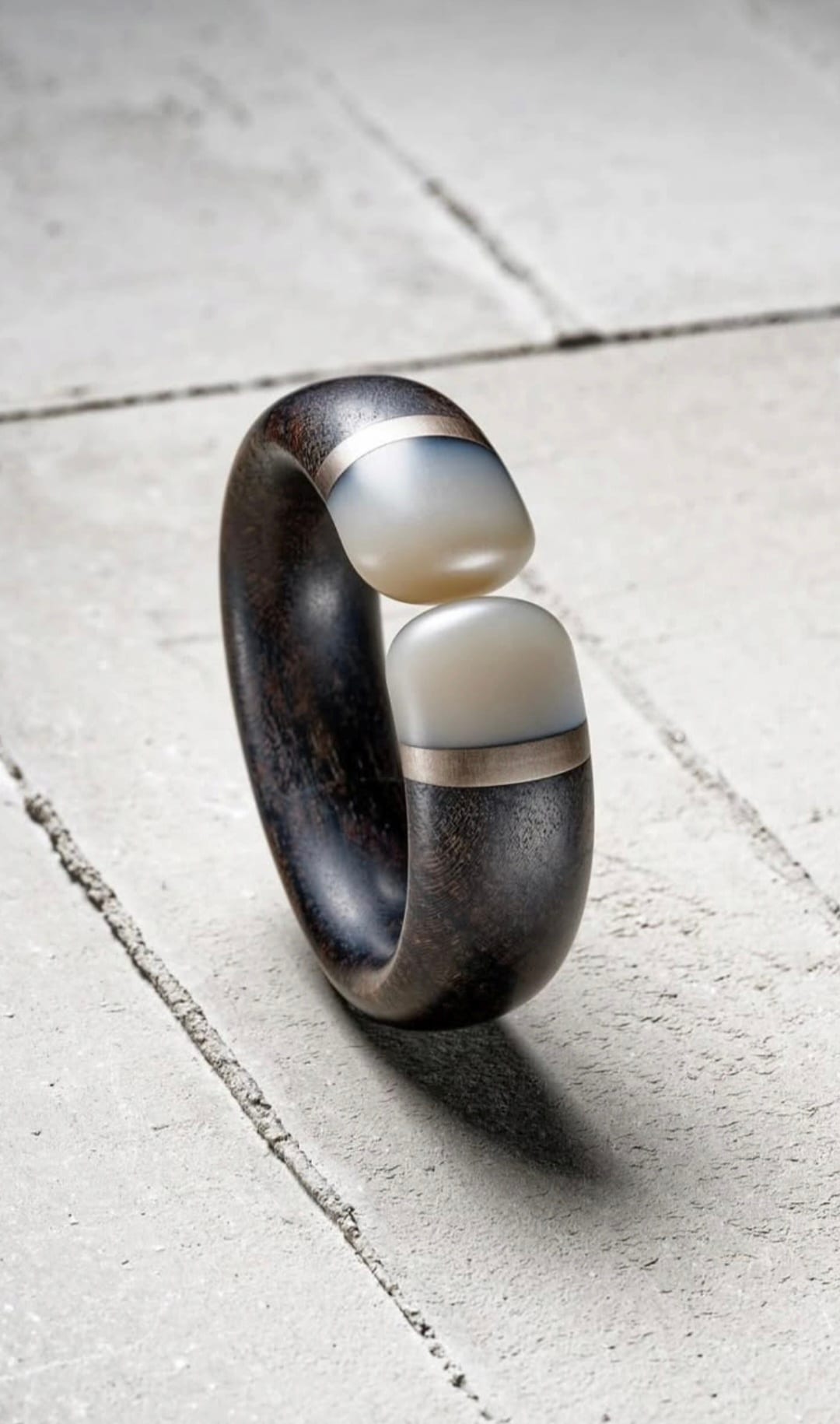
Hemmerle’s artistic philosophy and technical mastery is further demonstrated by their signature Harmony bangles originally made from woods like ebony and olive wood which take up to a decade to dry and are hand-carved from start to finish by a single craftsman. Set with precious or unusual custom-cut stones like anhydrite, marble, or even pebbles, then collared in iron, aluminum, bronze, or gold, each bangle is finished with a specially engineered, seamless twist-clasp closure. Similarly, an extraordinary bangle made with twisted, oxidized iron and white gold with a 10-plus carat tension-set elongated cushion diamond particularly highlights their engineering expertise.
Nature-inspired jewels like the showstopping African Grey Parrot brooch set with custom-cut moonstones and pavé diamonds while clutching an old mine-cut diamond as well as the eye-catching starfish brooch covered in pavé brown diamonds with a central cushion-cut brown diamond rendered in copper-plated gold blur the lines between conventional jewelry and objet d’art.
Masculine and feminine
What’s most striking is the way Hemmerle jewels fluidly embrace feminine and masculine codes and challenge gender categorization. Those bangles would look equally remarkable on a man’s wrist as it would on a woman’s. And just as well, their diamond-set brooches would look powerful on the lapel of a man’s tailored jacket as it would on a woman’s evening gown. Even Hemmerle’s cufflinks realized in either copper, bronze, gold, or platinum, and set with bold, geometric-cut stones such as raspberry-toned rubellites or steel-green tourmalines continue this genderless dialogue. The focus has shifted entirely from the wearer, to the object itself.
The language of jewelry continues to change, dissolving traditional gender conventions and appealing to a more diverse clientele. From ancient pharaohs to modern collectors, each particular epoque has transformed its significance and meaning. And because of haute joaillerie houses like Hemmerle, jewelry is no longer defined by who it is for, but by the creative vision, materials, innovation, and savoir-faire. It has become an intellectual form of luxury that concurrently functions as a work of art, an heirloom and cultural object, and a collectible asset. The language may have evolved, but its enduring purpose will remain the same throughout time—to narrate the story about who we are, what we value, and what we would like to communicate.
Fashion journalist and content producer Ingrid Chua has crossed over from traditional media to social media. She has been publishing stories on her blog, thebaghagdiaries.com, for over 14 years and is also a freelance writer for several international publications.