Today I Learned: Throwback to Signature Kicks Before Air Jordan
With the Air Jordan line, Nike and Michael Jordan launched the sneaker game to another level, but that landmark 1984 deal was far from the first of its kind. Here are the athletes who ran so MJ could.
by JV Emmanuel
Published on Sep 16, 2026
Enterprising individuals have always tried to make money off of famous people. If trash from Taylor Swift’s wedding selling out in 24 hours is any indication, this business trend isn’t stopping any time soon. The same can be said of athletes and sportswear brands.
Air Jordans have become synonymous with signature kicks, but the Jordan 1 was just one of several signature sneakers that have gone to market before the Jumpman ever took flight. While it was Nike and Michael Jordan that created the modern signature sneaker deal—new iterations yearly, full matching apparel collection, elaborate (and expensive) ad campaigns— this partnership was far from the first of its kind.
But before we talk about early signature sneakers, we first have to define what a signature sneaker is. The most common universally accepted definition of a signature sneaker is that which is designed for a specific athlete, usually carrying the athlete’s name to set it apart from mass-market offerings.
With that said, some notable footwear classics have to be left out of the conversation, but they still certainly deserve to be mentioned.
Converse Chuck Taylor All-Star (1917 as Non-Skids, 1919 as The All Star)
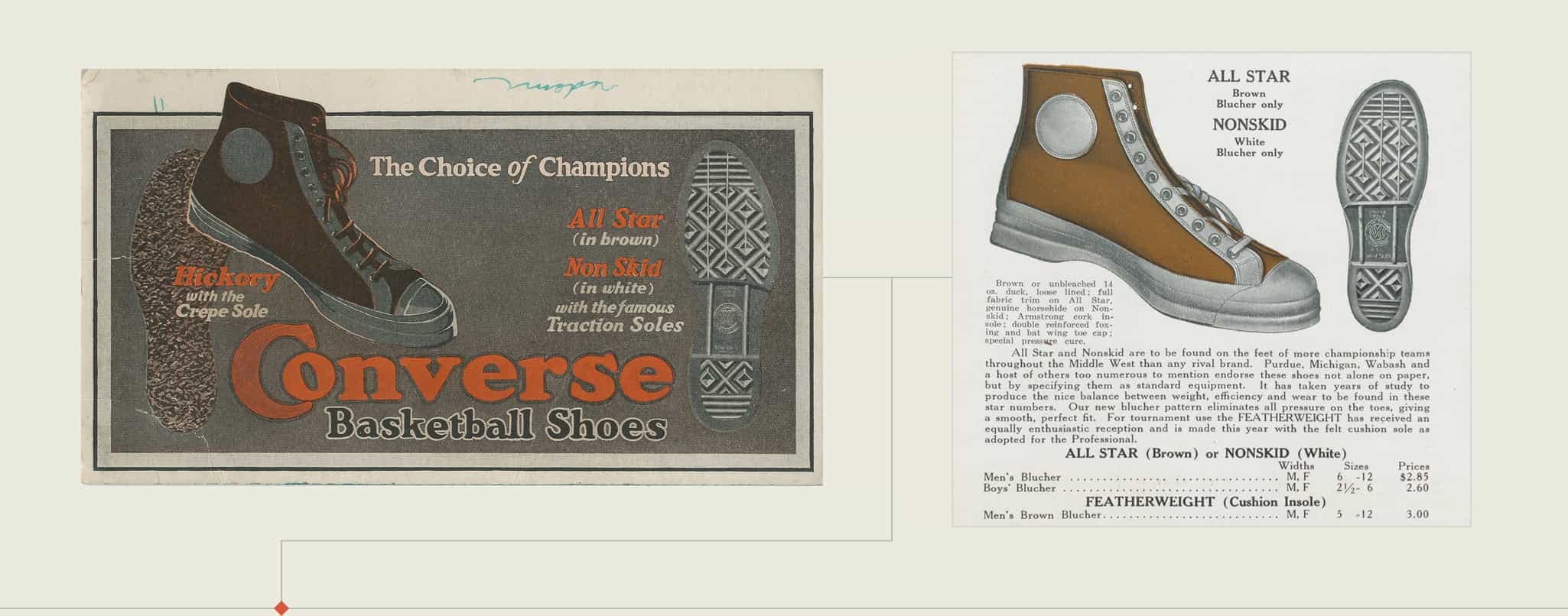
Initially released by Converse in 1917 as the Non-Skids, the basketball shoe was later renamed in 1922 as the Chuck Taylor All-Star, after Converse’s star salesman, Chuck Taylor. Taylor, having played basketball in his youth, was hired by Converse to promote the Non-Skids through basketball exhibitions and clinics. While the name also came after some design input from Taylor, the shoe was not designed for Taylor—he simply was that popular a salesman, which is honestly just as impressive as being a star athlete.
Pro-Keds Pete Maravich (1971)
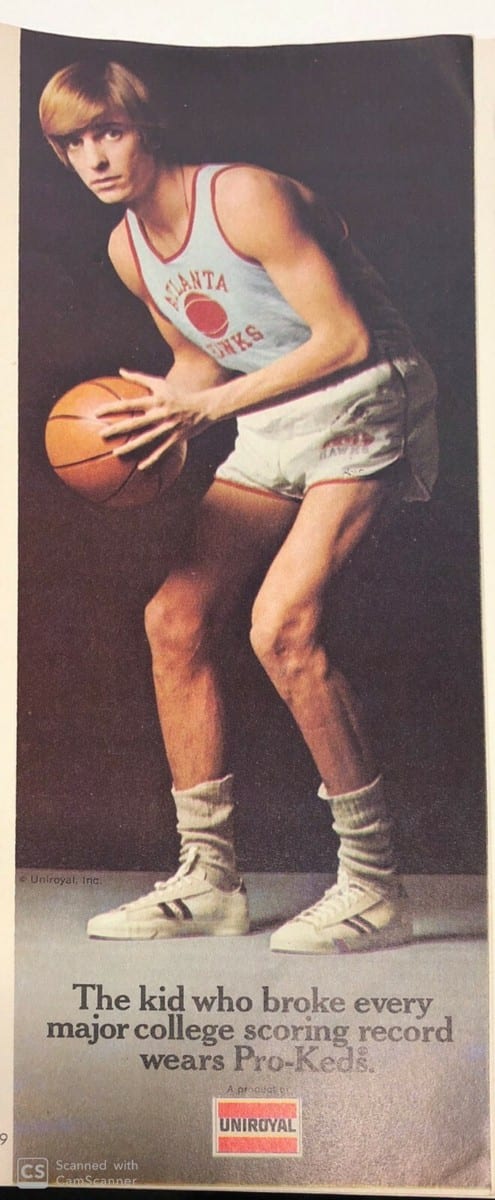
Do yourself a favor and watch Pete Maravich highlights. Without a three-point line, Pistol Pete averaged a record 44.2 points for Louisiana State University at the National Collegiate Athletic Association. To capitalize on the hype, Pro Keds scooped up the scoring prodigy and gave him his sneaker, the creatively named Pro Keds Pete Maravich. In a stable of signees that included legends like Tiny Archibald and even Kareem Abdul-Jabbar (before he committed to Adidas), it was the ace fresh out of college that got his own shoe. It did, however, look suspiciously like the Royal Plus from 1970, the only difference being Pete’s name and likeness being on it. So does it count? Like his long range jumpshots before the three point line, it sadly doesn’t.
Converse Pro Leather (1976)
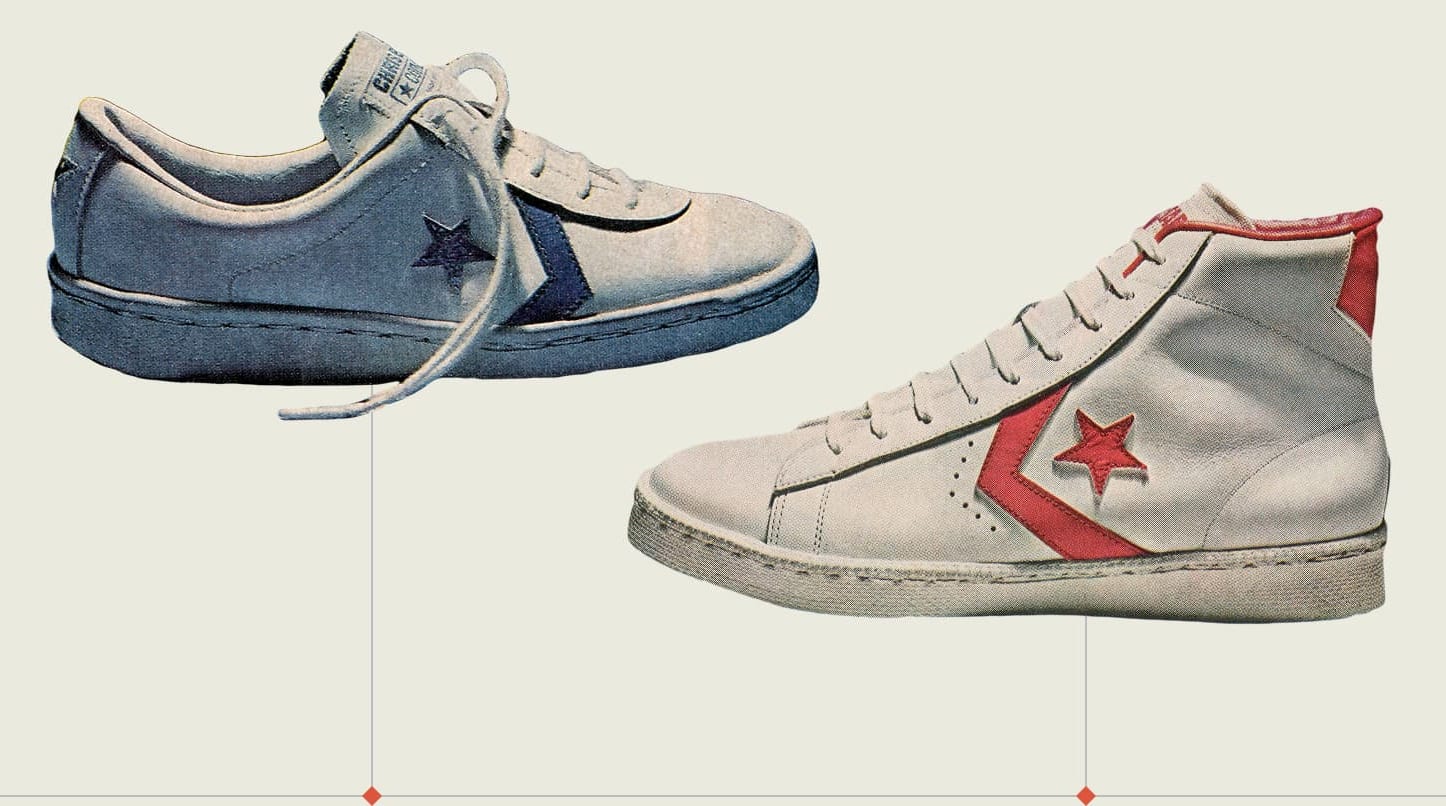
In 1976, the successor to the Chuck Taylor All-Star was released: the Converse All-Star Professional Basketball Shoe. Try to say that five times in a row. Unsurprisingly, they renamed it the Pro Leather, and with Julius Erving having just signed with the brand a year prior, Dr. J’s acrobatics, poster dunks, and afro quickly became associated with the sneaker, and vice versa. But once again, despite Converse having released Pro Leathers with “Dr. J” written on them, the model was not made for Erving. But to the many defenders who watched the bottom of Doc’s soles as he soared for a slam, the Pro Model may as well have been made for Erving.

With that out of the way, let’s get into the earliest signature sneakers that may have been forgotten by many, but might matter to somebody in a tightly contested trivia night, a sneakerhead obsessed with sneaker history, someone trying to impress a date, or some combination of all three.
P.F. Flyers Bob Cousy All-American (1956)
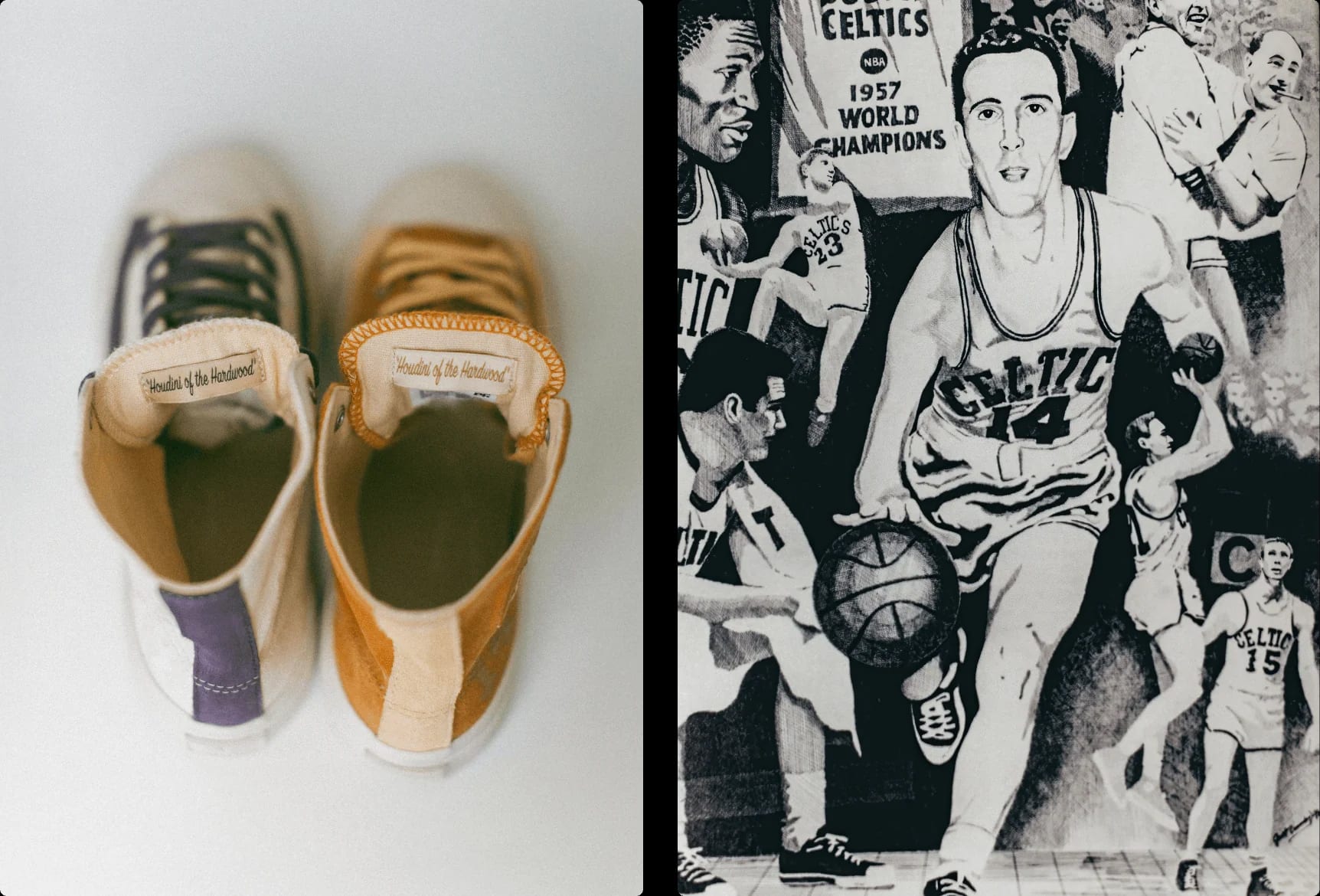
Converse and Chuck Taylor may have struck the first celebrity endorsement deal, but PF Flyers and Bob Cousy inked the very first contract between a company and an active pro athlete. By 1956, Cousy had become a six-time NBA All-Star, an All-Star MVP, and a five-time All-NBA First Team member, all in the first six years of his career. With PF Flyers, Cousy helped design the All-American, a simple canvas sneaker featuring PF Flyer’s patented “Posture Foundation” arch support insoles.
Puma Clyde (1973)
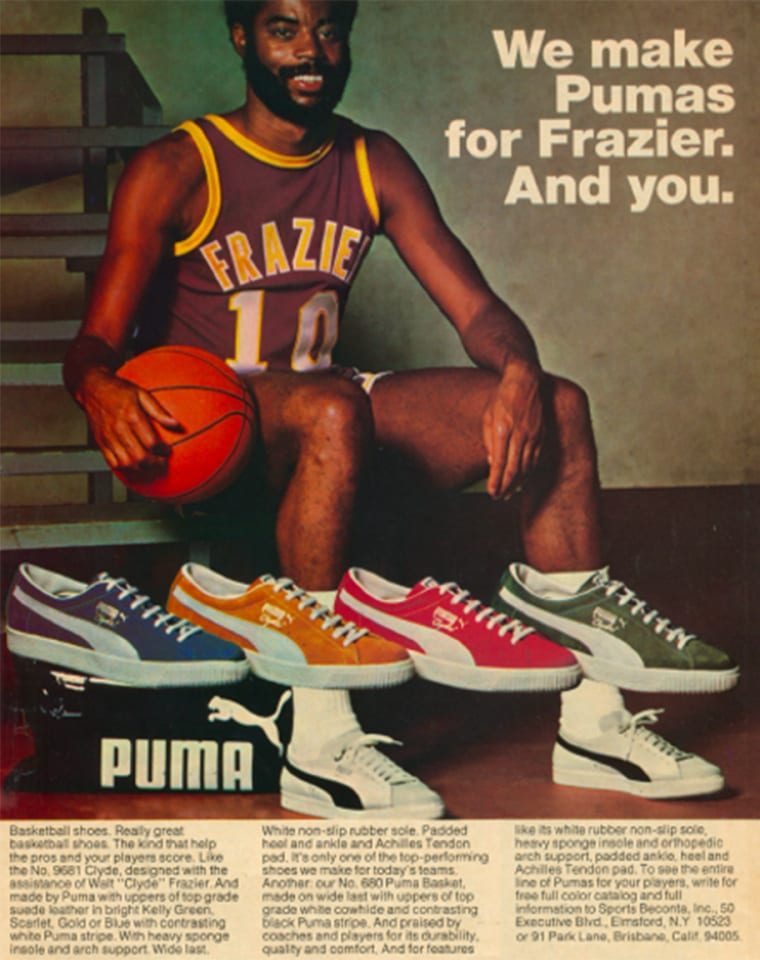
If you didn’t start watching the Knicks when they made the Finals, you would be familiar with their commentator who wears the big fur coats and speaks in rhymes. But in 1973, Walt “Clyde” Frazier wasn’t calling games; he was winning them in style, helping lead New York to championships in ‘72 and ‘73. Using the Puma Suede as the base, the Clyde was created to Frazier’s exact specifications. It’s even said that Frazier demanded the model have multiple colorways, resulting in over 300 iterations during the Clyde’s first year of production alone, all of which, of course, Frazier wore with his patented mismatched laces.
In an interview, Frazier said of his on-court style: “If you look good, you feel good. If you feel good, you play good. And if you play good, they pay you good.”
Truer words have not been spoken.
PONY Havlicek, McAdoo, and Thompson (Early ‘70s - Late ‘70s)
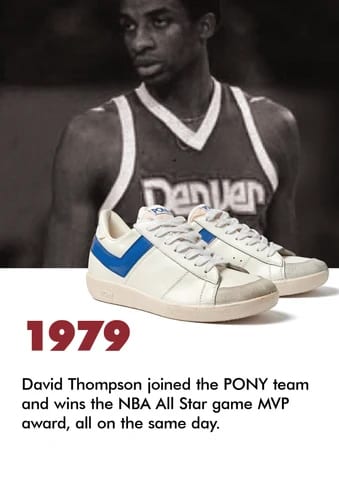
Before Pony’s sneakers became a common sight at rock shows and skate parks, they first graced basketball courts, from the hardwood of NBA arenas to the blacktop of city playgrounds. Product of New York, or Pony, was established in 1972 by Roberto Muller, and in a few short years, the upstart brand would sign some of basketball’s biggest names, including eight-time champion and Finals MVP John Havlicek, 1973 Rookie of the Year and three-time scoring champion Bob McAdoo, and the player a young Michael Jordan modeled his game after, the high-flying All-Star David Thompson.
Pony blessed their three stars with their own signature models, succinctly named the Havlicek Pro-Model, the Bob McAdoo, and the David Thompson Pro-Model.
With all that history behind the shoes, it’s a mystery Pony has yet to bring them back.
Adidas Jabbar (1978)
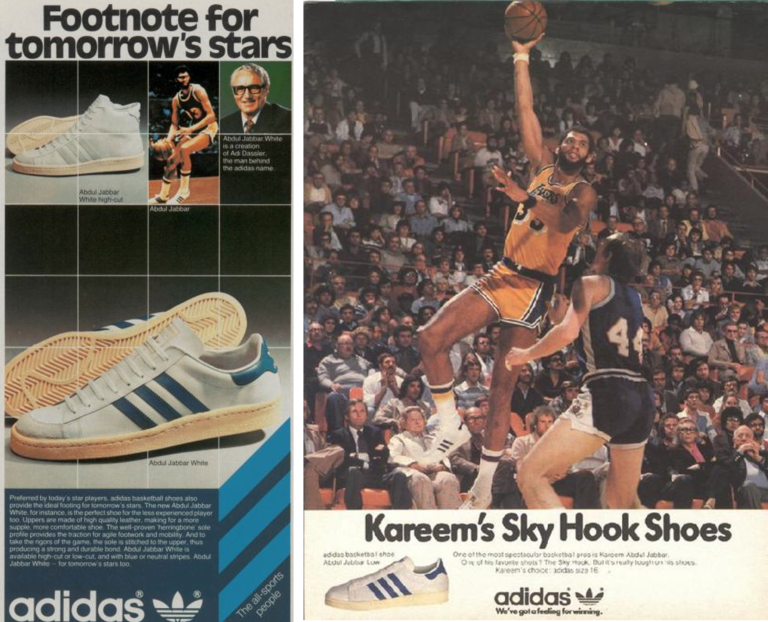
Many people thought Kareem Abdul-Jabbar’s scoring record was untouchable until it was broken and thoroughly shattered by LeBron James. But some things can never be taken away from Kareem: his work as an activist, his picture-perfect Sky Hook, and his Adidas Jabbar being the very first Adidas signature basketball shoe.
After signing with Adidas in 1971, Kareem would go on to become a champion and a five-time MVP by 1978, up to which point he wore only entry-level models like the Tournament and the Superstar. That all changed when Adidas designed a brand new model for Kareem, taking design cues from sneakers the legend had previously worn.
Kareem would win more games, MVPs, and championships, all while wearing a sneaker that bears his name and his likeness as a logo, well before everyone and their dog had a signature deal. Did somebody say “greatest of all time”?
Today’s signature sneaker landscape sees new models come out every year, each more ambitious—and more expensive—than the last, all backed by hundreds of millions of dollars in research and marketing. And for as long as there are people playing basketball, there will always be transcendent talents. And for as long as there are transcendent talents, there will always be a brand waiting to cash in. And for as long as we watch those athletes, we will always be buying the product.
When will our wallets catch a break?
ALSO READ:
Rappers Who Built the Hip-Hop Sneaker Game
Today I Learned: The NBA Player Who Changed Basketball Sneaker Deals Forever
JV Emmanuel is a writer, photographer, and human rights activist. See some of his photos on IG @gospelchordsonly.
View More Articles About: