Tudor Brings Back the Northflag With a GMT Hand and Master Chronometer Certification
The 2026 Tudor Northflag keeps its industrial case and integrated bracelet and adds a GMT function, a new manufacture movement, and METAS Master Chronometer certification.

by Alvin Uy
Published on Oct 16, 2026
Tudor first introduced the Northflag in 2015, and the watch returns for 2026 with a GMT function, a new manufacture movement, and Master Chronometer certification. It is now available in the Philippines, where the revival ties the brand back to its exploration heritage and shows how far its watchmaking has moved since the original.
The name pays tribute to the British North Greenland Expedition of the 1950s, when Tudor watches accompanied expedition members through two years of punishing Arctic conditions. The experience helped cement Tudor’s reputation for robust, dependable tool watches built for extreme environments, and the new Northflag carries that legacy forward with a 24-hour hand and GMT function.
That history also explains the complication. Where the sun can stay above the horizon for months or disappear for just as long, conventional day-and-night references lose their use, and a 24-hour hand gives a practical way to tell the two halves of a day apart. The GMT function matters most to travelers, pilots, and anyone coordinating activities across different time zones.
The original Northflag holds a particular place in Tudor’s modern history. Introduced in 2015, it was the first Tudor watch powered by a mechanical movement developed and manufactured in-house, the calibre MT5621, and it also introduced an open caseback that put the movement on display.
Its design drew on the 1973 Tudor Ranger II, particularly the integrated-bracelet look, bold Arabic hour markers, and functional, almost instrument-like appearance. By the time the Northflag arrived, the Black Bay had already made vintage styling Tudor’s best-known look, and the Northflag went in a more architectural, contemporary direction, with angular lines and a striking black dial that read as unmistakably Tudor without leaning on nostalgia.
The Tudor Northflag
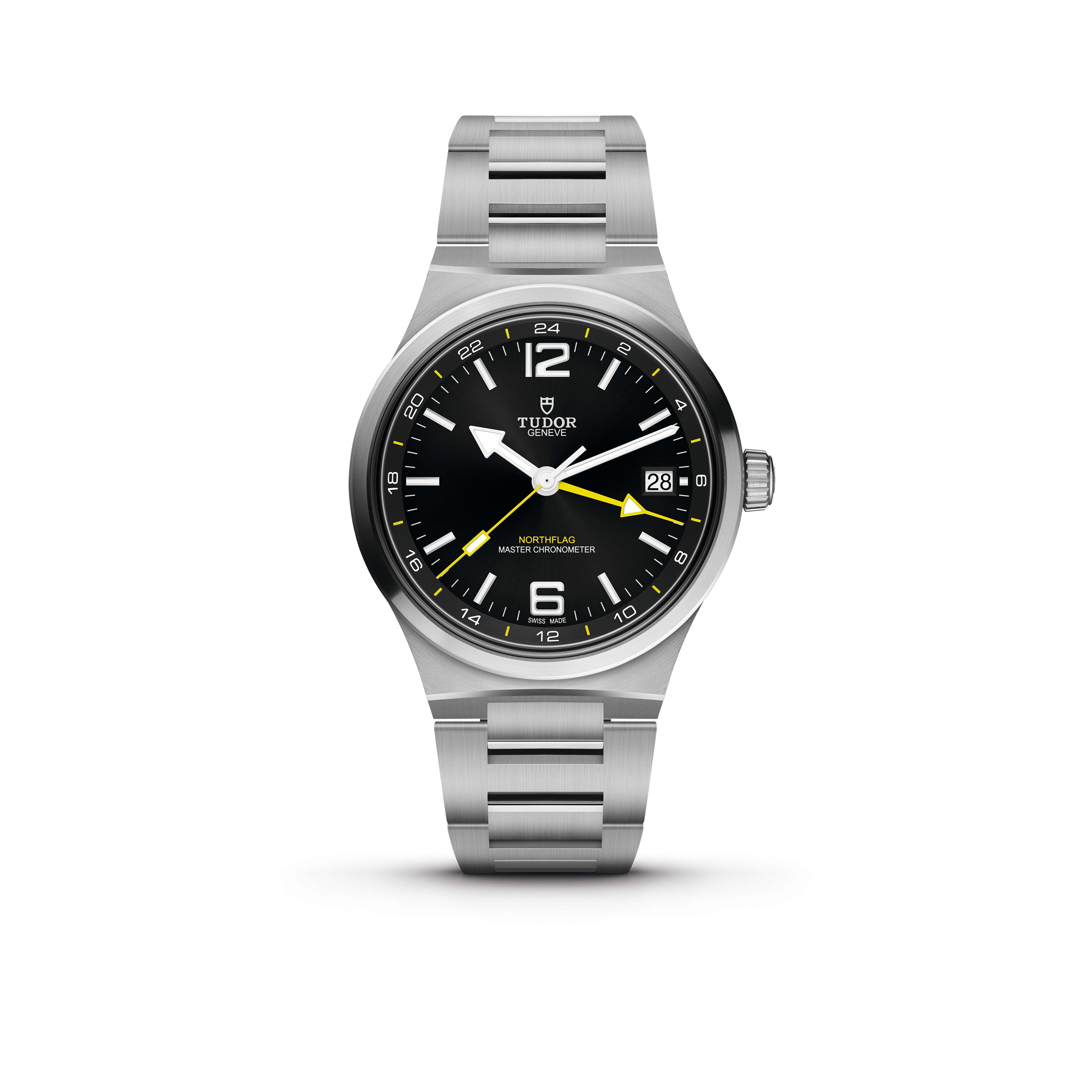
The 2026 Northflag retains much of that original personality. Its 40mm stainless steel case combines satin-brushed and polished surfaces, and the integrated two-link bracelet creates a continuous line from case to wrist. The black dial carries large, luminous ceramic hour markers, a 24-hour graduated rehaut, and hands that recall the original watch, with an arrow-shaped 24-hour hand that suits a watch built around navigating different time zones.
At 12.7mm thick with a lug-to-lug of 48.8mm, the Northflag has real wrist presence while staying within the proportions of a versatile everyday watch. The open caseback, topped by a domed sapphire crystal, shows the movement within, and water resistance is rated at 100 meters.
For decades Tudor was best understood as Rolex’s less expensive sibling. Hans Wilsdorf, who created Rolex, founded the brand in 1926 and developed it formally as Montres Tudor SA in 1946, and the original proposition was straightforward: Rolex-grade reliability and quality at a more accessible price.
That relationship remains part of Tudor’s heritage, though the brand has spent recent years building an identity of its own. The Black Bay and Pelagos collections have developed distinct personalities, and manufacturing movements, technical innovations, and increasingly demanding independent certifications have raised their standing among enthusiasts.
The Northflag marks that shift well, since its 2015 incarnation brought the brand’s first in-house mechanical movement.
The 2026 revival builds on that milestone with a movement that adds a complication while keeping the robustness behind Tudor’s tool-watch philosophy.
Tudor now offers serious Swiss watchmaking, distinctive design, and performance that invites comparison with watches at considerably higher price points, and its appeal increasingly comes from what sets it apart from Rolex.
The 2026 Northflag's display caseback
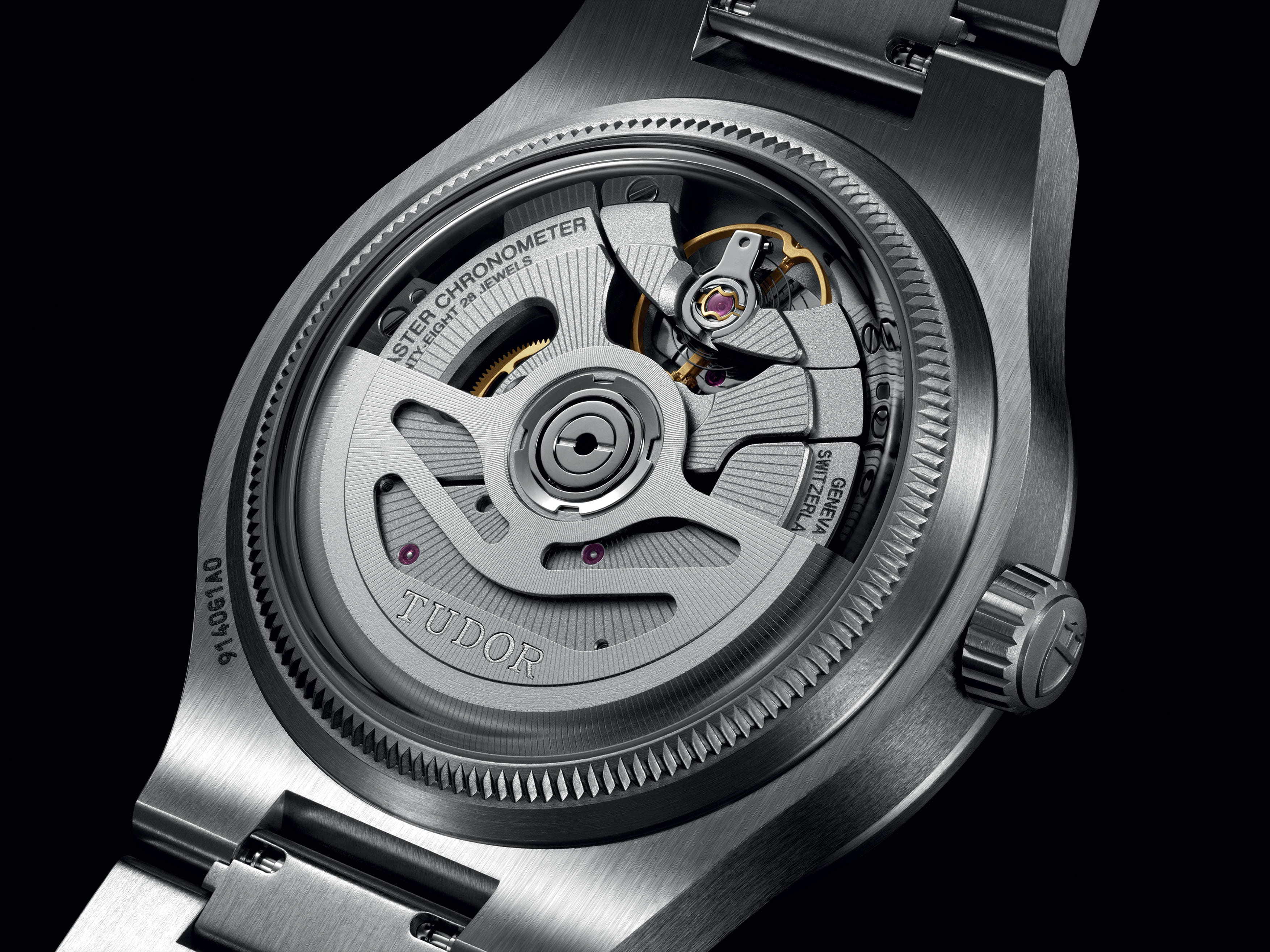
Inside the MT5652-U
Powering the new Northflag is the manufacture calibre MT5652-U, a self-winding mechanical movement with hours, minutes, seconds, date, and GMT functions. The GMT is built into the movement itself with no separate module, which watchmaking purists tend to prefer for its engineering and long-term performance.
The movement uses a silicon balance spring for resistance to magnetic interference, a variable-inertia balance wheel, and a robust traversing bridge secured at two points. It beats at 28,800 vibrations per hour and provides a 65-hour power reserve, which means the watch can be taken off on Friday evening and still be running when Monday morning arrives.
Its dual certification by COSC, the Official Swiss Chronometer Testing Institute, and METAS, the Swiss Federal Institute of Metrology, carries more weight still. METAS awards Master Chronometer certification only after a comprehensive series of tests covering precision, resistance to magnetic fields, water resistance, and power reserve.
The Northflag is certified to keep accuracy within a daily variation of zero to plus five seconds and to withstand magnetic fields of 15,000 gauss, and its claimed 100-meter water resistance and 65-hour power reserve are independently verified as part of the same process.
Watchmakers now compete on measurable performance as well as design and heritage, and a METAS certificate means an outside laboratory stands behind the figures. It also fits Tudor’s stated ambition to extend the certification across its collection.
Since launching its “Born to Dare” campaign in 2017, Tudor has drawn consistently on stories of achievement in extreme environments, from the ocean depths to high peaks and the frozen Arctic. The Northflag fits that narrative: its name recalls a real expedition, and its design follows the priorities of a tool watch, while the GMT movement serves people whose lives extend beyond a single time zone.
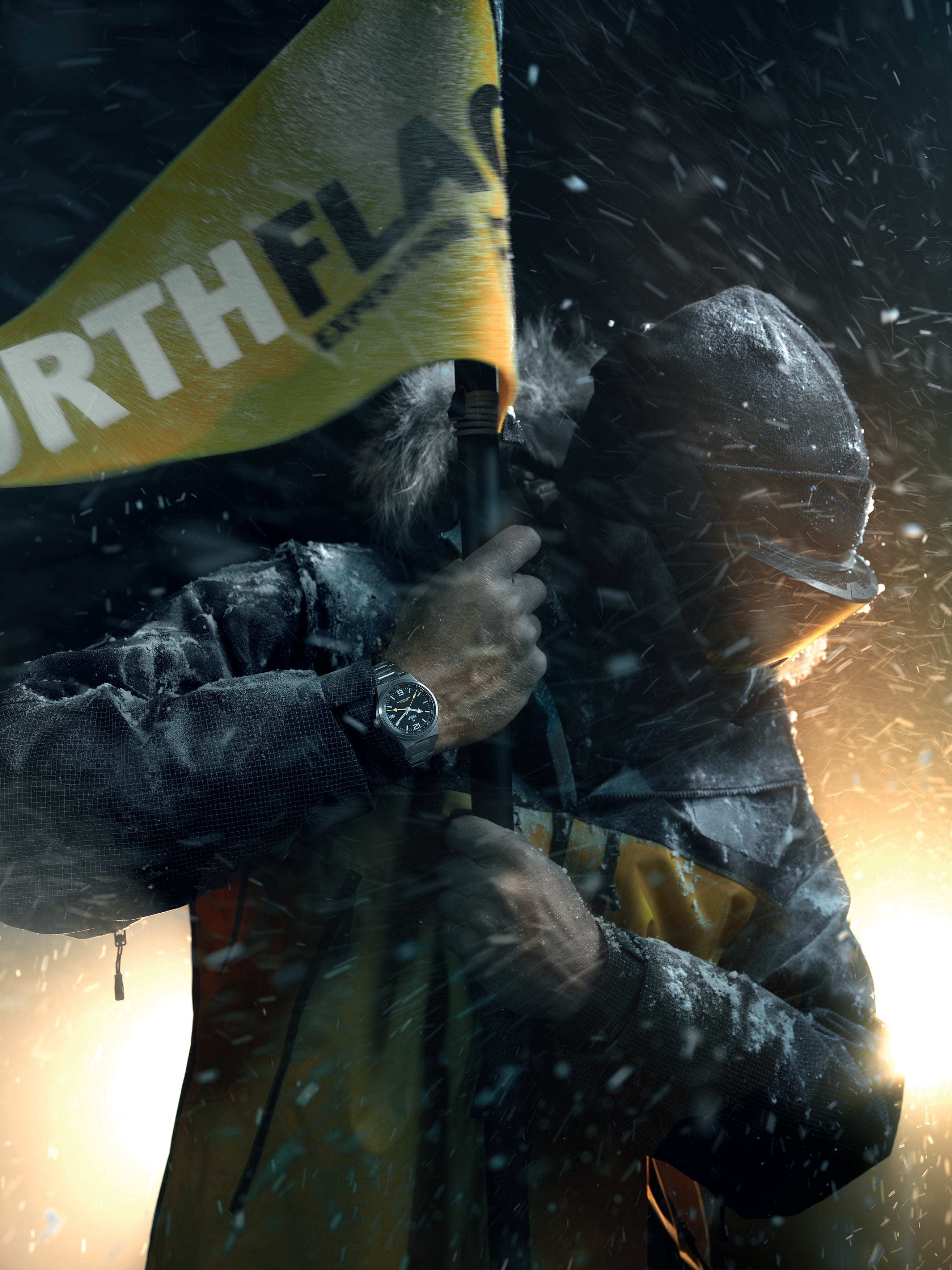
A dramaticized promotional image of the Tudor Northflag in the wild
The bracelet shows how Tudor pairs rugged character with everyday practicality. Its T-fit rapid-adjustment clasp offers five positions and up to 8 mm of adjustment without tools, ceramic ball bearings give the closure a secure, tactile feel, and the integrated construction and polished chamfers lend a more refined finish than the utilitarian design suggests.
The return of the Northflag revives a relatively obscure model from Tudor’s recent past, one that marked a turning point in the brand’s development, and updates it with technology that reflects Tudor’s current ambitions. It joins the reliability demanded of Arctic expedition equipment to the precision that modern international travel calls for.
View More Articles About: