The All-New BMW iX3 Could Be the Most Important BMW of the Decade
BMW's Neue Klasse just gave every EV rival something to worry about.

by Alvin Uy
Published on Jul 16, 2026
If you've spent any time behind the wheel of the current crop of electric vehicles, a pattern starts to emerge. Every manufacturer wants to sell you on the numbers: how quickly the car gets to 100 km/h, how much torque it puts down, how far it goes on a single charge. Those figures are usually impressive, and increasingly, they're beside the point, because nearly every premium EV on the market can now embarrass a supercar off the line. The novelty of straight-line speed wore off years ago.
BMW seems to have understood this before most of its rivals did. When it flew members of the ASEAN motoring press to Pathum Thani Speedway outside Bangkok for the regional debut of the all-new iX3, the goal wasn't to convince anyone that this was the fastest electric SUV in its class. It was to explain, in terms that are much harder to fit on a spec sheet, the engineering philosophy BMW believes will define the next decade of the brand.
The iX3 isn't simply BMW's newest electric SUV. It's the first production model built on the Neue Klasse architecture, a clean-sheet platform carrying a new design language, a new electronics architecture, sixth-generation electric drive technology, and a digital ecosystem that will eventually work its way into nearly every BMW that follows it. That's a lot of weight to put on one car, and BMW's answer to explaining all of it was refreshingly simple: stop talking, and let people drive.
BMW's fleet of Neue Klasse test units, lined up at Pathum Thani Speedway ahead of the ASEAN media drive.
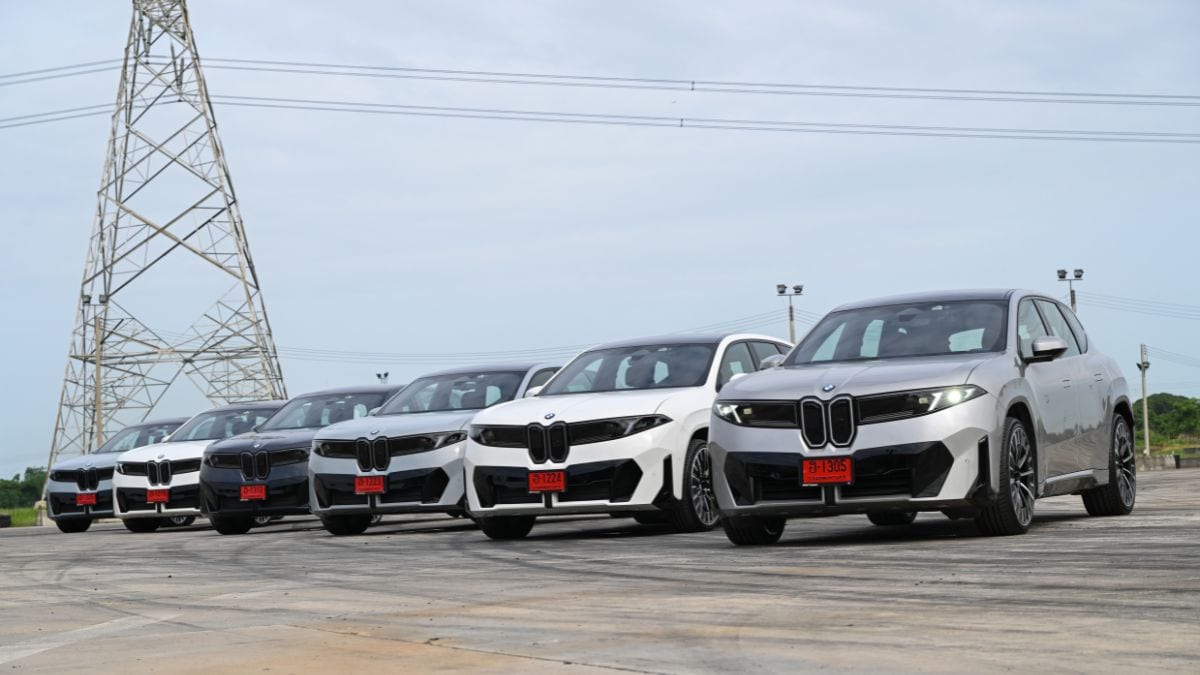
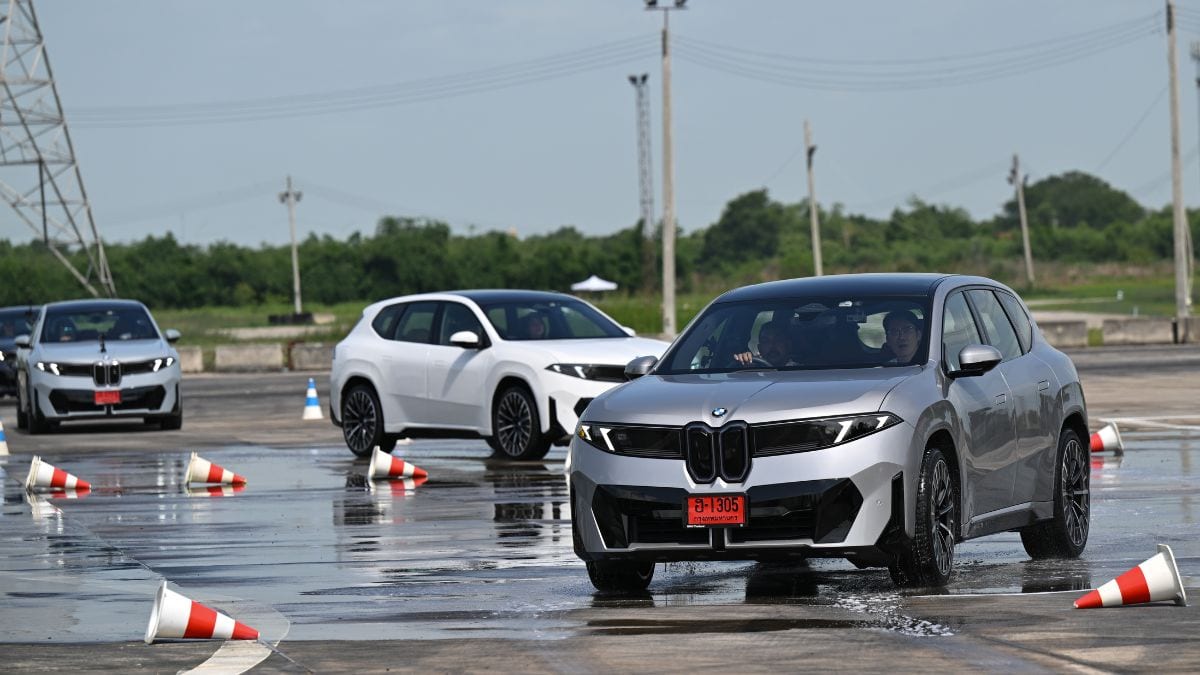
Pathum Thani Speedway isn't laid out like a conventional circuit built to reward outright pace, and for this event, its flat skid pad became a series of exercises designed to isolate specific traits of the car rather than reward whoever was heaviest on the throttle. One section simulated emergency obstacle avoidance, the classic moose test used across Northern Europe to catch cars that can't handle a sudden swerve. Another stayed continuously soaked to replicate low-traction conditions. The largest stretch was reserved for a slalom that demanded constant, rapid steering corrections. None of it was really about speed. All of it was about precision.
The iX3 working through the wet handling course, one of several exercises built to expose weaknesses in suspension tuning rather than reward outright speed
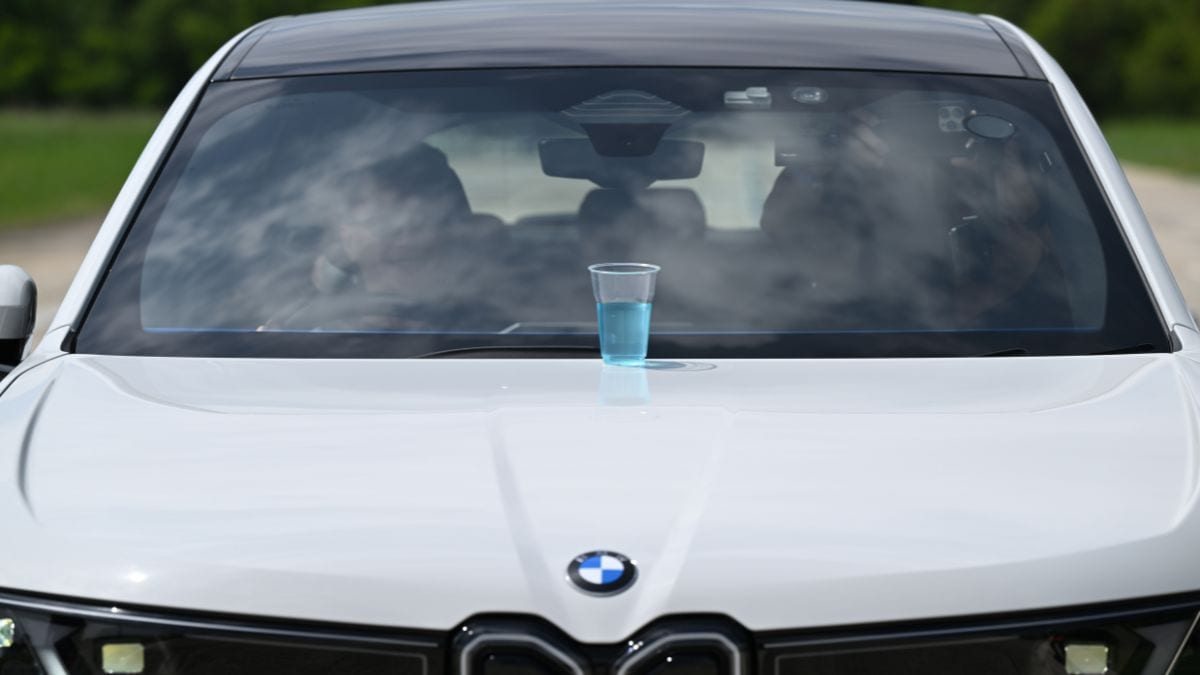
The slalom produced the day's best demonstration of what BMW was trying to prove. Before anyone climbed behind the wheel, instructors handed out ordinary plastic cups filled with water and set a simple assignment: clear the full cone course at roughly 35 km/h without spilling a drop. It's a deceptively difficult test. Rapid left-right transitions expose whatever a chassis is hiding, and body roll, delayed damping, and nervous steering all become obvious within the first few gates.
The iX3 didn't hide anything because there wasn't much to hide. Every steering input translated cleanly, weight shifted from one side to the other and settled almost immediately, and none of it carried the top-heavy feeling you'd expect from an SUV with its battery pack mounted under the floor. By the end of the run, the cup was still close to full.
BMW's low-tech proof of high-tech engineering: a cup of water, a cone course, and a car that refused to spill it.
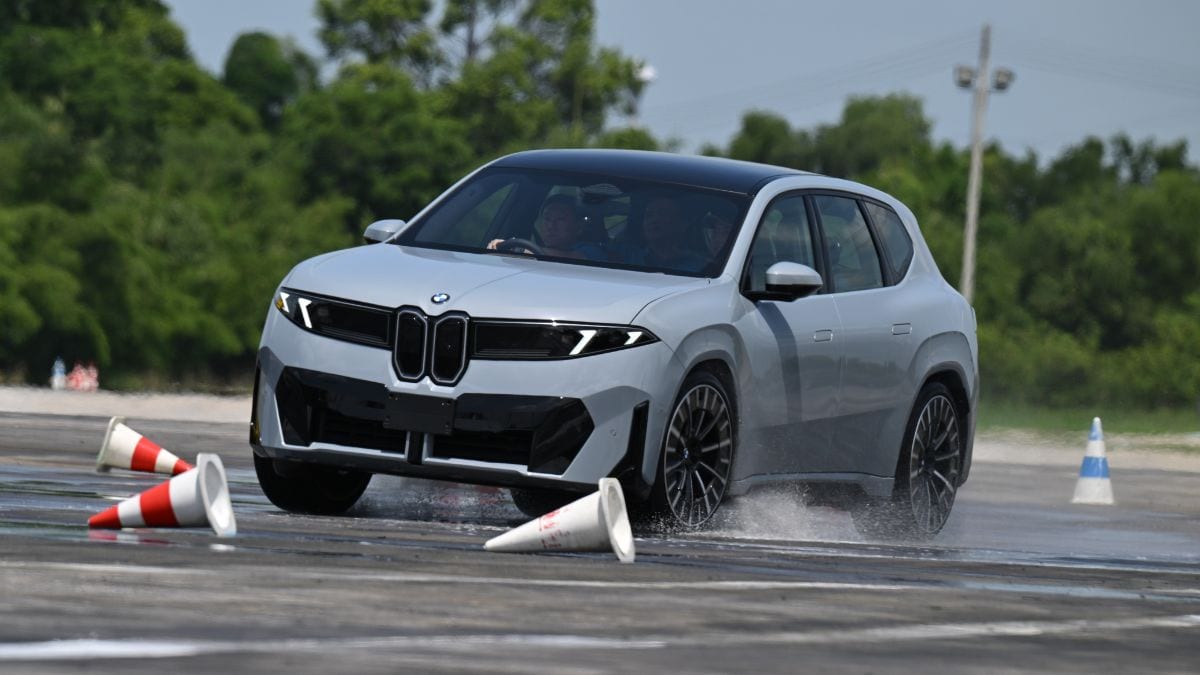
BMW has a name for the system behind this kind of composure: the Heart of Joy. Rather than letting separate control units independently manage steering, braking, power delivery, and regenerative braking, BMW consolidated all of it into a single high-performance computer that processes inputs up to ten times faster than the architecture it replaces. Paired with BMW's Dynamic Performance Control software, the system is constantly calculating the ideal response to whatever the driver, or the road, throws at it next. The difference isn't just quicker reaction times. It's a car that reacts the way a skilled driver would, smoothly and predictably, which is a much harder thing to engineer than raw speed, and a much harder thing to explain until you've felt it yourself through a cone course.
Another pass through the wet skid pad, part of BMW's case for why chassis tuning matters more than horsepower figures.
A Cockpit Built Around the Driver
BMW Panoramic iDrive projects driving information across the width of the windshield rather than behind the steering wheel.
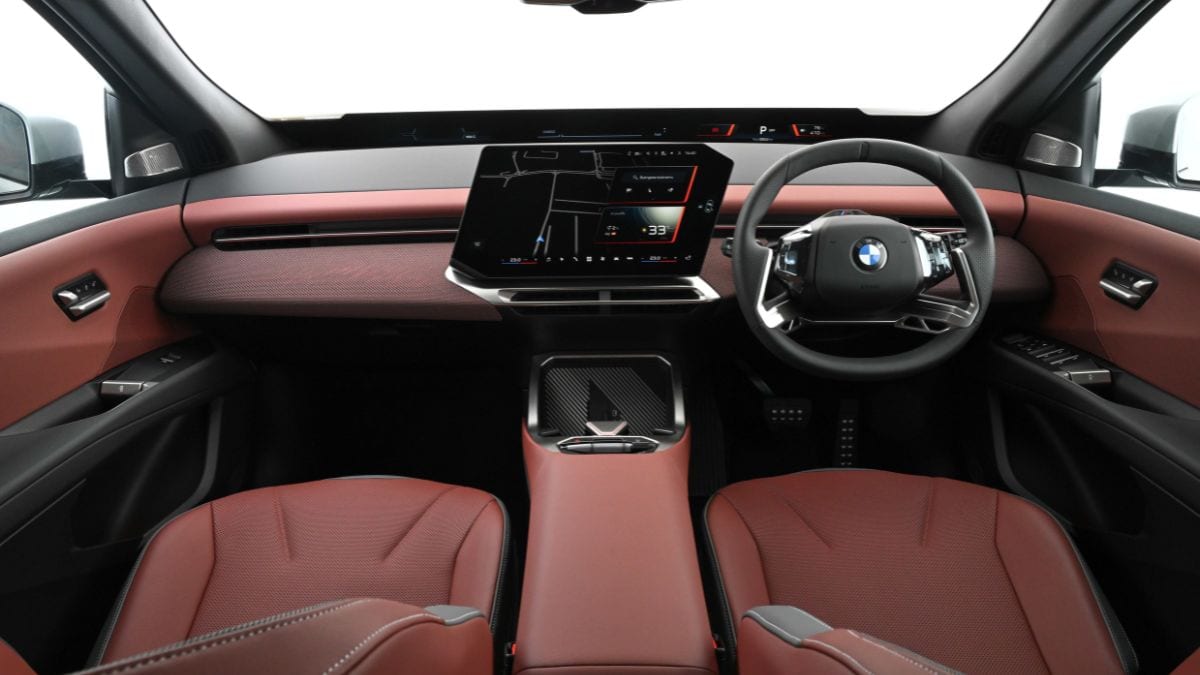
Where most manufacturers treat new technology as an excuse to pile on more screens and more menus, BMW went the other direction with the iX3's interior. The traditional instrument cluster is gone entirely, replaced by BMW Panoramic iDrive, which projects the information a driver actually needs across the full width of the windshield instead of tucking it behind the steering wheel. The idea is to keep eyes on the road rather than darting between displays.
It's supported by BMW's new Operating System X, a central display positioned within easy reach, a redesigned multifunction steering wheel with illuminated haptic controls, and a fully integrated 3D head-up display. Instead of competing for the driver's attention, the pieces work as a single interface that adjusts to driving conditions and personal preference. It takes a few minutes behind the wheel before the system stops feeling new and starts feeling obvious, which, for a cockpit this different from anything BMW has built before, is a genuinely difficult thing to pull off.
The Numbers, For What They're Worth
The dual-motor iX3 50 xDrive produces 469 horsepower and 645 Nm of torque, enough to get from zero to 100 km/h in 4.9 seconds on the way to a top speed of 210 km/h. It runs on BMW's sixth-generation eDrive technology, built around a new cylindrical-cell battery, an 800-volt electrical system, and charging speeds of up to 400 kW, fast enough to add 372 km of range in 10 minutes at a compatible fast charger. Total WLTP range comes in at 805 km.
Those numbers hold up against anything else in the segment. But after a full day driving the iX3 through emergency avoidance maneuvers, a soaked handling course, and a slalom most cars would fail with a full cup of water on the dash, the figure that mattered most wasn't on the spec sheet at all. It was how much the car let you trust it, corner after corner, without ever asking you to think about the technology working underneath you.
Three Things Worth Knowing About the iX3
1| The new iX3 is the first Neue Klasse car
Everything that debuts here, the battery architecture, the electronics, the computing backbone, becomes the template BMW builds the rest of its future lineup on. That raises the stakes on this launch well past a normal model refresh.
2 | The panoramic iDrive replaces the gauge cluster outright
Windshield-width display, Operating System X, a haptic steering wheel, and a 3D head-up display are built to function as one system rather than five separate ones competing for your attention.
3 | The chassis is doing more of the talking here than the horsepower
469 hp and a sub-5-second 0-100 km/h time are real, but it's the Heart of Joy control unit and Dynamic Performance Control software that let the car hold a nearly full cup of water through a slalom course. That's the number worth remembering.
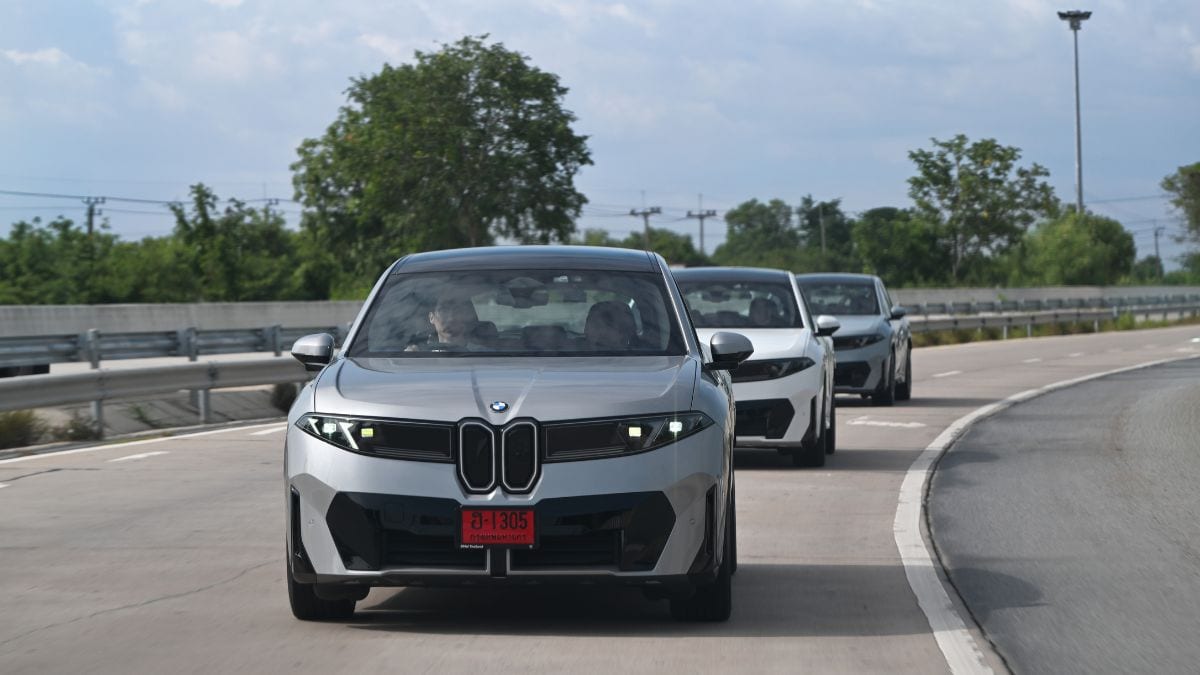
The iX3 convoy is back on public tarmac, after a day of cone courses and wet skid pads at Pathum Thani
BMW built the Neue Klasse to carry the brand's electric future, and the iX3 is the car tasked with introducing it to the world. On the strength of one day at Pathum Thani Speedway, it's a strong first impression, and if BMW's claims about what comes next on this platform hold up, it may end up being the start of the most significant model run the brand has had in years.
View More Articles About: