The Wheels Keep Turning for Sam Liuson
Sam Liuson built a business around making cars stand out. More than two decades of doing so, he has really done amazing things with the hand he was dealt.

by Alvin Uy
Published on Nov 3, 2026
There are people who look at a car and see transportation. Others see performance, engineering, status, or simply a way to get from one place to another. Sam Liuson sees something else: a blank canvas, waiting for its owner’s personality to emerge. For him, the right wheels can transform not only the appearance of a car but also its entire character, much like the right clothes can change how a person carries himself.
It is an idea that has defined much of Liuson’s professional life. As the man behind Wheel Gallery and Concept One Wheels Philippines, he helped introduce a generation of Filipino motorists to a new vocabulary of automotive customization. But after more than two decades in the aftermarket business, his story has become about more than wheels, tires, and modified cars. It is a story about taking risks, recognizing opportunity, adapting to change, putting family before personal indulgence, and eventually discovering that business itself can be a vehicle for a much larger purpose.
Liuson’s fascination with cars began long before he became a businessman. As a child, he remembers looking at Matchbox cars at Unimart, but his earliest real automotive memories involve his father. He would sit between the front seats, supported by a pillow, while his father taught him to shift gears, calling out the numbers as young Sam moved through them. By 13, he was already maneuvering cars around the family home. In high school, his fascination grew as he watched classmates modify their cars and began collecting American automotive magazines such as Car and Driver and Road & Track.
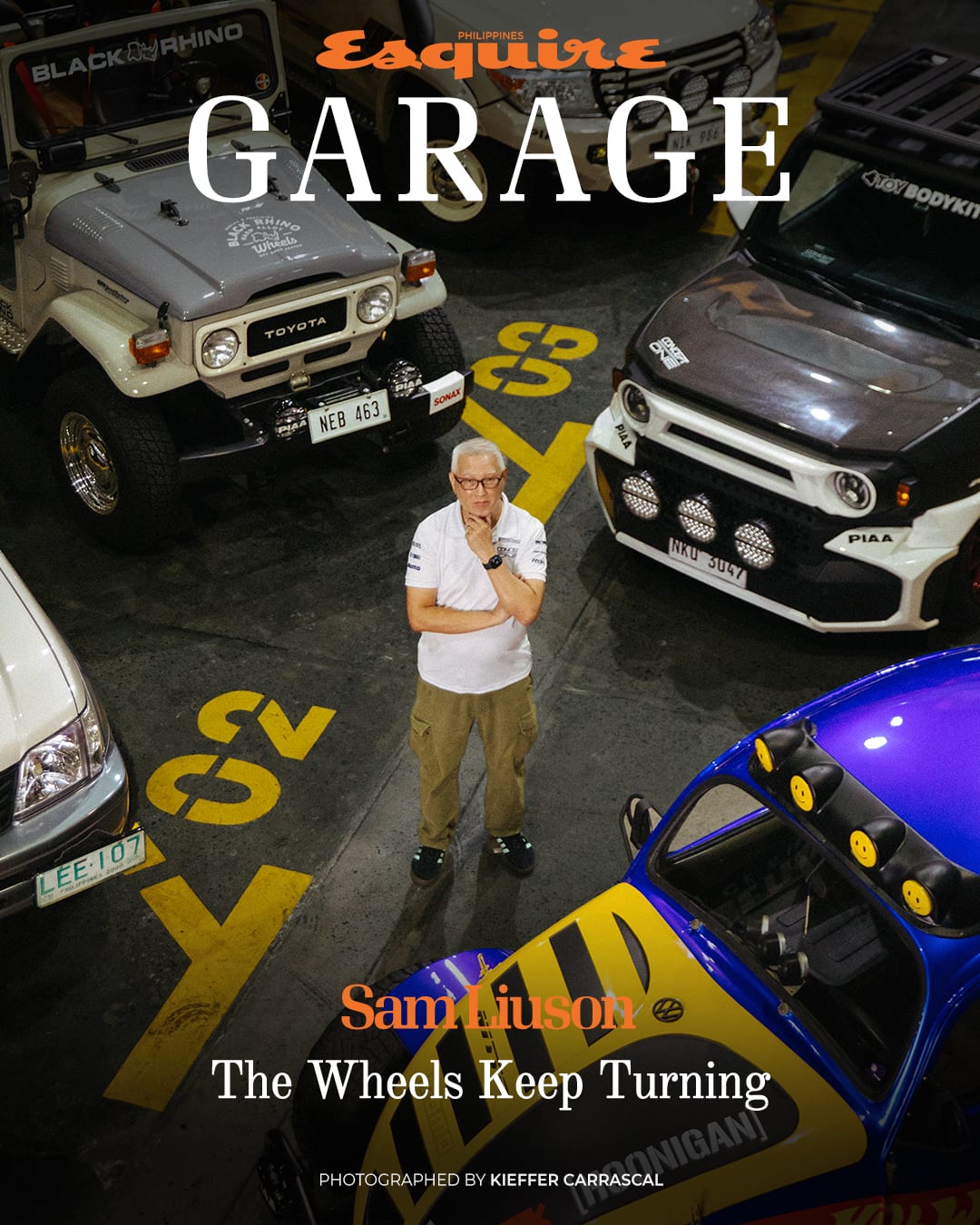
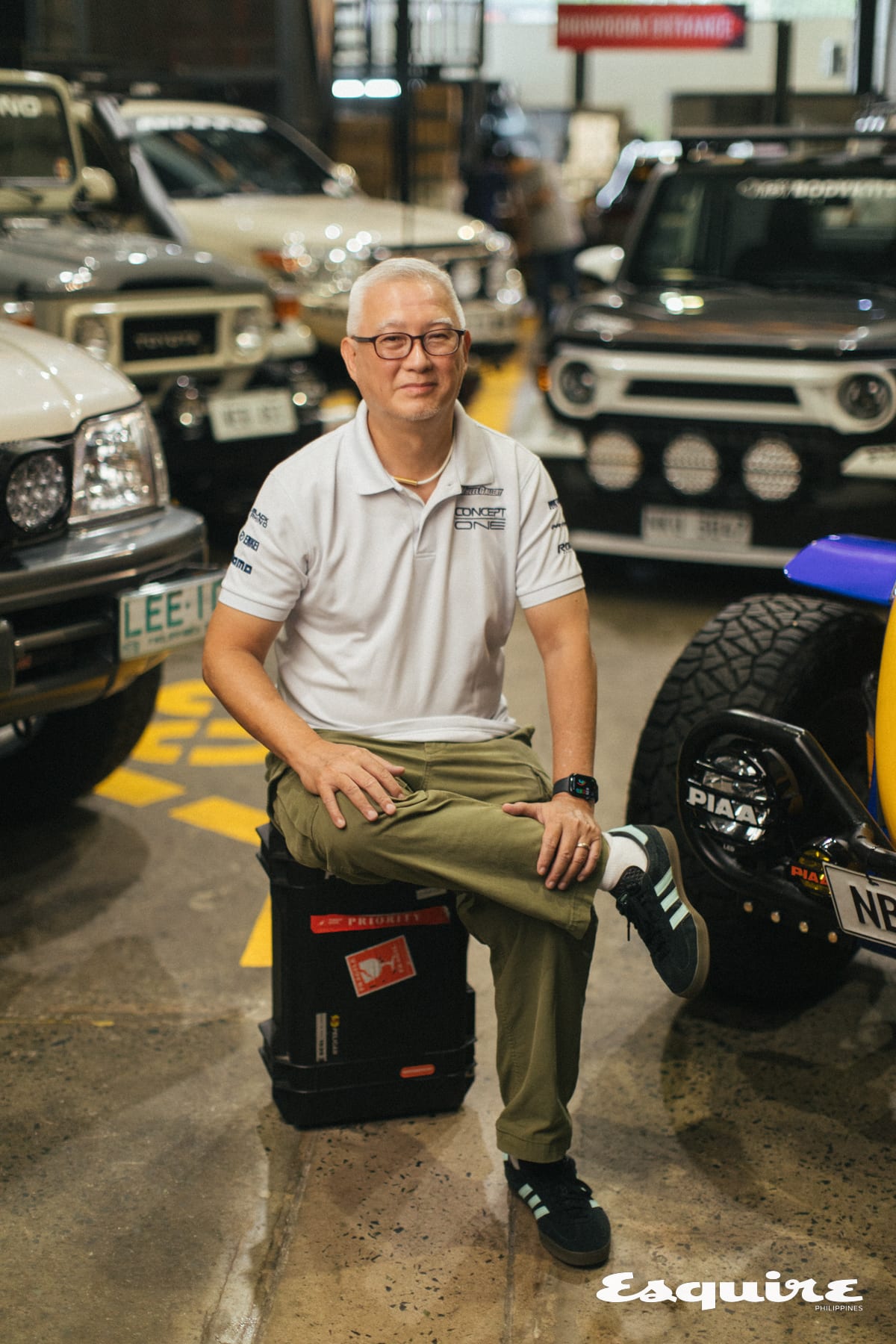
The wheel connoisseur in his element
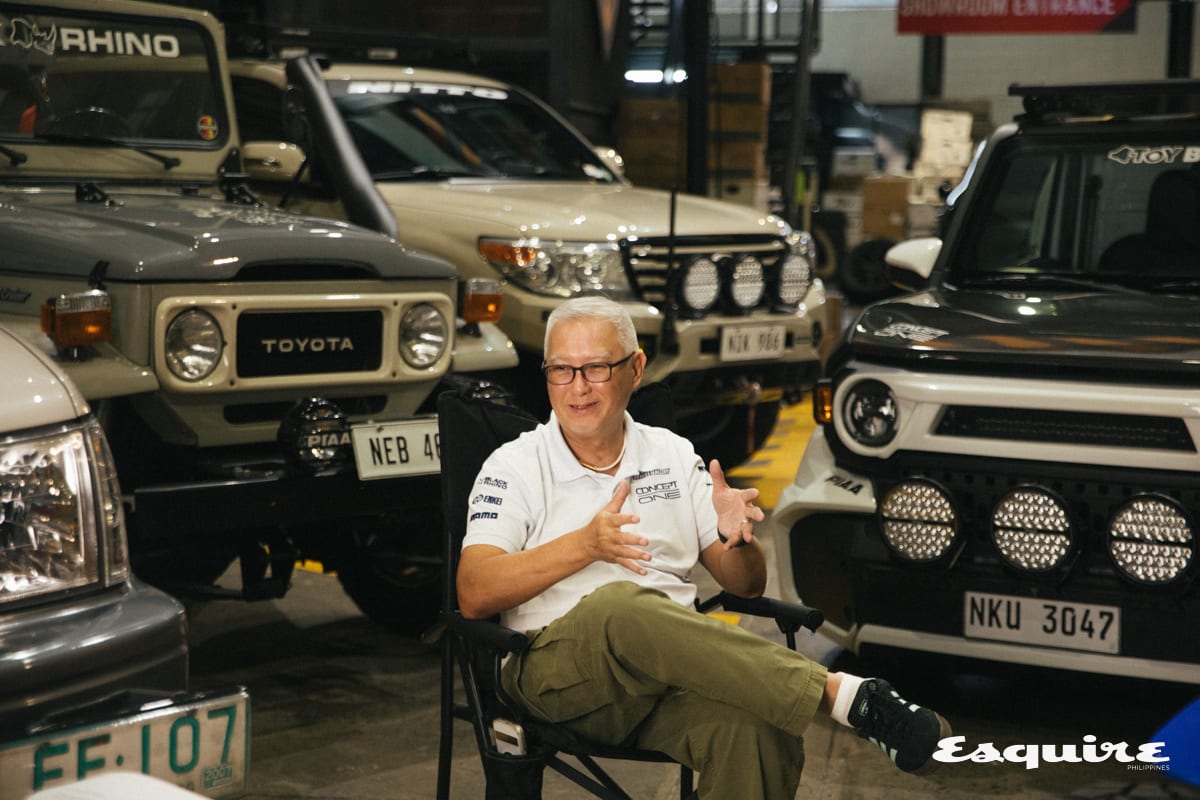
The young Liuson, however, did not grow up assuming that he would one day run a successful automotive business. He started working during his high school summers, helping an uncle in Binondo with whatever needed to be done, from running errands to tidying the workplace. Later, he worked as a real estate agent selling townhouses in Mandaluyong and eventually became a general manager in another family business, where he spent about a decade.
He describes himself as a working student, not necessarily because his family could not provide for him, but because he wanted to earn his own money and become independent. Growing up in a family of seven children meant there was naturally competition for attention and resources, and those early experiences helped shape the entrepreneurial instincts that would eventually define him.
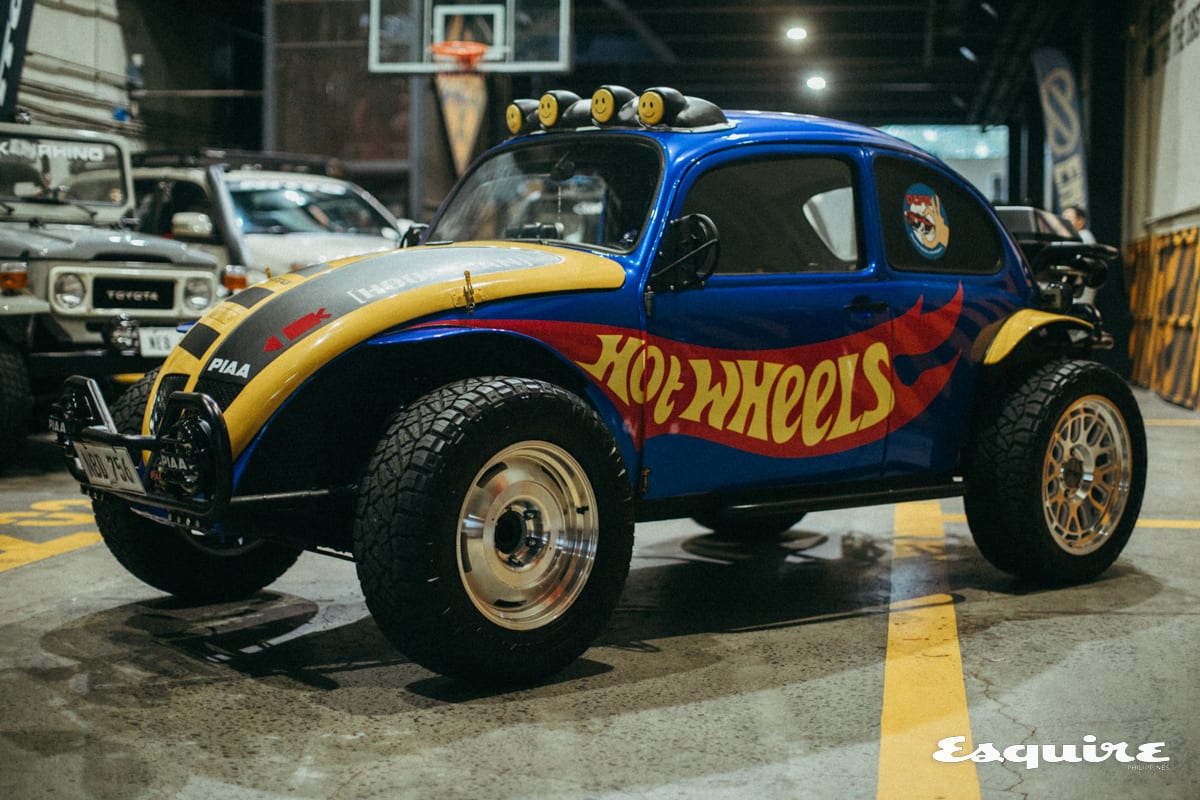
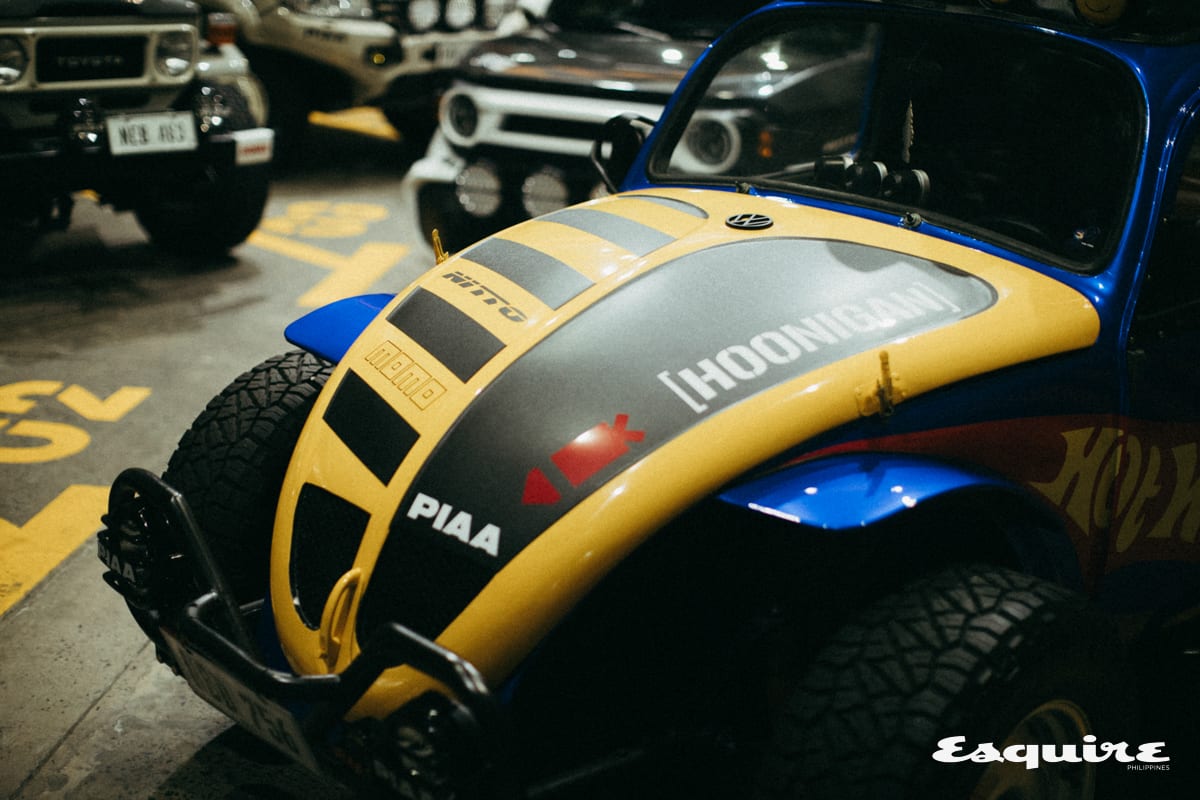
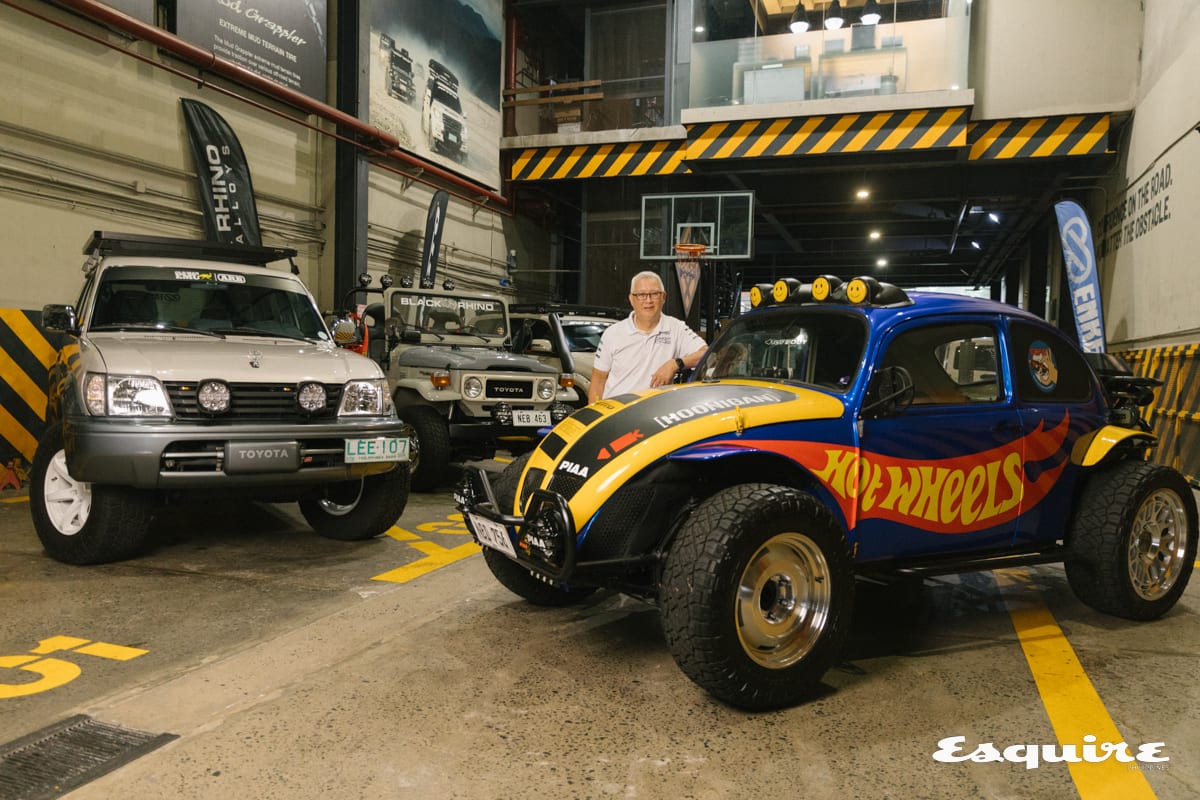
A custom off-road Volkswagen Beetle (Baja Bug) featuring Hot Wheels livery, lifted suspension, knobby off-road tires, and auxiliary lights.
When Liuson entered the wheel business in 2002, the Philippine automotive market was still very different from the one we know today. Fifteen-inch wheels were commonplace on many Japanese and American cars, while 17- and 18-inch wheels were still something of a novelty. Liuson, however, had already seen where automotive culture was heading through the magazines he collected and the increasingly elaborate cars he encountered abroad.
When an opportunity arose to work with factories in Taiwan, he took the chance. It was not a cautious investment. Liuson sold his shares in his previous company and put everything into the new venture, effectively placing his future in one basket. When he visited the Taiwanese factories and recognized the same wheels he had seen in American magazines, he realized that the opportunity was much closer than he had imagined.
The timing and the relationships helped, but so did something less tangible: the willingness to make a bet before everyone else was convinced it would work.
That instinct eventually helped turn Concept One from a wheel brand into something closer to a lifestyle. Liuson recalls giving away Concept One stickers at car shows and later seeing them all over Metro Manila. Eventually, the branding even appeared on jeepneys, while one car wash jokingly called itself “Concept None.” For Liuson, those moments signaled that the brand had moved beyond simply selling a product. People had begun identifying with it.
His philosophy was straightforward: market the lifestyle, not merely the wheel.
The bottomline is that the aftermarket business is ultimately about individuality. Liuson understood early that customers were not simply buying a piece of hardware. They were buying an expression of themselves.
A Car as a Blank Canvas
Ask Liuson what makes a great wheel, and his first answer is not design. It is quality. When selecting suppliers, he says quality comes first, followed by design. The latter requires something that cannot easily be taught in a classroom: an eye for proportion, style, color, and character.
He believes that talent was given to him by God, and he compares the wheel business to men's fashion. The wrong design, size, color, or texture can leave a company with expensive inventory that nobody wants, while the right combination can completely transform a vehicle.
That is why he does not simply tell customers what wheel to buy. He asks how they want their car to look and considers their personality and lifestyle. Someone who wants an elegant executive look requires a different approach from someone who wants to go off-road. A stealthy black-on-black setup creates a different character from bronze wheels on an olive-green vehicle.
For Liuson, a stock car is essentially a blank canvas. The job of the person modifying it is not to impose his own personality on it but to bring out the character of the owner. The philosophy extends naturally into his own garage.
Practicality Before Fantasy
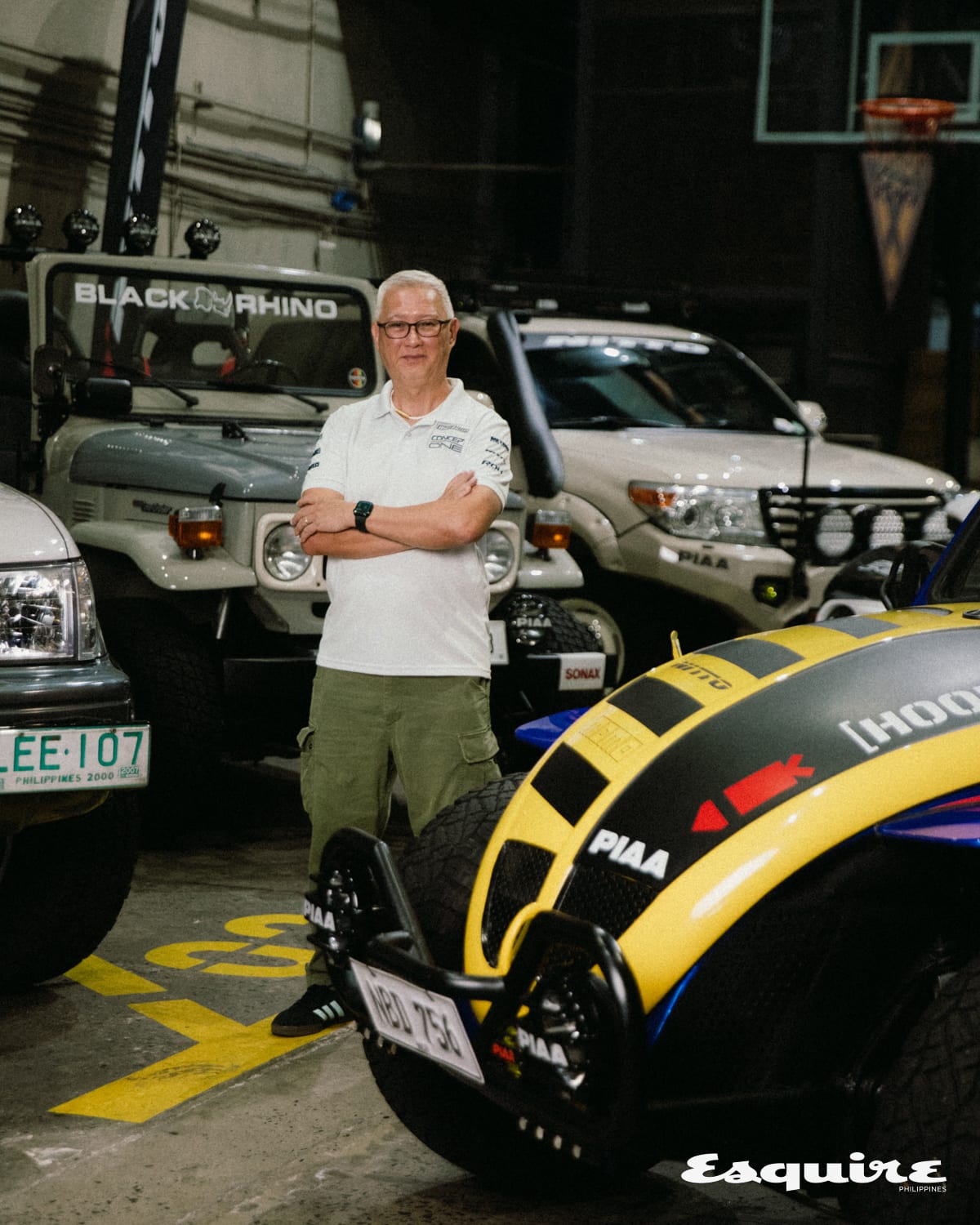
Liuson has a long-standing affection for Toyota that began with a hand-me-down 1977 Corona from his father. He repaired the car himself, and the experience helped establish his appreciation for Toyota's practicality and ease of maintenance.
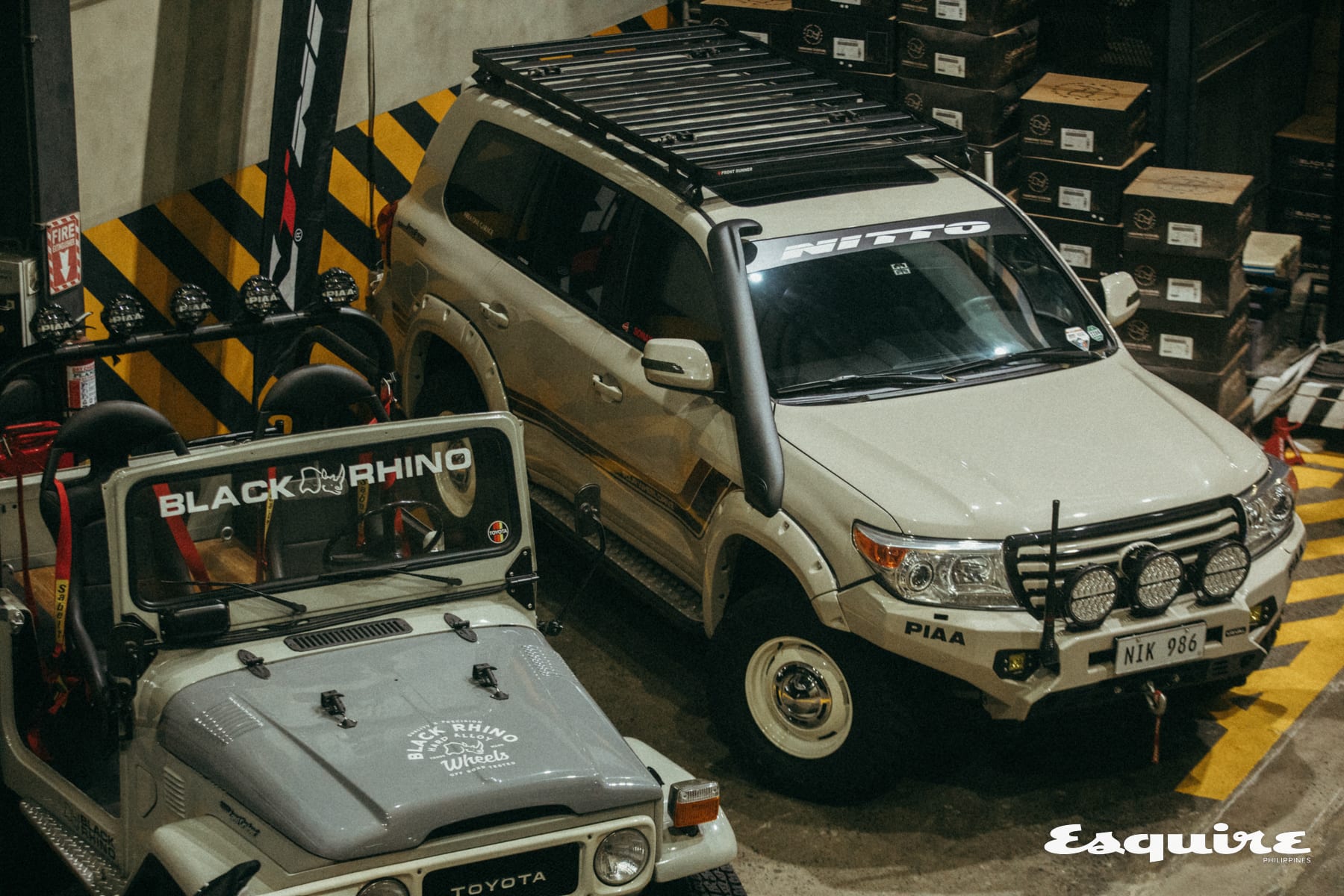
Today, his principal vehicle is a Toyota Land Cruiser LC200, a choice that reflects how his priorities have evolved. There was a time when off-roading and overlanding were central to his automotive adventures, but family eventually became an important consideration. With a wife and two daughters, he needed something comfortable, capable and spacious enough to carry everyone, and everything they might bring along.
There is also a remarkably preserved 1997 Prado with only 61,000 original kilometers, along with several more adventurous projects. A Volkswagen Beetle was transformed from an unfinished project into what Liuson describes as a big toy.
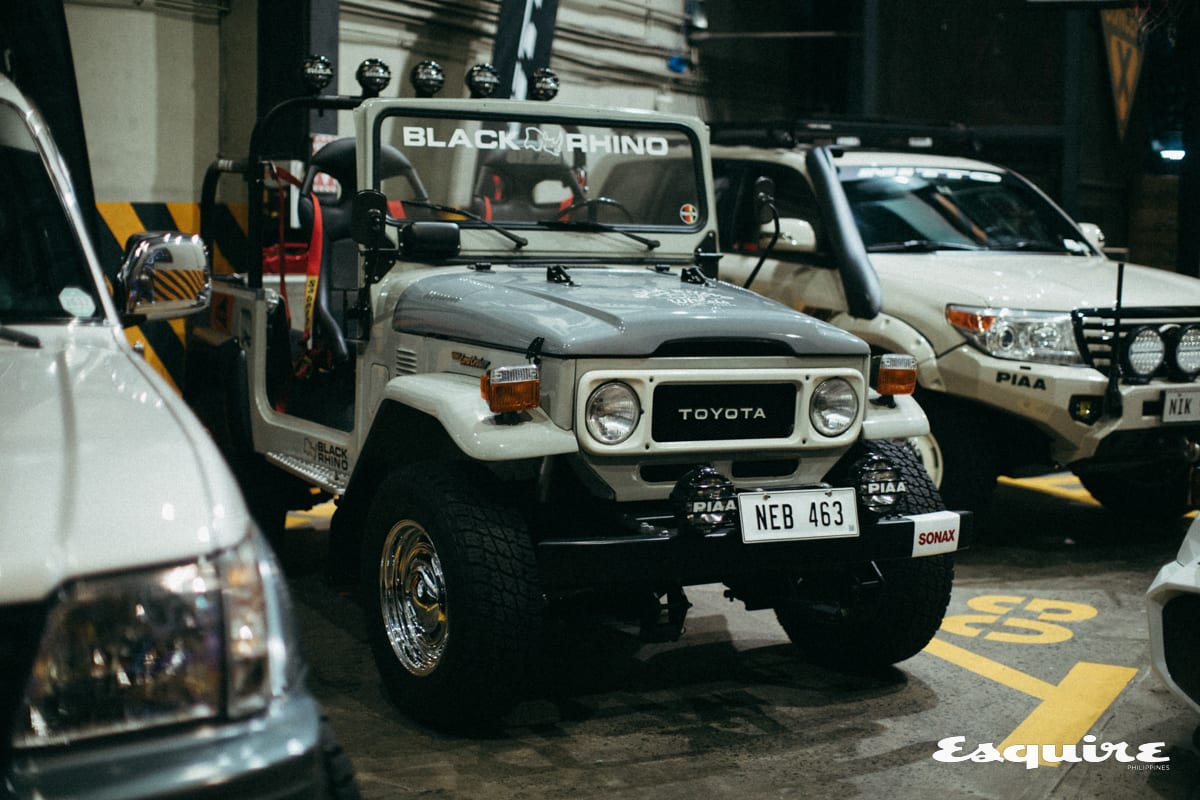
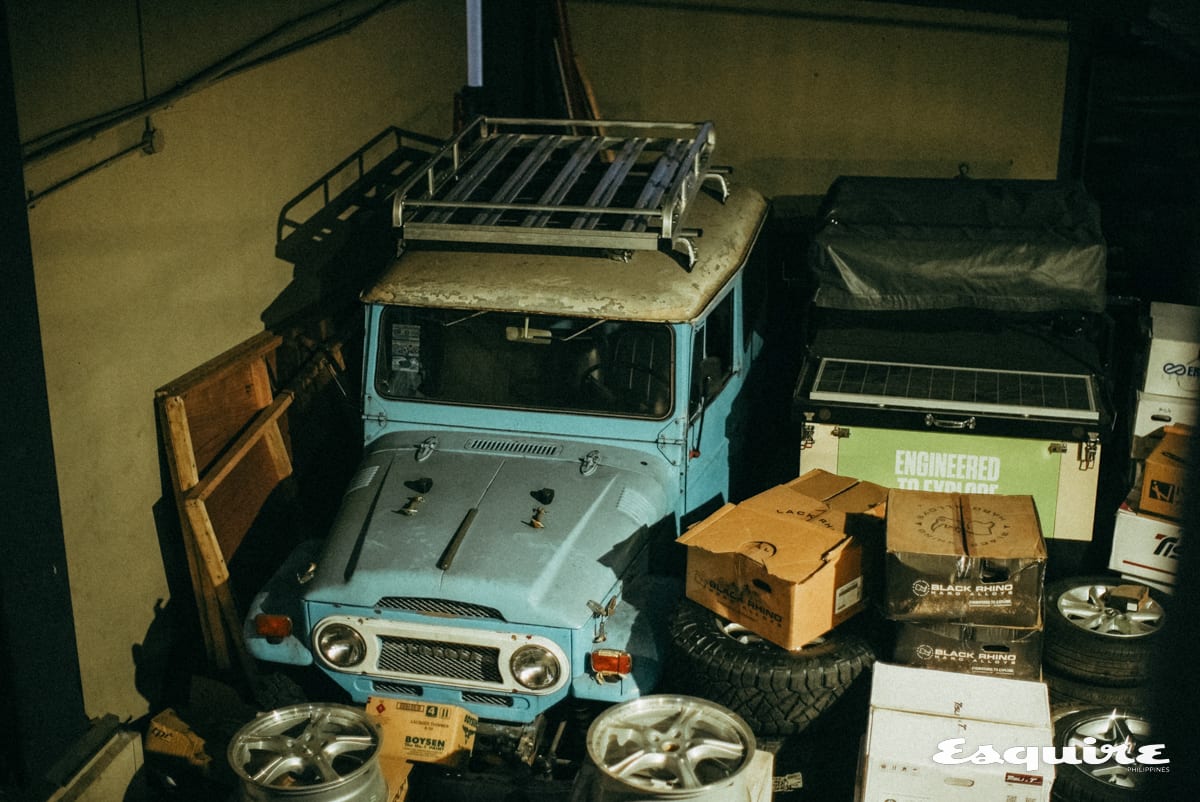
A customized Tamaraw was given the name “Tamawow” because of the reaction it generates. At the back of the shop sits a classic Toyota BJ40 and a classic Toyota FJ40, another unfinished project that Liuson saw potential in and decided to rescue.
Yet even with all the possibilities available to someone in his position, Liuson remains surprisingly practical. He still regrets selling a Mini Cooper because it was too small and uncomfortable for his family, and he had to let go of a 280Z for the same reason. He once owned a Mitsubishi Evolution X that proved too powerful for his tastes, eventually deciding that the car's performance could become dangerous if he allowed himself to get carried away.
His dream car remains the Porsche 911, something he has admired since the 1980s. If money were no object, he says he would consider a 911 Carrera 4 or a 911 Dakar. But if he could keep only one car from his entire automotive life, he would probably choose the Prado or LC200 because they are dependable, capable, and practically indestructible.
After decades in the business, that answer says something about the man. The most exciting car is not necessarily the most meaningful one. Sometimes, the vehicle that matters most is the one that simply starts when you need it to.
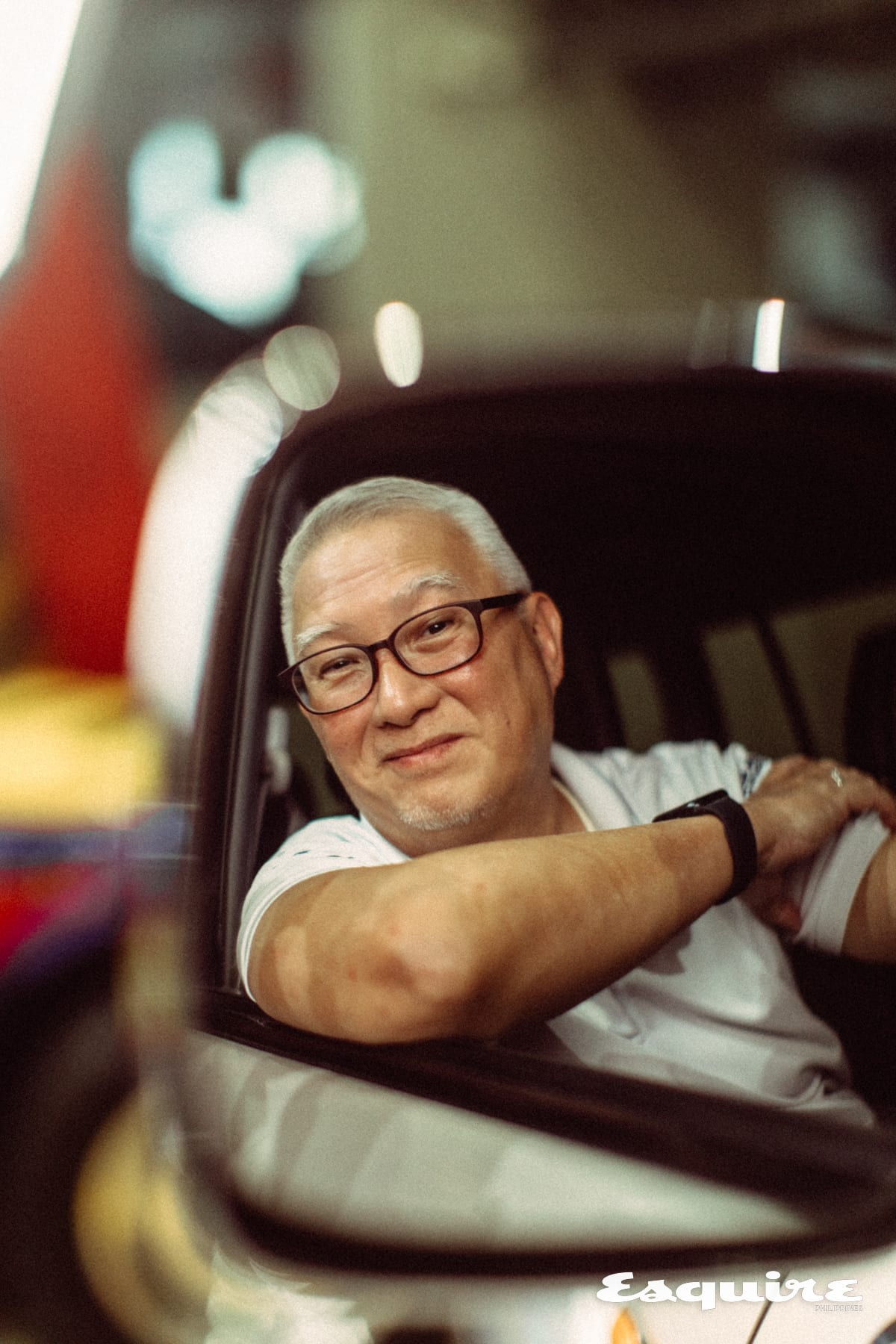
Liuson's career has also been a masterclass in recognizing when the market is changing. He has witnessed the evolution from polished and hyper-silver wheels to chrome, the enormous rims and “bling” culture of the Pimp My Ride era, and eventually the popularity of matte-black wheels. He remembers being one of the first to bring 20-inch matte-black SUV wheels into the market at a time when even his business partner questioned whether customers would actually buy them.
Liuson has seen the Philippine automotive market move from sedans to SUVs and crossovers, particularly after Typhoon Ondoy in 2009. Rising fuel prices later helped accelerate another transformation, this time from traditional internal-combustion vehicles toward hybrids and EVs.
His response has always been to observe rather than resist.
He has attended Tokyo Auto Salon since the 1990s and also visits SEMA in Las Vegas, using international shows as a way of studying trends and considering which ones might eventually find an audience in the Philippines. But he also understands that experience alone can become a liability if it makes a businessman stop listening.
That is why he consults younger members of his team, bouncing ideas around and asking what they think before making decisions. It is perhaps one of the most important lessons from his career: staying relevant requires both experience and the humility to know what you don't know.
Liuson's own cars have also become rolling experiments for the business. Some projects are intentionally exaggerated, particularly those displayed at car shows, where he wants people to stop, stare, and imagine what might be possible.
He compares it to fashion shows, where designers sometimes exaggerate their ideas on the runway to spark the imagination of the audience. The same principle applies to his automotive projects. The purpose is not necessarily to convince everyone to build an identical car but to show the possibilities.
That willingness to experiment is part of how Liuson keeps his brand visible in an increasingly crowded market.
But experimentation has also taught him the importance of responsibility.
One of his biggest entrepreneurial mistakes came when one of his shops burned down after an acetylene tank being used for welding was positioned among tires and cartons. The tank did not explode, but the regulator came off, and the resulting flames ignited the surrounding materials, destroying the shop.
For Liuson, the incident became a lasting lesson in safety and the consequences of overlooking seemingly basic protocols. Success, he learned, does not excuse carelessness.
Despite the rise of social media and online shopping, Liuson believes the aftermarket industry will continue because people fundamentally do not want to look like everyone else. A car, like clothing, watches, shoes, or even eyeglasses, becomes another way of expressing personality.
What has changed is the amount of information available.
When Liuson started, car magazines were among the few sources of inspiration. Today, Facebook, Instagram, TikTok, and other platforms provide an almost limitless gallery of modified cars from around the world. A customer can search for a particular model and find hundreds of different interpretations of how it can be customized.
Interestingly, he sees enormous potential in small and affordable EVs. He points to the VinFast VF3 as an example of a relatively inexpensive vehicle whose owners are nevertheless enthusiastic about customizing it.
That may be where the next chapter of Philippine car culture emerges: not necessarily from the most expensive cars, but from vehicles that give ordinary owners an accessible canvas for self-expression.
The Businessman and His Faith
There is another side of Liuson that does not always appear in automotive stories, and it may ultimately be the most important.
At some point in his 40s, Liuson says he began shifting from simply being a businessman toward living with a sense of purpose. His success, he realized, was not entirely his own doing. His talents, opportunities, and resources were gifts that carried responsibilities.
He began to view what he had accumulated as stewardship.
That realization changed the way he understood wealth. Rather than seeing business simply as a means of accumulating more, he began to see it as a vehicle for blessing others, supporting the church and contributing to a larger purpose.
It is not always easy.
The world of business rewards competition, accumulation, and aggressive decision-making. Christian values, meanwhile, can call for humility, generosity, honesty, and surrender. Liuson acknowledges that tension and admits that he is still learning how to navigate it.
One lesson has been learning not to “overstep God.” There were times when his instincts as a businessman pushed him to move ahead, only to discover that things did not end well. Over time, he learned the value of waiting for God's timing and surrendering outcomes that he could not control.
That does not mean abandoning ambition. Instead, it means understanding that ambition should have a purpose beyond itself.
What Does Success Look Like?
.jpg)
For Liuson, the answer has changed. “Success to Sam Liuson today is accomplishing my purpose in my generation,” he says. Business is a vehicle to that purpose.
He points to Deuteronomy 8, which speaks of God giving people the ability to produce wealth. For Liuson, that ability comes with responsibility. Wealth and talent should not simply be accumulated and protected; they should be used for a greater good. That perspective also changes what he wants his legacy to be.
He does not ultimately want to be remembered simply as the man behind Concept One, the businessman who helped popularize large wheels, or the enthusiast with an impressive collection of modified vehicles. He wants to leave something more enduring for his employees, his children, and his family.
He wants to leave a godly legacy.
There is a certain irony in that ambition. Liuson spent much of his professional life helping people make their cars stand apart from the crowd. Yet his philosophy today is less about standing out and more about making what you have been given count.
The car can be an expression of your personality. A business can be an expression of your talent. Wealth can become a tool for helping others. Success can create opportunities that did not exist before.
But none of those things, in Liuson's view, should become the destination.
The automotive world will continue to change. Wheels will get bigger and smaller, finishes will come and go, sedans will give way to SUVs, and gasoline engines will increasingly share the road with hybrids and EVs. The market will keep moving, just as it always has, and so will Sam Liuson.
Perhaps that is the most fitting lesson from his story. After more than two decades of building businesses and transforming cars, he has learned that the most important journey is not about how far you can go or how impressive the vehicle looks when you arrive.
It is about knowing why you are on the road in the first place and what you choose to leave behind when the journey is over.
.jpg)
View More Articles About: