Toyota Announces a GR 86 Class for the 2027 Philippine Cup at the Season Finale in Clark
Three champions were crowned at Clark International Speedway on October 24, and Toyota Motor Philippines used the finale to announce a third racing class for next year.

by Alvin Uy
Published on Oct 31, 2026
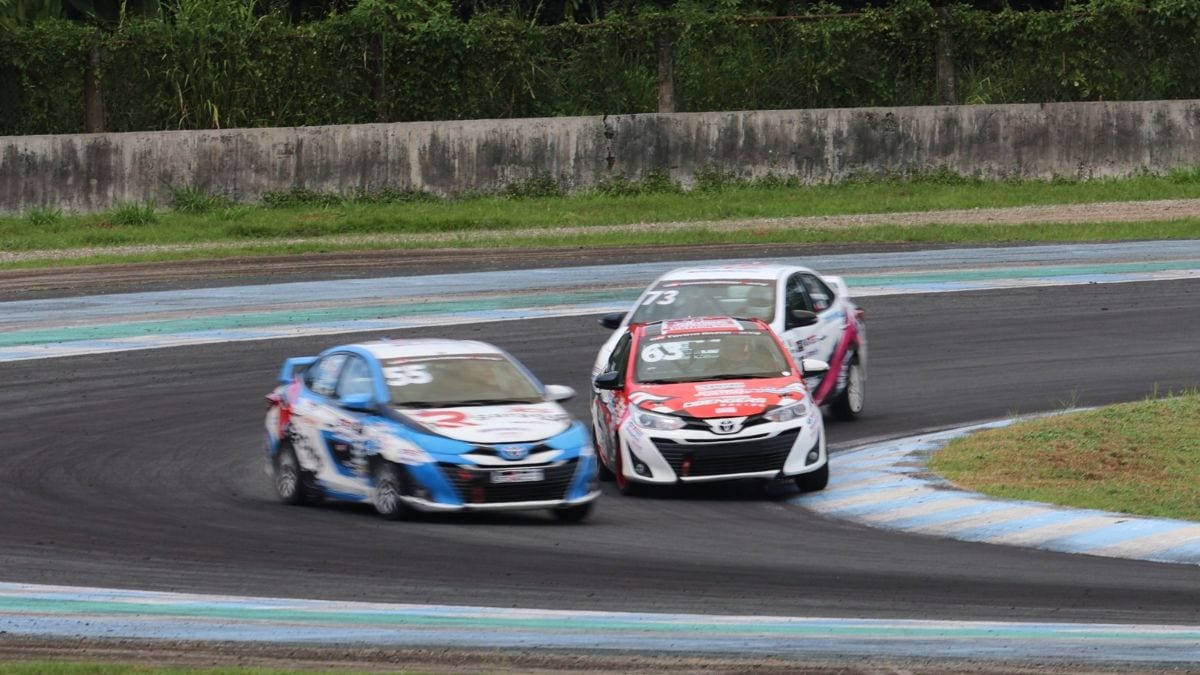
Joaquin Garrido took the lead at the first corner of the penultimate Super Sporting sprint at Clark International Speedway on October 24, while a collision sent Red Diwa off the track and into the grass. Diwa recovered and rejoined the race, and Garrido ran into trouble later and had to come back to the pits. The Tamaraw Class went down to its last lap, where Raymond Cudala, who had been protecting his lead, ran wide while battling Oliver Aquino, and David Enzo Ison, who crossed the line first, was relegated to third for a time penalty after exceeding track limits. The months of preparation and tuning that the drivers and teams of the 2026 TOYOTA GAZOO Racing (TGR) Philippine Cup had put in came down to moments like these.
Four race weekends produced three champions. Alain Gabriel Alzona of Toyota General Santos–Davao Racing won the Super Sporting Class, Bern Zaragoza of Resultado Racing won the Sporting Class, and Iñigo Anton of Obengers Racing became the first champion of the Tamaraw Class, which debuted this season.
The bigger news of the weekend came from Toyota Motor Philippines (TMP) president Masando Hashimoto, who unveiled the GR 86 One-Make Race (OMR) Class for 2027. The Philippine Cup will then run three cars, the Vios, the Tamaraw, and the GR 86, which gives drivers another step to take as their experience and ability grow.
The Vios Cup has long been where local circuit racers start. Every car in its one-make format is prepared the same way, so results depend on driving ability, racecraft, consistency, and teamwork before they depend on the size of a team’s budget. Drivers move up from Sporting to Super Sporting through qualification requirements, and top performers get the chance to do so. Newcomers with no circuit racing experience have to finish Levels 1 and 2 of the Toyota Gazoo Racing Academy before they can apply for a national racing license.
The Vios motorsport dramatics in action
The Tamaraw Class takes a utility vehicle that Filipinos already know from the road and turns it into a race car. The GR 86 is a more traditional sports car, front-engine and rear-wheel-drive with a balanced chassis, and it gives drivers another car to learn the skills that tougher circuit racing demands. Those include reading racing lines, managing tires, interpreting telemetry, talking to engineers, and making split-second decisions under pressure, none of which can be learned by driving fast on public roads, which matters to anyone with ambitions beyond local racing.
TGR Academy Philippines teaches high-performance driving, vehicle dynamics, and racecraft, and Toyota links it to its international TGR Driver Challenge Program and WRC Challenge Program, which identify promising racers and give them professional coaching and a route toward international competition. A seat in the Philippine Cup does not guarantee a ride in an international series, since professional racing takes money, experience, licensing, and sustained results. Plenty of young Filipinos want to race professionally, and chances to get real circuit experience inside a structured program have historically been few, so a one-make series with an academy behind it and clear movement between classes fills part of that gap. It also trains the mechanics, engineers, officials, and other professionals the sport depends on.
Tamaraw Class Racing
.jpg)
Inigo Anton
.jpg)
Toyota also announced that Rookie Racing Garage Manila will open soon, described as a home for people who love cars. Drawing on Toyota’s wider motorsports culture, it will offer automotive products, services, technical learning, and community activities away from the track, on the reasoning that motorsports needs enthusiasts, technical expertise, supporting industries, and different ways for people to take part.
Lexus Philippines was at the finale too. The LBX served as lead car and the RX 500h F SPORT Performance as the medical car, and visitors could look over the Lexus IS 300h Executive, a hybrid sports sedan with a driver-focused cockpit, a double-wishbone front suspension, and a multi-link rear suspension.
Toyota has long maintained that racing is about more than winning trophies, and that learning under pressure, testing engineering limits, and developing people all feed back into the cars we drive every day. Hashimoto described the GR 86 as an exciting new chapter that welcomes a new generation of drivers and enthusiasts, and he reflected on the year behind it. “Despite the challenges we faced this year, we continued to race with a purpose. Throughout the 2026 season, we learned, tested, improved, and pushed ourselves forward. As always, we use motorsports as a platform to help shape a better future for mobility.”
View More Articles About: