Why the Toyota Land Cruiser HEV Matters
The legend of the Land Cruiser continues with the superb hybrid electric refresh. Keep your eye on this killer vehicle.

by Alvin Uy
Published on Jun 28, 2026
The arrival of the Toyota Land Cruiser HEV in the Philippines marks more than another electrified vehicle launch. It represents a pivotal chapter in the story of a nameplate that has become part of Philippine motoring culture in ways few cars ever manage.
Unveiled locally at the 10th Philippine International Motor Show (PIMS) and officially launched for retail sales on June 24, the Land Cruiser HEV signals Toyota Motor Philippines' commitment to a flexible approach to electrification — one that recognizes the road to a lower-carbon future will not be identical for every customer.
The Land Cruiser HEV occupies a unique position in the market. It is simultaneously a flagship luxury SUV, a status symbol, a family vehicle, and one of the most respected off-road machines ever built.
A Nameplate Filipinos Have Trusted for Decades
The Land Cruiser's global story dates back to 1951, when Toyota introduced the BJ, a rugged utility vehicle that would eventually carry the Land Cruiser name. Over the next seven decades, it earned a worldwide reputation for durability, reliability, and the ability to operate in some of the harshest environments on earth.
In the Philippines, that story carries a particularly special resonance.
Long before SUVs became the preferred vehicle of executives and entrepreneurs, earlier generations of Land Cruisers were already familiar sights on Philippine roads—on provincial farms, construction sites, government fleets, and family compounds. In the 1970s through the late 1980s, they were used as armored bank vehicles in urban Manila. By the 2000s, LC100 and LC200 generation Land Cruisers had become the preferred platforms for armored VIP transport, favored by politicians, business leaders, and security-conscious families alike.
Land Cruiser HEV on display at the 10th PIMS
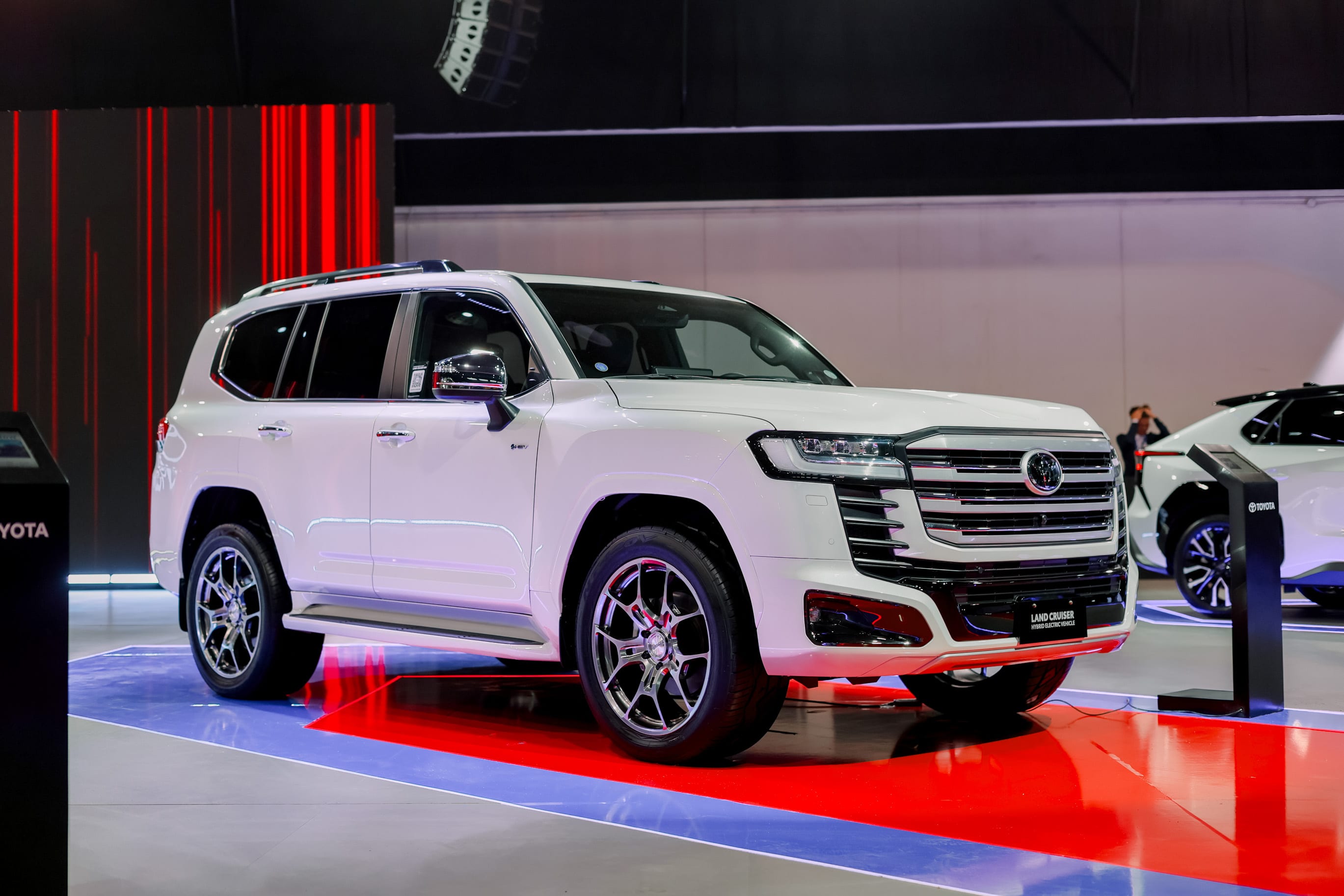
Their reputation for toughness is not merely folklore. Earlier this year, a heavily armored Land Cruiser carrying Shariff Aguak Mayor Akmad "Mitra" Ampatuan survived an assassination attempt involving a rocket-propelled grenade in Maguindanao del Sur. CCTV footage showed the armored SUV absorbing the blast and driving away, the mayor escaping unharmed. While the survival owed much to its specialized armor, the incident reinforced a long-standing perception: few vehicles possess the underlying strength and engineering integrity that have made the Land Cruiser the platform of choice for everyone from overlanders to heads of state.
That reputation reached new heights in 1990 with the Land Cruiser 80 Series. For many Filipino enthusiasts, the LC80 remains one of the most significant models in the nameplate's history. It introduced a level of comfort, refinement, and technology that transformed the Land Cruiser from a purely utilitarian machine into a premium SUV—without compromising its off-road capability.
The LC80 also helped create one of the strongest owner communities in the country. Decades later, enthusiast groups dedicated to various Land Cruiser generations — from the 40 Series and 60 Series to the 80, 100, 200, and current 300 Series — continue to thrive through weekend trail runs, overlanding expeditions, restoration projects, and club gatherings.
The durability of older examples is its own testament. Many vehicles more than 20 or 30 years old still serve as daily drivers, adventure rigs, and family heirlooms. A quick scan of digital classifieds confirms the other side of that durability: resale values that remain stubbornly high.
Land Cruiser 80, the first Land Cruiser generation officially sold in the Philippines
.jpg)
Entering the Electrified Era
Against this backdrop, the Land Cruiser HEV carries real weight.
The Philippine automotive market has undergone significant change in recent years. Electrified vehicles — hybrid, plug-in hybrid, and battery-electric — have steadily gained acceptance, and Toyota has played a major role in that shift through models such as the Corolla Cross HEV, Camry HEV, Corolla Altis HEV, Yaris Cross HEV, and Zenix HEV.
The challenge was never whether the Land Cruiser would eventually become electrified. The real question was how to do it without compromising what made it worth buying in the first place.
Rather than trading capability for efficiency, Toyota has chosen to augment one through the other. The new flagship variant pairs a 3.5-liter twin-turbo V6 producing 415 PS with a hybrid motor generating an additional 49 PS. The powertrain is designed not merely to reduce emissions but to enhance performance while keeping the Land Cruiser's core character intact.
The Land Cruiser HEV retains the full-time four-wheel-drive system, locking differential, Multi-Terrain Select, Crawl Control, adaptive variable suspension, and Toyota Safety Sense suite that buyers expect at this level.
A look under the Land Cruiser HEV's hood
.jpg)
The Luxury-Off-Roader Paradox
Part of what makes the Land Cruiser fascinating is the contradiction at the heart of its appeal.
On one hand, it is among Toyota's most luxurious vehicles. The HEV features premium leather upholstery, power-adjustable seats with memory functions, a 14-speaker JBL audio system, a 12.3-inch digital instrument cluster, a head-ups display, rear-seat entertainment, and a full suite of convenience features expected from a flagship SUV.
On the other hand, it can traverse terrain that would challenge many purpose-built off-roaders.
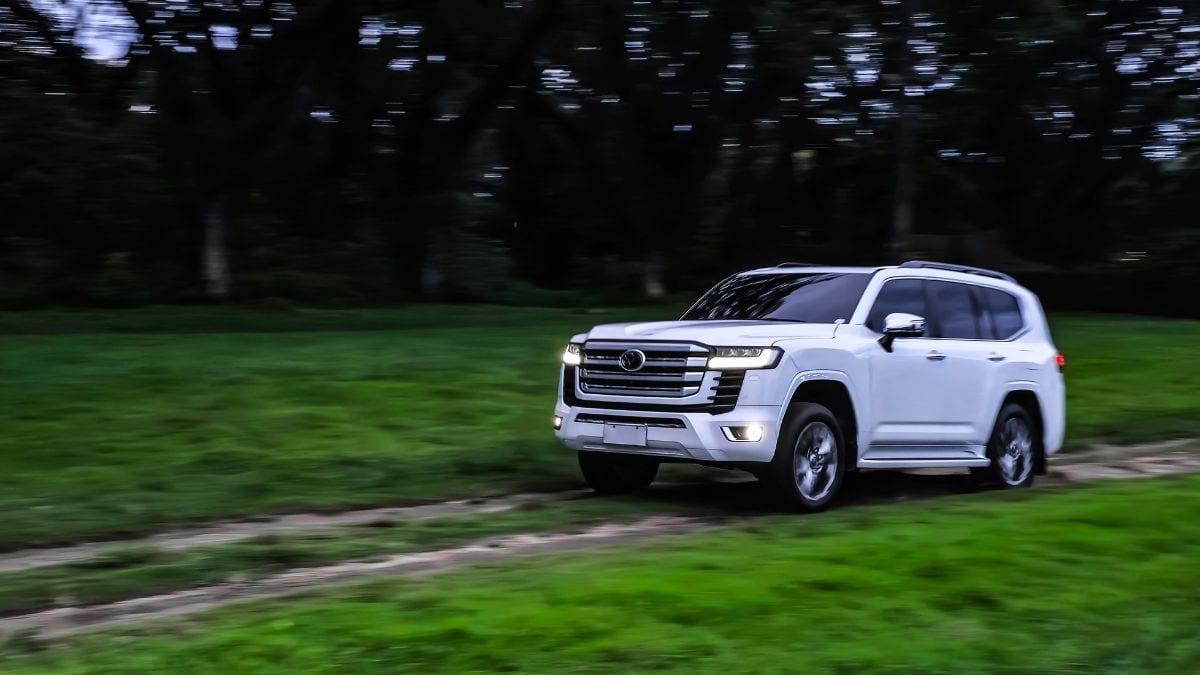
This has always defined the Land Cruiser. Owners can arrive at a five-star hotel in complete comfort, then drive hundreds of kilometers into remote provinces, mountain trails, or undeveloped terrain with equal confidence. The HEV reinforces that duality — electrification brings modernity and improved efficiency, while the chassis and off-road systems preserve the ruggedness the nameplate has spent decades earning.
A Strategic Addition to Toyota's Portfolio, The Next Chapter
As more Filipino buyers embrace electrified vehicles, Toyota is expanding hybrid technology across different segments. The Land Cruiser HEV serves as a bridge between tradition and progress — attracting buyers who may have previously hesitated over a large SUV's environmental footprint, while reassuring loyal owners that electrification does not mean abandoning the values that built the brand.
For more than seven decades globally, and for generations of Filipino motorists, the Land Cruiser has represented something beyond transportation: a symbol of resilience, capability, and longevity.
Technology will evolve. Powertrains will change. But if Toyota has succeeded in its mission, the Land Cruiser HEV carries the same essential promise the nameplate always has—built to last, trusted to go anywhere, and capable of whatever comes next.
View More Articles About: