Beer Culture Is Not Dead: How Filipinos Keep Pint Conversations Alive
Walwal, happy hour, tagay sessions, call it however you please. The Filipinos want their beer.

by Jove Moya
Published on Jul 12, 2026
There was much to chug about in 2016 when I had my first bottle of Red Horse: my friend’s crumbling love life, our failed tests in basic algebra, and, well, the government. In a way, it was an amusing coincidence… that our bitter drink matched the bitterness of the times. It was us, our funny lives, and our slurred drawls.
Beer has arguably become inseparable from the Filipino identity simply because drinking it is rarely a solitary affair. Think of the San Mig Light unironically passed around titos and titas at a children’s party, the shirtless tambays who fill the monobloc table with bottle after bottle orders from the sari-sari store, and all the red cups that inevitably appear at your karaoke nightouts. Whatever the setting, it’s a drink that, slowly but surely, permits us to have conversations we’d otherwise avoid when we’re sober.
“There is a collective consciousness around beer in the Philippines,” says Marla Darwin, co-owner of Palm Tree Abbey, a craft brewery in Makati. “What makes us us?” she asks, adding that if she were to show someone the country for the first time, she’d take them to the beach, serve them inihaw na liempo and ensaladang talong with rice, and pair the meal with an ice-cold Pale Pilsen.
“I cannot remember a time when San Miguel Beer didn’t have a hold on our collective imagination. I can still hear the ‘Kahit kailan, kaibigan, San Miguel Beer!’ tagline play in my head,” she says, noting that she grew up during the peak of the brand’s ad campaigns in the ‘90s.
“Beer is a social beverage, a friend if you will. It’s casual and simple. You don’t need special gear or rituals to enjoy it. I associate it with good times and the hope that drinking a cold one will bring me to a better place than I was beforehand. I think this is very Filipino,” she adds.
The figures tell a story of their own. The Philippines holds significant potential for the beer economy. Market research estimates that the country’s beer sector reached U.S. $13,955.28 million in 2025 and is projected to grow to U.S. $16,199.04 million by 2034. In the same year, the industry recorded P155.4 billion (approximately U.S. $2.7 billion) in consolidated revenues.
Beyond mainstream lagers, the future looks especially promising for Philippine craft brewing as its market reached U.S. $702.5 million in 2025 and is expected to swell to U.S. $1,610.8 million by 2034, more than doubling in value, with an average annual growth rate of 9.37 percent. The report adds that this surge is largely fueled by urban drinkers who are increasingly gravitating toward more adventurous pours.
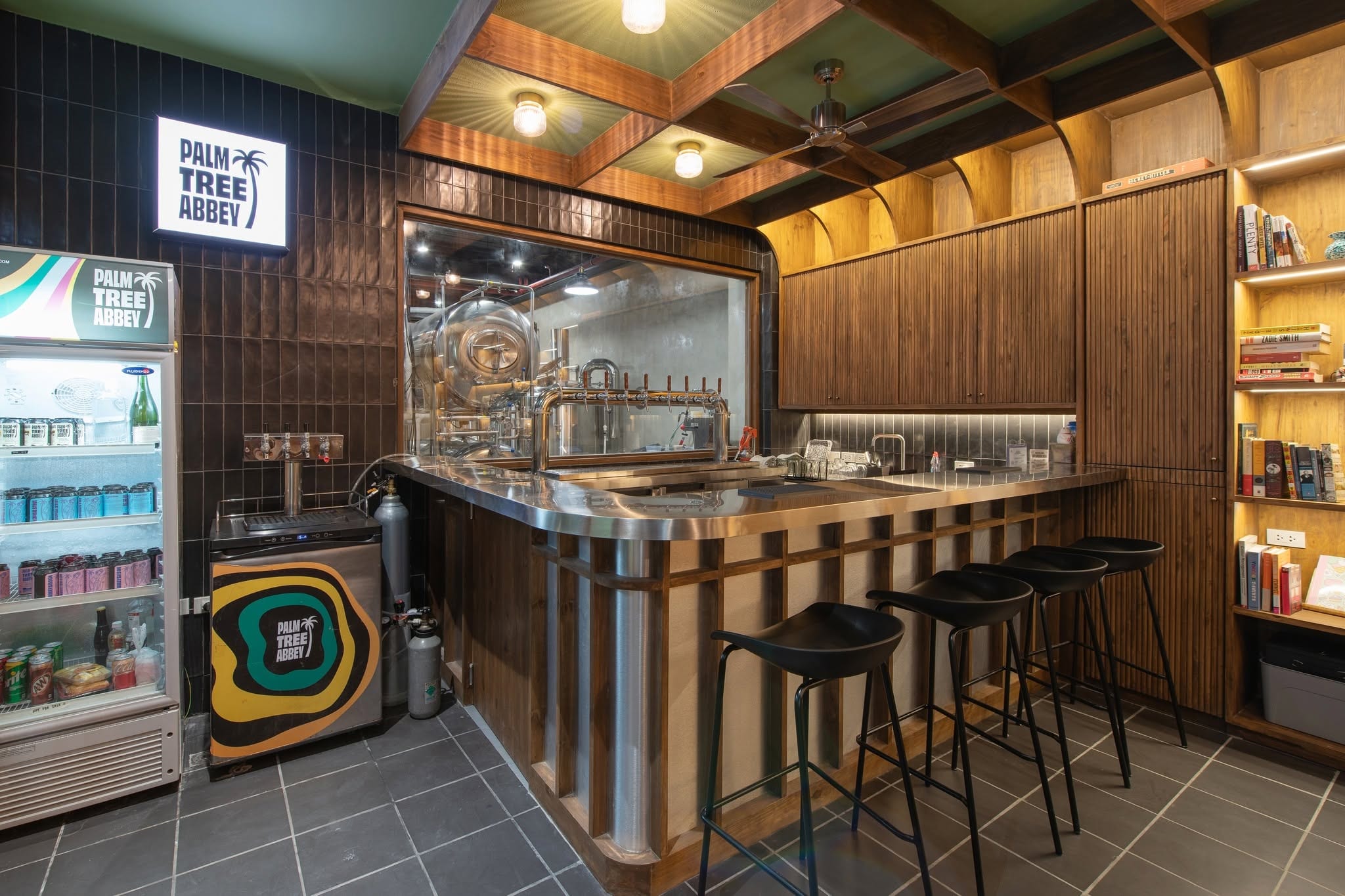
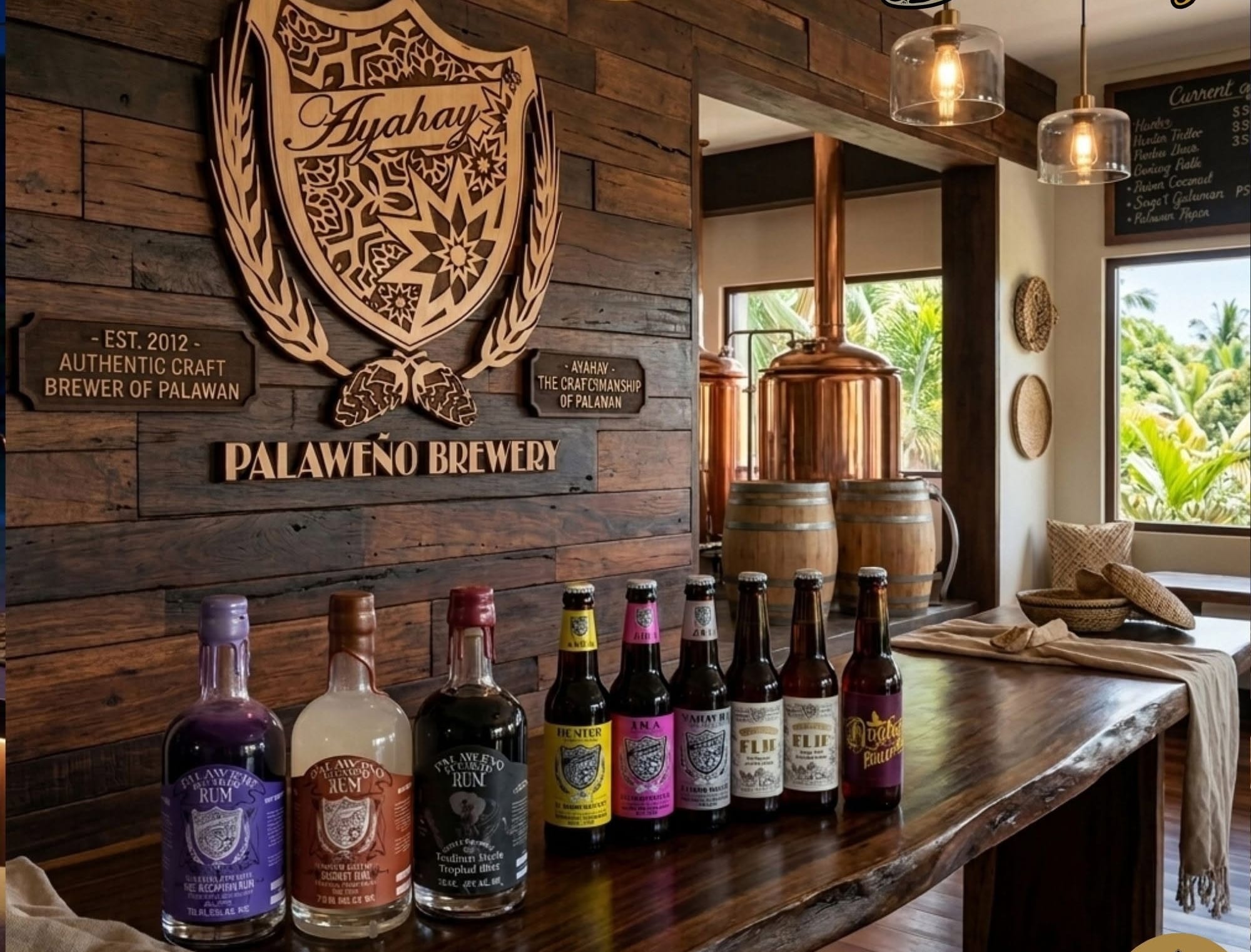
Few people have their finger on the pulse of the local brewing scene quite like writer Philbert Dy, whose views on beverages are regularly sought by brewers and mixologists. He believes the Philippines has no shortage of exceptional independent breweries, many of which have turned their labels into a canvas for native produce.
“There is craft beer from all over the country, and it has become a vehicle through which local ingredients can be showcased. Palawan honey features prominently in the beer of Palaweño Brewery; Hoppyside from Aurora uses chocolate grown in the province; Papa Bolo in Tagaytay has a beer with local pineapples.”
For Dy, himself a co-owner of a craft beer store, such experimentation is a sign of a scene that, despite arriving later than its neighboring counterparts, has become one of the country’s fastest-growing industries. “I can tell you that craft beer is growing, with several breweries and brewpubs gaining a significant following, and developing communities within their respective neighborhoods.”
“Based on what we’ve seen at our taproom, I think there’s some truth to that,” Raoul Masangcay, brewer and co-founder of Elias Wicked Ales & Spirits, says on the prospects of craft beer in the Philippines. In 2023, his store in Quezon City earned recognition at the Asia Beer Championship, standing out among 640 entries.
“Interest in craft beer has continued to grow, and many of our customers seem to be looking for unique flavours and quality rather than simply drinking to get intoxicated. We’ve also noticed that our customers are becoming more curious. They ask about different beer styles and flavor profiles, and some even come in looking for a specific type of beer.”
Masangcay, who has been brewing for over a decade, adds that the tie between beer-drinking and the Filipino identity has “A lot to do with our history and our climate.”
“The Europeans, particularly the Spanish and later the Americans, introduced brewing culture to us and techniques like lager brewing naturally took hold.”
“In hot and humid countries like ours, a cold pint just hits differently. There is also an interesting pattern I have noticed where places with colder temperatures tend to lean toward higher ABV (alcohol by volume) spirits while tropical countries naturally gravitate toward beer. It just fits the way we live and the way we love to gather.”
Is the Walwal Era Dead?
Younger people are drinking less…or at least that’s what a report released in 2024 by the National Institute on Alcohol Abuse and Alcoholism suggests. While the "sober conscious movement" continues to gain traction around the world, the picture in the Philippines appears more complicated.
A study by the National Institutes of Health-Health Promotion Program (NIH-HPP), presented at the University of the Philippines in 2025, found that younger Filipinos are engaging in binge drinking at what researchers described as “alarming” rates.
According to the data, drinking among younger folks has been linked to impaired brain function, including diminished emotional and behavioral regulation, poorer coordination, and slower breathing and heart rates.
While the records suggest an opposing trend, bar owners are careful not to draw direct contradiction. The takeaway from industry players interviewed for this story is that rituals surrounding alcohol are changing.
“I have many observations about this,” says Darwin when asked whether the seemingly conflicting global and local data match her personal observations. “The pandemic shaped people’s relationships with being at home. I think that also affected young people who experienced their college years in lockdown.”
At the height of COVID-19, bar stools sat empty. With nowhere to gather, drinkers brought the ritual home. Darwin recalls watching her condominium’s maintenance staff empty the garbage chute during lockdowns, only to find it overflowing with bags of empty liquor. Even as restrictions eased, some of those habits lingered. Coupled with the rising cost of living, the pandemic encouraged a more deliberate approach to drinking.
That, Darwin believes, is what many mistake for declining interest. People are still going out, perhaps not as often, but with greater intention. The appeal of a night out now lies less in the drink itself and more in the experiences that can’t be replicated at home. “Like having spontaneous encounters with people, listening to music you wouldn’t be able to discover on your own, or the timeless art of people-watching,” she notes.
“Millennial youth culture centered around drinking, especially in college. I’m a prime example of someone who lived through a walwal era—I have a theory that since there’s a generation that skipped this experience entirely, youth culture shifted toward a different direction,” Darwin says.
“They’ll come in solo or in groups,” she says about the consumers who frequent Palm Tree Abbey. “The broader culture around drinking and walwal may have changed, but the young people who go to us—and they’re not many—are so cool. They travel, engage with the world, and seek connection with others.”
Masangcay, for his part, observed something relatively similar: that people have gone back to bars and restaurants, but make more conscious choices than before. “There appears to be growing interest in products that align with health and wellness, such as low-alcohol beers, non-alcoholic beverages, hard seltzers, and ready, and ready-to-drink cocktails. People still enjoy going out, but they seem more open to exploring different options and drinking more mindfully.”
Chug It With Feelings
Beer has always been a fascinating subject for Masangcay, who believes so much of its story is often overlooked. He implies the drink’s appeal is more interesting once you look beyond the buzz. “When you start digging a little deeper, there is so much more to discover,” he says.
“There is the history of how beer has shaped cultures across the world, the science behind fermentation, the farmers who grow the malts and hops, and the brewers who work hard to keep every batch consistent, which is no small feat. I think, once people start seeing beer through that lens, it becomes a lot more meaningful than just the alcohol content,” Masangcay explains.
Bayanihan, tsismisan, and any occasion worth lingering over, as natural gatherers, Filipinos have a way of conjuring beer into the mix. “I would simply say that beer has always been about people. It is one of the few things that has consistently brought us together,” says Masangcay.
As long as there are feelings to sort through, a bottle of beer will likely remain a familiar companion. “There is a shared experience in cracking open a beer with someone that is hard to replicate. Beyond that, there is real craft and intention behind every good brew, from the ingredients to the process to the flavors. At its heart, beer is not just something you drink. It is something you share,” he concludes.
ALSO READ:
Conversation on Tap at Engkanto Bridgetowne
9 Old-School Filipino Beers You Were Too Young to Drink
Jove Moya wanders Manila with a camera in hand and a pen in her pocket, for leads message her on IG @Jovemoya.
View More Articles About: