Conversation on Tap at Engkanto Bridgetowne
Collaboration and community build a global Filipino beer brand.
Published on Jun 21, 2026
Ian Paradies of Engkanto Brewery challenged attendees of the opening of the fourth Engkanto Taps in Bridgetowne with a question: What is the difference between beer from a commercial brewery and from a craft brewery? One might argue scale, but it is more than that. Sure, a smaller batch ensures better quality. But the easiest way to distinguish a beer from a craft brewery is through care. Intent for process. Love for ingredients. The malt is better. The hops are fresher. The brewing is more deliberate.
All of that is true at Engkanto Brewery. Yet after spending an evening at the opening of Engkanto Taps Bridgetowne, the brewery's fourth taproom, it became clear that the company's understanding of craft extends beyond what goes into the tank.
For Engkanto, craft is also about listening.
"The idea behind Engkanto Taps," says co-founder Ian Paradies, "was that we wanted a place where we could communicate directly with our customers."
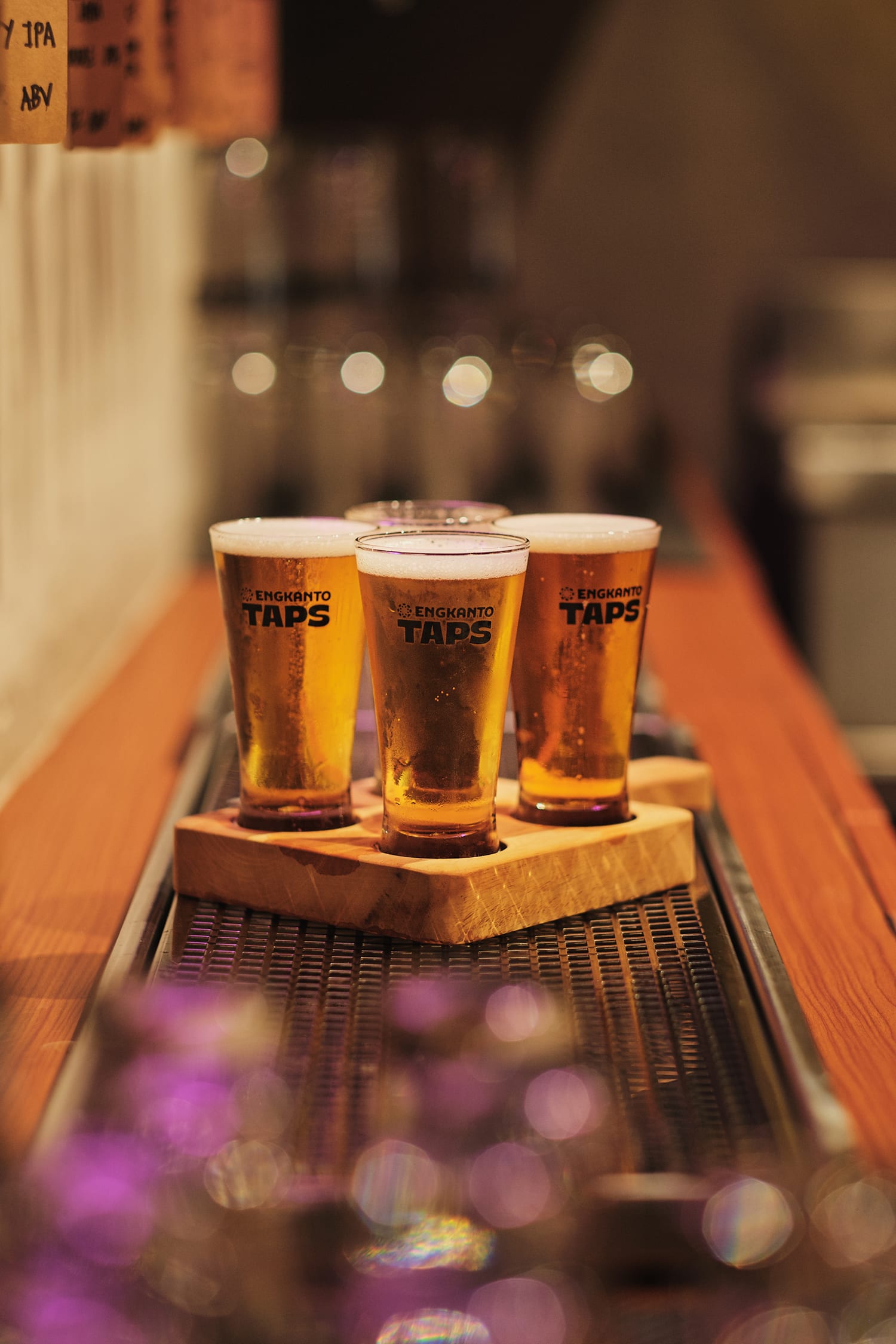
Before opening its own taprooms, Engkanto's beers reached drinkers through bars, restaurants, hotels, grocery shelves, and online orders. The brewery knew what sold, but direct conversations with drinkers were harder to come by. The taproom changed that.
"The idea behind Taps was to create a space where our customers would come, get our beers at a very attractive price, and a place where beer could be incorporated into everything," Paradies says.
The philosophy is visible throughout the menu.
Beer isn't confined to the taps. It finds its way into recipes. Signature cocktails incorporate it as an ingredient. The taproom becomes less of a retail outlet and more of a laboratory where brewers, bartenders, cooks, and customers participate in the same conversation.
The beers themselves reveal what that conversation sounds like.
Take the globally recognized award-winning Honey Ale, and still one of Engkanto's most popular offerings. It speaks to a preference many Filipinos share: a fondness for sweetness that doesn't become cloying. Matamis pero hindi sobrang tamis. It delivers approachable flavor without the syrupy character often associated with mass-market beverages.
Then there are beers like Mango Nation Hazy IPA and Paint Me Purple Ube Lager. International drinkers may encounter them as exotic exports, products distinguished by distinctly Filipino ingredients. Locally, however, they succeed for the opposite reason. Mango and ube are not novelties here. They are familiar flavors woven into everyday life. The beers work because they begin with tastes people already understand.
The relationship goes both ways.
Engkanto's rotating seasonal releases often feel like public-facing research and development. Beers such as Hop Coolture Series 5 Pale Ale, Crook-o-dile Tears American IPA, and Lost at Sea Imperial Pilsner introduce drinkers to styles rooted in American, European, and other brewing traditions. With every pint poured, the brewery learns something about how Filipino drinkers respond to bitterness, astringence, aroma, body, and balance.
The resulting exchange gradually shapes what comes next.
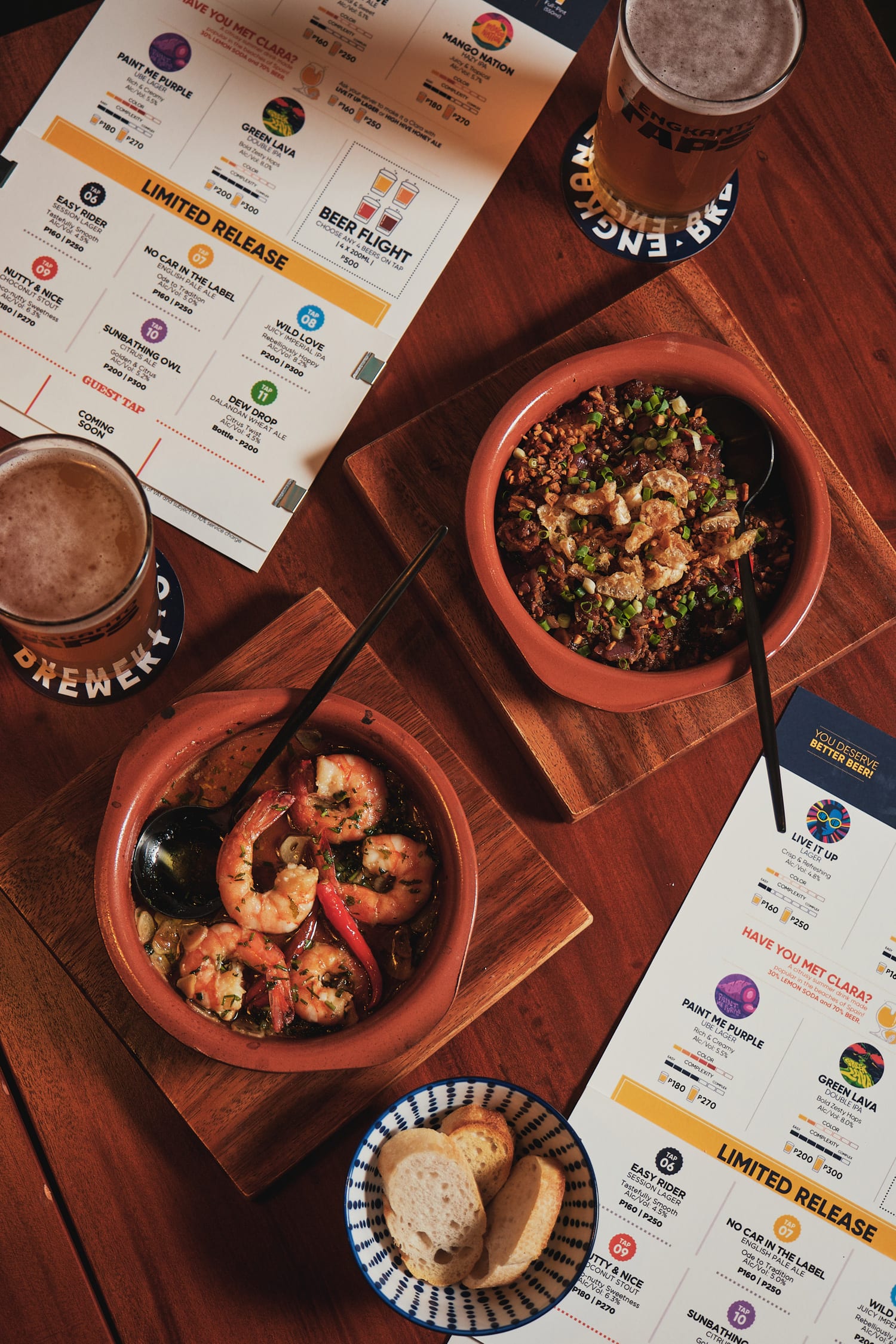
Even beers that seem distant from traditional Filipino flavor profiles often reveal familiar points of connection. Sunbathing Owl Citrus Ale, a collaboration with Hitachino Nest Kuichi Brewery of Japan, for example, draws on the same affection for bright acidity that runs through countless Filipino dishes and snacks, from calamansi-dressed seafood to tamarind-based soups. (People with choice paralysis can opt for the beer flight to get four sample-sized glasses of the ten they have on tap!)
The cocktails continue the dialogue.
The Peach Perfect Mangroni layers peach and mango, a pairing beloved by generations of Filipinos, onto a framework inspired by the Negroni and the Jungle Bird. The Sampa-loca Highball leans into the sweet-sour-salty interplay that feels immediately recognizable to anyone who has ever bought tamarind candy from a sari-sari store.
None of these drinks feels like an exercise in localization. They feel like work made through attentiveness.
That may explain why Engkanto has continued to invest in physical spaces. From its original taproom along Santa Rosa–Tagaytay Road to locations in BGC, Pioneer, and now Bridgetowne, each venue places the brewery in a different community and exposes it to different preferences, habits, and tastes.
The taprooms are not simply places where Engkanto serves beer. They are places where Engkanto learns.
World-class beer is often discussed as something that emerges from strict adherence to international standards. Engkanto's success suggests another possibility: that world-class beer can also emerge from paying close attention to local tastes and treating customers as collaborators rather than consumers.
In that sense, every taproom visit becomes part of the brewing process.
The invitation at Engkanto Taps Bridgetowne is simple. Come for the beer. Stay for the cocktails and the food. Bring your preferences, your curiosities, and your palate. The brewery is listening.
And somewhere in that ongoing exchange, award-winning beer continues to become more distinctly Filipino.
Engkanto Taps Bridgetowne is at G/F GBF Center 1, Bridgetowne, C-5 Road, Ugong Norte, Quezon City.
ALSO READ:
The Chemical Romance of Manila’s Professional Class
9 Old-School Filipino Beers You Were Too Young to Drink
Craft cocktails, social justice, books, board games, and TTRPG. Chopsuey.
View More Articles About: