How to Build Your Home Bar, One Drink at a Time
Stretton's Gin, Andrei Campian, and The Bevvy reacquaint us with the lost art of entertaining at home.

Published on Aug 3, 2026
Every hobby has its rabbit hole. Coffee lovers eventually debate burr geometry. Audiophiles compare amplifiers. Home bartenders are no different. It takes only a few minutes on YouTube before you're convinced you need Japanese barware, crystal coupes, half a dozen bitters, and bottles you've never heard of.
The appealing lesson from Stretton's Gin's masterclass with bartender and educator Andrei Campian at The Bevvy in Makati last July 27 is that you don't.
Campian divided the class into the three foundational techniques of build, stir, and shake—with muddling naturally bridging the last two. Seen another way, they also offer a sensible roadmap for building a home bar without buying everything at once.
The trick is to let each technique justify the next investment.
Because the goal isn't to own a professional bar.
It's to enjoy learning enough that you find yourself wanting to make another drink.
ALSO READ: This Hidden Bar in Makati Is Back With a New Look

Build
Every journey into cocktails should begin with a drink you already know.
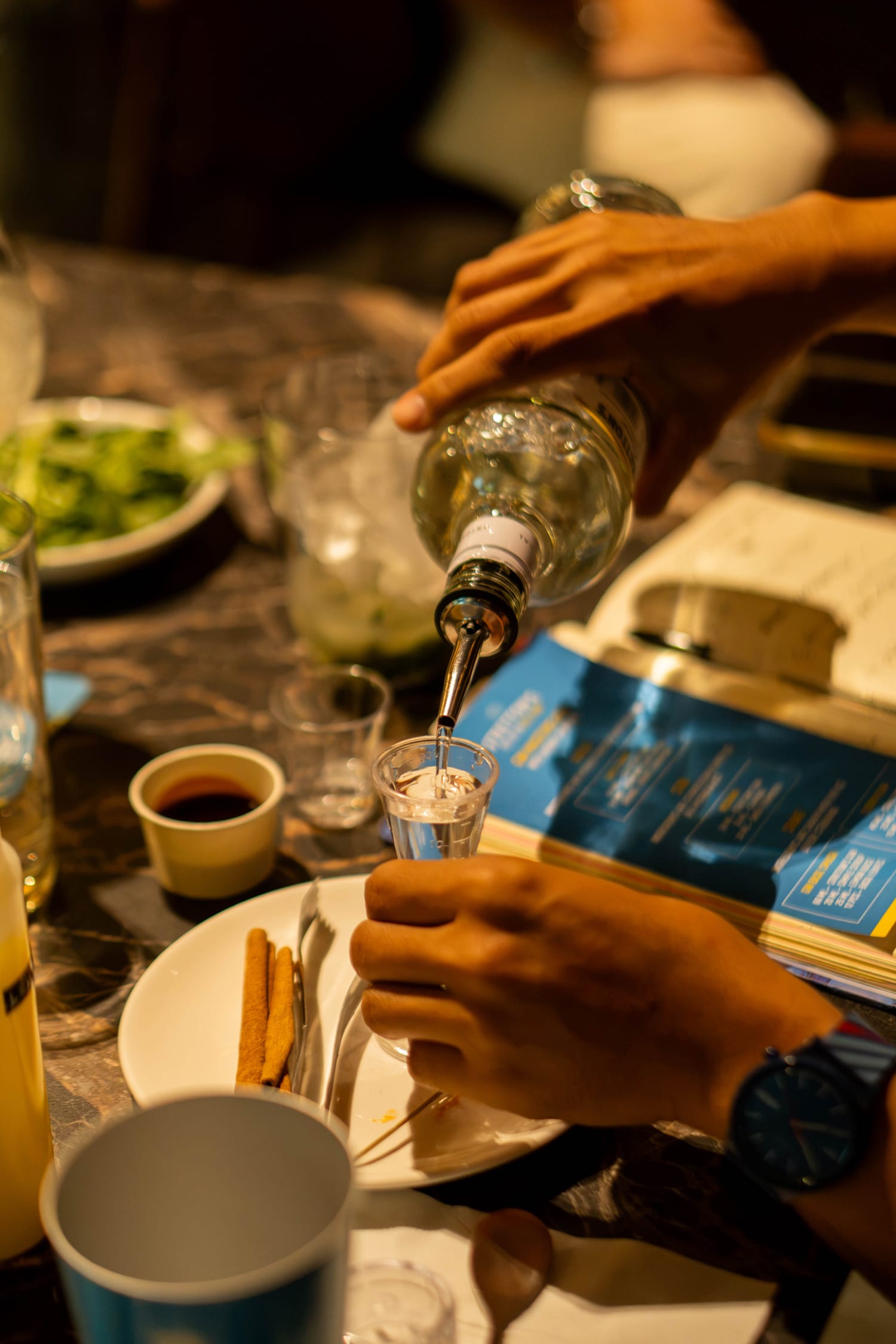
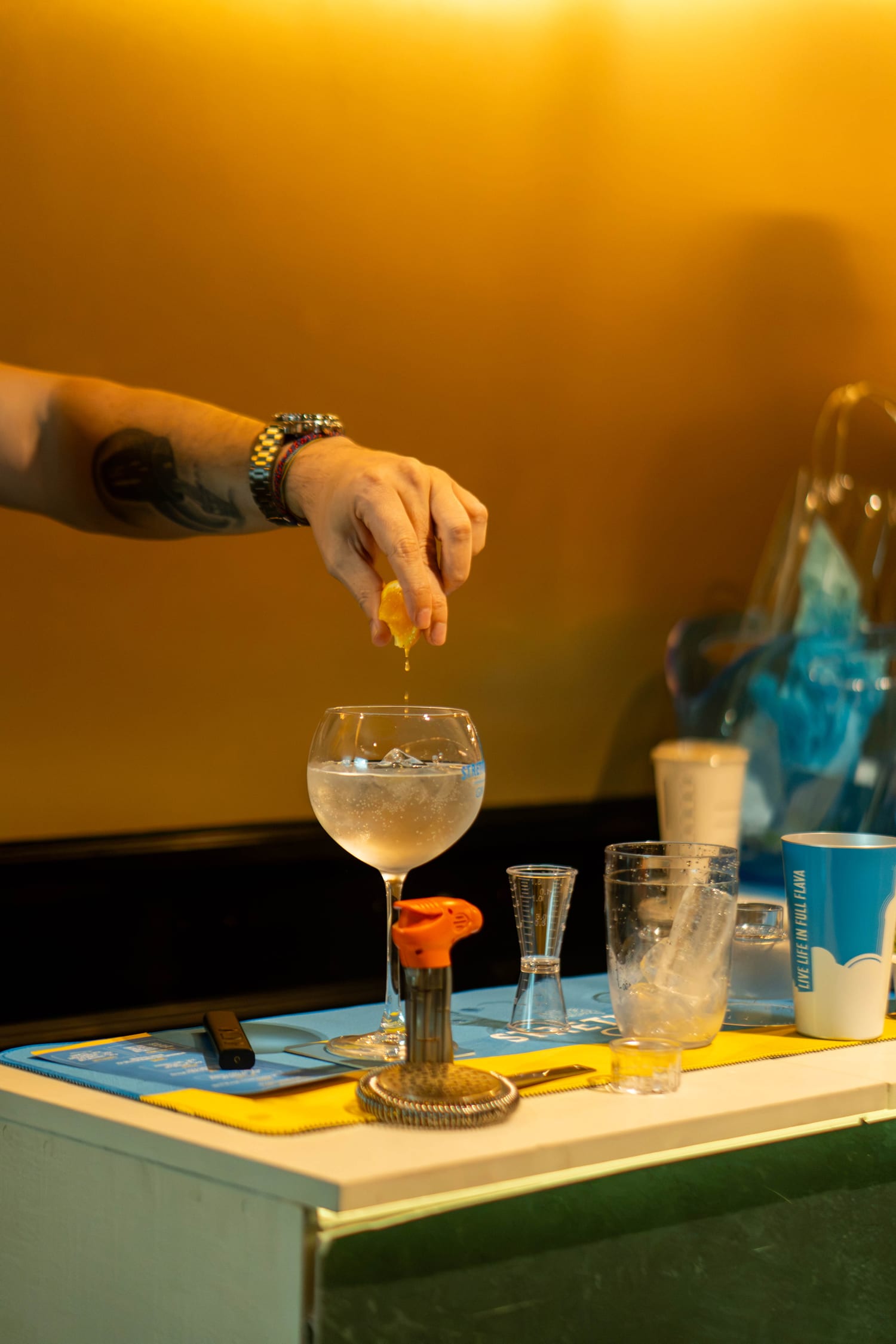
Building is the most forgiving technique because everything happens directly in the serving glass. Campian's Gin & Tonic combines 60 ml of Stretton's Gin with 140 ml of premium tonic water over ice, finished with orange and burnt cinnamon.
The equipment list is refreshingly short: a jigger and a balloon glass, a highball or Collins glass. You probably already use the latter for water. Silicone molds for long ice spears are inexpensive online and make even the simplest drink look considered.
The jigger is the first purchase worth making. It is an unassuming tool, but measuring transforms a drink from something you happened to mix into something you can recreate consistently. Experts recommend filling the jigger on a flat countertop to avoid spills, pouring away from yourself into the glass, then gently lifting the ice once or twice with a bar spoon rather than stirring vigorously, preserving the tonic's lively carbonation.
It is a surprisingly satisfying ritual.
Soon you'll find yourself caring about details you never noticed before: how close the liquid sits to the wash line, whether your ice is clear enough to show off the drink, whether burnt cinnamon smells different from fresh bark.
Other built cocktails worth exploring include the Highball, the Buck, and the Mule. Feeling a little adventurous? The French 75 and the Seelbach reward the same straightforward technique while introducing sparkling wine into the equation.
If this is as far as you ever go, that's perfectly fine.
Your home bar doesn't have to become a personality.

Stir
The next purchase doesn't dramatically change what you make.
It changes how you make it.
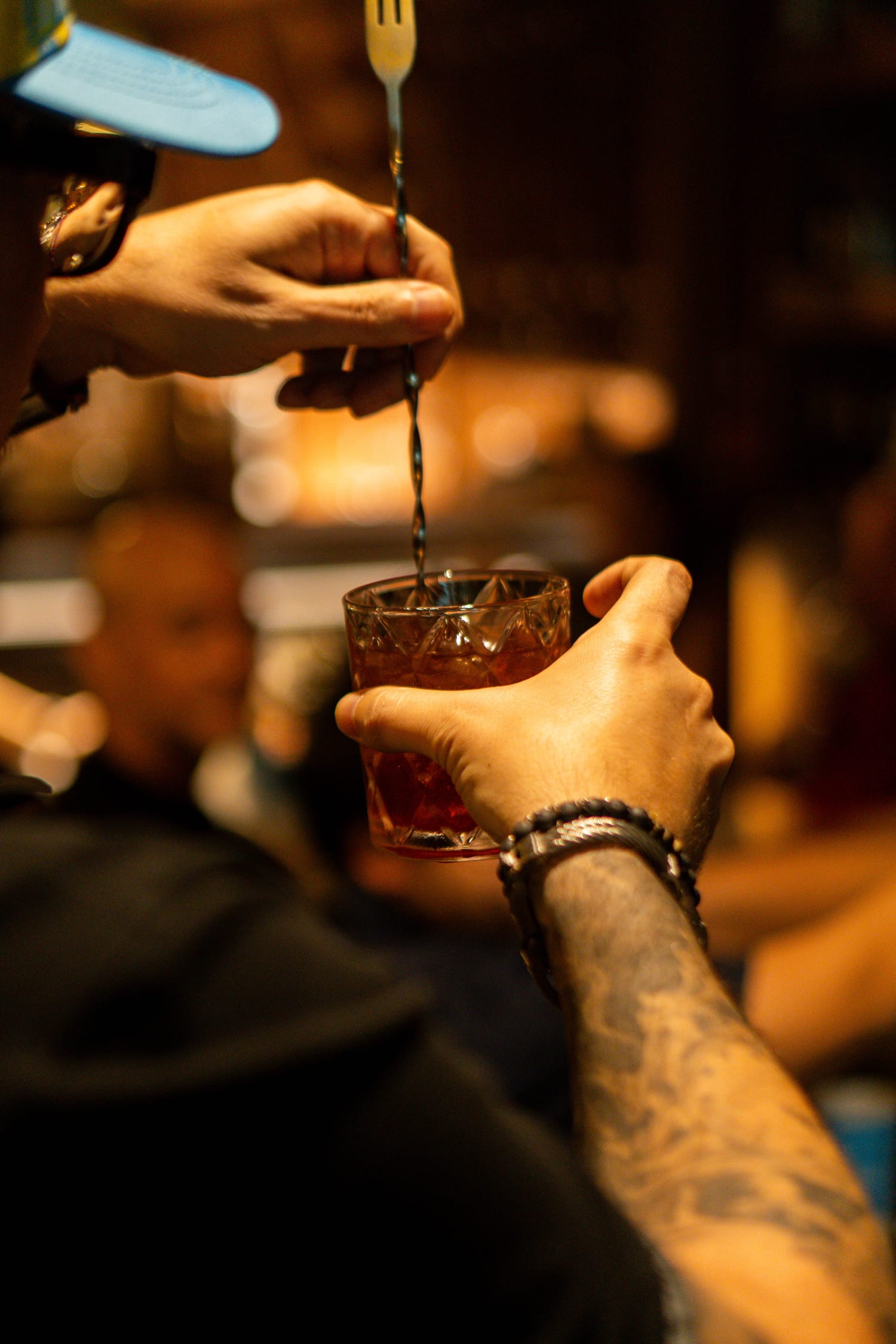
Campian's Negroni calls for equal parts Stretton's Gin, Campari, and sweet vermouth, stirred gently over ice before being strained into a rocks glass.
Now your toolkit grows to include a mixing glass, a bar spoon, a Hawthorne or julep strainer, and investing in some classy-looking rocks glasses.
The pleasure of stirring is almost meditative. The spoon slides silently against the wall of the mixing glass rather than clinking through the ice. After 20 or so revolutions, the vessel begins to frost over. Campian notes that in our tropical humidity, the best indicator isn't counting stirs but feeling the cool weight of the thick glass base and listening as the ice settles into a quieter rhythm.
Then comes one of those wonderfully nerdy details that make cocktails endlessly fascinating.
Express a strip of orange peel over the drink so the oils perfume the surface. Rub the peel around the rim before dropping it into the glass. If you're serving someone else, place the garnish on the far side of the glass so its fragrance reaches them just before the first sip.
It is a tiny gesture. It also happens to be the sort of thing that separates making a drink from hosting.
Once you've discovered how much difference a properly expressed orange peel makes, you'll start noticing the same detail at bars. That's the fun of learning a craft: it changes the way you experience everyone else's work.
Classic stirred cocktails such as the Martini and the Old Fashioned naturally follow.
Muddle
This is where the kitchen begins to overlap with the bar.
Campian's Gin Basil Smash starts not with alcohol, but with basil. Around 10 leaves—stems removed—are slapped gently between the palms to wake their aroma before being placed into the base of a three-piece cobbler shaker with simple syrup and lemon juice. Only then does the gin follow.
Notice the order.
The inexpensive ingredients come first. If something goes wrong, you haven't wasted the spirit.
It is the kind of practical wisdom that rarely appears in cocktail books but becomes invaluable once you start experimenting at home.
Rather than crushing the herbs, let the weight of the muddler do the work. Press down instead of grinding against the sides of the tin, which bruises the leaves and extracts unwanted bitterness. If you are muddling in glassware, you might also break the glass if you lean into the walls with a muddler. Assemble the cobbler shaker carefully—the filter before the cap—and shake until the outside frosts over like a department store window at Christmas.
Remove the cap and use a fine mesh or tea strainer to complement the built-in strainer to get rid of small bits of leaves and shards of ice. Serve over ice with a garnish of basil leaves and a lemon wedge. The finished drink should be bright, vibrant green.
By now you've probably added a cobbler shaker and perhaps a bar spoon with a muddling end. A dedicated muddler can wait until you discover that basil smashes, mojitos, and caipirinhas have quietly become part of your regular rotation.
That's really the philosophy of Campian's class: Every new tool should solve a problem you've already encountered. Not one you imagine you'll have someday.
Shake
Eventually, curiosity leads almost everyone here.
The investment becomes a little more serious: a Boston shaker, a Hawthorne strainer, and your first proper stemmed cocktail glasses—whether that's a coupe, Nick & Nora, Martini, or Margarita glass.
Campian's Clover Club demonstrates exactly why.
Gin, lemon juice, raspberry purée, and egg white are first shaken with only a tiny pebble of ice to begin developing the foam before a second shake with plenty of ice chills and dilutes the drink. Double-straining removes stray ice crystals and bubbles, producing a pale pink cocktail crowned with a dense, velvety meringue.
Even the mechanics become fascinating.
A properly assembled Boston shaker seals with one clean tap and opens with another. Pressing opposite sides of the tins releases the vacuum with a satisfying pop. It looks effortless when experienced bartenders do it because they've repeated the motion hundreds of times.
The first few times? Not as much, so practice before inviting company.
Few things humble aspiring home bartenders faster than wrestling a stubborn Boston shaker in front of their guests.
The reward is worth it. Air softens citrus, giving shaken sours their plush texture and rounded acidity. It's a small piece of chemistry made visible in the glass.
By now, you've crossed a threshold.
You're no longer buying equipment because someone online said you should.
You're buying it because you've discovered why it exists.

Somewhere along the way, you'll stop thinking about the purchases altogether.
The jigger lives beside the ice tray. The mixing glass’s base has fingerprints from Friday nights. Friends begin asking whether you're making Negronis again. You start watching videos not because you need another gadget, but because you're curious whether stirring with larger cubes changes dilution or because you saw grapefruit in the grocery.
That is the quiet pleasure of geeking out over cocktails. Every small discovery makes the next one more interesting.
And that is perhaps the most sensible way to build a home bar.
Start with the essentials: a jigger, a Collins or highball glass, and a paring knife you probably already own. If the hobby sticks, add the bar spoon, the mixing glass, a strainer or three, and a rocks glass. Later, perhaps, a cobbler shaker. Finally, when you've earned it, the Boston shaker and a few elegant stemmed glasses.
You might even find yourself signing up for another masterclass at The Bevvy or one of the many cocktail workshops now flourishing across Metro Manila.
When you have discovered that learning how to make one is half the fun, the perfect drink is the one you are excited to make for your friends.
One drink at a time, the equipment accumulates alongside the memories and the people who give you a reason to use it.
Don't buy a home bar. Let your home bar happen.
ALSO READ:
Today I Learned: Why Every Bar Is Suddenly Obsessed With Guest Shifts
Everything You Need to Create Your Very Own Bar at Home
Craft cocktails, social justice, books, board games, and TTRPG. Chopsuey.
View More Articles About: